If you’re a first-time EV buyer, you’re not alone in feeling excited and a little overwhelmed. EVs drive differently, charge differently, and age differently than gas cars, which means first-timers tend to repeat the same avoidable mistakes, especially when they’re shopping used. The good news: if you understand those common traps ahead of time, you can pick an electric car that actually fits your life instead of fighting it.
Why mistakes matter more with EVs
Why first-time EV buyers still get caught out
Surveys in 2024–2025 show that the top concerns for would‑be EV buyers are range, access to charging, and cost. At the same time, many people don’t realize how little they actually drive each day, how much public charging exists in their area, or how fast EV prices have been dropping, especially in the used market. That gap between perception and reality is where most of the classic mistakes live.
What first-time EV shoppers worry about most
Underneath those worries are very practical questions: Will this work for my commute? Will I find chargers where I live? Will the battery still be healthy in five years? Let’s walk through the most common mistakes first-time EV buyers make and how to avoid them, especially if you’re considering a used EV from a marketplace like Recharged.
Mistake 1: Not matching the EV to your real driving
Most shoppers start with the car they want, then try to fit their life around it. With EVs, you’re better off flipping that: start with your life, then find the car. The first question isn’t “Which model looks best?” It’s: What does a typical week of driving actually look like?
Step 1: Map your normal week
- How many miles is your round‑trip commute?
- How often do you run errands between trips?
- Do you regularly drive kids, gear, or pets?
- Do you have dedicated off‑street parking overnight?
Most Americans drive less than 40 miles per day. Even shorter‑range used EVs can cover that easily with overnight charging.
Step 2: Separate special trips
- How many long road trips (150+ miles) do you take a year?
- Could you rent or borrow a longer‑range car a few times?
- Do you routinely tow or haul heavy loads?
You don’t need to buy for the rare road‑trip use case if it means overpaying every other day of the year.
Practical move
Mistake 2: Ignoring where and how you’ll charge
Charging is where first‑time buyers make the costliest assumptions. They either assume charging will be impossible, or that it will magically work itself out. In reality, you should treat home and public charging like you’d treat parking: if you don’t know where it’s going to happen, don’t buy yet.
Three common charging situations for first-time EV owners
Understand which one you live in before you pick a car
Homeowner with driveway or garage
If you can install a Level 2 (240V) charger, owning an EV is usually straightforward. You plug in overnight and start each day "full." Factor in:
- Cost to add a 240V outlet or wallbox
- Whether your panel has spare capacity
- Utility rebates for home charging
Renter or apartment dweller
You’ll likely rely on a mix of Level 1 (120V) at home, workplace charging, and public stations. Key questions:
- Does your building already have chargers?
- Can you run a cord safely to your parking spot?
- Are there reliable public chargers near home or work?
Long-distance or rural driver
If you often drive in rural areas or between cities, public DC fast charging becomes important. Before you buy:
- Check charging maps on PlugShare or ChargePoint
- Look at winter vs summer coverage
- Confirm which networks your car works with
Big red flag
Mistake 3: Over- or under-estimating range needs
Range anxiety is still powerful, even though most newer EVs offer 200–300 miles of rated range. The common mistake: paying thousands extra for range you’ll rarely use, or, on the flip side, buying a short‑range EV that can’t comfortably handle your winters or your commute with a buffer.
- Aim for an EV whose realistic year‑round range is at least 3× your average daily miles.
- Remember that highway speeds, cold or hot weather, and heavy loads can temporarily cut usable range by 20–30%.
- Don’t base your decision on the single longest trip you take once a year, think about the routine you’ll live with every week.
- Know that used EVs will have less range than when new due to normal battery degradation; you’re buying today’s range, not the original brochure number.
Range rule of thumb
Mistake 4: Skipping battery health and warranty checks
In a used EV, the traction battery is the single most valuable component. Replacement packs can cost several thousand dollars, so buying blind on battery health is one of the worst mistakes a first‑time EV buyer can make.
Typical EV battery warranty patterns
Always confirm the exact terms for the model year you’re considering.
| Brand example | Typical battery term | Mileage limit | Capacity guarantee? |
|---|---|---|---|
| Many mainstream brands | 8 years | 100,000–160,000 mi | Often 70% capacity |
| Luxury brands | 8–10 years | 100,000–150,000 mi | Varies by model |
| Early EVs (older Leafs, etc.) | 5–8 years | 60,000–100,000 mi | Sometimes none |
Most modern EVs carry separate battery warranties that are longer than the basic bumper‑to‑bumper coverage.
- Ask for a battery health report or state of health (SOH) reading, not just “it charges fine.”
- Compare the car’s current full‑charge range to the original EPA rating to estimate degradation.
- Verify whether the battery is still under factory warranty, and whether that warranty transfers to you.
- Be cautious if the seller refuses to share any battery data, won’t let you see the car at high state‑of‑charge, or dodges range questions.
Walk-away moment
Mistake 5: Focusing only on sticker price, not total cost
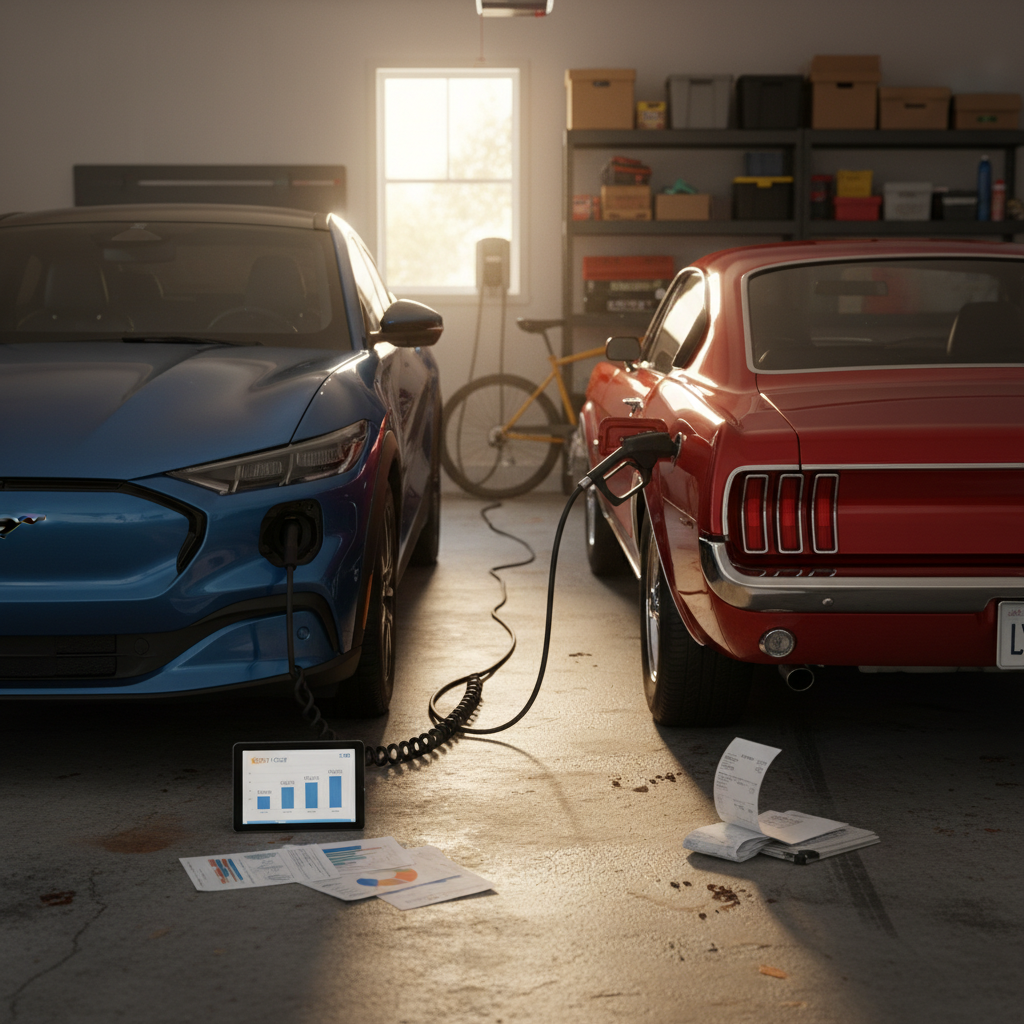
EVs flip some of the usual car‑buying math. The sticker price might be higher than a comparable gas car, but fuel and maintenance costs are usually lower. At the same time, insurance, registration, and depreciation can behave differently than you expect, especially for older, niche models.
Costs most first-time buyers forget
- Home charging setup: Electrical work plus a Level 2 unit, if needed.
- Insurance: Some EVs cost more to insure than similar gas cars.
- Depreciation: Certain models lose value faster, especially if incentives changed.
- Public charging rates: DC fast charging can be pricier than home charging per mile.
Costs that usually drop with EVs
- Energy per mile: Electricity typically beats gas on a cost‑per‑mile basis.
- Maintenance: No oil changes, fewer moving parts, and less brake wear.
- Time at the shop: Well‑built EVs often need fewer unplanned repairs.
- Incentives: Federal and state benefits can lower your effective price, especially on used EVs.
Used EV incentives are easy to miss
Mistake 6: Not considering charging connectors and networks
In the gas world, a fuel nozzle is a fuel nozzle. With EVs, connectors and charging networks still matter. The ecosystem is converging, most automakers in North America are adopting Tesla’s NACS connector, but for the next several years, first‑time buyers need to pay attention to what plugs into what.
- Know which connector your EV uses for DC fast charging today (CCS, NACS, or CHAdeMO on older models like early Nissan Leafs).
- Check whether an adapter is included with the vehicle, and whether it supports the charging speeds you expect.
- Look at where you actually drive and which networks dominate there, Tesla Supercharger, Electrify America, ChargePoint, EVgo, and regional players.
- If you’re considering an older CHAdeMO‑only car, make sure there are still enough compatible fast chargers on your regular routes.
Connector compatibility can shape your whole experience
Mistake 7: Ignoring weather and driving style impacts
EV range isn’t a fixed number, it’s a moving target that responds to temperature, speed, and terrain. First‑time buyers in cold or very hot climates often underestimate how much climate control and highway speeds can trim their real‑world range.
How your environment can change real-world range
These effects are normal, but you should plan for them
Cold weather
- Cabin heating and battery warming use extra energy.
- Short trips in winter can feel especially inefficient.
- Plan on a noticeable range drop on the coldest days.
Heat, speed, and terrain
- Highway speeds increase aerodynamic drag and energy use.
- Air conditioning also draws power, though less than heating.
- Steep grades and heavy loads reduce range, just like in gas cars.
What to look for on a test drive
Mistake 8: Buying a used EV without enough transparency
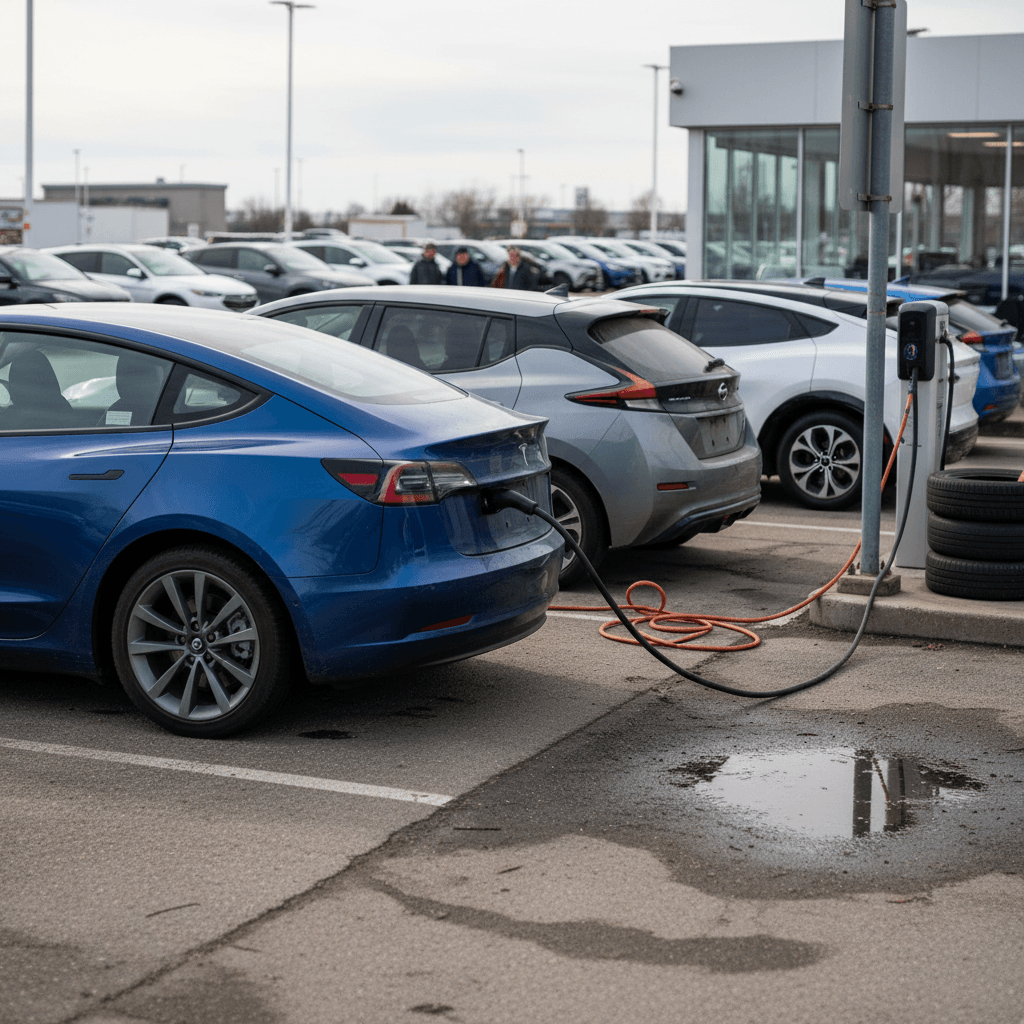
Used EV listings can be vague, and many private sellers don’t fully understand the car’s battery history. The most common first‑timer mistake is treating a used EV like a used gas car and relying only on a basic mechanical inspection and CARFAX‑style report. Those are necessary, but not sufficient for an EV.
Red flags specific to used EVs
No battery data available
The seller can’t provide any documentation or screenshots showing battery health, recent range, or charging history.
Vague answers about range
You hear things like “It goes plenty far, it’s an EV,” instead of concrete numbers about full‑charge range today.
Only DC fast-charged
The car’s history or seller story suggests heavy, frequent DC fast charging and very little home Level 2 use, especially in hot climates.
Ignored recalls or software updates
The model has known recalls or battery‑related software updates that haven’t been performed.
Marketplaces like Recharged were built to solve exactly this problem. Every vehicle on Recharged comes with a Recharged Score Report, including verified battery health data, fair market pricing, and model‑specific insights so you’re not buying blind.
Mistake 9: Overlooking software, apps, and tech lock-in
An EV is as much a software product as a hardware one. First‑time buyers sometimes fall in love with the range and price, then discover they dislike the car’s infotainment, mobile app, or driver‑assistance behavior once they live with it.
- Make sure you can use the vehicle’s mobile app with a used EV; some brands require ownership transfers or subscriptions.
- Check which features are permanent vs. paid subscriptions (connected services, remote climate, navigation data, etc.).
- Confirm that over‑the‑air updates are still supported and whether the previous owner installed the latest ones.
- If the car relies heavily on a built‑in route planner for charging stops, test how intuitive it feels before you buy.
Why this matters more with EVs
Mistake 10: Assuming every dealer or seller understands EVs
The retail world is still catching up to EVs. Many salespeople are experts in gas cars but only lightly trained on electric models. A common mistake is assuming that because the car is on the lot, the people selling it understand battery health, charging, and incentives in depth.
“Most bad outcomes happen when people buy before clarifying whether the EV is a good fit for their charging, driving and budget.”
How to quickly gauge a seller’s EV fluency
Mistake 11: Not test-driving like you’ll actually use it
First‑time EV buyers sometimes treat the test drive like a quick novelty spin. They accelerate hard once, like the feel of instant torque, and sign. That’s fun, but it doesn’t tell you how the car will live with you.
How to test-drive an EV the smart way
Drive your actual route
If possible, test‑drive on a route similar to your commute, with a mix of city and highway driving.
Use climate control normally
Set the HVAC the way you would in January or July, not in eco‑mode you’ll never use, and watch how range estimates respond.
Test charging behavior
Even a short plug‑in at a Level 2 or DC fast station can show you how the car communicates and how easy the process feels.
Check visibility and ergonomics
Make sure you’re comfortable with camera views, seating position, and screen layout during everyday maneuvers, not just full‑throttle launches.
Mistake 12: Rushing the decision because it’s “exciting tech”
EVs are genuinely exciting. Instant torque, quiet cabins, clever software, there’s a lot to like. The flip side is that excitement can compress your timeline. Buyers sometimes go from “EV‑curious” to “I just put down a deposit” in a few days, skipping the boring but crucial homework on charging, incentives, and long‑term fit.
Slow down just a little
First-time EV buyer checklist
Want a simple way to avoid most of these pitfalls? Use this checklist as your minimum due diligence before you sign anything, especially for a used EV.
Essential checklist for first-time EV buyers
1. Confirm your charging plan
Identify where you’ll charge most nights and most weeks (home, work, or nearby public stations) and what equipment you’ll need.
2. Match range to real life
Calculate your typical weekly miles and target an EV whose realistic year‑round range is at least 3× your average daily distance.
3. Get objective battery data
Request a battery health report or state‑of‑health reading and compare current full‑charge range to the original EPA rating.
4. Verify warranties and recalls
Check battery and powertrain warranty terms, confirm they transfer to you, and ensure all open recalls or critical software updates are completed.
5. Run the total cost of ownership
Estimate five‑year fuel, maintenance, insurance, and charging costs, not just the purchase price. Include any federal or state used‑EV incentives.
6. Test-drive like it’s yours
Drive a realistic route, use climate control normally, and (if possible) plug in once to see how you feel about the charging experience.
7. Use trusted EV specialists
Work with sellers and marketplaces that specialize in EVs. With Recharged, every car comes with a Recharged Score report, verified battery health, and EV‑savvy support from first click to delivery.
FAQ: Common questions from first-time EV buyers
First-time EV buyer FAQ
Bottom line: Shop smart, and use the data
Buying your first EV doesn’t have to feel like a leap into the unknown. If you match the car to your real driving and charging reality, insist on clear battery and warranty information, and look at total ownership costs instead of just the sticker, you’ll dodge the most common first‑time EV buyer mistakes.
From there, it’s about choosing the right partner. Browsing used EVs on Recharged means every car comes with a Recharged Score report, EV‑savvy support, and flexible options for trade‑ins, financing, and delivery. Do your homework, lean on the data, and your first EV can be the start of a much better way to drive, not a learning experience you pay for twice.