If you follow electric cars even casually, you’ve noticed a new pattern: the most interesting, aggressively priced EVs are coming from China. Chinese electric car brands aren’t just knocking on the door of the global market, they’re already inside the house, rearranging the furniture, and putting pressure on everyone from Tesla to Toyota.
China’s EV export moment
Why Chinese electric car brands suddenly matter everywhere
China’s electric-car dominance in numbers
That’s the macro picture. On the ground, what it means for you is simple: more choice, more technology, and more pricing pressure in the EV world. Chinese brands are forcing everyone else to sharpen their pencils, particularly on batteries, software, and value-for-money.
But not (yet) in US showrooms
Quick overview: the big Chinese EV groups
The major Chinese electric car groups
Most brand names you see on EV badges roll up to these big players
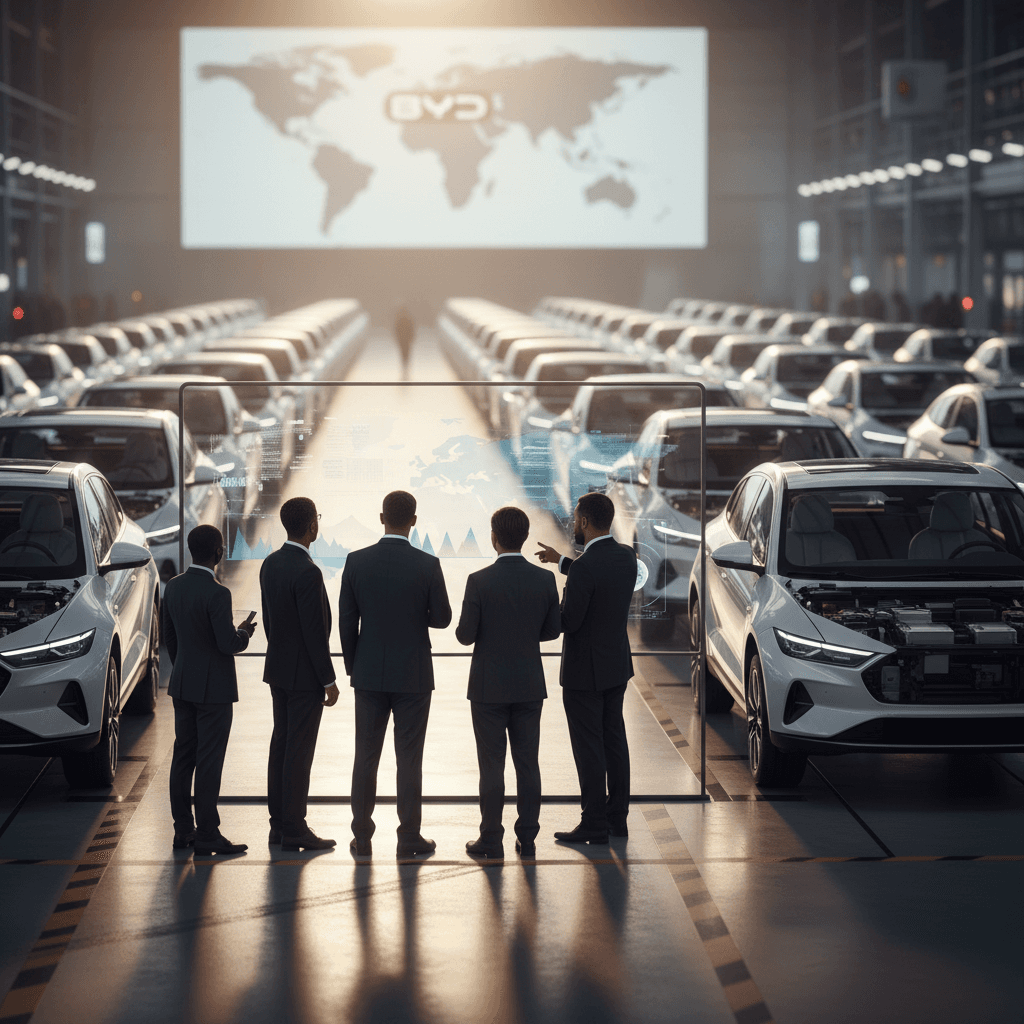
BYD Group
World-scale battery giant turned EV powerhouse. Sells everything from $10,000 city EVs to high-priced luxury off-roaders.
Key brands: BYD, Denza (with Mercedes origins), Yangwang, Fangchengbao.
SAIC Motor
State-backed giant with deep international roots. Uses historic Western badges to go global.
Key brands: MG (popular in Europe), Roewe, plus joint ventures with VW and GM.
Geely Group
Private conglomerate with a stake in Volvo and Polestar. Runs a whole constellation of EV brands.
Key brands: Geely, Zeekr, Geometry, Lynk & Co, plus Volvo/Polestar ties.
The “New EV” trio
Venture-backed tech darlings positioning themselves as China’s answer to Tesla.
Key brands: NIO, XPeng, Li Auto (Li Xiang).
Mainstream & value players
Brands focused on high-volume, lower-cost EVs for China and emerging markets.
Key brands: GAC Aion, Wuling (GM joint venture), Chery’s Exeed/Sterra, Great Wall’s Ora.
Electronics & tech crossovers
New entrants from outside the traditional auto world.
Key brand: Xiaomi (SU7 sedan and YU7 SUV), aiming to fuse smartphones, smart homes, and EVs into one ecosystem.
How to think about Chinese brands
Spotlight on the key Chinese electric car brands
BYD: From battery maker to global EV superpower
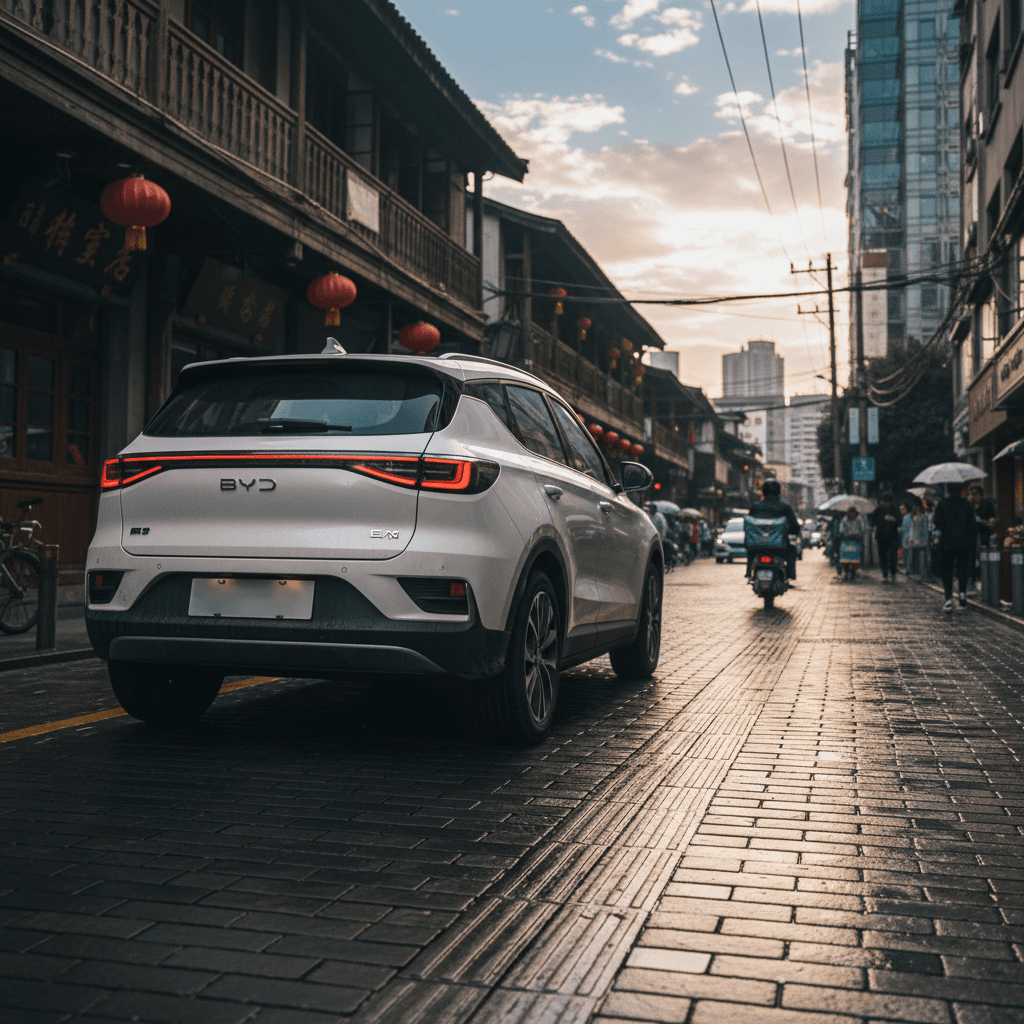
BYD started as a battery company and has leveraged that expertise into one of the broadest EV lineups on Earth. It builds its own Blade Battery, prized for safety and longevity, and sells everything from the tiny Seagull city car to the Qin L EV sedan and Tang SUV.
In 2024 BYD’s passenger vehicle sales jumped more than 40%, with overseas shipments surging as it pushed deeper into Europe, Southeast Asia, and Latin America. Its strategy is unapologetically aggressive: undercut rivals on price, beat them on efficiency, and flood the zone with product.
NIO: Tech-forward luxury with battery swap
NIO aims upmarket. Think sleek sedans like the ET5 and large SUVs, wrapped in minimalist interiors and heavy on driver-assist tech. Its calling card is battery swapping: instead of waiting to fast-charge, you roll into a station and get a fresh pack in minutes.
NIO remains focused on China but is steadily building out in Europe, including dozens of swap stations. It’s not cheap, but it’s influential, especially around subscription batteries and software-defined cars.
XPeng: Autonomy first, design second
XPeng has built its brand around software and autonomy: its XPILOT system now includes advanced highway and parking features, and newer models such as the G6 crossover and Mona M03 sedan are designed to showcase those abilities.
XPeng has tested its driver-assist stack in Europe and is clearly playing the long game: get the tech right, then scale exports when the politics and tariffs allow.
Li Auto: Big family SUVs with a twist
Li Auto’s core audience is Chinese families that want space, comfort, and long range. Most of its early success came from range‑extender SUVs, EVs with a small gasoline engine acting as a generator, before it moved more decisively into pure battery-electric vehicles.
In 2024 it sold roughly half a million SUVs in China alone, a staggering figure for a company that didn’t exist 10 years ago.
Budget and city-car heroes: Wuling, Aion, Ora and more
Beneath the Teslas and luxury crossovers lives the beating heart of China’s EV story: small, cheap, city-focused electric cars that move millions of people every year.
- Wuling (SGMW): Maker of the wildly popular Hongguang Mini EV, basic, boxy, and city-only, but priced closer to a laptop than a traditional car. In 2024 Wuling sold over 1.5 million vehicles, more than half of them “new energy” (EV or plug‑in hybrid).
- GAC Aion: Focuses on affordable but relatively spacious EVs and crossovers. Roughly 375,000 sales in 2024, plus a new plant in Thailand to serve Southeast Asia.
- Great Wall Ora: Retro-styled small EVs (think cartoon Beetle meets iPhone) designed to be charming as well as practical. Targeted heavily at urban buyers and style-conscious drivers.
- Chery & Exeed/Sterra: Chery’s EV push includes more premium-leaning models under Exeed and Sterra, chasing younger buyers who want design and tech but still watch the price tag.
Why these matter globally
Tech, luxury, and performance brands to know
Beyond basic transport: China’s high-end EV badges
These brands chase Tesla, BMW, and Mercedes on tech, design, and performance
Zeekr (Geely)
Premium, European-flavored EVs with clean design and strong performance. The Zeekr 001 and 007 target the same shoppers eyeing a Model 3, Model Y, or Polestar 2.
Yangwang (BYD)
BYD’s ultra-luxury sub-brand, with six-figure SUVs that do tank turns and show off individual wheel drive tech. Mostly a halo brand, but proof of how far upmarket Chinese EVs now reach.
Fangchengbao (BYD)
Translated loosely as “Formula Leopard,” this sub-brand builds off-road and performance‑oriented plug‑in SUVs. Think Wrangler energy, with batteries.
Xiaomi EV
Smartphone giant Xiaomi leapt into cars with the SU7 sedan and YU7 SUV, leaning heavily on software, connectivity, and its existing user ecosystem.
Denza (BYD + Mercedes roots)
Originally a joint venture with Mercedes‑Benz, Denza now focuses on upscale family EVs and MPVs with plush interiors and long-range batteries.
Onvo (NIO)
NIO’s mass‑market spin-off. The first model, the Onvo L60, went on sale in 2024, targeting mainstream families that can’t stretch to NIO’s higher prices.
Where you’ll actually see these brands on the road
Chinese EV brands by region
Chinese electric car brands are global now, but not everywhere in the same way.
| Region | Most visible Chinese brands | Typical role in market | What drivers notice first |
|---|---|---|---|
| China | BYD, Wuling, Aion, NIO, XPeng, Li Auto, Geely, Chery, Great Wall | Dominant domestic players in almost every segment | Low prices, dense model lineup, fast tech cycles |
| Europe & UK | MG (SAIC), BYD, NIO, Zeekr, Ora, Aiways (limited) | Strong challengers to VW, Stellantis, Renault in value and tech | Aggressive pricing, long range, generous standard equipment |
| Southeast Asia | BYD, Aion, Wuling, SAIC (MG), Chery | Rapidly growing presence in Thailand, Indonesia, Malaysia | Cheaper than Japanese rivals, often with better in-car tech |
| Middle East & Latin America | BYD, Chery, Great Wall, SAIC (MG) | Fleet sales, taxis, ride‑hailing, plus growing retail | Range and cabin comfort at unexpectedly low prices |
| United States | Very limited direct presence; some Polestar, Volvo, and Tesla models built in China | Indirect influence through Chinese-built cars and tariff debates | Chinese-built cars wearing Western badges; political controversy more visible than the cars themselves |
For US drivers, most exposure to Chinese brands is still indirect, via Chinese-built models from Western manufacturers.
A quick note on US policy
Pros and cons of Chinese electric car brands
The upsides
- Price-to-hardware ratio: You often get more battery, more range, and more tech for the money than Western or Japanese rivals.
- Battery expertise: Companies like BYD supply packs to other automakers; LFP chemistry and Blade-style designs favor durability and safety.
- Feature density: Panoramic cameras, advanced driver-assist, huge screens, and over-the-air updates are often standard, not optional.
- Fast iteration: Product cycles move quickly. Bugs are squashed and refreshes arrive in years, not decades.
The trade-offs
- Brand unknowns: Outside China, resale values and long-term durability aren’t as well documented as, say, Toyota or Honda.
- Service networks: In newer export markets, dealer coverage and parts logistics can lag behind the excitement.
- Software polish: The tech is ambitious, but UX and localization sometimes feel like beta versions shipped to paying customers.
- Policy risk: Tariffs and political tensions can change the math on pricing and availability overnight, especially in the US and EU.
What this means if you’re buying a used EV in the US
If you’re shopping for a used EV in the United States, you might reasonably ask: Why should I care about Chinese electric car brands if I can’t even buy one new? Three reasons.
- Price pressure on everyone else: Chinese EVs set a global benchmark on cost and features. When BYD sells a competent compact EV for the equivalent of $15,000–$20,000 abroad, it forces US and European brands to sharpen their used and new-car pricing over time.
- Chinese-built cars with Western badges: Some EVs from brands like Tesla, Volvo, Polestar, and others are built in China, even if the badge on the grille isn’t Chinese. The factory ZIP code may matter more than the logo when it comes to build techniques and supply chains.
- Battery tech migration: Chinese innovations, especially in LFP chemistry and pack design, are increasingly being licensed, copied, or partnered into non-Chinese brands. You’ll see the tech long before you see the badges.
How Recharged fits into this picture
How to evaluate a Chinese-built EV (new or used)
Practical checklist for assessing a Chinese-built EV
1. Focus on battery chemistry and warranty
Find out whether the car uses LFP or NMC chemistry, the pack size (kWh), and the original warranty terms. LFP packs, common in Chinese EVs, tolerate more charge cycles and frequent fast‑charging, which can be a plus for used buyers.
2. Look up crash tests and safety ratings
Check Euro NCAP, ANCAP, or local equivalents. Many Chinese EVs now score four or five stars, but results can vary widely by model and year.
3. Check software support and updates
Confirm whether the car still receives over‑the‑air updates, map data, and security patches. Tech‑centric brands like NIO and XPeng live or die on software upkeep.
4. Investigate service and parts coverage
Is there an official importer or dealer in your region? How far is the nearest authorized service center? Lack of support can turn a bargain into a headache.
5. Verify charging compatibility
For North America, check connector type (NACS vs CCS), DC fast‑charge speeds, and whether any adapters are required. For imports, make sure regional charging standards have been properly supported.
6. Use third-party or marketplace diagnostics
Whether you’re buying from a dealer or peer‑to‑peer, insist on a battery health report or independent diagnostics. On platforms like Recharged, this comes built‑in via the Recharged Score, so you’re not guessing about the pack’s life left.
Be wary of orphaned models
FAQ: Chinese electric car brands
Frequently asked questions about Chinese electric car brands
Bottom line: A new center of gravity for EVs
For more than a century, the gravitational center of the car world sat over Detroit, Stuttgart, Tokyo. In electric vehicles, that center has shifted decisively toward Shenzhen, Shanghai, and the large industrial belt of coastal China. Chinese electric car brands now set global reference points on price, battery technology, and software pace, whether or not you ever see a BYD badge in your grocery-store parking lot.
As a shopper, you don’t have to root for or against that reality. You just have to recognize it and use it to your advantage: more competition, better deals, and faster innovation. And when you’re ready to choose a used EV, no matter which country stamped the VIN, make sure you’re looking at real battery health, honest pricing, and expert guidance. That’s exactly what Recharged exists to provide, so you can pick the EV that fits your life, not just the logo that fits your keychain.