If you follow the EV world, you’ve noticed a shift: in 2026, Chinese electric car brands are no longer a side story, they’re setting price expectations, pushing software innovation, and reshaping global supply chains. Understanding the key Chinese electric car brands 2026 isn’t just trivia; it’s crucial context if you care about where EV prices, technology, and availability are headed over the next few years.
China’s EV dominance in one sentence
Why Chinese electric car brands matter in 2026
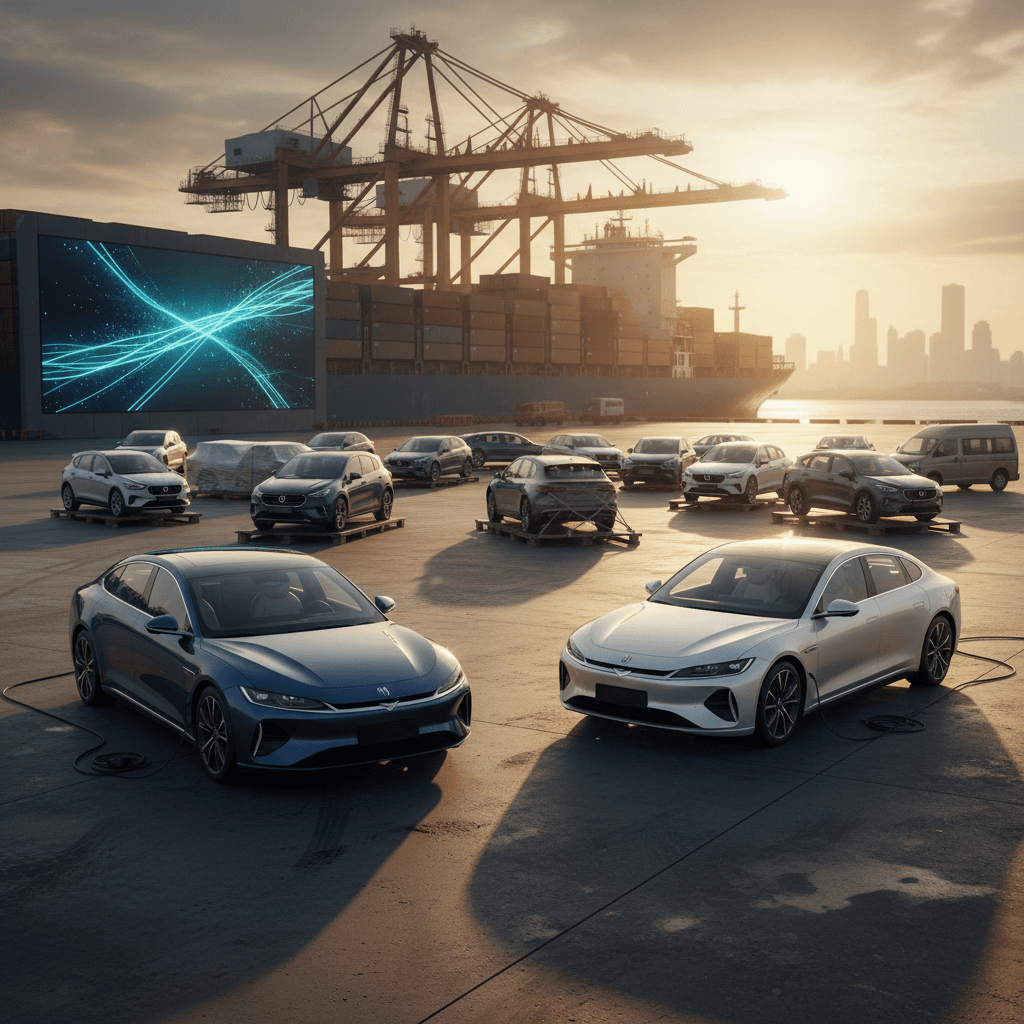
Chinese manufacturers have turned the EV transition into a scale game. Brands like BYD, NIO, XPeng, Zeekr, Li Auto, GAC Aion, and Voyah are building high-volume, highly localized supply chains, and they’re exporting more aggressively every year. In 2025, China exported well over a million EVs, and 2026 is on track to set new records. That global push is colliding with Western tariffs and political backlash, but it’s also forcing legacy automakers to cut prices and accelerate their own EV plans.
China’s EV industry by the numbers
For U.S. drivers, especially used EV shoppers, the impact is subtle but real. Even if you never buy a Chinese-branded EV, their low-cost models put competitive pressure on global pricing. Over time, that helps pull down the cost of both new and used EVs available through platforms like Recharged.
Quick overview: Top Chinese electric car brands in 2026
Key Chinese EV brands to know in 2026
From mass-market value to premium tech, each brand plays a different role.
BYD
Position: Global volume leader, from budget to luxury.
Notable models: Dolphin, Atto 3/Yuan Plus, Seal, Seagull, Denza N7, Yangwang U8.
Why it matters: Sets global price floor for small and midsize EVs.
NIO
Position: Premium EV brand with battery swapping and strong software focus.
Notable models: ET5, ES6, EL7/ES7.
Why it matters: Pioneer of subscription-style batteries and high-touch ownership experience.
XPeng
Position: Software-forward, highway automation and smart cockpit tech.
Notable models: G6, G9, P7 series.
Why it matters: Aggressively pushes advanced driver-assist and OTA features at mid-market prices.
Zeekr
Position: Geely’s premium-performance EV brand.
Notable models: Zeekr 001, Zeekr X, Zeekr 007.
Why it matters: Competes with German premium brands in Europe on performance and tech.
Li Auto
Position: Family-focused large SUVs, many with range extenders.
Notable models: L7, L8, L9, Mega.
Why it matters: Shows there’s still strong demand for long-range, three-row family EVs.
GAC Aion & Voyah
GAC Aion: Value-oriented EVs with strong domestic sales.
Voyah (Dongfeng): Premium crossovers and SUVs with growing European presence.
Why they matter: Illustrate how China’s “second wave” of EV brands is scaling rapidly.
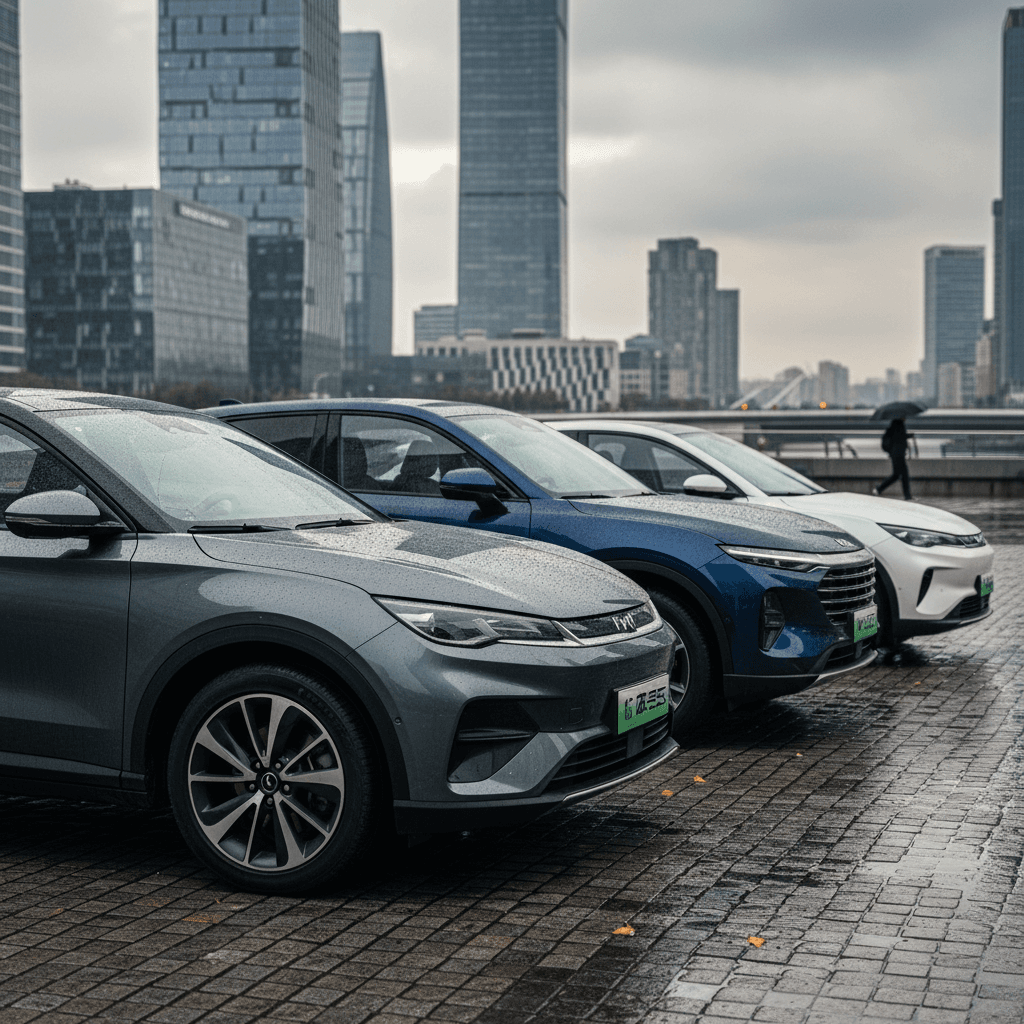
1. BYD: The volume king and budget EV benchmark
If you remember only one name from any guide to Chinese electric car brands 2026, make it BYD. Once a battery maker, BYD is now the world’s largest producer of plug-in vehicles by volume. In 2024 it sold over 4 million new energy vehicles and has used that scale to drive down costs on everything from battery packs to inverters.
- Brand structure: Core BYD brand (Dolphin, Seal, Song, Yuan Plus/Atto 3), plus Denza (premium), Yangwang (ultra-luxury), Fangchengbao (off-road/lifestyle), and Linghui for commercial and fleet-focused EVs.
- Global footprint: Rapid expansion across Europe, Latin America, the Middle East, and parts of Asia-Pacific. Models like the Atto 3 and Dolphin are now common sights in European registration charts.
- Product breadth: From sub-$15,000 equivalent city cars like the Seagull in China to six-figure luxury SUVs like the Yangwang U8.
Why BYD matters for non-Chinese buyers
BYD’s in-house "Blade" LFP battery technology is also a big reason you see more affordable long-range EVs globally. It sacrifices some cold-weather performance and ultimate energy density compared with premium NMC cells, but the cost, durability, and safety advantages make it perfect for mass-market vehicles.
2. NIO: Premium EVs and battery swapping
At the opposite end of the spectrum from bare-bones commuter EVs, NIO is trying to reinvent the premium ownership experience. It sells sleek sedans and SUVs with long range, polished interiors, and one of the most ambitious battery-swapping networks in the world.
What NIO sells
- ET5 / ET5 Touring: Compact premium sedans aimed at Model 3 and BMW 3 Series drivers.
- ES6 / EL7 (ES7): Mid-size SUVs with upscale cabins, long range, and strong performance.
- Flagship models: Larger SUVs and sedans aimed at Mercedes and BMW’s upper ranges.
How NIO is different
- Battery-as-a-service: Option to separate the car purchase from the battery, lowering upfront cost and paying a monthly fee instead.
- Battery swapping: Hundreds of automated swap stations where a depleted pack can be changed in minutes.
- Community ecosystem: NIO Houses, lounges, and concierge-style service aimed at building brand loyalty.
NIO in Europe vs. China
3. XPeng and 4. Zeekr: Software-first and performance-focused
Where NIO leans into hospitality and swapping, XPeng and Zeekr are more direct tech plays. They’re less about white-glove ownership experiences and more about making advanced driver assistance, big batteries, and strong performance feel mainstream.
XPeng vs. Zeekr at a glance
Two different answers to the same question: what does a tech-forward EV look like?
XPeng
- Key models: G6 and G9 crossovers, P7 sports sedan.
- Signature tech: Advanced driver-assist suites and highway autonomy features at mid-market prices.
- Positioning: Somewhere between Tesla and a traditional compact premium brand, more tech than most, but with keen pricing.
Zeekr (Geely)
- Key models: Zeekr 001 shooting brake, Zeekr X small SUV, Zeekr 007 sedan.
- Signature tech: Strong performance, long-range packs, and upscale interiors targeting Audi/BMW/Mercedes buyers.
- Positioning: The “cool premium” end of Geely’s portfolio, often sharing tech with Volvo and Polestar.
Don’t assume one “Chinese EV” template
5. Li Auto and 6. GAC Aion: Family haulers and value plays
If you look at what actually sells in China, big family vehicles and good value are powerful themes. Li Auto and GAC Aion embody that shift as well as any brands.
Li Auto: XXL family SUVs
Li Auto built its reputation on large, three-row SUVs with range extenders, essentially plug-in hybrids with big batteries that can run as EVs for daily driving and rely on a gasoline generator for long trips.
- Core audience: Families in suburbs and smaller cities who want space and flexibility.
- Transition path: Gradually adding more pure BEVs alongside range-extended models.
GAC Aion: Value and volume
GAC’s Aion brand leans on efficient manufacturing and competitive pricing. It quietly delivered hundreds of thousands of EVs in 2024 and continues to be a top-five player at home.
- Portfolio: Compact and mid-size crossovers and sedans with pragmatic specs rather than flashy marketing.
- Global angle: Early export steps into Southeast Asia and the Middle East, and a toe in the European market.
Why these “boring” brands matter
7. Voyah and emerging brands like Xiaomi
Beyond the top-tier players, there’s a long tail of ambitious brands fighting for mindshare at home and abroad. Voyah, the premium EV arm of state-owned Dongfeng, has focused on stylish crossovers and SUVs and is one of several Chinese brands building a retail presence in Europe. At the same time, newcomers like Xiaomi, better known for smartphones, are treating cars as hardware platforms for software ecosystems.
- Voyah: Mid- to large-size crossovers and SUVs with premium interiors, competitive range, and pricing that often undercuts European incumbents.
- Xiaomi: Launched the SU7 sedan and quickly ramped deliveries, leveraging its consumer electronics ecosystem and software UX experience.
- Others: Leapmotor, Hozon/Neta, and a long list of regional players that might never export widely but help push down component and battery costs through scale.
The software platform play
Chinese EV brands outside China: Europe, U.S., and beyond
The most visible battleground for Chinese EV brands in 2026 is Europe. BYD, MG (owned by China’s SAIC), Zeekr, and others have steadily climbed registration charts, with some models cracking top-10 EV lists in markets like the UK, Norway, and the Netherlands. Chinese brands are also pushing into Latin America, the Middle East, and Southeast Asia with aggressive pricing and local assembly plans.
Where Chinese EV brands are most visible in 2026
Regions where consumers are most likely to encounter Chinese-branded EVs.
| Region | Chinese brands commonly seen | Market status in 2026 | U.S. buyer takeaway |
|---|---|---|---|
| Western Europe | BYD, MG, Zeekr, NIO, XPeng, SAIC Maxus | Fast-growing presence; some models among top-selling EVs in certain countries. | Signals how aggressively pricing could move if tariffs soften elsewhere. |
| Eastern Europe | MG, BYD, Chery, Great Wall (Ora), others | Mix of fully built imports and local assembly projects. | Lower-cost EVs here increase pressure on EU incumbents, indirectly shaping global strategies. |
| Latin America | BYD, GWM, Chery, others | Rapid bus and taxi electrification; passenger EVs gaining share. | Fleet deals help Chinese brands gain scale and brand recognition. |
| Middle East & Africa | BYD, GAC Aion, Chery, Geely group brands | Early adoption with government and corporate fleet orders. | These regions help absorb Chinese production beyond China and Europe. |
| United States | Very limited, mostly via niche importers or non-passenger vehicles | High tariffs and political scrutiny limit direct Chinese EV sales. | Impact is indirect, via pricing pressure on global rivals and component supply chains. |
Visibility is shaped by tariffs, local incentives, and how quickly regulators respond to low-priced imports.
Why you don’t see many Chinese EVs in U.S. showrooms
Tariffs, regulation, and supply chain: What could slow them down?
For all the momentum behind Chinese electric car brands in 2026, there are real headwinds. The United States and European Union have both moved to impose or increase tariffs on Chinese-built EVs, arguing that heavy subsidies and industrial policy distort fair competition. China, for its part, now requires export permits for new energy vehicles from 2026 onward to better manage where and how its EVs flow abroad.
- Trade friction: Tariffs, anti-subsidy investigations, and potential quotas could limit how many Chinese EVs reach Western markets and at what price.
- Regulatory scrutiny: Concerns over data privacy, over-the-air connectivity, and cybersecurity mean Chinese brands face higher hurdles for approvals, especially where in-car data might leave the country.
- Supply chain realignment: To work around tariffs, Chinese automakers are weighing factories in Europe, Mexico, and other regions, which could change cost structures but may be the price of market access.
Don’t underestimate politics
What this means if you’re shopping for an EV in the U.S.
If you’re in the United States, you might reasonably ask: "So what? I can’t just walk into a dealer and buy a Zeekr or BYD." That’s true today, but the influence of Chinese electric car brands 2026 still shows up in three important ways: pricing, technology expectations, and used EV availability.
How Chinese EV brands shape your choices, even if you never buy one
1. Downward pressure on prices
When BYD can profitably build a usable small EV for well under $20,000 equivalent, Western automakers can’t justify $40,000 price tags on basic transportation forever. That competition has already forced price cuts and richer incentives on many U.S. models.
2. Better tech even in mid-priced EVs
Chinese brands are normalizing big screens, robust driver assistance, heat pumps, and strong fast-charging performance at mainstream prices. U.S. and European brands have to respond, which means more features trickling down even on models that eventually show up on the used market.
3. More variety in the used EV ecosystem
Over time, as automakers react to this competition with more efficient platforms and lower-cost trims, those vehicles become the <strong>used EVs</strong> you’ll see on marketplaces like Recharged, at lower price points and with better range than the first EV wave.
4. Faster innovation cycles
Dozens of competing Chinese brands iterate rapidly on vehicle refreshes and software. That accelerates the global pace of change, which can make slightly older EVs even better value used, provided you understand battery health and software support.
Where Recharged fits in
If you’re cross-shopping a slightly older U.S. or European EV against a newer, more aggressively priced model, understanding total cost of ownership is crucial. That’s where transparent battery health reports, fair market pricing, and EV-specialist support can save you from buying something that looks cheap up front but disappoints on range or depreciation.
FAQ: Chinese electric car brands in 2026
Frequently asked questions about Chinese EV brands in 2026
Bottom line: Chinese EV brands are rewriting the playbook
By 2026, the story of Chinese electric car brands isn’t about whether they can build competitive EVs, they already do. The real question is how quickly trade rules, politics, and local manufacturing catch up with the economics of their scale. BYD, NIO, XPeng, Zeekr, Li Auto, GAC Aion, Voyah, and a long list of others have set a new baseline for what an EV can offer at a given price.
For U.S. buyers today, that means more pressure on legacy automakers to lower prices, improve software, and design EVs that are genuinely competitive on a global stage. As those vehicles age into the used market, platforms like Recharged help you capture the upside of that global arms race, transparent battery health, fair pricing, and EV‑specialist guidance, without having to navigate the geopolitics yourself.