If you live in Pennsylvania, you’re feeling two forces at once: higher gasoline prices and higher electricity rates. That makes the question “Should I switch to an electric car in Pennsylvania?” more complicated than a simple yes or no. The right answer depends heavily on how you drive, where you live, and whether you’re looking new or used.
Key takeaways for Pennsylvania drivers
Is an electric car right for you in Pennsylvania?
- Above‑average electricity prices, roughly 18¢/kWh for residential customers in 2025–2026, a bit higher than the U.S. average.
- Plenty of highway fast charging along I‑76, I‑80, I‑81, I‑95 and the Turnpike, but patchier coverage in rural counties.
- Cold winters and hilly terrain that can shave 20–40% off rated range.
- State rebates and federal tax credits that can take thousands off the price of a qualifying EV.
Pennsylvania EV landscape at a glance
Quick checklist: should you switch now or wait?
5‑minute self‑assessment for Pennsylvania drivers
1. Can you plug in at home most nights?
If you have a driveway or garage where you can install at least a 120V outlet (Level 1) or, ideally, a 240V Level 2 charger, you’re in a great position. Apartment/rowhouse street parking without dedicated charging makes EV ownership in PA much harder and more expensive.
2. How many miles do you drive per year?
If you drive <strong>10,000–15,000 miles a year or more</strong>, the fuel and maintenance savings of an EV in Pennsylvania usually outweigh higher purchase prices over time. If you drive under 7,000 miles a year, savings are smaller and convenience factors may matter more.
3. Do you regularly take 200+ mile trips?
Frequent Turnpike or I‑80 runs are doable in an EV thanks to the growing fast‑charging network, but you’ll be planning charging stops and accepting longer travel times. If you mostly drive locally, an EV is much easier to live with.
4. Are you eligible for incentives?
Stacking the federal Clean Vehicle Credit with Pennsylvania’s Alternative Fuel Vehicle Rebate can knock thousands off a qualifying new or used EV. If you don’t qualify for those, a competitively priced used EV may still make sense, but the payback period will be longer.
5. How long do you usually keep cars?
If you swap cars every 2–3 years, you’re exposed to faster EV depreciation. If you typically keep vehicles 7–10 years, you’re in the sweet spot where low running costs and stable technology make an EV increasingly compelling.
A simple rule of thumb
Pennsylvania EV incentives and the new Road User Charge
Pennsylvania sweetens the deal on EVs with state rebates, but it also now charges EV owners a Road User Charge to replace gas taxes. You need to understand both sides of that ledger.
Key EV financial policies in Pennsylvania (2025–2026)
Major state and federal programs that materially change EV affordability for PA residents.
| Program | Applies To | Typical Amount | Key Conditions |
|---|---|---|---|
| PA Alternative Fuel Vehicle Rebate (AFV) | New or used BEV/PHEV registered in PA | Up to about $2,000 for BEVs, less for PHEVs | Must be a Pennsylvania resident, purchase/lease from a dealer, meet price and income caps; funding is limited each program year. |
| Federal Clean Vehicle Credit | New qualifying EVs | Up to $7,500 federal tax credit | Income limits, vehicle MSRP caps, and North American assembly and battery sourcing rules apply. |
| Federal Used Clean Vehicle Credit | Used qualifying EVs | Up to $4,000 or 30% of price | Vehicle must be at least 2 years old, under $25,000 purchase price, and bought from a dealer; income caps apply. |
| PA Road User Charge (RUC) | Most light‑duty EVs registered in PA | Annual fee in lieu of gas tax | Began April 1, 2025; amount varies by vehicle type and is paid alongside registration renewal. |
Always confirm current program terms before you buy; amounts and eligibility can change year to year.
Don’t forget the Road User Charge
The upshot is this: if you qualify for both a federal tax credit and the Pennsylvania AFV rebate on a relatively efficient EV, the upfront incentives can easily outweigh several years of the Road User Charge. If you buy a more expensive EV that doesn’t qualify for incentives, or you lease for short terms, the math gets murkier and you have to look more closely at your specific driving.
EV vs gas costs in Pennsylvania
Because Pennsylvania’s electricity is relatively pricey, you can’t just assume an EV will be dramatically cheaper to run than a gas car. You need to compare energy costs per mile, not just per gallon or per kWh.
Home charging vs public fast charging in PA
Two very different cost stories for the same electric car
Scenario A: Mostly home charging
Assumptions:
- 18¢/kWh residential electricity
- EV averages 3.2 miles/kWh year‑round
- 90% of charging done at home
Cost per mile: about 5.6¢/mile.
Gas comparison: A 30‑mpg car at $3.50/gallon costs roughly 11.7¢/mile. So home‑charged EV driving is about half the cost per mile, even with higher PA electricity rates.
Scenario B: Heavy DC fast charging
Assumptions:
- Public fast charging at ~40–50¢/kWh
- Same 3.2 miles/kWh efficiency
- Most charging done on the road
Cost per mile: around 13–16¢/mile.
Gas comparison: Now the EV is roughly on par with, or more expensive than, a 30‑mpg car at $3.50/gallon. You’ll still save a bit on maintenance, but energy savings mostly disappear.
Energy cost takeaway
You should also factor in maintenance. EVs in general skip oil changes, timing belts, exhaust repairs, and many transmission issues. Over 5–8 years, that can easily save you a few thousand dollars versus a similarly priced gas car, especially if you drive a lot. That additional savings tilts the scale further toward EVs for high‑mileage Pennsylvania drivers.
Can you actually charge easily in Pennsylvania?

On paper, Pennsylvania looks reasonably well served: over 2,100 public charging locations and more than 6,000 charging ports as of 2026, with about a third of them DC fast chargers. In practice, those chargers are heavily concentrated along interstate corridors and in metro areas like Philadelphia, Pittsburgh, Allentown–Bethlehem, and the Harrisburg–Lancaster–York region.
Good news for many PA drivers
- Turnpike and interstate travel is well covered by DC fast charging from networks like Electrify America, Tesla Supercharger (increasingly open to non‑Tesla EVs), and others.
- Suburban homeowners around major cities often have easy access to both home charging and backup public Level 2 options at workplaces, shopping centers, and municipal lots.
- Urban hubs are seeing more curbside and parking‑garage chargers, especially where NEVI federal funds are being deployed.
Where EV ownership is still tricky
- Older rowhouse neighborhoods in Philadelphia and Pittsburgh with limited off‑street parking face real challenges for overnight charging.
- Rural counties off the main highways may have large gaps between fast chargers, demanding more planning and tolerance for slower Level 2 stops.
- Condo and apartment dwellers sometimes struggle to get HOA or landlord approval and funding for installing shared chargers.
Practical step before you buy
How PA winters and hills affect EV range
Cold temperatures and elevation changes are two of the biggest reality checks for EV range, and Pennsylvania has plenty of both. Batteries are less efficient in the cold, and cabin heating draws more power than many first‑time EV owners expect. Long grades on I‑80 or the Turnpike can further increase consumption on the way up, even though regenerative braking gives some energy back on the way down.
Typical range impacts for Pennsylvania driving
Not exact numbers, but realistic ballparks so you aren’t surprised
Mild weather, mixed driving
Conditions: 50–75°F, mix of city and highway at 45–65 mph.
Impact: Many EVs will hit or slightly beat their EPA range if you’re not constantly at 75+ mph.
Cold winter commuting
Conditions: 20–35°F, preheating, short trips with frequent stops.
Impact: Expect 20–30% less range than the EPA rating due to cabin heating and cold‑soaked batteries.
Hilly highway road trips
Conditions: Winter, 70–75 mph, long grades (e.g., I‑80, Turnpike).
Impact: Combining speed, cold, and hills, you can see 30–40% less usable range versus the window sticker on some segments.
Range anxiety vs routine reality
Who benefits most from switching in PA?
Profiles that usually do well with EVs in Pennsylvania
If you see yourself below, an EV is probably worth serious consideration
Suburban commuter with driveway
You live in the suburbs of Philly, Pittsburgh, Allentown, or another metro area, drive 40–70 miles a day, and have a driveway or garage.
- Overnight Level 2 charging covers virtually all daily needs.
- High annual mileage makes fuel and maintenance savings meaningful.
- Public fast charging is available for occasional trips.
Environment‑minded multi‑car household
Your family has two cars and at least one parking spot with access to power.
- You can make the EV the default for commuting and errands.
- The remaining gas car handles edge‑case trips, towing, or extremely rural travel.
- This setup often delivers the best mix of cost savings and convenience.
Urban delivery or rideshare driver
You put a lot of miles on your vehicle and can reliably access overnight charging (home or depot).
- High utilization magnifies EV fuel and maintenance savings.
- Predictable routes make planning charging straightforward.
- Some commercial programs and utility rates further improve economics.
Value‑focused shopper eyeing used EVs
You’re shopping in the used market, can live with ~200 miles of real‑world range, and care more about low running costs than the latest tech.
- Used EVs avoid new‑car depreciation and often still qualify for a federal used‑EV credit.
- Inexpensive electricity plus simple maintenance can dramatically lower monthly costs.
When it might make sense to wait
- You have no realistic path to home or workplace charging and rely on street parking in a neighborhood with few chargers.
- You drive mostly in very rural parts of Pennsylvania far from interstates, and can’t tolerate longer stops if a charger is down or occupied.
- You replace cars frequently and are very sensitive to depreciation, especially on new, high‑MSRP models that don’t qualify for strong incentives.
- You tow heavy loads or routinely need 400+ miles of range in winter without stopping, and keeping your existing truck plus perhaps adding a plug‑in hybrid feels more practical.
Red flags for a first EV in PA
Why used EVs are a sweet spot in Pennsylvania
From a total‑cost‑of‑ownership perspective, used EVs are where a lot of the smartest money is going in 2026, especially in markets like Pennsylvania with moderate incentives and relatively high energy prices. You’re letting the first owner absorb the steepest depreciation and, in many cases, still getting plenty of range for real‑world use.
Advantages of buying a used EV in PA
Why the math often looks better than new
Depreciation already baked in
Many 3–5‑year‑old EVs have already taken a large value hit from new‑car pricing wars and rapid tech updates. If you buy at this lower plateau and keep the car for another 5–7 years, your depreciation per year often looks similar, or better, than a new gas car.
Real‑world battery data
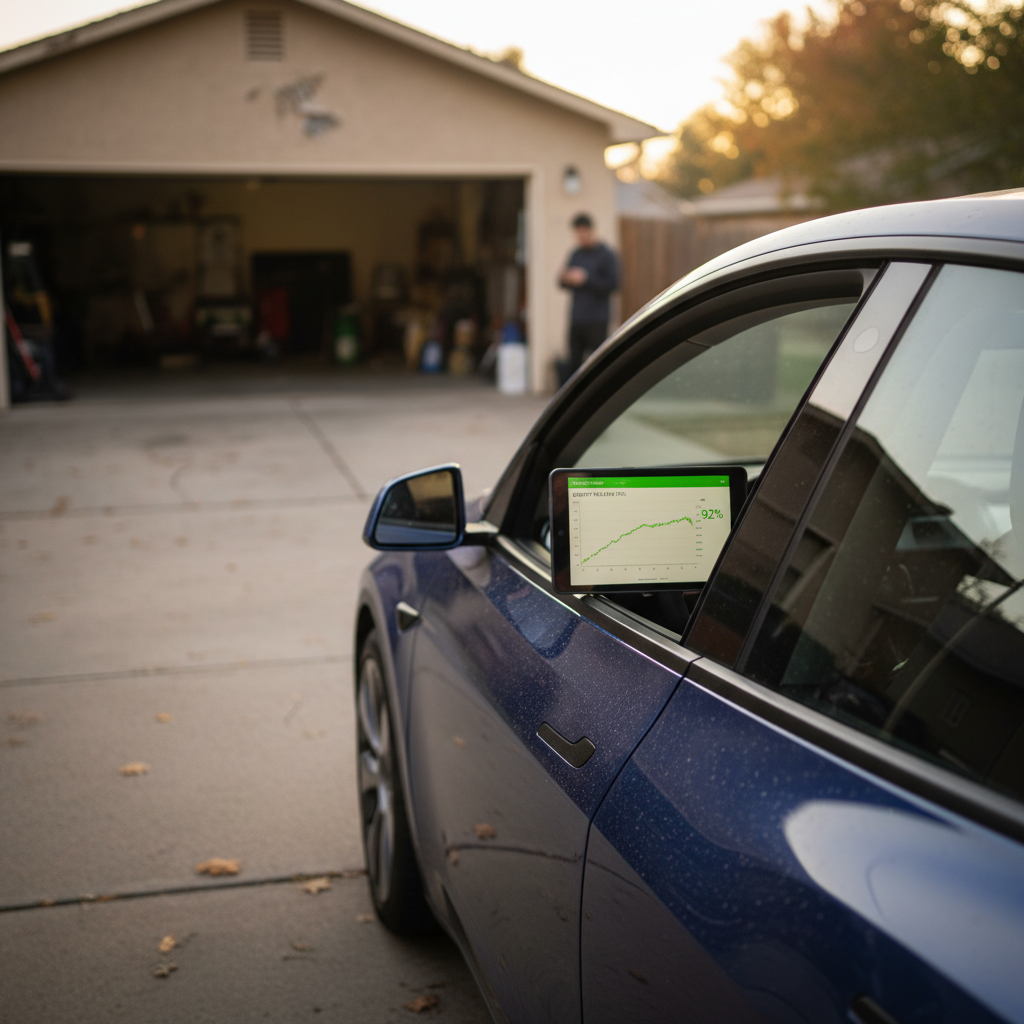
With a used EV, you can look at actual degradation instead of guessing. Tools like the Recharged Score report quantify battery health so you can compare different cars on more than just odometer readings.
Stackable savings
Some used EVs qualify for the federal used EV tax credit, and Pennsylvania’s AFV rebate program has periodically included used EVs under certain conditions. Pair that with lower insurance on lower‑value vehicles and you can drive electric for less than many new compact gas cars.
Battery health matters more than model year
How Recharged fits into your Pennsylvania EV journey
If you decide an EV makes sense for your life in Pennsylvania, your next challenge is finding the right car at the right price, and doing it without gambling on battery health. That’s exactly the problem Recharged was built to solve.
Transparent used EV shopping
- Every vehicle on Recharged comes with a Recharged Score Report that includes verified battery health, not just a generic “good/bad” checkmark.
- Listings are priced against fair market data so you can see how a given car compares to others with similar age, mileage, and equipment.
- You can finance, get a trade‑in offer, and arrange nationwide delivery fully online, which is especially useful if the right used EV isn’t sitting on your local lot in PA.
Support that understands EVs
- Recharged’s specialists are focused on EVs, not juggling oil changes and gas‑car sales, and can talk through range, charging, and battery health in plain language.
- If you’re near Richmond, VA, you can visit the Recharged Experience Center for in‑person help, test drives, and education; otherwise, everything can be done digitally.
- You can also choose between instant offers or consignment if you’re selling an existing vehicle to fund your switch to an EV.
FAQ: Electric cars in Pennsylvania
Common questions about switching to an EV in PA
Bottom line: should you switch to an EV in Pennsylvania?
In Pennsylvania, an electric car isn’t automatically a slam‑dunk or a non‑starter, it’s a tool that either fits your life very well or not quite yet. If you have reliable home charging, drive at least 10,000 miles per year, and can take advantage of federal and state incentives, the total cost of owning an EV, especially a well‑vetted used one, will often undercut a comparable gas car over a 5–8‑year window, even after accounting for higher electricity prices and the new Road User Charge.
On the other hand, if you’re locked into street parking without workplace charging, live far from fast‑charging corridors, or swap cars every couple of years, sticking with a hybrid or efficient gas car a little longer may be the more rational move while infrastructure and policy continue to evolve.
If you’re leaning toward making the jump, your next step is to get concrete: run your own miles‑per‑year, energy‑price, and incentive numbers, and start looking at specific vehicles and battery‑health reports rather than just window‑sticker range. That’s where platforms like Recharged can take the guesswork out of used EV shopping, so your decision to go electric in Pennsylvania is based on clear data, not wishful thinking.