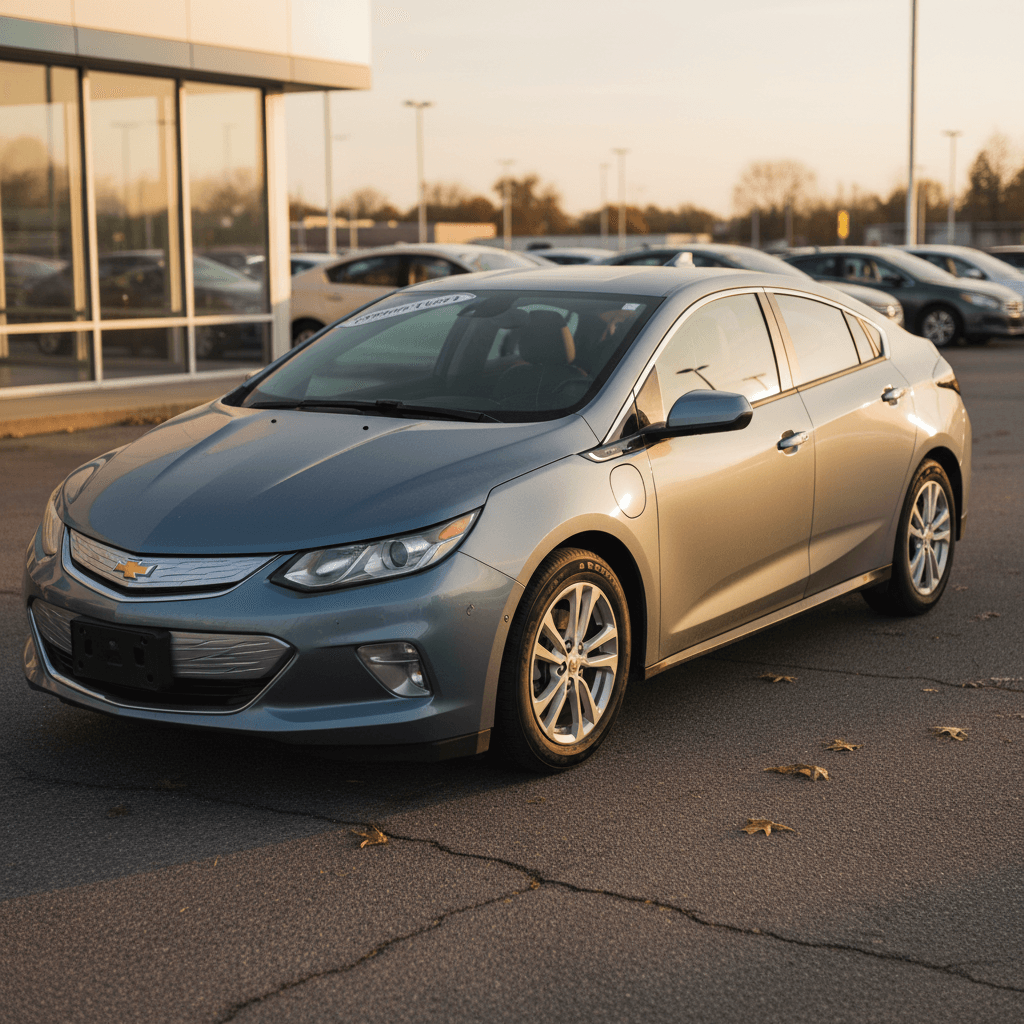
If you’re searching for Chevy Volt prices, you’re probably trying to figure out whether this discontinued plug‑in hybrid is a smart buy in 2025. The Volt sits in a strange spot: it’s not a pure EV, it hasn’t been built since 2019, and yet used prices are still strong. This guide breaks down real‑world Volt prices Chevy shoppers are seeing today, why they look the way they do, and how to decide if a Volt is good value versus other used EVs and plug‑in hybrids.
Key takeaway
Chevy Volt prices in 2025: quick overview
Used Chevy Volt pricing at a glance (late 2025)
- Pricing guides (KBB, CARFAX, etc.) show national averages and “fair purchase prices.” For example, guides peg a typical 2019 Volt LT in the mid‑teens, with Premier trims a bit higher.
- Actual listings on sites like Carfax and marketplace platforms span a wide range, from around $10,000 for higher‑mileage 2016–2018 cars to just under $20,000 for low‑mile, optioned 2019 Premiers.
How much does a used Chevy Volt cost today?
Let’s translate “Volt prices Chevy shoppers see online” into simple, realistic ranges for late 2025 in the U.S. market. These are ballpark figures, not quotes, local supply, incentives, and dealer markups will move the needle either way.
Typical 2025 Chevy Volt price bands (U.S.)
Approximate listing ranges you’re likely to see when shopping used Volts from reputable dealers and private sellers.
| Model year | Generation | Mileage band | Typical asking price | Notes |
|---|---|---|---|---|
| 2011–2013 | 1st gen | 100k+ miles | $6,000–$9,000 | Older, lower EV range, often bargain commuters. |
| 2014–2015 | 1st gen | 80k–120k miles | $7,500–$11,000 | Slightly newer, still limited range and premium gas. |
| 2016–2017 | 2nd gen | 70k–120k miles | $9,500–$13,500 | Much better drivetrain; watch for known 2016–2017 issues. |
| 2018 | 2nd gen | 50k–100k miles | $11,500–$16,500 | Strong sweet spot for many buyers. |
| 2019 | 2nd gen | 40k–90k miles | $12,500–$18,500 | Last model year; low‑mile Premiers can push toward the top end. |
Assumes clean title, no major accidents, and typical mileage for age.
Why your local prices might look different
Chevy Volt prices by model year
Because the Volt was discontinued after the 2019 model year, every Volt on the market in 2025 is at least six years old. Values cluster into two main groups: 1st‑generation cars (2011–2015) and 2nd‑generation cars (2016–2019). For most shoppers, the 2nd‑gen cars are where the pricing and daily‑use experience make the most sense.
Volt pricing by generation: what you get for your money
Both generations are compelling, but they deliver value in different ways.
1st‑gen Volt (2011–2015)
Typical prices: about $6,000–$11,000 in 2025, depending on year and mileage.
- Electric range in the 35–40 mile ballpark.
- Requires premium fuel when the engine runs.
- Great budget commuter if you’re OK with age and older tech.
- Higher chance of cosmetic wear and out‑of‑warranty repairs.
2nd‑gen Volt (2016–2019)
Typical prices: roughly $9,500–$18,500, with many good options in the $12k–$16k range.
- 53 miles of rated electric range.
- Runs on regular gasoline.
- More refined interior and driver‑assist tech.
- Later years (2018–2019) tend to be the safest bet.
Spotlight: 2018–2019 Chevy Volt pricing
- 2018 Chevy Volt: pricing guides and listing data typically show fair‑purchase or average prices in the low‑ to mid‑teens for LT trims, with well‑equipped Premier models pushing higher, especially with low mileage.
- 2019 Chevy Volt: as the final year, 2019s command a modest premium. Real‑world listings commonly run from the low‑teens for higher‑mile LTs up to the high‑teens for low‑mile Premiers.

Why Chevy Volt prices look the way they do
At first glance, Chevy Volt prices can feel high for a discontinued plug‑in hybrid. There are a few structural reasons the market hasn’t collapsed:
- Unique value proposition: The Volt offers genuine EV‑like commuting with its 53‑mile electric range, but you still have a gas backup for road trips. That combination is rare today.
- Limited supply: Production ended after 2019, so every year the pool of decent examples shrinks while awareness of the car’s strengths grows.
- Fuel and charging economics: For many households with 20–40 mile daily commutes, a Volt can run mostly on electricity while burning almost no gas, very compelling with volatile fuel prices.
- Tax credits on used plug‑in vehicles: Depending on your income, the seller, and the car’s price cap, it’s sometimes possible to apply a federal used clean‑vehicle credit to a plug‑in like the Volt, effectively lowering your out‑of‑pocket cost. (Always confirm current rules with a tax professional.)
Why depreciation hasn’t nuked Volt values
How battery health and warranty affect Volt pricing
With any plug‑in vehicle, the battery pack is the single most expensive component. The Chevy Volt’s pack has proven generally robust, but age, fast‑charging habits (for 2019’s faster onboard charger), climate, and mileage can change the picture. Sellers and dealers who can prove strong battery health can ask more, and often get it.
Battery health: what to look for
- Check real‑world EV range on a full charge versus the original ~53‑mile rating.
- Review any battery capacity or health reports if available.
- Look for error messages or reduced‑propulsion warnings in the instrument cluster.
- Ask about fast‑charging and climate use, extreme heat and constant high SOC aren’t ideal.
Warranty & special coverages
- GM’s high‑voltage battery warranty on Volts was typically 8 years/100,000+ miles (exact terms vary by year and state).
- There are also special policy coverages for certain modules and components on later cars.
- A 2018–2019 Volt with remaining battery coverage (by time or mileage) is generally worth more than a similar car that’s fully out of warranty.
How Recharged de‑risks used EV batteries
Ready to find your next EV?
Browse VehiclesChevy Volt prices vs fully electric used EVs
When you zoom out from just “Volt prices Chevy shoppers see” and look at the broader used EV market, the Volt ends up competing with two main groups: older, lower‑range full EVs, and newer but more expensive long‑range EVs. Understanding that landscape helps you decide whether a given Volt price is a bargain or a compromise.
Where the Volt sits in the used EV price landscape
Very high‑level comparison of what similar‑budget EV shoppers are likely cross‑shopping in 2025.
| Vehicle type / example | Typical 2025 used price | Real‑world electric range | Gas backup? |
|---|---|---|---|
| 1st‑gen Volt (2011–2015) | $6,000–$11,000 | ~35–40 miles | Yes |
| 2nd‑gen Volt (2016–2019) | $9,500–$18,500 | ~50+ miles | Yes |
| Older full EV (e.g., 2015–2018 Leaf / i3) | $7,000–$15,000 | ~60–120 miles | No |
| Newer long‑range EV (e.g., Model 3, Bolt EV, Kona EV) | $17,000–$30,000+ | ~220–300+ miles | No |
Exact prices vary by trim, battery size, and incentives, but the relationships are fairly consistent.
The Volt usually undercuts newer long‑range EVs on price but offers a smoother ownership experience than many older, short‑range EVs, especially if your charging situation is uncertain. That’s a big part of why its resale values remain relatively firm.
How to evaluate a specific Chevy Volt listing
Rather than asking whether a price is “good” in the abstract, it’s better to benchmark a specific Volt against your mental price map. Here’s a structured way to do that.
Chevy Volt pricing checklist
1. Start with year & generation
Confirm whether you’re looking at a 1st‑gen (2011–2015) or 2nd‑gen (2016–2019) Volt. If you want the full 53‑mile EV range and regular gas, focus on 2016+ and ideally 2018–2019.
2. Compare mileage to age
Divide the odometer by the car’s age; ~12,000–15,000 miles per year is typical. A 2018 Volt with 80k miles is roughly average; 40k miles is low and justifies a premium.
3. Adjust for trim and options
Premier trims with features like leather, Bose audio, adaptive cruise, and advanced safety tech should cost more than base LTs. Make sure a higher price comes with a higher level of equipment.
4. Ask for battery and charging documentation
Look for service records, battery health reports, and any warranty work on the high‑voltage system. If you’re buying through a platform like Recharged, use the included battery diagnostics in the Recharged Score to sanity‑check the asking price.
5. Check history and title status
Accidents, salvage titles, and frequent owners should push the price down. A clean, one‑owner Volt with documented maintenance can reasonably sit at the top of the range.
6. Benchmark against at least 3 other Volts
Search nationwide listings for the same year/trim/mileage. If a car is $2,000–$3,000 above comparable examples without a clear reason, you can either negotiate or move on.
Don’t ignore cheap outliers
Ways to save on a used Chevy Volt
Volt prices aren’t giveaway‑cheap, but there are smart ways to land on the right side of the value curve without taking on unnecessary risk.
Tactics to bring your Volt cost down
Look beyond the sticker and think in total cost‑of‑ownership terms.
Target the sweet spot years
For most buyers, late‑2nd‑gen cars, especially 2018s with solid service history, offer the best blend of price, age, and range.
Leverage out‑of‑market shopping
Prices can vary dramatically by region. Expanding your search radius and using nationwide delivery options (like Recharged offers) can save more than the cost of shipping.
Explore financing and tax credits
Affordable monthly payments matter more than list price for many households. Platforms like Recharged can help you line up EV‑friendly financing and clarify whether any used clean‑vehicle credits may apply.
Use total fuel savings in your math
FAQ: Chevy Volt prices and value
Frequently asked questions about Chevy Volt prices
Is a used Chevy Volt worth it in 2025?
If you’re hunting for accurate Volt prices Chevy buyers actually pay, the answer is that a healthy 2nd‑gen Volt still commands real money, but it often earns it back in daily electric driving and flexibility. As long as you price in battery health, warranty status, and your real‑world charging situation, a Volt can be a very rational choice in the mid‑teens price bracket.
If you’d rather not decode all of this on your own, platforms like Recharged exist to make that process simpler. Every vehicle on Recharged includes a Recharged Score Report with verified battery health, fair‑market pricing analysis, and expert guidance from first click to final delivery. Whether you ultimately decide on a Volt or a different used EV, having that level of transparency makes it much easier to know when the price in front of you is truly fair.