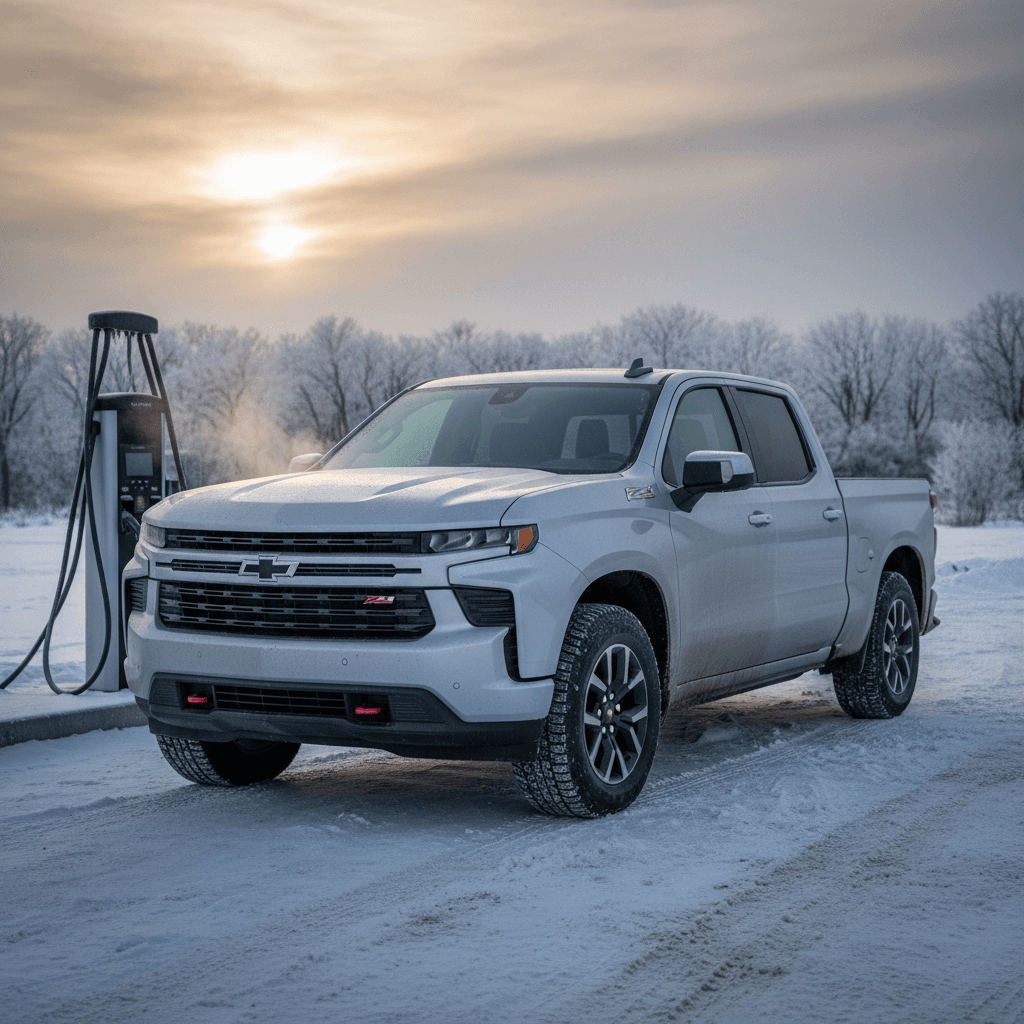
If you live where winters are real, think freezing temps, snow, and long highway drives, you’re right to wonder how much Chevy Silverado EV winter range loss you’ll see. Cold weather affects every electric vehicle, but big, heavy electric trucks feel it a bit more, especially when you add highway speeds, heat, and towing into the mix.
Quick takeaway
Why winter hurts EV (and Silverado EV) range
The Silverado EV uses a large lithium-ion battery pack under the floor. Those batteries are happiest in a mild temperature window, roughly room temperature. When the mercury drops, chemical reactions inside the cells slow down, internal resistance increases, and you get less usable energy from the same pack until it warms up.
- Battery chemistry slows down: Cold cells can’t deliver current as efficiently, so the truck limits power and usable capacity until they warm up.
- Cabin heating is energy-hungry: Unlike gas trucks that use engine waste heat, an EV has to power electric heaters or heat pumps directly from the battery.
- Thicker fluids and rolling resistance: Cold tires and driveline components add small but real drag.
- Snow, slush, and wind: Pushing heavy, wet snow takes extra energy; winter headwinds also hit boxy trucks harder.
Cold-soaked vs. just cold air
How much winter range loss to expect in a Chevy Silverado EV
Real-world Chevy Silverado EV winter data is still building as more trucks hit the road, but we can combine what we know from GM’s Ultium platform, early owner reports, and other electric pickups to outline realistic expectations. Think in terms of percentage loss vs. EPA rating.
Typical winter range loss scenarios for Silverado EV
Approximate range reductions compared to EPA rating, assuming a healthy battery and no extreme towing load.
| Scenario | Conditions | Expected Range vs. EPA | Notes |
|---|---|---|---|
| Mild winter city/suburban | 30–45°F, mixed driving, modest heat use | ~80–90% of rated range | Shorter trips, more regen; cabin warms quickly. |
| Typical highway winter | 20–32°F, 65–75 mph, steady heat | ~70–85% of rated range | High speed and cabin heat are main penalties. |
| Very cold start, short trips | 0–20°F, truck parked outside, multiple short hops | ~60–80% of rated range | Battery rarely reaches ideal temp; lots of heating cycles. |
| Cold + highway + roof rack/box | 20–30°F, 70+ mph, extra aerodynamic drag | ~55–75% of rated range | Boxes and racks hurt big, bluff trucks. |
| Cold + towing moderate load | 20–40°F, 60–70 mph, 4,000–6,000 lb trailer | ~35–60% of rated range | Towing plus cold multiplies the impact. |
Actual results will vary by speed, terrain, temperature, and driving style, but this table gives ballpark expectations.
Use percentage, not miles, to plan
Silverado EV trims, batteries, and winter range basics
Chevy has promised several Silverado EV configurations, but early trucks center on large battery packs and long-range ratings. Exact EPA numbers can vary by trim and wheel/tire package, but the pattern is straightforward: bigger battery packs and more aerodynamic wheels help in winter, while aggressive off-road tires and lift kits hurt.
How Silverado EV setup influences winter range
What matters more than the badge on the tailgate.
Battery capacity
Wheel & tire choice
Aero accessories
City vs. highway in the cold
Towing, hauling, and winter range: stacking the penalties
One of the Silverado EV’s big selling points is its towing and payload capability. But just as with a gas truck, pulling a trailer or hauling a heavy load cuts range, and in winter, that effect is amplified. You’re stacking aerodynamic drag, weight, and cold temperatures on top of each other.
How towing plus winter impacts an electric truck
Don’t plan off the headline EPA number when towing
If you regularly tow campers, snowmobile trailers, or equipment in freezing weather, use tools like ABetterRoutePlanner or manufacturer apps to simulate realistic range with a trailer. Consider planning more frequent, shorter charging stops to keep the battery warm and reduce risk.
How to optimize your Silverado EV for cold weather
You can’t change physics, cold air is cold air, but you can drive and charge in ways that significantly reduce Chevy Silverado EV winter range loss. Think in three steps: prepare, drive smart, and park smart.
Winter optimization checklist for Silverado EV owners
1. Precondition while plugged in
Use the myChevrolet app or in-truck settings to warm the cabin and battery while the truck is still connected to your home charger. This puts the energy burden on the grid instead of the battery, so you start with a warm pack and full charge.
2. Use seat and steering wheel heaters first
These use far less energy than blasting cabin heat. You can keep the cabin a bit cooler while staying personally comfortable, easing the load on the battery during winter drives.
3. Avoid frequent short trips with long cold soaks
Do your best to combine errands into longer drives. Repeatedly heating the cabin and battery from cold for short trips is one of the quickest ways to burn winter range.
4. Watch your speed on the highway
In cold air, aero drag goes up and battery efficiency goes down. Dropping from 75 mph to 65 mph can noticeably improve range, especially in a tall, boxy truck.
5. Clear snow and ice from the body
Snow buildup on the grille, bumpers, and wheel wells adds drag and weight. Knock it off before you drive to keep efficiency as high as possible.
6. Keep your tires properly inflated
Tire pressure drops as temperatures fall. Underinflated tires increase rolling resistance and can further chip away at your winter range, check them frequently.
Aim for a warm battery, not a full battery
Charging a Chevy Silverado EV in winter conditions
Cold doesn’t just affect driving range, it also affects how fast your Silverado EV will DC fast charge. When the pack is cold, the truck’s software will limit charge speeds to protect battery health. That’s why you sometimes see much lower kW numbers on the screen during winter than in summer.
Home and Level 2 charging
- Install a quality Level 2 home charger if possible, this lets you precondition comfortably and top up overnight.
- In very cold weather, consider using a departure timer so the truck finishes charging shortly before you leave, warming the battery in the process.
- If you park outside, a consistent daily charging routine keeps the battery from ever getting fully cold-soaked.
Public DC fast charging
- Use navigation that can precondition the pack for fast charging when you route to a DC charger, this can dramatically improve winter charge speeds.
- Expect slower charging if you arrive with a very cold battery or high state of charge; 10–50% is the sweet spot for fastest sessions.
- On road trips, it’s often better to charge more often, but not to 100%, especially in cold weather.
Beware near-empty batteries left in the deep cold
Trip planning: building a realistic winter range budget
If you’re using your Silverado EV for long winter drives, to the ski hill, a jobsite, or a family visit, good planning removes most of the anxiety. Instead of aiming for the longest possible leg, plan around conservative winter assumptions and known charging options.
A simple framework for winter range planning
Use this as a mental checklist before every cold-weather road trip.
1. Start with a conservative range
2. Map out charging options
3. Build in a safety buffer
If you’re new to EV trucks, do a few practice runs on familiar routes in cold weather before you commit to long winter hauls. That will teach you how your particular Silverado EV trim behaves at your typical speeds and temperatures.
Protecting Silverado EV battery health over many winters
Short-term range loss in winter is mostly about temperature and energy use; long-term degradation is about how the battery is treated over years. Fortunately, modern battery management systems are very good at self-preservation, but your habits still matter.
- Avoid fast-charging from 0–100% regularly; 10–80% windows are healthier, especially in high heat.
- Don’t store the truck at 100% for days on end, charge to 80–90% for daily driving when possible.
- In extreme heat, park in shade or garages; in extreme cold, plug in so the pack can manage itself.
- Use preconditioning instead of hammering the battery with high power demands when it’s stone cold.
Winter range loss vs. permanent degradation
Buying a used Silverado EV for cold climates
If you’re considering a used Chevy Silverado EV and you live in a cold region, you’ll want to look beyond the window sticker. How the truck was used and maintained will have a bigger impact on your winter experience than the odometer alone.
Cold-climate checklist for a used Silverado EV
1. Review battery health documentation
Look for objective battery health data, not just a guess. Every vehicle bought and sold through Recharged comes with a <strong>Recharged Score Report</strong> that verifies battery health, estimated remaining capacity, and charging history patterns.
2. Ask about previous climate and storage
A truck that’s spent its life in a temperate climate and slept in a garage will often age more gracefully than one stored outside in deep cold or extreme heat year-round.
3. Inspect tires and aero add-ons
Oversized mud-terrain tires and heavy racks might be fine for your needs, but know they’ll cost you range, especially in winter. Factor that into your expectations or budget for a tire change.
4. Confirm charging habits and hardware
Check that the previous owner used appropriate home charging and didn’t rely exclusively on DC fast charging. Verify the included charging equipment and make sure it fits your home setup.
5. Take an extended cold-weather test drive
If possible, test the truck on a chilly day at your normal highway speeds. Watch the energy consumption and projected range to see if it matches your needs. Recharged’s EV specialists can help you interpret what you’re seeing.
How Recharged can help
Ready to find your next EV?
Browse VehiclesFAQ: Chevy Silverado EV winter range loss
Common questions about Silverado EV winter range
Bottom line: Is the Chevy Silverado EV good for winter?
If you understand and plan for Chevy Silverado EV winter range loss, the truck can be an excellent year-round partner. Like every EV, it gives up some range in the cold, often 15–30%, and more if you add highway speeds, heavy heat use, or towing, but you get quiet, confident traction, low operating costs, and the convenience of home charging in return.
The key is to size your truck and your expectations to your life. For daily commuting and weekend winter trips, a well-maintained Silverado EV with a healthy battery and the right tires will serve most drivers very well. If you’re planning frequent long-distance winter towing, you’ll need to go in with eyes open, build conservative routes, and lean on smart charging strategies.
And if you’re shopping used, consider working with a specialist. Recharged’s combination of Recharged Score battery health diagnostics, transparent pricing, and EV-focused support can help you find a Silverado EV that’s ready for many winters to come, without guessing how it will perform when the temperature drops.