If you’re looking at a Chevy Silverado EV, or you already own one, you’ve probably heard about “Service High Voltage System” warnings, software headaches, and mixed reviews on ride quality. This guide breaks down the most common Chevy Silverado EV problems and fixes, based on early owner reports, service bulletins, and what we’ve seen in the broader EV market. We’ll also cover what to watch for if you’re considering a used Silverado EV.
Early-production reality check
Overview: How the Silverado EV Is Holding Up So Far
Silverado EV in the Real World (Early Snapshot)
Across owner forums and first‑drive reviews, a pattern has emerged. The Silverado EV is praised for its massive range, fast charging capability, Super Cruise, and clever packaging. On the flip side, the biggest pain points fall into five buckets: high‑voltage/battery warnings, charging errors, software and UX issues, ride and noise complaints, and a small number of recalls and technical service bulletins (TSBs) you should know about.
1. Battery & “Service High Voltage System” Warnings
A cluster of early Silverado EV owners, especially 2024 model year trucks, have reported scary‑sounding alerts like “Service High Voltage System”, flashing battery icons, or warnings that the vehicle may power down. In a small but very visible subset of cases, these warnings have led to full high‑voltage battery replacements, sometimes tied to coolant leaks into or around the pack.
- Dashboard warnings such as “Service High Voltage System” or reduced power messages
- OBD codes related to high‑voltage isolation or battery module faults (when the dealer pulls codes)
- Truck entering a reduced‑power or limp‑home mode
- Occasional reports of burning or melting smells near the battery area (that’s a red‑flag, park it immediately)
Don’t ignore HV warnings
Common Battery‑Related Issues and Typical Fixes
What owners report, and what dealers usually do about it
Intermittent HV warning with no drivability issue
Symptoms: Warning pops up occasionally, then disappears after a restart. No obvious loss of power.
Likely cause: Software calibration bug or overly sensitive fault thresholds.
Typical fix: Dealer applies latest TSB software updates to battery and power electronics control modules; in mild cases, the error doesn’t return.
HV warning + coolant leak
Symptoms: Persistent warnings, possible coolant level loss, sometimes a faint sweet smell.
Likely cause: Coolant leak into or around the battery pack or HV components.
Typical fix: High‑voltage system inspection, leak detection, replacement of lines or components; in severe cases, full battery pack replacement under warranty.
Module or pack replacement on low‑mileage trucks
Symptoms: Repeated HV faults on young trucks (under ~5,000 miles); sometimes long waits for parts.
Likely cause: Early‑run component defects or contamination issues inside the pack.
Typical fix: GM authorizes pack or module replacement. Long repair times often have more to do with parts and EV‑tech capacity than the fix itself.
What You Should Do If You Get a High‑Voltage Warning
1. Don’t keep driving if the truck feels unsafe
If you smell burning, see smoke, or experience severe power loss, pull over in a safe place, exit the vehicle, and move away. Call roadside assistance rather than trying to nurse it home.
2. Document the warning
Take photos or video of the dashboard messages, note the mileage, state of charge, temperature, and what you were doing (fast charging, highway towing, etc.). This helps the dealer and strengthens any lemon‑law claim later.
3. Call the Chevy EV concierge or your dealer immediately
Ask for a written description of stored trouble codes and any bulletins applied. If they mention specific TSB numbers, save those in your records.
4. Ask about parts availability and loaner options
High‑voltage repairs can take weeks if parts are back‑ordered. Don’t be shy about asking for a loaner or rental coverage while your EV is down.
5. Track days out of service
If you’re in the U.S., many state lemon laws kick in after a certain number of days in the shop or repeated repair attempts. Keep a simple log of drop‑off and pickup dates.
2. Charging Errors, Slow Charging & Public Station Glitches
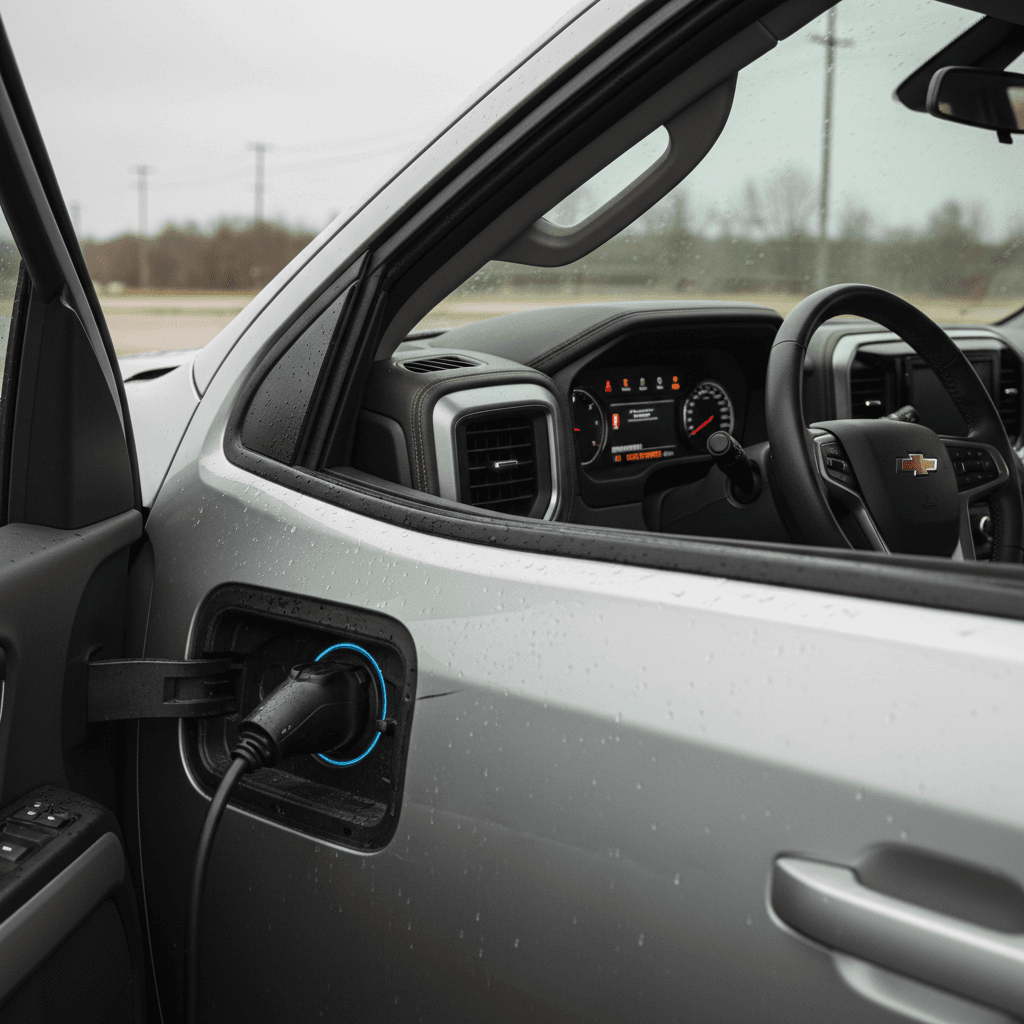
The Silverado EV’s massive pack and high peak charge rate look great on paper, but early owners report a mix of charging‑system warnings, especially on 2024 trucks, and inconsistent experiences at public DC fast chargers. Some see “Service charging system” or reduced‑power messages; others simply get slower‑than‑expected charge speeds at non‑GM stations.
Typical charging problems owners report
- “Service charging system” warnings after fast charging.
- Truck refusing to start a DC charge at certain stations.
- Charge rate that ramps up, then quickly throttles down even on low‑state‑of‑charge sessions.
- Heat‑related warnings after long or repeated fast charges on hot days.
What usually fixes them
- Updated software for the onboard charger and battery management system.
- TSB‑driven reprogramming for specific error codes.
- In rare cases, inspection or replacement of the charge port or HV components.
- Simply avoiding older or unreliable DC stations, network quality matters as much as the truck.
Pro tips for fewer charging headaches
3. Software Issues, Missing CarPlay & OTA Frustrations
If there’s one near‑universal gripe about the Silverado EV, it’s software. Owners frequently complain about the lack of Apple CarPlay and Android Auto, a cluttered or unintuitive infotainment layout, and an over‑the‑air (OTA) story that doesn’t feel very “over the air” at all, many updates still require multi‑hour dealership visits.
Most Common Silverado EV Software Complaints
These don’t strand you, but they can make daily life annoying
No Apple CarPlay/Android Auto
GM bet heavily on its own Google‑based infotainment. Many truck buyers expected CarPlay, and its absence is a recurring sore spot.
Scattered settings & clunky UI
Owners report that key settings are buried in menus, and the layout wastes space instead of surfacing core EV info like charging stats and trip energy.
OTA that isn’t really OTA
The trucks technically support OTA, but major updates often require a dealership appointment, and some service departments charge for software work once the basic warranty expires.
Watch out for paid software updates
The good news: software issues are usually annoying, not catastrophic. The bad news: when they intersect with high‑voltage or charging systems, the line between a UX gripe and a drivability problem can get blurry. Keeping your Silverado EV on the latest approved software is one of the simplest ways to prevent minor glitches from turning into major service visits.
4. Ride Quality, Noise and Heavy-Feeling Handling
On the road, the Silverado EV doesn’t behave like a traditional half‑ton pickup. With a curb weight north of 9,000 pounds, huge optional 24‑inch wheels, four‑wheel steering and air suspension on some trims, the driving experience is unique, and not always in a way owners love.
- Ride quality: Reviewers and some owners describe the ride as busy or unsettled on imperfect pavement, especially with the big wheels.
- Cabin noise: More wind and tire noise than you might expect from a modern EV; some report a constant low‑frequency hum that can’t be turned off.
- Body motion: Noticeable body movement on undulating roads despite the fancy suspension, reminding you just how much mass you’re moving around.
Simple tweaks that can help ride and noise
5. Recalls, Service Bulletins and What They Actually Fix
Because the Silverado EV is new, every recall or bulletin gets outsized attention. As of late 2025, the biggest high‑profile action specific to these trucks is a recall on certain 2026 Silverado EV and GMC Sierra EV pickups where the electronic stability control (ESC) warning light might not stay illuminated after a restart, even if the system still has a fault. The fix is a software update for the instrument‑cluster logic; it doesn’t change the underlying brakes or stability system hardware.
Silverado EV: The Types of Service Actions You’ll See
Examples of issues and how they’re typically addressed. Always run your VIN on NHTSA or GM’s recall tool for the latest status.
| Type | Example issue | How you hear about it | Who pays | What to do |
|---|---|---|---|---|
| Safety recall | ESC warning light behavior on some 2026 Silverado EVs | Official letter or email; shows up in NHTSA and GM recall tools | GM pays, always | Schedule with a dealer promptly; repairs are free. |
| Technical Service Bulletin (TSB) | “Service High Voltage” false alarms, charging‑system updates | Dealer sees it in their system when you come in with a complaint | Usually GM/warranty if under coverage | Ask the advisor to check for EV‑related TSBs every time you’re in. |
| Campaign/service update | Non‑safety infotainment or feature updates | Notice in your app, email, or during service visits | Often GM while in warranty; varies later | Get them done when convenient, they can prevent future headaches. |
Recall repairs are free; TSB‑driven updates are usually covered under warranty when they address a documented concern.
How recalls and TSBs affect used values
How to Diagnose Silverado EV Problems at Home
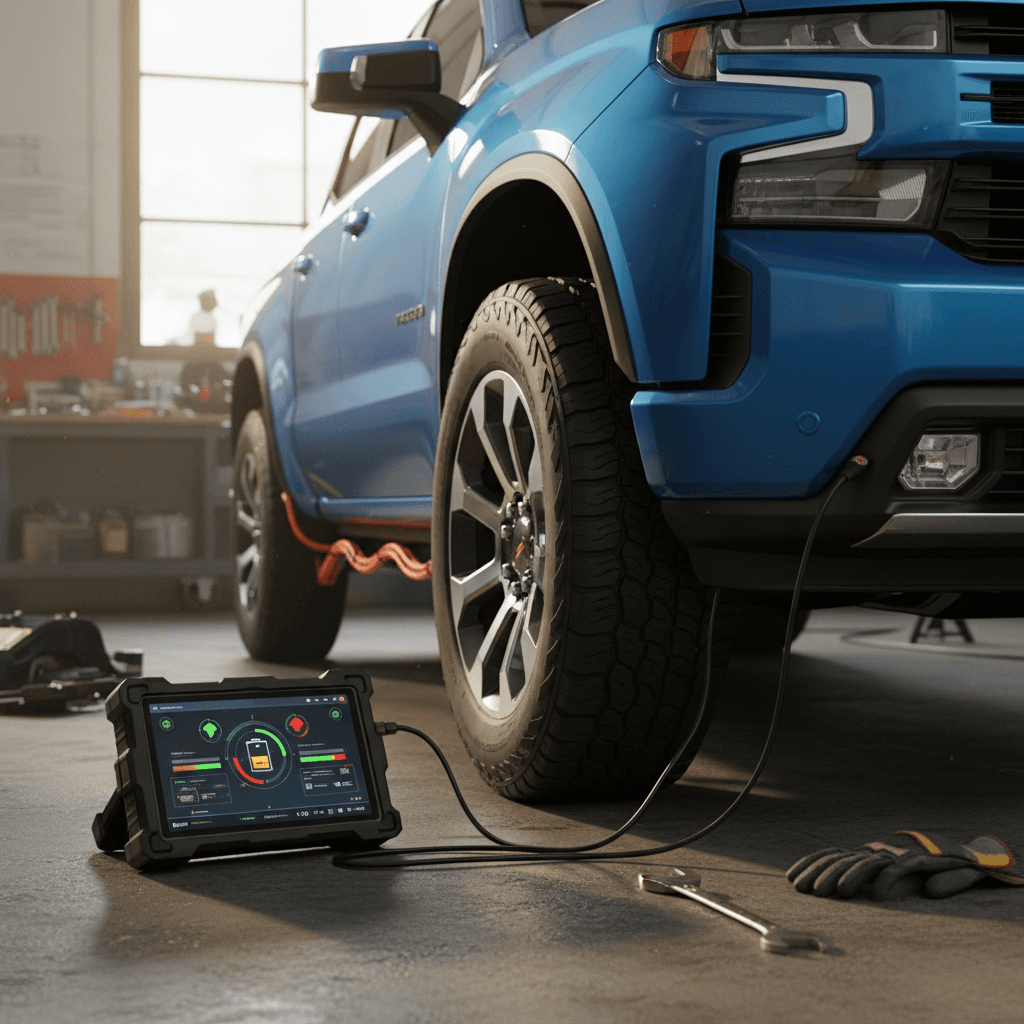
You don’t need to be an EV engineer to spot most brewing Silverado EV problems. What you do need is a bit of structure: watch for patterns, document everything, and know which checks you can safely do yourself versus what demands professional high‑voltage tools.
Owner-Friendly Checks Before You Head to the Dealer
Log when and how warnings appear
Note state of charge, outside temperature, speed, and what you were doing, fast charging, towing, or just commuting. Intermittent faults are much easier to diagnose with a pattern.
Track charging behavior over time
If DC fast charging suddenly slows, or you start seeing charging‑system warnings, take photos of the station screen and your truck’s display. Try a different network to rule out station problems.
Verify coolant levels visually
You can safely check coolant reservoir levels while the truck is off and cool. If you see fast or repeated drops, that’s a sign to stop driving and call for service.
Listen for new noises or smells
Whining, grinding, burning smells, or loud clunks that weren’t there before are all signals to get the truck inspected, especially on a heavy, high‑power EV truck.
Keep a simple service & software log
Write down every dealer visit, TSB, and software version update. This helps with warranty claims, lemon‑law evaluations, and resale value later.
When to Call the Dealer, Use the Warranty or Consider Lemon Law
Situations where you should call the dealer immediately
- Persistent or repeating high‑voltage, battery, or charging warnings.
- Any sign of coolant leaks near the battery or underbody tray.
- Burning or melting smells, smoke, or unusual heat from the floor area.
- Brakes or steering not behaving normally, with or without dash lights.
- Safety‑related warning lights that don’t clear after a restart.
When to talk to a lawyer or state agency
- The truck spends weeks in the shop for the same HV or charging issue.
- Multiple repair attempts for the same major problem without a lasting fix.
- You’re told a battery pack or major component needs replacement more than once.
- Dealer or manufacturer stops responding or refuses reasonable repairs under warranty.
Lemon‑law thresholds vary by state, but many focus on days out of service or repeated unsuccessful repair attempts. Keep clean documentation if you think you’re heading down that path.
Use the Silverado EV warranty aggressively
Buying a Used Chevy Silverado EV: How to Avoid Problem Trucks
Because early‑run EVs can have more software revisions and occasional hardware learning curves, buying a used Silverado EV is very much a “trust but verify” situation. You want a truck that’s had its bugs worked out, not one that’s bounced between dealers for chronic high‑voltage faults.
Key Checks Before You Buy a Used Silverado EV
You’re not just buying a truck, you’re buying its history
Service & recall history
Ask for printouts showing recall completion and EV‑specific TSBs. A clean, well‑documented history is better than a mystery‑truck with no records.
Battery health & usage
Look for consistent charging habits (not constant 0–100% fast charging), no history of HV battery replacement without a clear fix, and no active HV or charging warnings during test drives.
Real‑world test drive
Drive the truck on mixed roads, try DC fast charging if possible, and confirm that all driver‑assist and infotainment features behave normally.
How Recharged helps if you’re shopping used
If you’re coming out of a problematic early‑production Silverado EV, you might decide a different used EV truck, or even a smaller EV SUV, fits your risk tolerance better. In that case, trading out of the truck before the warranty clock runs down can be a rational, not emotional, choice.
Chevy Silverado EV Problems: Frequently Asked Questions
Frequently Asked Questions About Silverado EV Issues
Bottom Line: Who the Silverado EV Fits, and How to Live With It
The Chevy Silverado EV is a technically ambitious truck: huge battery, big power, long range, sophisticated chassis, and one of the best driver‑assist systems on sale. Those strengths come with trade‑offs, complex software, heavy weight, and a learning curve for dealers that shows up as battery warnings, charging quirks, and inconsistent update experiences. For many owners, those are manageable teething issues; for a smaller but very vocal group, they’ve meant extended time in the shop or even battery replacements.
If you already own a Silverado EV, your best move is to stay on top of software, document issues early, and lean hard on the warranty. If you’re shopping, especially in the used market, focus on trucks with a clear service history, up‑to‑date recalls, and independent battery‑health data. And if you’d rather not untangle that alone, Recharged can help you compare options, pre‑qualify for financing, and ship a vetted EV truck to your driveway, with a Recharged Score Report that makes the invisible parts of EV ownership visible.