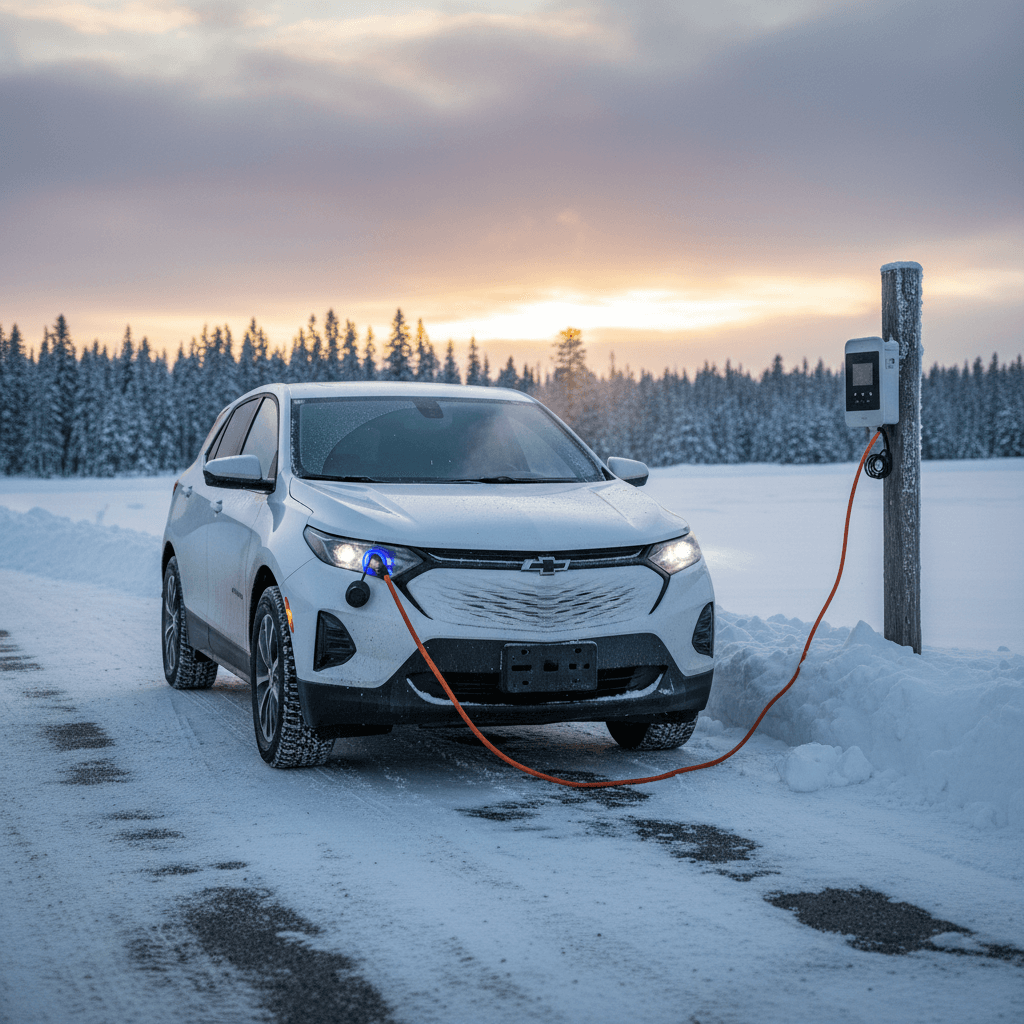
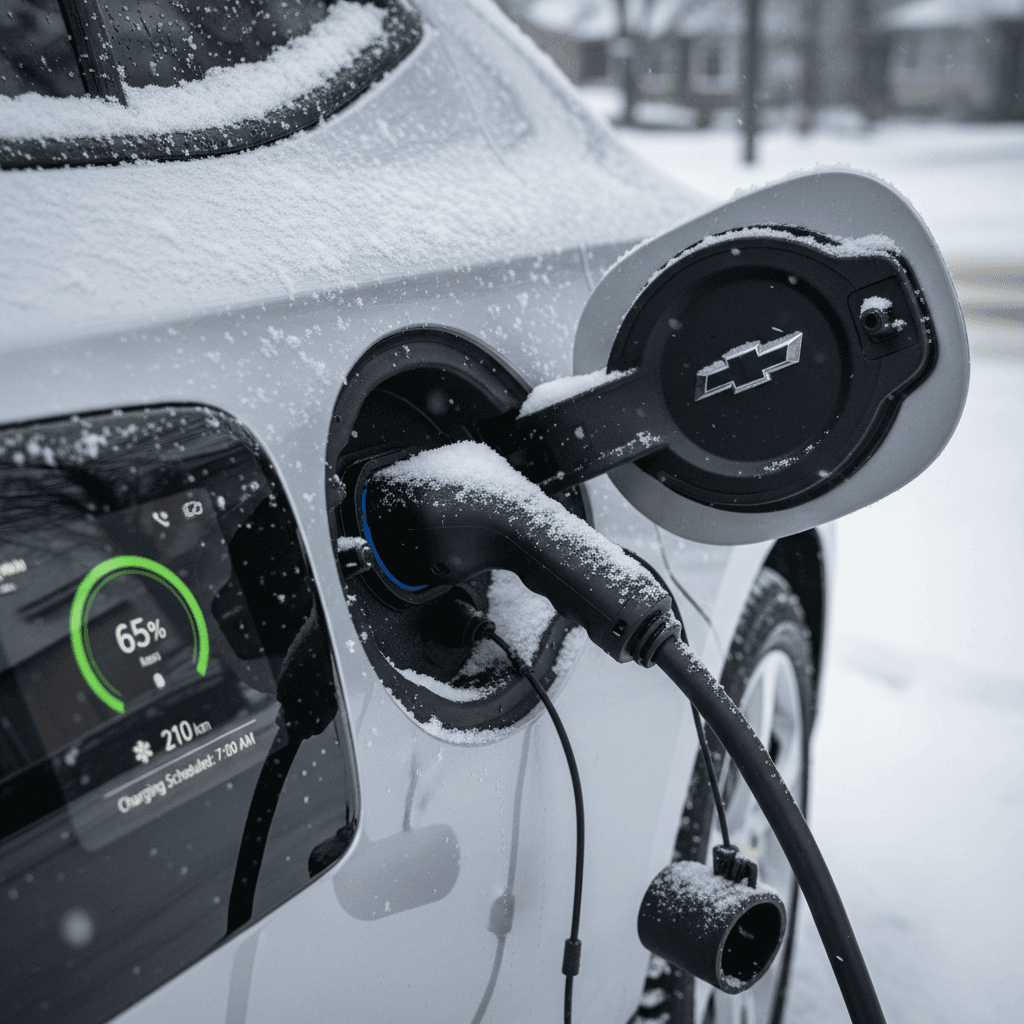
If you live where snow is more than an occasional Instagram filter, you’re going to care about Chevy Equinox EV winter range loss. The EPA says up to 319 miles, but that’s on a nice, mild day. What happens when it’s 15°F, the roads are slushy, and the heat is on full blast? This guide walks through realistic winter range expectations, why the loss happens, and how to claw back as many miles as possible.
Cold truth up front
Chevy Equinox EV range basics before winter hits
To talk about winter range loss, you first need a clear picture of the Equinox EV’s baseline range and energy use in normal conditions.
Chevy Equinox EV EPA range and efficiency
Official EPA ratings and typical real-world test results in mild weather, which you’ll mentally “discount” for winter.
| Configuration | Battery (usable) | EPA range (mi) | Real-world test range (mi) | Efficiency (mi/kWh) |
|---|---|---|---|---|
| LT / 1LT / 2LT / RS FWD | ≈81 kWh | 319 | ~356 (Edmunds test, 61°F) | 3.2–3.4 |
| eAWD dual‑motor | ≈81 kWh | 285 | ~260 (highway test) | 2.8–3.0 |
Front-wheel drive trims travel farther than all-wheel drive, but both offer a healthy buffer before winter losses.
Why this matters for winter
How much winter range loss to expect in a Chevy Equinox EV
Let’s get to the number everyone wants: How many miles do you actually lose in winter in an Equinox EV? No one has a giant dataset yet specific to this model, but we can triangulate from broad EV testing and from GM’s own Ultium-platform behavior.
Typical winter range loss bands for modern EVs
Where your Equinox EV is likely to land on a cold day
Cool (40–50°F)
Expected loss: ~10–15%
Light jacket weather. Battery is a bit less efficient, and you’re running some heat, but it’s not catastrophic.
Equinox FWD owner: 319 mi EPA → plan for ~270–290 mi.
Cold (20–32°F)
Expected loss: ~20–30%
Where most U.S. winter driving happens. Cabin heat and denser air really start to bite.
Equinox FWD: 319 mi → ~220–255 mi realistic.
Deep freeze (0–20°F)
Expected loss: ~30–40%+
Prolonged sub‑freezing temps, short trips, and full‑blast heat can push losses to the high end.
Equinox FWD: 319 mi → ~190–225 mi, sometimes less on short hops.
Short trips hurt most
In other words, a Chevy Equinox EV that comfortably covers 300+ miles in mild weather might feel more like a 200–240 mile SUV on a bitter January day, especially with heat and defrost working full time. That’s normal, not a defect.
FWD vs AWD Equinox EV: Range tradeoffs in winter
The Equinox EV offers front‑wheel drive and dual‑motor all‑wheel drive. That choice isn’t just about traction; it changes how winter hits your usable range.
FWD: Range maximizer
- EPA: 319 miles, real‑world tests above that in mild weather.
- Winter reality (20–30°F): Plan on ~220–255 miles per full charge with normal highway speeds and cabin heat.
- Pros: Best miles per kWh, simpler drivetrain, lower cost.
- Best for: Plowed suburbs and cities, drivers who value range over acceleration.
AWD: Traction with a price tag
- EPA: ~285 miles, with independent tests around 260 miles on the highway in good weather.
- Winter reality (20–30°F): Think ~185–220 miles with typical winter use.
- Pros: Extra grip on slick launches and unplowed side streets.
- Best for: Hilly or rural snow country where traction is safety, not convenience.
Don’t confuse traction with stopping power
Why EVs lose range in cold weather
Cold‑weather range loss isn’t GM‑specific or Equinox‑specific. It’s baked into the physics of lithium‑ion batteries and how we heat a rolling glass box in January. Three forces do most of the damage:
- Battery chemistry slows down. At low temperatures, lithium ions move more slowly through the electrolyte. The pack can’t deliver or accept energy as efficiently, so you get fewer miles from the same kWh and slower fast‑charging.
- Cabin heat is expensive. Gas cars heat the cabin with waste heat from an inefficient engine. EVs have no such luxury. Even with a heat pump, pushing warm air into a freezing cabin pulls a big chunk of your available energy.
- Everything is heavier and draggy. Cold, dense air increases aerodynamic drag. Snow tires and slush increase rolling resistance. The car works harder at the same speed, and the watt‑hours per mile climb.
Battery life vs. battery range
Real-world winter range scenarios for Equinox EV owners
Abstract percentages are one thing. Let’s translate winter range loss into actual Equinox EV use cases so you can decide what’s comfortable, and what demands planning.
Common Equinox EV winter scenarios
1. 40‑mile daily commute, street parked
Your FWD Equinox EV starts each morning cold, parked on the street. At 20–30°F, expect the first 5–10 miles to be inefficient while the pack and cabin warm up. Even with a 30% winter hit, you’re using maybe 25–30% of the battery per day. The bigger issue is planning occasional DC fast‑charge stops if you can’t plug in nightly.
2. 150‑mile highway run to visit family
Headed 150 miles mostly at 70 mph in 25°F weather? A FWD Equinox with a nominal 220–240 mile winter range should do this in one shot if you leave with a full, preconditioned battery. An eAWD on aggressive winter tires might be closer to the edge; plan a quick DC stop or leave a bigger buffer.
3. Ski‑weekend, 250+ miles with mountain grades
Longer distances, high speeds, climbs, and cold temps all stack the deck against range. Here, that 319‑mile summer rating might feel more like 180–210 miles in the real world. Build your route around DC chargers and assume at least one extra stop compared with summer.
4. City errands in a cold snap
Five 5‑mile trips with the car parked and cooling in between can be brutal. You’ll see the ugliest mi/kWh numbers in this scenario because you’re repeatedly paying the warm‑up penalty without getting highway‑cruise efficiency back.
Beware of optimistic guess‑o‑meters
Charging the Chevy Equinox EV in winter conditions
Winter doesn’t just shrink range; it also slows charging. The Equinox EV’s 400‑V Ultium pack can accept up to roughly 150 kW on paper, adding on the order of 70–100 miles in ten minutes in good conditions. In the cold, you rarely see that peak without preparation.
Equinox EV winter charging: Home vs fast charging
What changes when temperatures drop
Home Level 2 (11.5 kW)
- Overnight in a garage or even on the driveway, charge rate barely changes, there’s plenty of time.
- Use scheduled charging to finish just before you leave so the pack is warm and SOC is high.
- Precondition the cabin while plugged in; you “pay” for warmth from the wall, not your battery.
DC fast charging (up to 150 kW)
- Arriving at a charger with a cold battery can cut your peak rate dramatically.
- Preconditioning via nav (if available) or arriving after a highway stint helps the pack reach a comfortable temperature.
- Expect winter stops to be longer and less predictable; plan time margin into road trips.
Time your charge, not just your charge level
Setup and driving tips to cut winter range loss
You can’t repeal chemistry, but you can absolutely shrink your Equinox EV’s winter penalty. Think of it as winterizing your habits rather than fighting the car.
Practical Equinox EV winter range tips
1. Precondition while plugged in
Use the app or in‑car scheduling so the cabin and battery are warmed before you unplug. You start with a comfortable interior and a pack that isn’t at rock‑bottom temperature, saving precious kWh for driving.
2. Use seat and wheel heaters first
Seat and steering‑wheel heaters sip power compared with blasting cabin air to 78°F. Set the cabin a little cooler and let the contact heaters do most of the comfort work.
3. Dial back the speed
Above about 60 mph, aerodynamic drag becomes a major player. In cold, dense air, dropping from 75 to 65 mph can be the difference between making the next charger comfortably and sweating it out with 2% left.
4. Keep tires properly inflated
Tire pressure falls with temperature; underinflated winter tires are noisy, squirmy, and inefficient. Check pressures often and keep them near the door‑jamb spec for the conditions you actually drive in.
5. Minimize repeated cold starts
Bundle errands so you have one longer outing rather than many short ones. Every cold start is a warm‑up tax on your battery.
6. Clean off snow and ice
Packed snow in wheel wells, on the roof, or blocking aero elements adds drag and weight. A clean Equinox is a more efficient Equinox, especially on the highway.
Don’t run down to zero in extreme cold
Buying a (used) Equinox EV for winter driving
If you’re shopping a used Chevy Equinox EV, winter performance should be part of the decision, not an afterthought. The car is fundamentally well‑suited to cold‑climate duty, biggish battery, heat‑pump HVAC, available AWD, but condition and configuration still matter.
- Prioritize healthy battery packs. A degraded pack in an older EV compounds winter loss. A robust 81 kWh pack shrunk to, say, 72 kWh will feel like a much smaller tank once January hits.
- Match drivetrain to your reality. If you live in a flat, well‑plowed metro and rarely see unplowed hills, FWD will likely give you a better winter ownership experience than AWD simply because of the extra range buffer.
- Look for cold‑climate features. Heated seats and steering wheel, heat pump, remote preconditioning, and good driver‑assist systems make winter commuting less of a chore.
- Consider your charging situation. Garage + Level 2 is winter hard mode made easy. Street parking with only DC fast charging nearby is possible, but it demands more planning and you’ll feel winter penalties more acutely.
How Recharged can help
Ready to find your next EV?
Browse VehiclesChevy Equinox EV winter range loss: FAQ
Frequently asked questions about Equinox EV winter range loss
Bottom line: Making peace with winter range loss
Every EV owner eventually discovers that winter comes for everyone’s range. The Chevy Equinox EV is no exception, but it does start with enough battery and efficiency that even a 25–30% cold‑weather haircut still leaves you with a capable daily driver and road‑trip partner.
If you treat the 319‑mile EPA figure as a sunny‑day best case, then mentally budget for roughly 200–240 miles in serious winter use, you’ll be in the right headspace. Layer in smart habits, preconditioning, efficient heat use, reasonable speeds, and good tires, and the Equinox EV becomes the kind of winter car you trust, not fear.
And if you’re looking at a used Equinox EV, or comparing it to other electric crossovers, that’s exactly where Recharged leans in: verified battery health, clear pricing, and human beings who actually drive EVs in winter. Cold weather is non‑negotiable. Range anxiety doesn’t have to be.