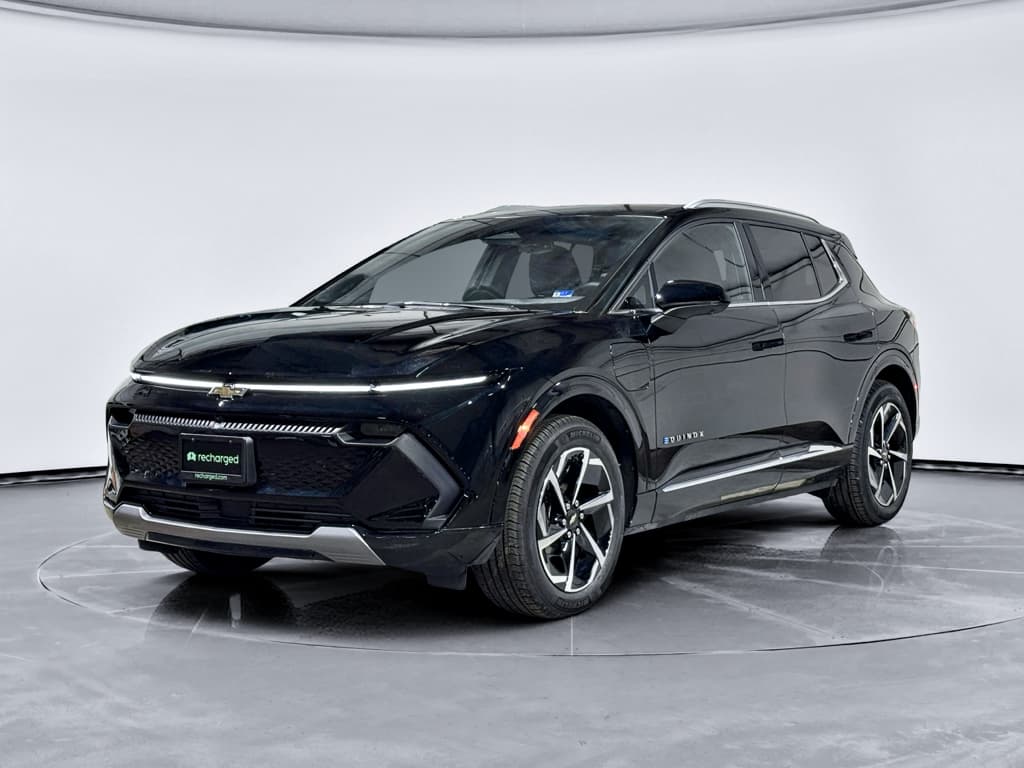
If you’re considering a Chevy Equinox EV, you’re probably thinking beyond the sticker price. The real question is what Chevy Equinox EV long-term ownership cost looks like over 5–10 years compared with a gas SUV. Between excellent efficiency, lower maintenance, higher insurance, and fast-changing EV depreciation, the picture is more nuanced than a simple “EVs are cheaper” headline.
Quick takeaway
Why Chevy Equinox EV long-term ownership costs matter
The Equinox EV slots into one of the most competitive segments in the U.S.: compact and small SUVs. Many shoppers are cross-shopping it with a Toyota RAV4, Honda CR‑V, Hyundai Ioniq 5, Tesla Model Y and even Chevy’s own gas Equinox. Those buyers aren’t just chasing range; they want predictable monthly costs and confidence that the vehicle will hold up financially over time.
- EV running costs are front‑loaded in your favor, you save early on fuel and maintenance.
- EV depreciation has been steeper than gas vehicles in the last few years, especially in the first 3–4 years of ownership.
Equinox EV long-term cost signals (2024–2026 data)
Chevy Equinox EV at a glance: price, range, efficiency
Before you model ownership cost, lock in the basics. The Equinox EV is a compact electric SUV riding on GM’s Ultium platform, with strong range and competitive pricing for its class.
Chevy Equinox EV key specs that drive ownership cost
Approximate numbers for U.S. models as of 2025–2026; always confirm final pricing and specs with a dealer.
| Item | Front-Wheel Drive (FWD) | All-Wheel Drive (AWD) | Why it matters |
|---|---|---|---|
| MSRP (new, before options) | ~$33,600+ destination for lower trims | Adds roughly $3,000+ | Higher MSRP increases depreciation hit and finance charges. |
| EPA range | Up to ~319 miles | Around 285 miles | More range can reduce public DC fast-charging dependence. |
| EPA efficiency (combined) | About 31–32 kWh/100 miles | About 35 kWh/100 miles | Lower kWh/100 miles = lower energy cost per mile. |
| Battery warranty | 8 years/100,000 miles (high‑voltage components) | Same | Helps cap catastrophic battery costs in your first decade. |
| Charging speeds | Up to ~11.5 kW AC; ~150 kW DC | Same | Faster DC rates reduce time‑cost on road trips but don’t change cents per kWh. |
These specs apply broadly across trims; individual configurations may vary.
About prices and incentives
Fuel and charging: what it costs to power an Equinox EV
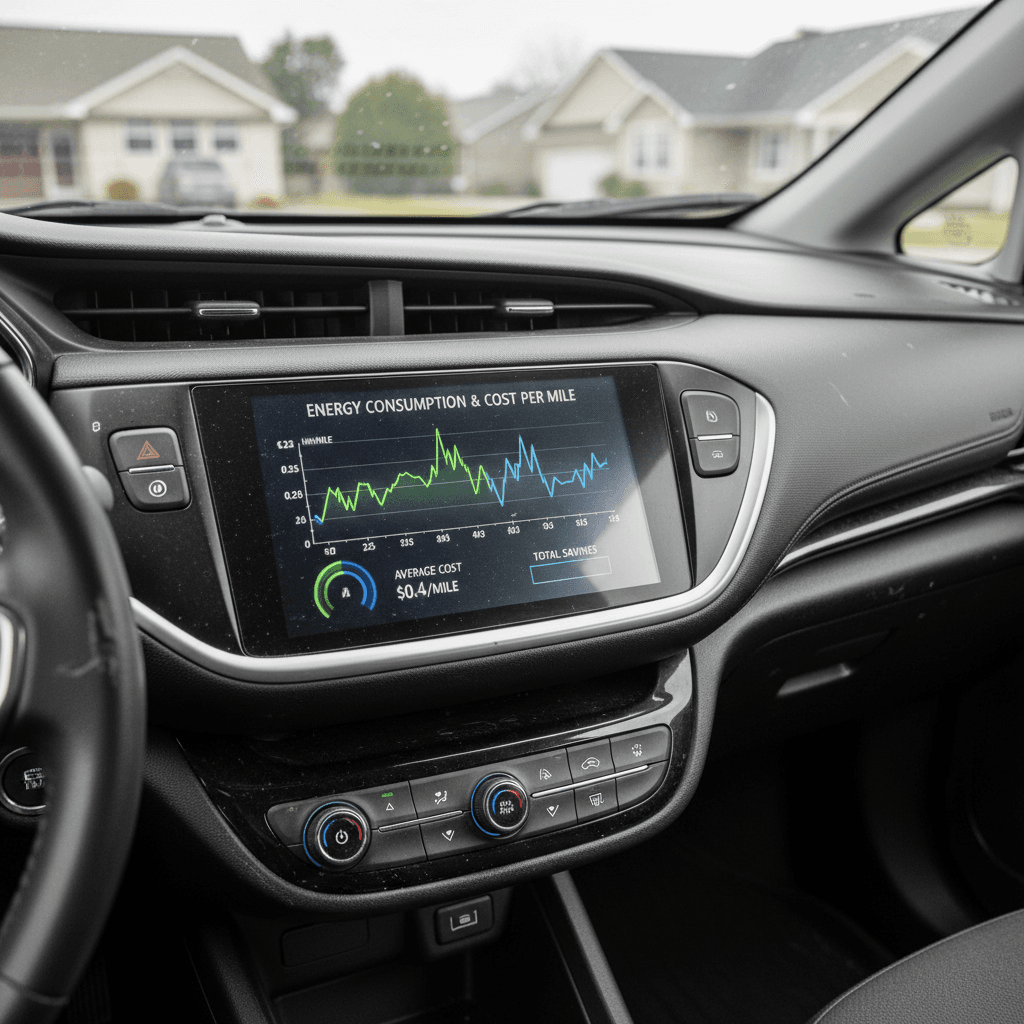
Most U.S. EV owners do most of their charging at home. That’s where the Equinox EV’s efficiency quietly pays dividends, especially if you drive 10,000–15,000 miles per year.
Home charging cost estimate
Using the FWD EPA number of about 31–32 kWh/100 miles and a U.S. residential average of roughly 16–17¢/kWh, you’re looking at:
- About 5–6¢ per mile on electricity at home.
- At 12,000 miles/year, that’s roughly $600–$720 per year.
If your local rate is closer to 13¢/kWh, you might be in the 4–5¢/mile range instead.
Public DC fast charging
On road trips, you’ll pay more. Many DC fast‑charging networks now sit in the 30–45¢/kWh band, sometimes higher near highways.
- At 35 kWh/100 miles and 35¢/kWh, you’re around 12–13¢ per mile.
- That’s similar to or slightly cheaper than many gas SUVs at $3–4/gallon.
The more you can lean on home or workplace charging, the more the Equinox EV beats gas on energy cost.
Rule of thumb: EV vs gas fuel cost
Maintenance and repairs over 5–10 years
The Equinox EV benefits from the same basic maintenance advantages as other EVs: no oil changes, no exhaust system, fewer fluids, and less brake wear thanks to regenerative braking. Industry data from 2024–2025 consistently shows EV owners spending 60–80% less on routine maintenance than owners of comparable gas vehicles over the first five years.
Estimated annual maintenance: Equinox EV vs similar gas SUV
These are ballpark averages for mainstream small SUVs driven ~12,000 miles per year, not formal quotes.
| Item | Equinox EV (estimated) | Gas compact SUV (estimated) |
|---|---|---|
| Oil changes | $0 | $150–$300 |
| Brake pads/rotors (annualized) | $60–$120 | $150–$250 |
| Tire rotation/balance | $80–$150 | $80–$150 |
| Fluids & engine service | $0–$100 | $200–$400 |
| Misc. repairs out of warranty (annualized) | $150–$250 | $300–$600 |
| Total est. annual maintenance | ~$300–$600 | ~$900–$1,800 |
Your numbers will vary, but the structure of the savings is fairly consistent across EVs.
Tire wear on EVs
Over a 5‑year horizon, it’s reasonable to expect the Equinox EV to save roughly $3,000–$5,000 in maintenance versus a gas SUV, assuming similar usage. Over ten years, that gap can easily double, especially once timing belts, exhaust components, and other engine‑related work start to hit on the gas side.
Insurance, taxes, and fees for an Equinox EV
In 2025 AAA data, EVs tend to cost more to own per year than similar gas vehicles, largely because of higher insurance premiums, registration fees in some states, and fast early depreciation, even though their fueling and maintenance are cheaper.
Why an Equinox EV can cost more to insure
Three main forces push premiums up, even when the driver profile is the same.
Higher vehicle value
New EVs like the Equinox often carry a higher MSRP than comparable gas SUVs. Higher replacement value = higher comprehensive and collision premiums.
Body & electronics repair
EV‑specific components, ADAS sensors, and aluminum body parts can be pricier to repair or replace, so insurers price that risk in.
State-level EV fees
Several states charge EV‑specific registration fees to replace lost gas tax revenue. They’re often a few hundred dollars per year and should be factored into your budget.
- Insurance: Often a few hundred dollars more per year than a comparable gas Equinox or CR‑V, depending heavily on your location, credit, and driving record.
- Registration, taxes, and EV fees: Highly state‑specific, some owners will see no EV surcharge; others may pay $150–$300 annually on top of normal registration.
Depreciation and resale value: how fast does it drop?
This is where the Equinox EV story gets complicated. Across the U.S. market, EVs have depreciated faster than comparable gas vehicles in 2023–2025 as new EV prices softened and inventory stacked up. Used EV prices dropped by roughly a third from their peaks in some segments, which is fantastic if you’re shopping used, and painful if you bought new at the top of the market.
If you buy new
For a new Equinox EV purchased around $40,000 out the door, it’s not unreasonable to plan for:
- First 3 years: 35–45% depreciation, depending on incentives and the pace of new EV price cuts.
- Years 4–7: Depreciation slows as the market stabilizes and battery health becomes the main lens for shoppers.
That means your Equinox EV might be worth somewhere in the low‑ to mid‑$20,000s after five years, very scenario‑dependent, but directionally useful.
If you buy used
Buy a 2‑ to 3‑year‑old Equinox EV after the steepest depreciation has already hit, and you’re letting the first owner absorb the biggest drop.
- Your 5‑year horizon now covers years 3–8 of the car’s life, where depreciation curves are flatter.
- Your risk shifts more toward battery health and out‑of‑warranty repairs, exactly where tools like the Recharged Score help.
This is why many cost‑focused shoppers are now targeting used EVs instead of new.
Why rapid depreciation is your friend as a used buyer
5-year vs. 10-year ownership cost scenarios
Let’s translate the pieces into rough scenarios. These aren’t quotes; they’re directional views to help you think about total cost of ownership (TCO). Assume 12,000 miles per year and a compact gas SUV alternative that averages ~30 mpg.
Very rough TCO comparison: Equinox EV vs gas compact SUV
Order-of-magnitude comparison for a mainstream compact SUV buyer; excludes parking, tolls, and insurance variability.
| Category (12,000 mi/year) | Equinox EV – 5 years | Gas compact SUV – 5 years | Equinox EV – 10 years | Gas compact SUV – 10 years |
|---|---|---|---|---|
| Energy (fuel/charging) | $3,000–$3,600 | $6,500–$7,000 | $6,000–$7,500 | $13,000–$14,000 |
| Maintenance & repairs | $1,500–$3,000 | $4,500–$9,000 | $4,000–$6,000 | $9,000–$15,000 |
| Insurance, taxes, EV fees | $7,000–$8,500 | $6,500–$8,000 | $14,000–$17,000 | $13,000–$16,000 |
| Depreciation (if bought new) | $15,000–$18,000 | $12,000–$15,000 | $22,000–$26,000 | $18,000–$22,000 |
| Estimated total (very rough) | $26k–$33k | $29k–$39k | $46k–$56k | $53k–$67k |
Dollar ranges reflect wide variation in energy prices, insurance, and local taxes.
Don’t forget finance costs
How buying a used Equinox EV changes the math
Given how quickly early EVs have depreciated, the used Equinox EV market is where long‑term cost of ownership gets interesting. You’re starting from a much lower purchase price while still getting most of the useful life of the battery and high‑voltage components.
Used Equinox EV ownership advantages
Why a 2–5 year old Equinox EV can be a sweet spot.
Lower starting price
Let the first owner eat that 30–45% drop. You step in at a price point that often matches or undercuts a comparable gas SUV.
Battery still under warranty
GM’s 8‑year/100,000‑mile high‑voltage warranty often still has years left, limiting your catastrophic‑failure risk.
Known real-world performance
Range and efficiency data are widely available now. A good used listing will show how the Equinox EV actually behaves in real owners’ hands.
- Every vehicle gets a Recharged Score Report with verified battery health and real‑world range insights.
- Pricing is benchmarked against the fast‑moving used EV market, so you aren’t overpaying based on last year’s trends.
- You get EV‑specialist support to walk through long‑term cost tradeoffs before you sign.
Battery health, warranty, and big-ticket risks
Battery health is the single biggest swing factor in long‑term Equinox EV ownership cost. The good news: modern EV packs tend to degrade slowly, and GM backs the Equinox EV’s high‑voltage components for 8 years or 100,000 miles against defects. Industry data suggests typical packs lose roughly 1–2% of capacity per year in normal use, though harsh climates and frequent DC fast charging can accelerate that.
Checklist: managing battery risk on an Equinox EV
1. Understand the warranty window
GM’s 8‑year/100,000‑mile battery warranty covers manufacturing defects, not normal wear. Know how many years and miles are left when you buy, especially on a used Equinox EV.
2. Review fast-charging history
Heavy DC fast‑charging use isn’t a dealbreaker, but it can add stress. Ask for records or telematics data when possible, or lean on a marketplace that checks this for you.
3. Get a real battery health report
Don’t rely on a simple dashboard range estimate. A diagnostic like the <strong>Recharged Score</strong> looks at usable capacity, state‑of‑health trends, and how the pack has been treated.
4. Consider your climate
Very hot or very cold regions can impact battery aging and winter range. Garage parking, preconditioning, and moderate charge levels (20–80%) help reduce stress.
5. Budget for out-of-warranty years
Even if a full pack replacement remains rare and increasingly cheaper per kWh, build a savings buffer for high‑ticket items in years 9–12 of the car’s life.
9 ways to lower your Equinox EV ownership cost
- Charge at home as much as possible, ideally on an off‑peak or EV‑specific electricity plan.
- If you buy new, plan to keep the Equinox EV at least 7–10 years to spread out depreciation.
- If you buy used, target a 2–5‑year‑old model with strong battery health so you skip the steepest depreciation years.
- Shop insurance quotes before you buy, the same Equinox EV can vary hundreds of dollars per year between insurers.
- Choose wheel and tire packages carefully; bigger wheels look great but often wear tires faster and hurt efficiency.
- Keep up on basic EV maintenance: tire rotations, brake inspections, cabin filters and software updates.
- Avoid frequent 100% DC fast charges; day‑to‑day, 20–80% is usually kinder to the battery.
- Factor in state EV fees and possible local incentives when comparing to gas alternatives.
- Use a marketplace like Recharged that ships nationwide, verifies battery health, and offers EV‑savvy financing options tailored to used electric SUVs.
FAQ: Chevy Equinox EV long-term ownership costs
Frequently asked questions about Equinox EV ownership costs
Bottom line: Is a Chevy Equinox EV cheap to own long term?
If you rack up miles and plan to keep your vehicle for the long haul, the Chevy Equinox EV can be very affordable to own. Its efficiency and low maintenance profile put hundreds of dollars a year back in your pocket compared with a gas compact SUV. The wild cards are depreciation, insurance, and your local electricity and fee structure.
From a pure cost perspective, the strongest value play today is often a well‑vetted used Equinox EV: the first owner absorbs the big depreciation hit, while you enjoy the fuel and maintenance savings with years of battery warranty still on the table. That’s exactly the gap marketplaces like Recharged are built to fill, pairing verified battery health, fair pricing, and EV‑savvy support so your long‑term ownership story is predictable, not a guessing game.