If you’re eyeing a Chevy Equinox EV, the big money question isn’t just “What’s the price?”, it’s “What’s the Chevy Equinox EV depreciation rate going to do to my wallet?” Early data shows that EVs, including GM’s Ultium-based SUVs, often lose value faster than comparable gas crossovers. But that can actually be good news if you’re shopping used and a risk if you’re buying new without a plan.
Quick take
Chevy Equinox EV depreciation rate at a glance
Equinox EV depreciation snapshot (early market)
About the numbers
How fast does the Chevy Equinox EV depreciate?
Depreciation is simply how much value a vehicle loses over time. For a new Chevy Equinox EV, you can think in three phases: the first‑year “cliff,” the 2–4 year sweet spot, and the slower, later‑life years.
- Year 0–1: The cliff. Like most new vehicles, the Equinox EV is likely to lose a noticeable chunk of value as soon as it leaves the lot and early incentives fade. For many EVs, it’s common to see 20–30% gone in the first 12–18 months, especially if MSRPs were high and discounts grow later.
- Years 2–4: The value window. This is typically where EV depreciation still runs faster than gas SUVs, but stabilizes compared with that first‑year drop. Industry data shows EVs often lose around half their value by year three, which aligns with what we’re beginning to see in the broader compact EV SUV segment.
- Years 5+ : The slower slide. Once the big upfront drop has happened, the curve usually flattens. Condition, mileage, battery health, and demand in the used market matter more than the calendar year.
The exact Chevy Equinox EV depreciation rate you experience will depend on options, mileage, battery health, and when you bought relative to price cuts or incentives. But if you’re buying new, it’s wise to expect a steeper hit in the first 3 years than you’d see with a similarly priced gas Equinox.
Why EVs (and the Equinox EV) depreciate differently than gas SUVs
What pushes EV depreciation higher?
Four forces working against (and sometimes for) the Equinox EV’s resale value
Rapid tech turnover
EV tech is moving fast, batteries, range, charging speed, driver‑assist features. When a newer model offers more range or better tech for the same money, older EVs see sharper price corrections than most gas SUVs.
Battery health concerns
Shoppers still worry about battery replacement costs and degradation. Even if the Equinox EV’s Ultium pack holds up well, uncertainty alone can push resale values down compared with familiar gas models.
Incentives & price cuts
Federal tax credits and manufacturer price cuts lower the effective new price. When new Equinox EVs are effectively thousands cheaper overnight, used values often adjust downward to compete.
Charging & infrastructure
In regions where public charging is thin or home charging is tricky, used EVs can be a harder sell. That dampens demand and pushes depreciation higher, especially outside EV‑friendly metros.
Where this helps you
Key factors that shape Equinox EV resale value
6 things that move your Equinox EV’s value up or down
1. Original MSRP, trim, and options
Higher‑trim Equinox EVs (LT with big option packages or RS) launch with higher MSRPs, which often means bigger absolute dollars lost, but not always better percentage retention. Well‑equipped mainstream trims usually hit the best balance for resale.
2. Federal and state incentives
When a new Equinox EV qualifies for a $7,500 federal credit and similar state rebates, effective new prices drop, sometimes undercutting what recent used buyers paid. That can drag resale down, especially right after big policy or pricing changes.
3. Mileage and usage pattern
Just like gas SUVs, low‑mileage Equinox EVs in commuter duty hold value better than high‑miles rideshare or delivery vehicles. Still, buyers expect slightly higher miles on EVs driven daily, so condition and maintenance history can matter even more.
4. Battery health and DC fast‑charging history
Battery health is the EV equivalent of an engine compression test. Repeated DC fast‑charging, hot‑climate use, and poor storage habits can accelerate degradation. A <strong>verified battery health report</strong> goes a long way toward supporting a strong resale price.
5. Market supply and fleet sales
If GM leans into fleet or rental sales with the Equinox EV, large batches can hit the auction lanes at once. That extra supply tends to pull used values down, especially in the first 3–5 years.
6. Brand and segment competition
The Equinox EV competes with compact electric SUVs from Hyundai, Kia, Tesla, and Ford. Aggressive discounting or new models with much better range/features in this segment can pressure Equinox EV resale values across the board.
Equinox EV vs. other EVs and gas SUVs on depreciation
Compared with gas SUVs
Across the market, EVs typically depreciate faster than gas vehicles. Five‑year data shows EVs losing close to 59% of their value on average, versus the mid‑40% range for all vehicles. That means a compact electric SUV like the Equinox EV is likely to drop more, and faster, than a similarly priced gas Equinox over the same window.
That extra depreciation is partly offset by lower fueling and maintenance costs, but if you’re sensitive to resale value, it’s an important trade‑off to understand.
Compared with other EVs
Within the EV world, not all models behave the same. Luxury or niche EVs can see very sharp drops; Teslas often hold value better than the pack. The Equinox EV, positioned as a mainstream compact SUV with solid range and a relatively affordable MSRP, is likely to sit in the middle of the EV pack, not the best on resale, but far from the worst.
In practical terms, expect it to behave similarly to other non‑luxury compact EV SUVs from major brands.
Where the Equinox EV shines
Real-world price examples: From MSRP to used values
Illustrative price path for a Chevy Equinox EV LT
These examples are directional, based on real‑world MSRPs and typical EV depreciation behavior. Your actual numbers will vary by market.
| Vehicle age | Scenario | Approx. price | What’s happening |
|---|---|---|---|
| New | 2025 Equinox EV LT FWD, lightly optioned | $35,000–$40,000 out‑the‑door | Sticker plus destination, minus incentives if you qualify. |
| 1 year old | Early used Equinox EV LT | $26,000–$30,000 | First‑year drop plus the impact of ongoing discounts and incentives on new inventory. |
| 3 years old | Well‑kept Equinox EV LT with average miles | $18,000–$22,000 | Around half the original value gone, in line with many mainstream EVs by year three. |
| 5+ years old | Higher‑mileage Equinox EV, mixed history | $13,000–$17,000 | Battery health and condition dominate; pricing spreads widen based on verified pack health. |
All prices rounded for simplicity; assumes typical mileage and condition.
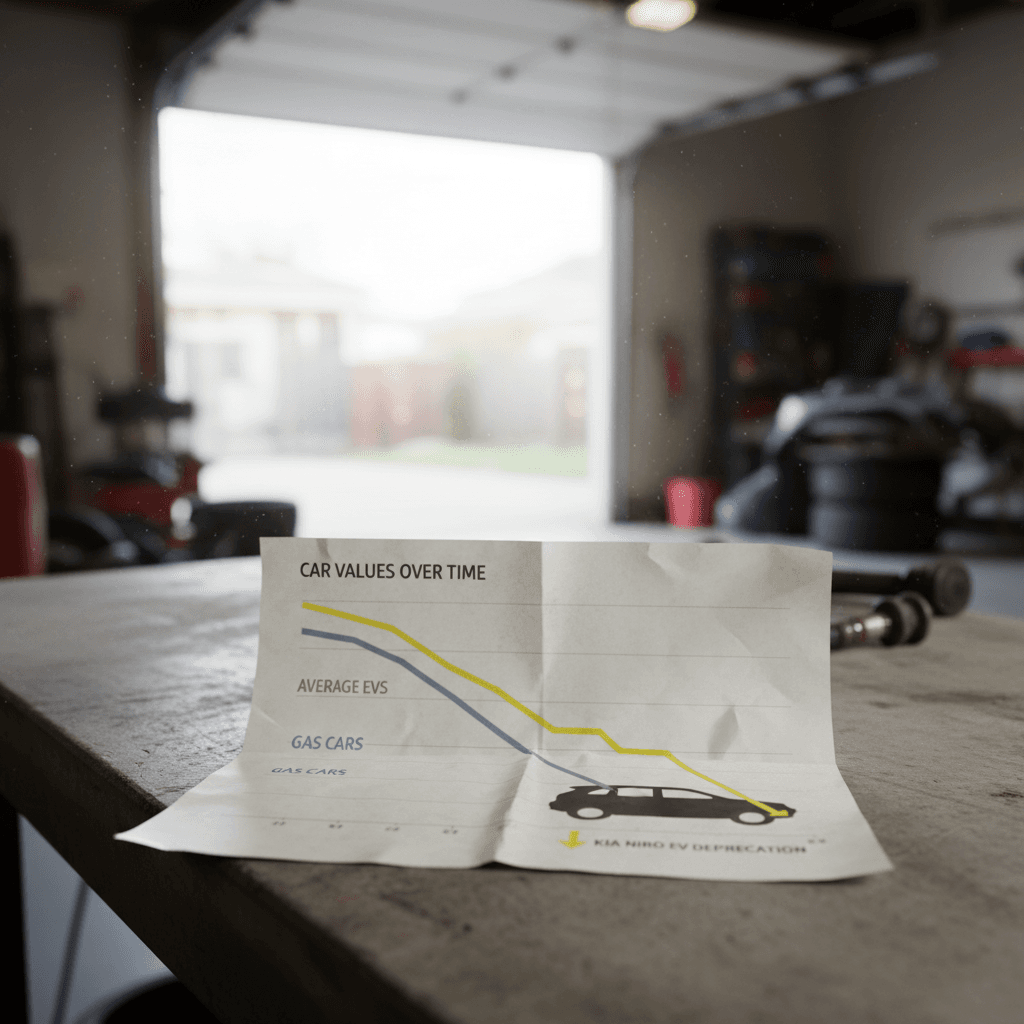
Don’t over‑index on any single chart
How to shop a used Chevy Equinox EV smartly
If you’re shopping a used Equinox EV, faster early depreciation is your friend, as long as you protect yourself on battery health, pricing, and long‑term costs. Here’s how to turn that depreciation curve into an advantage.
Used Equinox EV buyer checklist
1. Make battery health your starting point
On an EV, the battery pack is the single most expensive component. Ask for a <strong>third‑party battery health diagnostic</strong> or a report like the Recharged Score that quantifies remaining capacity and flags potential issues.
2. Understand original MSRP and incentives
Look up the original window sticker or build sheet. If the first owner stacked big incentives or discounts, depreciation might not be as painful as it looks on paper, which can affect what’s truly a fair used price today.
3. Compare used prices to current new deals
Before committing, compare your used Equinox EV’s asking price to what heavily discounted or incentivized new inventory costs in your region. Sometimes, a new model after credits is surprisingly close in price.
4. Review DC fast‑charging history
Repeated high‑power DC fast‑charging isn’t a deal‑breaker, but it can correlate with slightly faster degradation, especially in hot climates. Ask about the previous owner’s charging habits and look for any available telematics or service records.
5. Inspect for collision and structural damage
Body and frame repairs, especially involving the battery pack area, can hit resale value hard and complicate future insurability. Get a pre‑purchase inspection from a shop that actually knows EVs.
6. Model‑year updates and recalls
Check whether significant software or hardware updates landed after your target model year. If newer model years add range, safety tech, or charging improvements at similar prices, that will pull used values down for older years.
How Recharged helps here
Protecting your equity if you buy a new Equinox EV
Maybe you want that factory‑fresh Equinox EV with the exact color, wheels, and tech you like. You can still protect yourself against the steepest part of the depreciation curve, you just need a strategy.
Four ways to reduce the sting of Equinox EV depreciation
Buy for the long term
Depreciation hurts most if you plan to sell in 1–3 years. If you expect to own the Equinox EV for 6–8 years, those early hits get spread out, and lower operating costs have more time to offset the loss in value.
Leasing vs. buying
Leasing essentially bakes a depreciation forecast into your monthly payment. If you’re worried about future resale or policy changes, a lease can shift that risk to the captive finance company, at the cost of never owning the asset.
Be realistic on down payment
Large down payments can create the illusion of safety, but if the Equinox EV depreciates quickly you can still end up upside‑down on your loan. Consider a balanced approach, and avoid stretching loan terms just to hit a monthly payment.
Shop total cost, not just price
Factor in fuel savings, maintenance, and insurance, not just the sticker and expected resale. For many drivers, an EV’s lower running costs can close much of the gap created by higher depreciation.
Where Recharged fits in with used Equinox EVs
Recharged exists for exactly this moment in the EV market, when depreciation is noisy, pricing is confusing, and battery health is the make‑or‑break variable. If you’re considering a used Chevy Equinox EV, here’s how we make the process simpler and more transparent.
- Recharged Score battery diagnostics: Every vehicle on our platform, including the Equinox EV, comes with a battery health report so you’re not guessing about pack life.
- Fair‑market pricing you can see: We price vehicles against real‑world EV transaction data and depreciation trends, so you can understand why an Equinox EV is listed where it is.
- Flexible ways to buy and sell: Finance your next EV, trade in your current vehicle, or get an instant offer or consignment option if you’re moving out of an existing EV.
- Nationwide, digital‑first experience: Browse online, work with EV‑specialist advisors, and have your vehicle delivered, backed by our Experience Center support in Richmond, VA.
Turn depreciation into an advantage
Chevy Equinox EV depreciation FAQ
Frequently asked questions about Equinox EV depreciation
Bottom line: Is the Chevy Equinox EV a good value?
The Chevy Equinox EV depreciation rate won’t win any awards compared with thrifty gas SUVs, but that’s not the whole story. For first owners, the combination of incentives, tech progress, and shifting EV demand means you should assume a steeper‑than‑average drop in the first few years and plan your financing accordingly.
For second owners, though, that same curve is exactly where the opportunity lies. A well‑priced, well‑documented used Equinox EV with a strong battery health report can deliver modern range, solid tech, and low running costs for the price of a much older gas crossover. That’s where platforms like Recharged, with verified battery diagnostics, fair market pricing, financing, trade‑in options, and nationwide delivery, can turn a confusing depreciation story into a confident purchase decision.
If you’re ready to put EV depreciation to work for you instead of against you, start by comparing used Equinox EV listings, paying close attention to battery health and total cost of ownership. Then decide whether you want to let someone else eat the first‑owner losses, or, if you’re buying new, how long you plan to keep the keys.