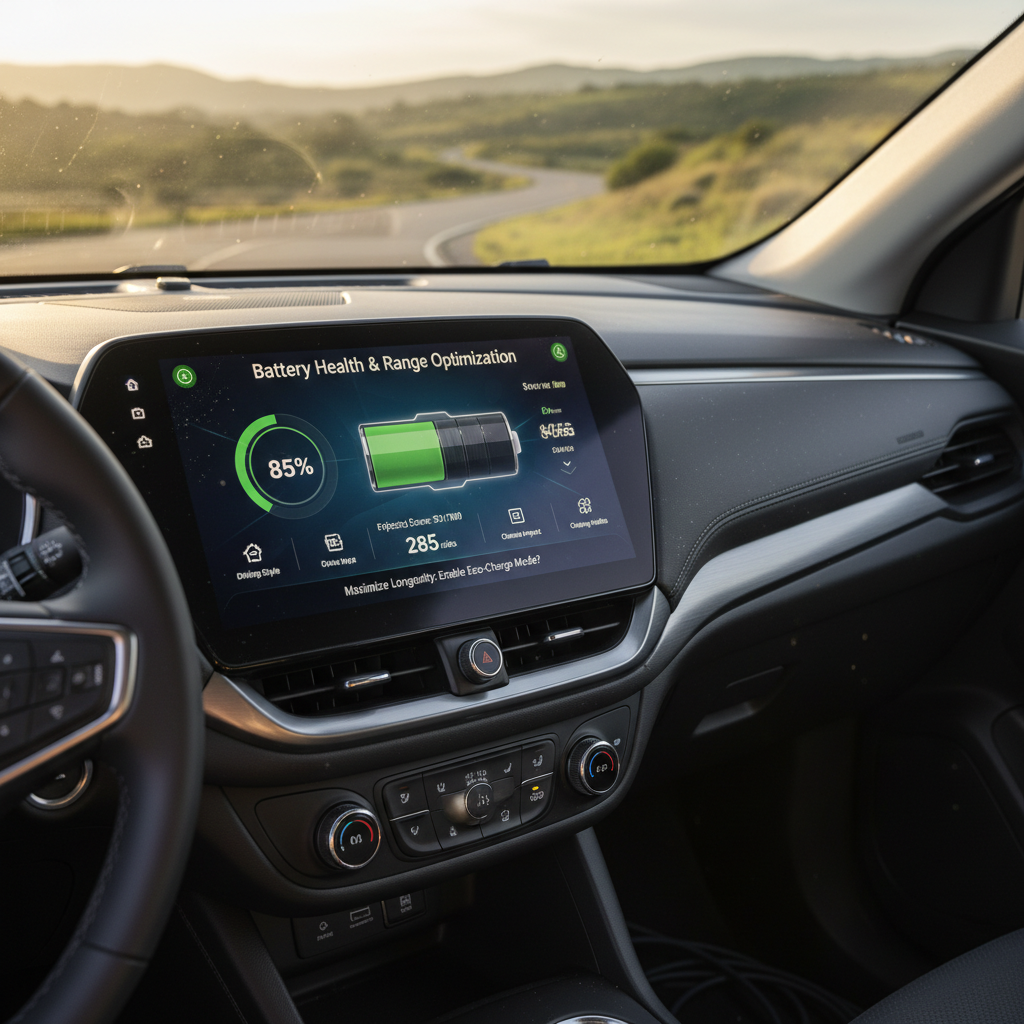
The Chevy Equinox EV was designed to be the mainstream, budget‑friendly electric SUV in Chevrolet’s lineup, compact, practical, and with up to roughly 319 miles of EPA‑rated range on some front‑wheel‑drive models. That makes it a serious contender if you want long range without luxury‑car pricing. This Chevy Equinox EV buying checklist walks you through each decision step so you can compare trims, understand range and charging, and know exactly what to look for, especially if you’re considering a used Equinox EV.
At a glance
Why the Chevy Equinox EV is on so many shortlists
Chevy Equinox EV: Key numbers to know
In U.S. testing and early reviews, the 2025 Equinox EV has stood out for combining long range, modern tech, and accessible pricing. It’s built on GM’s Ultium platform, offers a large 17.7‑inch infotainment screen on many trims, and uses DC fast charging plus Level 2 home charging to suit both commuters and road‑trippers. But to know if it’s right for you, and whether you should buy new or used, you need a structured way to compare the details. That’s where a focused buying checklist pays off.
Quick Chevy Equinox EV buying checklist
10‑point Chevy Equinox EV buyer checklist
1. Define your driving profile
Estimate your typical daily miles, highway vs. city mix, and how often you take 200+ mile trips. This determines whether FWD range is enough or if AWD traction is worth the trade‑off.
2. Decide on FWD vs. AWD
Front‑wheel drive offers the longest range (around 319 miles) and lower price. All‑wheel drive adds power and traction but cuts range a bit and increases cost.
3. Pick your trim and must‑have features
List non‑negotiables like heated seats, power driver’s seat, Super Cruise, or premium audio. Confirm which trims actually include them, many are bundled in packages.
4. Confirm range ratings for your exact trim
EPA range can vary significantly by trim, wheels, and drivetrain. Don’t assume every Equinox EV has the headline range, check the window sticker or specs for the specific vehicle.
5. Evaluate home charging options
Do you have (or can you add) a 240V outlet for Level 2 charging? If not, plan for slower Level 1 charging or nearby public Level 2/DC fast charging.
6. Check DC fast‑charging access
Look at charging networks near you, CCS public fast chargers and Tesla Superchargers (with the NACS adapter GM provides). Make sure your common routes are well covered.
7. Understand warranty coverage
Review the basic bumper‑to‑bumper warranty and the separate battery/electric drive warranty. If you’re buying used, check what’s left based on in‑service date and mileage.
8. Compare total cost of ownership
Include purchase price, financing, insurance, electricity vs. gas, maintenance, and potential EV incentives. An EV like the Equinox EV can be cheaper to own than a gas SUV over several years.
9. Inspect battery health (especially used)
Look beyond the dashboard range estimate. Use a third‑party battery health report, such as the <strong>Recharged Score</strong>, to see real degradation and charging history.
10. Test‑drive carefully
Evaluate ride comfort, visibility, tech interface, one‑pedal driving, and real‑world efficiency. Confirm the Equinox EV fits your family, cargo, and commuting needs before you sign anything.
Step 1: Clarify how you’ll use your Equinox EV
Before you dive into trims and incentives, get clear on how the Equinox EV will actually fit into your life. Chevy built this SUV to cover a lot of ground, from first‑time EV drivers to families downsizing from larger crossovers. The right configuration depends heavily on your daily patterns.
Match your Equinox EV to your lifestyle
Different drivers should prioritize different specs
Urban & suburban commuters
If you mostly drive under 60 miles a day with occasional weekend trips, prioritize front‑wheel drive and comfort features. The longer range gives you plenty of buffer, and you’ll probably rely more on home or workplace Level 2 charging than DC fast charging.
Highway road‑trippers
Frequent 200–300 mile drives mean you’ll live at fast chargers. In addition to range, focus on DC fast‑charging speed, battery preconditioning (for faster charging in cold weather), and access to both CCS and Tesla Supercharger networks.
Snowbelt & rural drivers
If you regularly see snow, gravel, or steep driveways, consider eAWD for traction, even if it shaves some range. Also pay attention to ground clearance and winter tire options; range will drop in cold weather, so start with as much as you can reasonably afford.
Pro tip: document your last month of driving
Step 2: Choose the right trim, FWD vs. AWD, and features
The Equinox EV lineup has evolved quickly between the 2024–2025 model years and will continue to add variants. Broadly, you’ll see LT and RS trims, each with front‑wheel drive (FWD) or available all‑wheel drive (eAWD). FWD versions are more efficient, while AWD adds power and traction at a cost to range and price.
Chevy Equinox EV: Trim & drivetrain cheat sheet
Always verify specs for the exact model year and VIN you’re shopping, this table is a starting point, not a substitute for the window sticker.
| Aspect | FWD Equinox EV | eAWD Equinox EV |
|---|---|---|
| Typical EPA range | Up to ~319 mi | Often around ~285–307 mi |
| Power output | Single motor, ~210–220 hp | Dual motor, ~280–300 hp |
| Starting price (new) | Lower | Adds several thousand dollars |
| Traction & performance | Adequate for daily use | Stronger acceleration, better in snow |
| Efficiency | Higher, especially highway | Slightly lower due to extra motor |
| Best for | Commuters & long‑range value | Snowbelt, performance‑oriented buyers |
Approximate specs for early Equinox EV model years; details may vary by year and package.
Comfort & convenience features
Lower‑priced Equinox EV trims can feel intentionally basic to hit a headline price. You may see manual front seats, limited ambient lighting, and even missing small touches like visor mirror lights. Higher trims and packages add features like:
- Heated and ventilated front seats
- Power‑adjustable driver’s seat and lumbar support
- Panoramic sunroof
- Surround‑view camera and improved camera resolution
Technology & driver assistance
Across the lineup you’ll typically find a large 17.7‑inch infotainment screen and Chevy Safety Assist driver‑assist features like automatic emergency braking and lane keep assist. Optional upgrades may include:
- Super Cruise hands‑free driving on compatible highways
- Enhanced adaptive cruise control
- Built‑in Google Maps and Spotify
- Wireless phone charging (not always standard)
Make a list of must‑have tech so you don’t fall for a low sticker price on a car missing key features.
Watch for feature deletions
Step 3: Range, battery, and charging checks
Range and charging are where the Equinox EV can really shine for the price, but it’s also where confusion creeps in. EPA range varies by trim and drivetrain, and DC fast‑charging performance is solid but not class‑leading. If you’re thoughtful about how and where you’ll charge, you can avoid surprises later.
- EPA range: Expect roughly up to 319 miles for some FWD trims and around 285–307 miles for comparable AWD versions. Larger wheels and certain packages can trim that number.
- Battery size: Early Equinox EV FWD trims use an Ultium pack with usable capacity in the low‑80 kWh range, giving strong efficiency for a compact SUV.
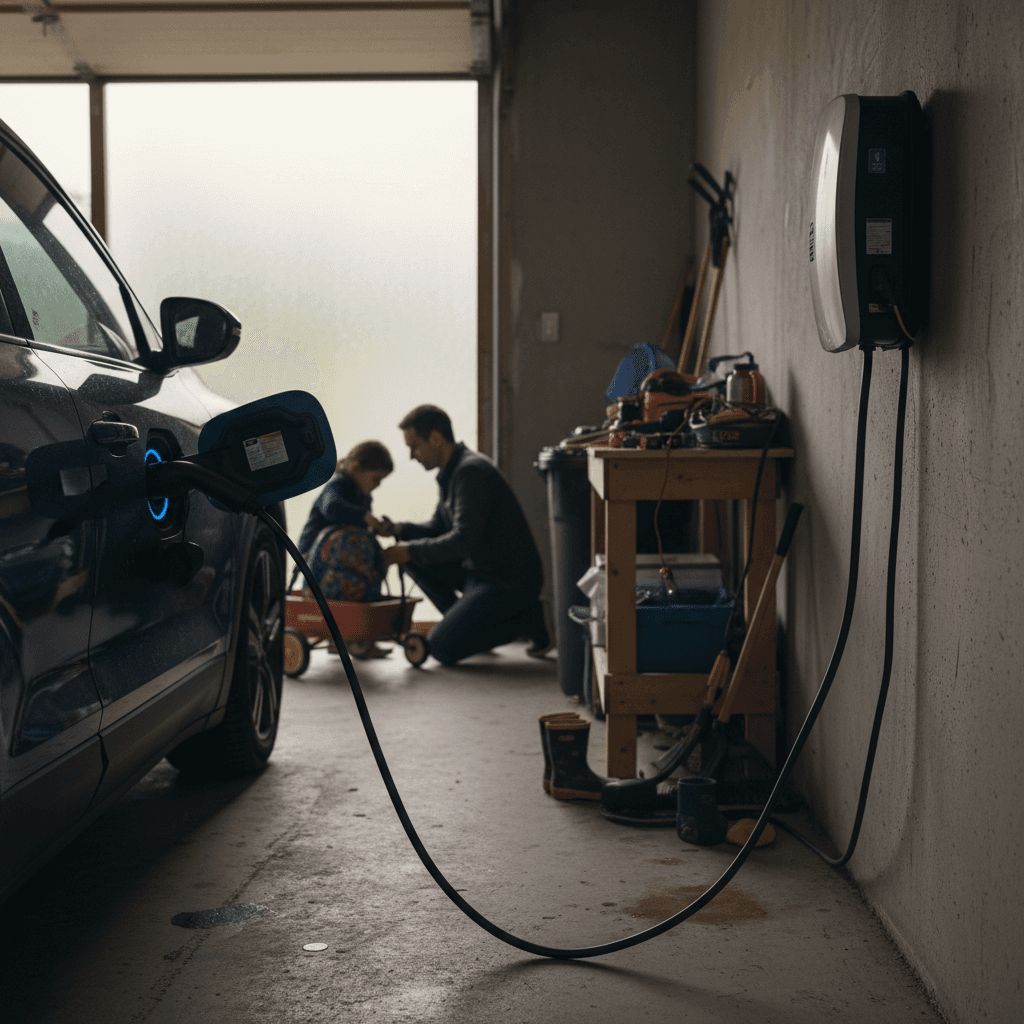
- Level 2 (home/work) charging: An onboard charger around 11.5 kW means a 240V Level 2 wall unit can add roughly 30–35 miles of range per hour, going from low to full in about eight to nine hours overnight.
- DC fast charging: Peak power is about 150 kW, which in ideal conditions can add around 70–80 miles of range in about 10 minutes and take you from 10–80% in roughly 30 minutes.
- Tesla Supercharger access: GM equips the Equinox EV with a NACS adapter so you can use most Tesla Superchargers that support non‑Tesla vehicles, dramatically expanding your fast‑charging options in many regions.
Charging strategy that works in real life
Don’t skip the outlet check
Step 4: Total cost, incentives, and financing
Chevy has positioned the Equinox EV as one of the more affordable long‑range electric SUVs. But the purchase price is only part of the story. Electricity is usually cheaper than gas per mile, maintenance needs are lower, and available incentives or tax credits can significantly change your real‑world cost.
How to think about Equinox EV costs
Look beyond the sticker price
Upfront price & financing
Depending on trim and drivetrain, new Equinox EVs can span from the mid‑$30,000s to the $50,000s with options. Compare:
- MSRP vs. dealer add‑ons or markups
- Interest rates and loan terms
- Lease vs. purchase offers
Run the numbers at different down‑payment levels so you know what monthly payment you’re comfortable with.
Ownership costs over 5–8 years
Estimate your total cost of ownership by adding:
- Electricity vs. gasoline costs at your local rates
- Insurance (EVs can differ from gas models)
- Tires and routine service (no oil changes, fewer moving parts)
- Any home‑charger installation cost
Many owners find that a higher purchase price is offset by much lower running costs over time.
How Recharged can help with the money math
Ready to find your next EV?
Browse VehiclesDon’t forget potential federal, state, and utility incentives. Depending on the model year and how the vehicle is sold (new retail, lease, or used), you may be able to benefit from tax credits or point‑of‑sale discounts. Utilities in many regions also offer rebates for installing a home Level 2 charger, which can reduce your upfront charging costs substantially.
Step 5: If you’re considering a used Chevy Equinox EV
The earliest Equinox EVs are just starting to appear on the used market. That’s an opportunity: you avoid the steepest new‑car depreciation and still benefit from a relatively young battery, modern tech, and remaining factory warranty. But because EV value is tied so closely to battery health, you need to go deeper than a traditional used‑car walk‑around.
Used Chevy Equinox EV buyer checklist
Verify original in‑service date
Battery and EV component warranties typically run around 8 years/100,000 miles from the original in‑service date. Ask for documentation so you know exactly how much coverage is left.
Pull a detailed battery health report
Request a third‑party battery diagnostic, like the <strong>Recharged Score Report</strong>, to see real state‑of‑health, fast‑charging history, and any warning signs of abuse or unusual degradation that the dashboard won’t show.
Check charging history & habits
If possible, ask the previous owner or dealer how the car was charged. Vehicles that lived on DC fast charging alone can show faster degradation than those mostly charged on Level 2 at home.
Confirm software updates & recalls
EVs rely heavily on software. Make sure all open recalls and key software updates (especially those related to charging or battery management) have been completed by an authorized Chevy dealer.
Inspect for collision or flood damage
A structural hit or flood event can affect the battery pack, high‑voltage wiring, and safety systems. Review accident reports and have a technician familiar with EVs inspect the underbody and high‑voltage components.
Compare price to battery health
Two Equinox EVs with the same mileage can have very different battery health. A lower‑mileage car with a weaker battery shouldn’t command top‑tier pricing. Use the battery report to negotiate a fair deal.
What the Recharged Score adds
Step 6: Test-drive and inspection checklist
Once you’ve narrowed down a few candidates, the test drive is where you confirm that the Equinox EV’s paper strengths actually match your expectations. Electric SUVs feel different from gas crossovers, quieter, quicker off the line, and heavier, so take your time and simulate your real driving.
What to check on your Equinox EV test drive
Cabin comfort & seating position
Adjust the driver’s seat and steering wheel, and check visibility in all directions. Make sure manual adjustments (on lower trims) or power adjustments (on higher trims) give you a comfortable, repeatable position.
Infotainment & driver‑assist systems
Test the 17.7‑inch screen responsiveness, built‑in navigation, and any driver‑assist features like lane keeping or adaptive cruise. Confirm you’re comfortable with Chevy’s Google‑based interface, which replaces traditional smartphone mirroring in some model years.
Noise, ride, and handling
On both city streets and highways, listen for wind and road noise, and feel for how the suspension copes with broken pavement. An EV’s quiet powertrain can make suspension or tire issues more noticeable.
One‑pedal driving & regen feel
Experiment with regenerative‑braking settings and one‑pedal driving if available. You should be able to bring the vehicle smoothly to a stop without jerky transitions between regen and friction brakes.
Real‑time efficiency readout
Reset the trip computer at the start of your drive and note the mi/kWh reading at the end. Compare it to published test data to see if the vehicle seems reasonably efficient for your driving style and conditions.
Charging demo (if possible)
If the seller allows, plug into a Level 2 or DC fast charger briefly. Confirm that the car initiates charging cleanly, the connector feels solid, and there are no warning messages or unusual noises from the battery area.
Don’t rush the decision
FAQ: Chevy Equinox EV buying questions
Chevy Equinox EV buying FAQ
Bottom line: Is the Chevy Equinox EV right for you?
The Chevy Equinox EV is built to make electric driving feel familiar: it looks like a compact SUV, goes as far as many gas crossovers on a full charge, and keeps pricing within reach of mainstream buyers. If you walk through this Chevy Equinox EV buying checklist, clarify how you’ll use it, pick the right trim and drivetrain, understand range and charging, and verify battery health, you’ll be able to separate a great deal from an expensive compromise.
If you’re leaning toward a used electric SUV, consider shopping through Recharged. Every vehicle comes with a Recharged Score battery‑health report, transparent pricing, and expert EV guidance from first click to final signature. That way, whether you end up in an Equinox EV or a comparable model, you’ll know exactly what you’re buying and how it will perform for years to come.