If you own a Chevy Bolt EV or EUV, you already know it punches above its weight in efficiency and everyday range. But when it comes to Chevy Bolt EV towing capacity and range, the story gets more complicated. Can you tow at all? How far can you go with a small camper or utility trailer before you’re hunting for a charger?
Quick Take
Can a Chevy Bolt EV Actually Tow?
On paper, the answer is simple: the original Chevy Bolt EV and Bolt EUV (2017–2023) were sold in North America with no factory tow rating. Many spec sheets list towing capacity as “N/A” or “not recommended,” and Chevrolet did not offer a factory hitch package in the U.S. or Canada.
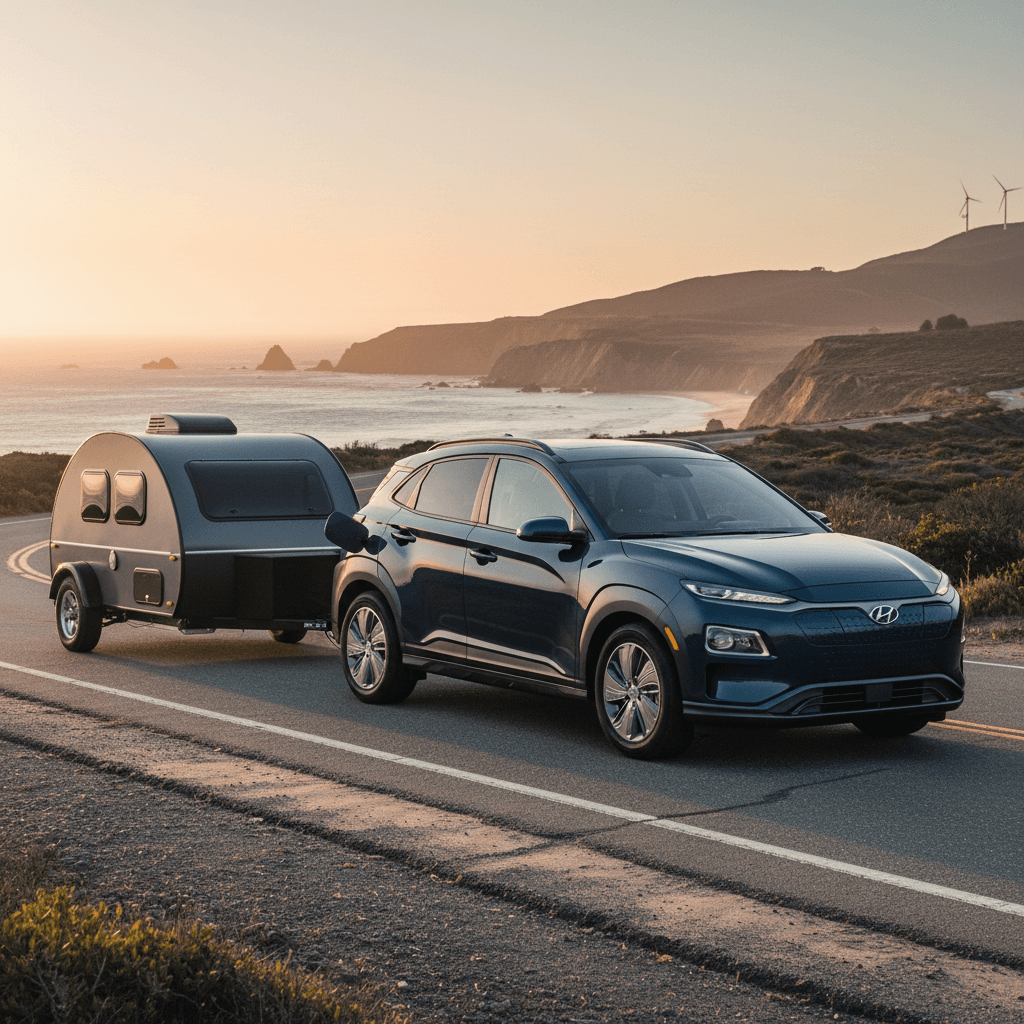
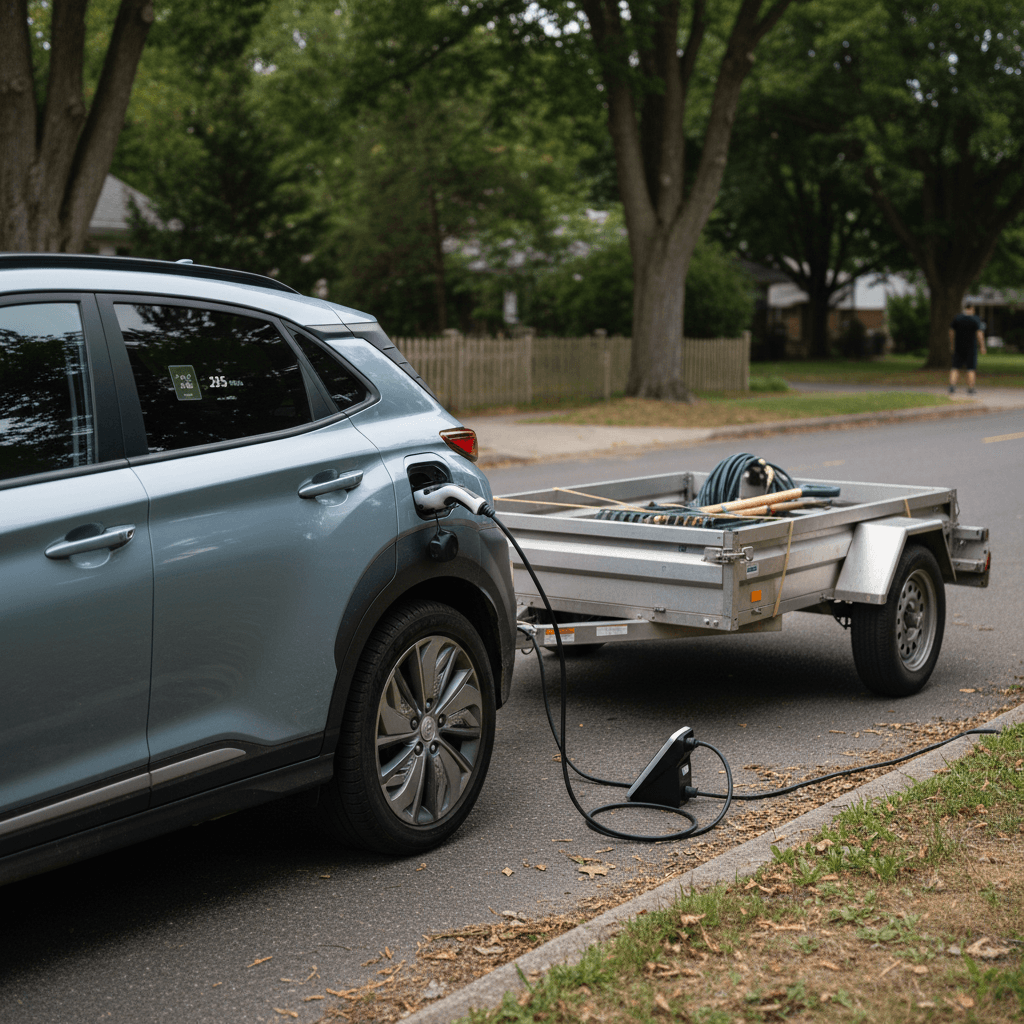
In practice, a small but vocal group of owners have installed aftermarket hitches and used their Bolts to tow light loads, think utility trailers, small teardrop campers, or bike racks with extra gear. The electric motor’s instant torque makes it feel effortless at low speeds, but the car’s structure, cooling system, and brakes weren’t engineered around towing the way a crossover or pickup would be.
Warranty & Liability Note
Official Chevy Bolt EV Towing Capacity
Factory-Stated Towing Capacity for Chevy Bolt EV and EUV (North America)
What Chevrolet and major spec guides say about towing with the first‑generation Bolt.
| Model & Years | Factory Tow Rating (U.S./Canada) | Notes |
|---|---|---|
| 2017–2020 Bolt EV | None – towing not recommended | No tow rating in owner’s manual; no OEM hitch |
| 2021–2023 Bolt EV (refresh) | None – towing not recommended | Same powertrain and battery, updated interior and styling |
| 2022–2023 Bolt EUV | None – towing not recommended | Spec guides list “towing capacity: not recommended” |
| 2027+ Bolt (next-gen, previewed) | Details TBD at launch | Uses new LFP battery; towing info still emerging |
Across multiple model years, the Bolt EV and EUV have no official tow rating in North America.
What About Europe?
Chevy Bolt EV and EUV Range Basics
Chevy Bolt EV & EUV EPA Range (No Trailer)
The outgoing first‑gen Bolt EV and Bolt EUV share a 65 kWh lithium‑ion battery and deliver up to 259 miles (EV)247 miles (EUV) of EPA combined range in their later model years. In mixed real‑world driving, many owners see around 3.0–4.0 miles per kWh, or roughly 195–260 miles per charge when the weather is kind and you’re not hustling on the freeway.
The next‑generation 2027 Bolt, which is starting to roll out with a lithium‑iron‑phosphate (LFP) pack, lands in similar territory on paper, around the mid‑250‑mile mark per charge. For this guide, we’ll focus on the widely available 2017–2023 Bolt EV and 2022–2023 Bolt EUV, since those are the cars you’re most likely shopping used today.
Know Your Baseline
How Towing Cuts Your Chevy Bolt EV Range
Any EV will lose range when towing, but compact hatchbacks like the Bolt are especially sensitive. You’re asking a relatively small battery and modest cooling system to do a lot more work, often at highway speeds where aerodynamics dominate.
Why Towing Hurts Bolt EV Range So Much
Three forces working against you the minute you hitch up a trailer.
Extra Weight
Even a simple utility trailer with lawn equipment can add 500–1,000 lb or more. That’s a big percentage of a Bolt’s ~3,600–3,800 lb curb weight, so every start, stop, and hill climb needs more energy.
Aerodynamic Drag
A tall boxy trailer can be like driving into a headwind all day. Drag grows with speed, so range loss is often worse at 65–75 mph than at 45–55 mph.
Heat & Cooling
More load means more heat in the battery, motor, and inverter. The car’s thermal management system works harder, and that overhead shows up as extra energy use.
Mild Load, Moderate Speeds
If you’re pulling a very small, low trailer, like a single-axle utility trailer with camping gear, under about 750–1,000 lb total, and keeping speeds to 55 mph or less, many EVs see roughly a 25–35% drop in range.
For a Bolt EV with an honest 220 miles of real‑world range, that might leave you with 140–165 miles between charges.
Heavier or Taller Trailer, Highway Speeds
Step up to a small camper or a boxy cargo trailer, or cruise at 70+ mph, and it’s common to see 40–50% range loss, sometimes more in strong headwinds or bad weather.
In that scenario, your practical range could fall to 110–140 miles on a full charge.
Don’t Let Range Loss Surprise You
What You Can Safely Tow With a Chevy Bolt
Because Chevrolet doesn’t publish a tow rating, there is no official “safe” number to point to. But there are some practical guidelines from physics, best practices, and small‑car towing experience that can keep you out of trouble if you decide to proceed at your own risk.
Practical Towing Guidelines for a Bolt EV or EUV
1. Stay Well Under 1,000 Pounds Total
For a non‑rated compact EV like the Bolt, many cautious owners cap total trailer + cargo weight in the <strong>500–1,000 lb</strong> range. That keeps added stress on the brakes, structure, and cooling system modest.
2. Prioritize Braked Trailers
If you’re anywhere near the top of that range, look for a trailer with its <strong>own electric brakes</strong> and a properly wired controller. The Bolt’s friction brakes are sized for the car, not a fully loaded trailer.
3. Keep Speeds Down
Aerodynamic drag skyrockets with speed. Towing at <strong>55–60 mph</strong> instead of 70 can be the difference between making the next charger comfortably and arriving on electrons and prayer.
4. Use a Quality Aftermarket Hitch
Choose a hitch specifically engineered and tested for the Bolt’s mounting points, and have it installed by a shop that understands EVs. Avoid improvising your own solution.
5. Distribute Weight Carefully
Pack heavy items low and forward on the trailer, but don’t overload the tongue. As a conservative rule of thumb, keep tongue weight to <strong>under 10% of trailer weight</strong> and well below what your hitch is rated for.
6. Avoid Mountain Passes on Hot Days
Long climbs in high heat are hard on an EV even without a trailer. When towing, they can push temperatures up and slash range. If you must cross mountains, plan more frequent stops and charge earlier than you think you need to.
Best Uses for a Towing Bolt
Real-World Towing Scenarios and Range Estimates
Because there’s no official tow rating, the best way to think about Chevy Bolt EV towing capacity and range is by use case. Below are rough, conservative estimates for a healthy 65 kWh Bolt EV or EUV in mild weather, starting from about 230 miles of solo real‑world range. Your results will vary.
Sample Towing Scenarios for a Chevy Bolt EV
Approximate ranges for typical light‑towing situations. These are not factory ratings, just planning tools.
| Scenario | Approx. Trailer + Cargo Weight | Typical Speed | Estimated Range Loss | Approx. Practical Range |
|---|---|---|---|---|
| Local utility trailer, yard waste run | 500–700 lb | 45–55 mph city/suburban | ~20–30% | 160–185 miles |
| Bike trailer or small kayak trailer | 400–600 lb, very low profile | 55–60 mph mixed | ~25–35% | 150–175 miles |
| Tiny teardrop camper, very aerodynamic | 800–1,000 lb | 55–60 mph highway | ~35–45% | 125–150 miles |
| Boxy small cargo trailer | 800–1,000 lb, tall | 60–65 mph highway | ~40–50% | 110–140 miles |
Always build in extra margin beyond these estimates, especially for headwinds, climbs, or cold weather.
Not the Right Tool for Big Campers
Towing, Heat, and Your Bolt’s Battery Health
Short bursts of light towing aren’t likely to destroy a healthy Bolt battery by themselves, but they can add stress if you’re not thoughtful. Heat is the big enemy for lithium‑ion packs, and towing piles more thermal load onto a battery that may already be a few years old.
How Towing Can Affect Bolt Battery Health
Where the extra stress shows up over time.
Higher Average Battery Temps
Long climbs or highway towing sessions push more current through the pack for longer. The Bolt’s liquid cooling will work harder to keep temps in check, but sustained high temperatures can accelerate long‑term degradation if you do it often.
Deeper, More Frequent Discharges
Towing makes it easy to run the pack down below 10–15% more often, especially if you misjudge range. Repeated deep discharges can add wear, particularly on older batteries.
Battery-Friendly Towing Habits
Shopping Used? What Bolt EV Shoppers Should Ask About Towing
Used Bolt EVs and EUVs are some of the most affordable long‑range EVs on the market right now, which makes them tempting road‑trip and light‑duty haulers. If you’re buying used, it pays to know whether the previous owner treated the car like an economy hatchback or a compact pickup.
Questions to Ask About a Used Chevy Bolt’s Towing History
1. Has a Hitch Ever Been Installed?
Look under the rear bumper or ask for photos. A properly installed hitch isn’t automatically bad news, but it tells you the car may have towed, or at least carried heavy hitch‑mounted racks.
2. What Was Typically Towed?
If the seller mentions only <strong>bike racks or light cargo trays</strong>, that’s less concerning than a history of cross‑country camper towing. Ask about trailer weight, distance, and terrain.
3. Any Overheating or Reduced Power Warnings?
Frequent thermal warnings or power‑limiting messages when towing suggest the car may have been pushed hard, especially in hot, hilly regions.
4. How’s the Battery Holding Up?
Range loss over time is normal, but significant early degradation can be a red flag. On Recharged, every used EV comes with a <strong>Recharged Score battery health report</strong> so you can see how the pack is actually performing.
5. Who Installed the Hitch?
A reputable shop that understands EVs is far preferable to a home‑brew install. Poorly mounted hitches can transfer stress into the body or crumple zones in ways the car wasn’t designed to handle.
If you’re shopping through Recharged, you’ll see a verified Recharged Score Report on every Chevy Bolt EV and EUV we list. That includes battery health diagnostics and fair‑market pricing, so you’re not guessing whether someone else’s towing adventures have taken an unseen toll on the car you’re considering.
Chevy Bolt EV Towing & Range: FAQ
Frequently Asked Questions About Chevy Bolt EV Towing
Bottom Line: When Towing With a Bolt EV Makes Sense
If you came looking for a simple number, “the Chevy Bolt EV towing capacity is X pounds”, you’ve already realized it doesn’t exist. Officially, the Bolt EV and EUV are not tow‑rated in North America, and Chevrolet doesn’t encourage you to hitch up a trailer. That said, within the EV community, plenty of owners quietly use their Bolts as light‑duty helpers, and the combination of instant torque and compact size can make them surprisingly capable around town.
Use the Bolt for what it does best: efficient commuting, affordable road‑tripping, and occasional light hauling with a carefully chosen, lightweight trailer. Respect the limits, keep weights low, speeds modest, routes conservative, and a close eye on range and temperature, and you can enjoy the flexibility without turning every drive into a nail‑biter.
If you’re shopping used and wondering whether a particular Bolt has lived a hard towing life, that’s where a transparent battery health check matters. Every Chevy Bolt EV and EUV on Recharged includes a Recharged Score Report with verified battery diagnostics, pricing grounded in real‑world data, and EV‑savvy support from first click to driveway delivery. Whether you’re towing a little or not at all, you’ll know exactly what you’re getting.