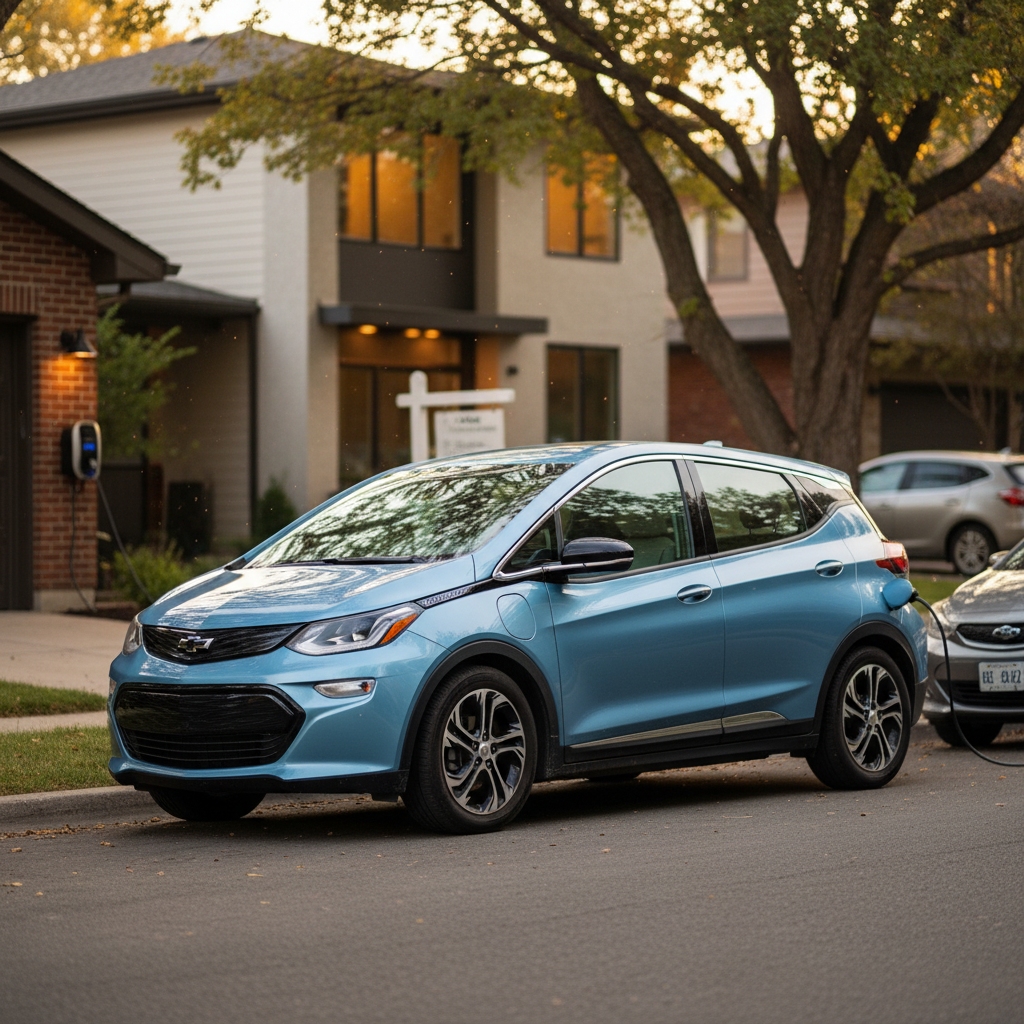
The Chevy Bolt EV has always been the contrarian’s road-trip car: humble little hatchback, gigantic battery, and just enough charging speed to get you across two states without losing your faith in electricity. This Chevy Bolt EV road trip review looks past brochure numbers and into what actually happens when you point a used Bolt at the interstate and disappear for 600 miles.
Which Bolt are we talking about?
Is the Chevy Bolt EV a good road trip car?
The short answer: yes, with conditions. A Chevy Bolt EV or EUV will absolutely do a long highway trip. It’s efficient, reasonably comfortable, and its ~65 kWh battery gives you real-world 180–230 miles between fast‑charge stops when driven smartly. What it isn’t is a 2026‑spec highway vacuum cleaner that inhales 250 kW and spits out 70% charge in a latte break.
The Bolt’s DC fast charging tops out at about 55 kW on 2017–2023 cars, and that is the soul of the experience. It means you road‑trip at a more deliberate rhythm: 2.5–3 hours of driving, 35–50 minutes of charging, repeat. If you expect Tesla‑like stop times, you’ll be annoyed. If you treat the car like a budget intercity train, with scheduled pauses for coffee and emails, it makes a persuasive sort of sense.
Who the Bolt suits best on road trips
The Bolt EV specs that actually matter on a road trip
Chevy Bolt EV/EUV key road-trip specs
Earlier Bolts (2017–2021) typically have a 60–66 kWh pack and a 7.2 kW onboard AC charger. The 2022 refresh brought the 11.5 kW AC charger and made DC fast charging standard, important if you’re shopping used with road trips in mind.
Bolt EV/EUV road-trip cheat sheet by model year
How the major Bolt generations stack up for highway travel.
| Model years | Body style | EPA range (approx.) | Max DC fast charge | Max AC Level 2 | Road-trip verdict |
|---|---|---|---|---|---|
| 2017–2019 | Bolt EV hatchback | 238 mi | ≈55 kW | 7.2 kW | Great efficiency, slower home charging, still road‑trip capable. |
| 2020–2021 | Bolt EV hatchback | 259 mi | ≈55 kW | 7.2 kW | Best value mix of range and price, if DC fast charge option is fitted. |
| 2022–2023 | Bolt EV & Bolt EUV | 259 / 247 mi | ≈55 kW | 11.5 kW | Most road‑trip friendly Bolts thanks to faster AC charging and refreshed interior. |
If you’re choosing a used Bolt as a road-trip companion, this is the stuff that matters more than paint and wheels.
Real-world Chevy Bolt EV road trip range
On paper, a 259‑mile EPA rating looks generous. On the interstate at 70–75 mph with luggage and climate control running, you should think in terms of usable 180–220 miles per leg, depending on conditions and how comfortable you are arriving near empty.
Best-case scenario
- Speed: 60–65 mph
- Weather: mild (60–75°F)
- Terrain: mostly flat
- Cabin: eco A/C, no roof box
You can realistically see 230+ miles between 10% and 80% if you drive gently.
Worst-case scenario
- Speed: 75–80 mph
- Weather: freezing temps, headwinds
- Terrain: long grades
- Cabin: full heat, loaded car
Expect more like 150–170 miles per comfortable leg before you start hunting for a charger.
Cold-weather caveat
The Bolt’s real strength is that it holds its efficiency where many bulkier crossovers fall apart. Run 70 mph with traffic and you can still see around 3.0–3.5 mi/kWh on a calm day, which is why this stubby hatch can play in the same long‑leg league as bigger EVs that charge faster but drink harder.
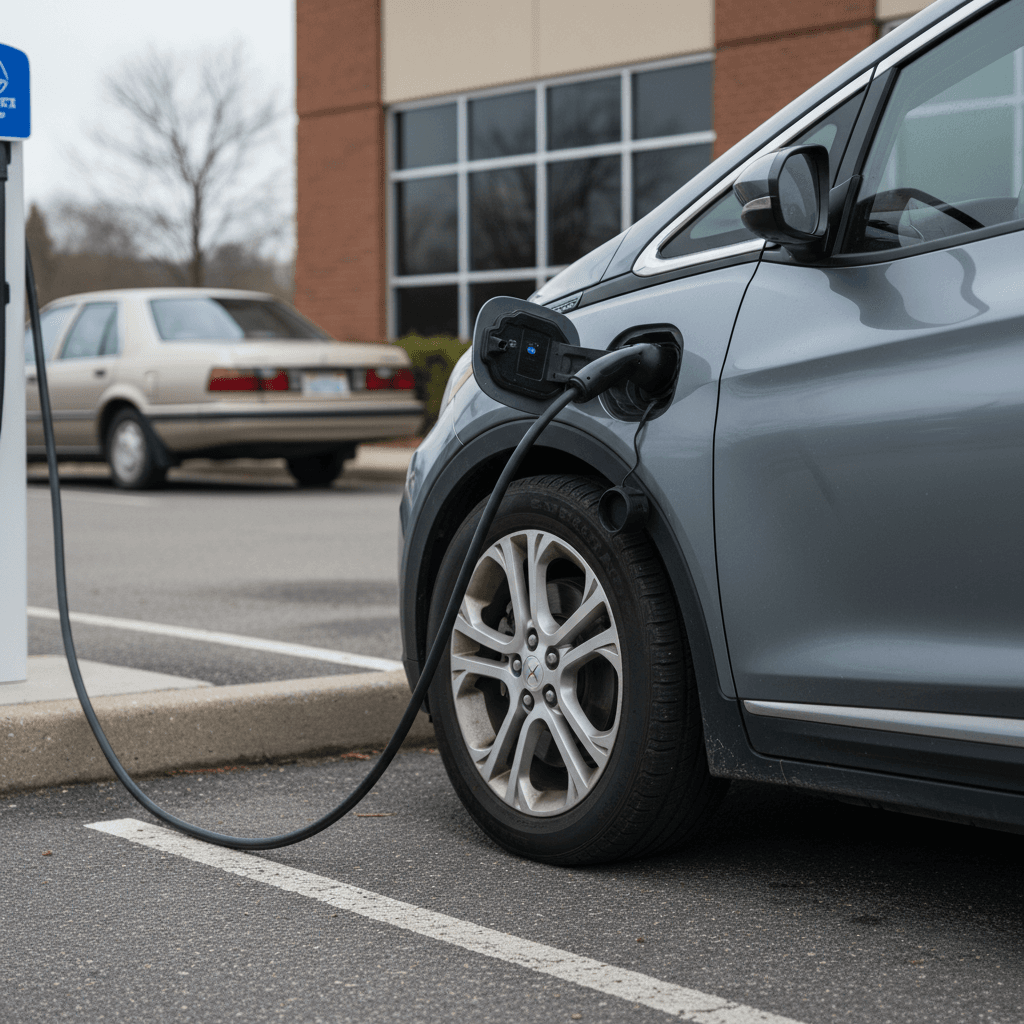
Charging the Bolt EV on the road
Here’s the crux of every Chevy Bolt EV road trip review: charging is perfectly workable, just not fast by 2026 standards. The car peaks around 55 kW on a DC fast charger, then starts ramping down around 55–60% state of charge. Above ~80%, you’re twiddling your thumbs for small gains.
How a typical Bolt fast-charging stop feels
The rhythm becomes predictable after your first day on the road.
Arrive 10–20%
You pull in with a healthy buffer but not too much leftover energy. This is where the Bolt takes the biggest bite out of the charger, often close to its 55 kW peak.
Charge to ~70%
The sweet spot. From ~10% to 70% typically takes 35–45 minutes if the station is healthy, netting you ~130–160 miles of highway range.
Stretch, snack, go
Use the time. Bathroom, coffee, check email, walk a loop of the parking lot. When you get back, you’re usually ready to roll.
Don’t chase 100% unless you must
AC charging matters too. Many hotels and Airbnbs offer Level 2. A 2022+ Bolt with the 11.5 kW onboard charger can refill completely overnight, turning a long dinner-and-sleep stop into a free reset for the next day’s legs.
Planning around CCS today
Comfort, noise, and highway manners
Out on the interstate, the Bolt isn’t a rolling lounge; it’s a very clever compact hatch doing a surprisingly good impression of grown‑up transport. The driving position is upright, sightlines are good, and the steering is light but precise enough that long stints don’t feel like work.
- Seats: Earlier Bolts (2017–2019) were dinged for narrow, firm front seats. The 2020+ cars feel better padded, but if you’re sensitive, test a long drive before you commit.
- Noise: Wind and road noise are very present at 75 mph. It’s not punishing, just less hushed than a Model 3 or Ioniq 5. Bring a good playlist.
- Ride comfort: Short wheelbase + big battery = a slightly busy ride over broken pavement. On fresh highway it settles down and feels tidy.
- Space: Two adults and two kids plus luggage fit fine. Four adults with hard‑sides? You’ll want to pack like Europeans, not Americans.
EV fatigue is different
In a gas car you fight engine drone and stop every 350 miles when your spine demands it. In a Bolt, the powertrain is silent; fatigue comes from noise, seating, and the mental load of watching your next charger.
The psychological trick
If you treat each 2.5–3 hour leg as its own self‑contained trip, the regular stops start to feel humane rather than restrictive. You step out of the capsule as often as your body probably should have forced you to anyway.
Planning a Bolt EV road trip: step-by-step
Six steps to a smooth Bolt EV road trip
1. Map your CCS backbone first
Use apps like PlugShare, A Better Routeplanner, or your preferred planner to sketch a route that hops between reliable CCS fast chargers every 120–170 miles. You’re not looking for the shortest distance, you’re looking for the cleanest charging spine.
2. Aim for 10–70% charging windows
Plan to arrive with 10–20% state of charge and depart around 70–80%. That keeps you in the Bolt’s faster portion of the charging curve and minimizes time spent crawling from 80–100%.
3. Build in a lunch-and-dinner ‘big stop’
Once a day, choose a stop near food, bathrooms, and a Level 2 or DC charger where you’re happy to sit 60–90 minutes. Think of it as your road‑trip layover: the long break that makes the rest feel easy.
4. Watch elevation and weather
Climbs and headwinds are range kryptonite, especially in winter. If your route crosses mountains or open plains, shorten the distance between chargers and give yourself a bigger arrival buffer (20–25% instead of 10–15%).
5. Precondition when you can
If your Bolt is warm from driving, it’ll charge closer to its peak. After an overnight Level 2 session in the cold, drive 20–30 minutes before the first DC fast charge to warm the pack a bit.
6. Have a fallback for every key stop
For each critical charger, identify a backup within 20–30 miles. Networks can be finicky; knowing you’ve got a Plan B is the difference between mild annoyance and a four‑letter vocabulary lesson.
Chevy Bolt EV road trip pros and cons
Bolt EV on a road trip: strengths vs. compromises
Why some drivers swear by it, and others swear at it.
What the Bolt does well
- Big battery, small appetite: Around 3.0–3.5 mi/kWh on the highway means you go surprisingly far on a relatively modest pack.
- Compact footprint: Easy to thread through cities, hotel garages, and tight parking at busy chargers.
- Affordable used pricing: Compared with newer 250 kW EVs, used Bolts are often thousands cheaper, freeing budget for those road‑trip weekends.
- One‑pedal driving: Strong regen makes stop‑and‑go traffic and descending mountain passes less tiring.
Where the Bolt compromises
- Slow DC fast charging: 55 kW peak is simply not fast in 2026; you must accept longer stops.
- CCS dependence: Until adapters and NACS access mature for legacy GM EVs, you’re mostly living on non‑Tesla networks.
- Noise & seats: Louder and less plush than many newer EVs, especially on coarse pavement.
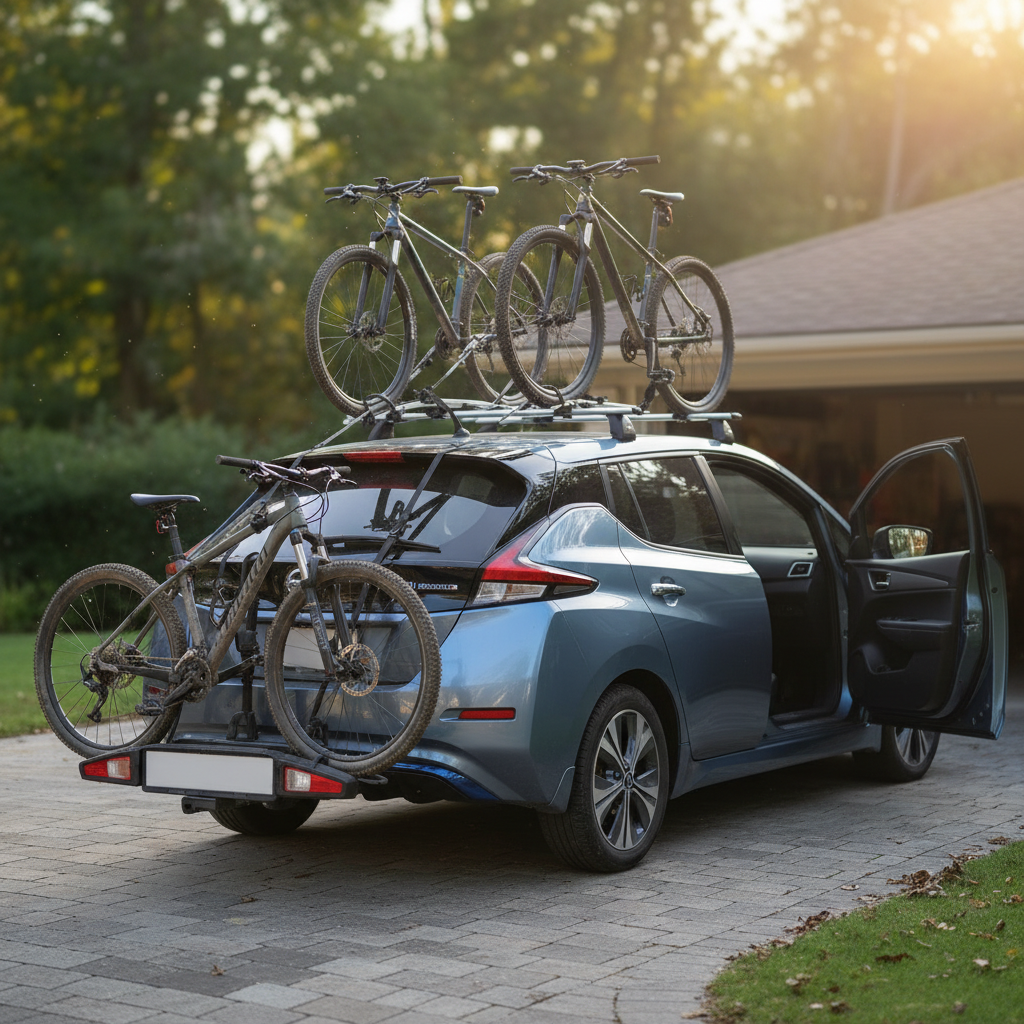
- Limited cargo volume: It’s a tall hatch, not a wagon, fine for light packers, less ideal for four adults plus gear.
The value proposition in one sentence
Used Bolt EV road trip buying advice
If road trips are part of your life, not your whole personality, a used Bolt can be the ideal second‑act EV. But you do need to shop carefully, battery history, DC charging hardware, and the recall work all matter more than color and wheel design.
What to look for in a road-trip-ready used Bolt
Verify battery recall and pack replacement
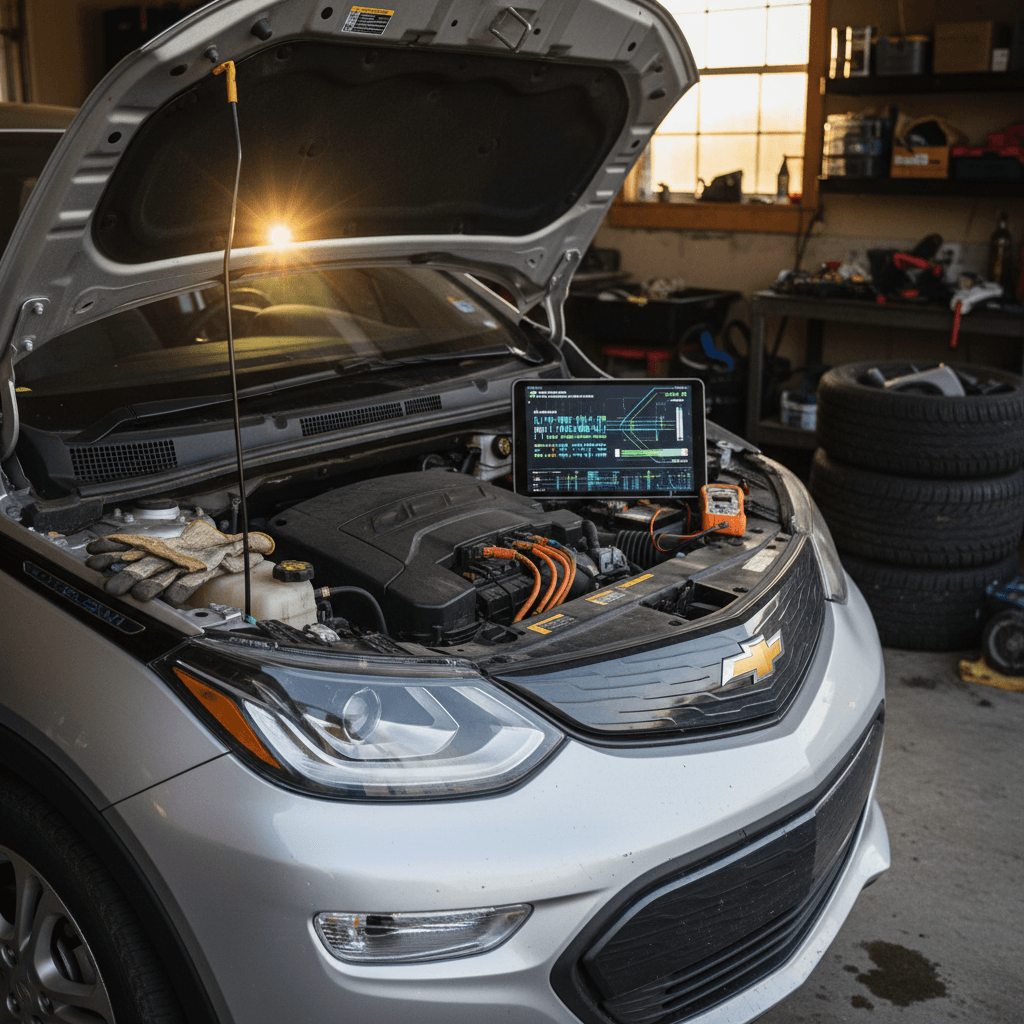
GM performed a major battery recall on first‑gen Bolts. Many cars received <strong>brand‑new packs</strong>, which is a big win for long‑term health and road‑trip confidence. Confirm recall status and whether the battery was replaced or just reprogrammed.
Confirm DC fast charging is fitted and tested
Some early Bolts were sold without the DC fast charging option. For road trips, that’s a hard no. Check the charge port for the lower CCS section and, ideally, ask for a recent DC fast‑charge session in the history.
Check real battery health, not just range guess
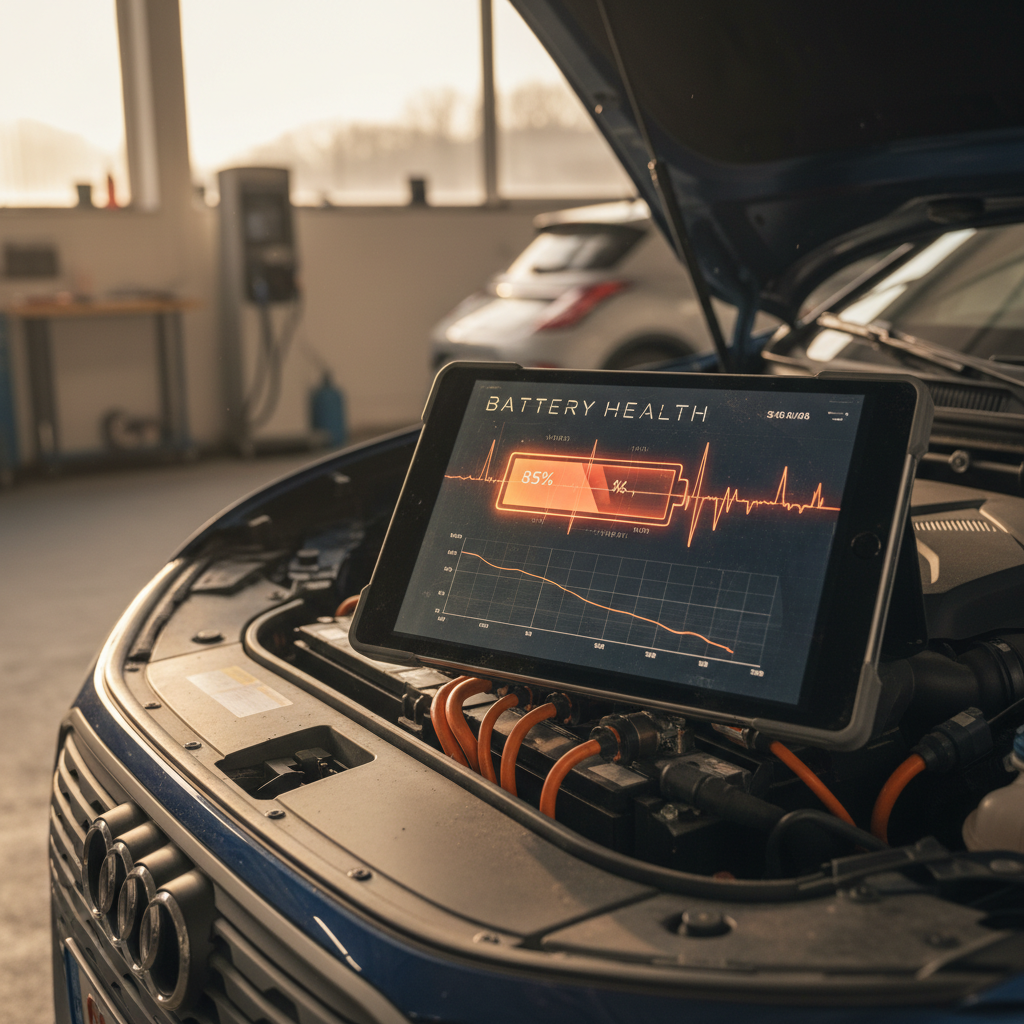
A healthy pack is everything on a road‑trip car. At <strong>Recharged</strong>, every vehicle includes a <strong>Recharged Score battery health report</strong> so you can see degradation clearly instead of guessing from a range estimate on a cold day.
Look for 2020+ if your budget allows
The 2020–2023 cars brought better seats, updated styling, and, on 2022+, faster AC charging. Earlier cars can be great value but budget for a seat upgrade if you’re sensitive.
Prioritize clean DC charging history
A car that’s lived on Level 2 with only occasional fast charging will likely have a happier battery than one that’s done rideshare duty on DC fast chargers every day.
Factor in your home charging situation
If you can install a 40–48 amp Level 2 at home, you’ll start trips topped‑off with minimal fuss. If not, you may rely more on public DC even close to home, another reason to have rock‑solid battery health and DC hardware. <strong>Recharged</strong> can also help you explore financing that includes money for a home charger and installation.
How Recharged fits into the picture
Ready to find your next EV?
Browse VehiclesChevy Bolt EV road trip FAQ
Frequently asked Chevy Bolt EV road trip questions
So…should you road-trip a Chevy Bolt EV?
If your idea of travel is annihilating states in 700‑mile cannonball shots, the Chevy Bolt EV will feel like it’s constantly asking for a coffee break. But if you’re willing to let the journey be punctuated by 40‑minute pauses, good coffee, bad fast‑food art, the small anthropology of American parking lots, the Bolt makes a strangely lovable road companion.
As a used EV road-trip tool, it’s still one of the sharpest bargains going: efficient, simple, and now old enough that depreciation has done most of its damage. Get a car with healthy battery metrics, confirmed recall work, and DC fast charging, and plan your routes like a grown‑up. Do that, and the little Chevy will carry you, quietly and cheaply, much farther than its spec sheet suggests.
If you want help finding that sweet‑spot Bolt, right model year, right battery, right price, Recharged can put the numbers, the Recharged Score, and the financing all in one place, then deliver the car to your door. You bring the playlist; the Bolt will take care of the miles.