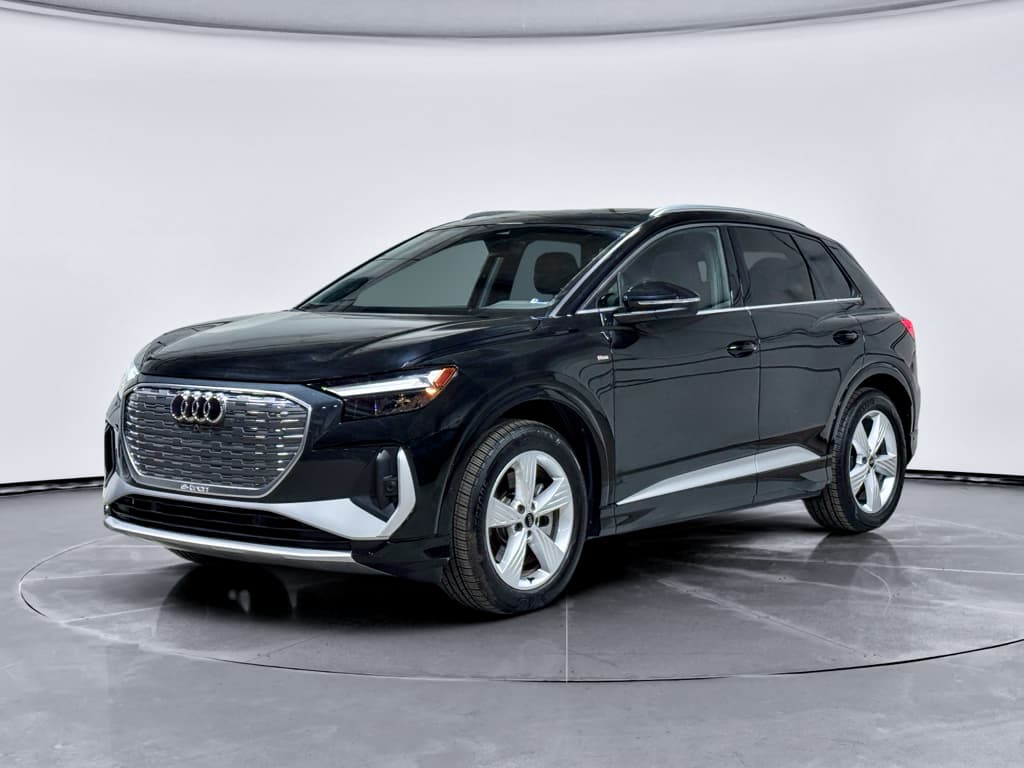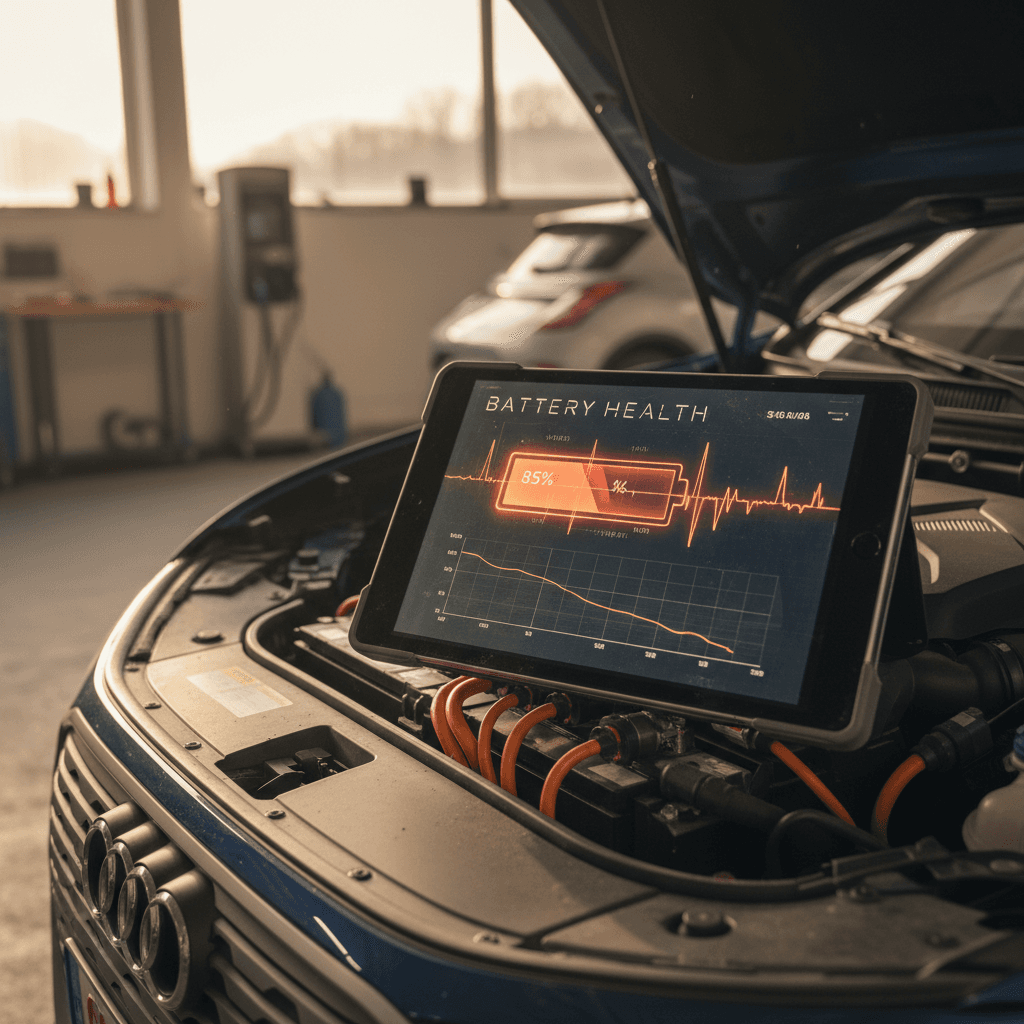
If you’re eyeing an Audi Q4 e-tron, especially a used one, the question that matters more than 0–60 times or wheel size is simple: how much does the battery degrade per year? In other words, how much range will you realistically lose as the miles and years stack up?
Quick answer
How much does an Audi Q4 e-tron battery degrade per year?
Audi doesn’t publish an official “degradation per year” figure for the Q4 e-tron, and no automaker really does. Instead, they back the pack with an 8‑year, 100,000‑mile (U.S.) or 160,000‑km (Europe) high‑voltage battery warranty that guarantees a minimum remaining capacity at the end of that period.
Audi Q4 e-tron battery degradation at a glance
Looking at early Q4 e-tron owners and data from sibling VW MEB vehicles (like the ID.3 and ID.4 that share the same battery tech), a realistic expectation is roughly 10–15% capacity loss over the first 8 years or 100,000 miles for a car that’s charged mostly at home and not abused. That averages out to around 1–2% per year, though the curve isn’t perfectly linear.
Warranty vs. reality
How the Audi Q4 e-tron battery is built
To understand why the Audi Q4 e-tron’s battery generally degrades slowly, it helps to know what’s under the floor. The Q4 rides on Volkswagen Group’s MEB platform, shared with the VW ID.4 and others. Most North American Q4 e-tron models use a large pack with about 77 kWh of usable energy (82 kWh gross), made up of lithium‑ion cells with liquid cooling and active thermal management.
- The pack is oversized relative to many daily commutes, so most drivers don’t regularly use 0–100% of its capacity.
- Audi keeps a buffer at the top and bottom of the state‑of‑charge (SOC) window, so even “100%” on the dash isn’t truly 100% at the cell level.
- Active cooling and, in colder climates, heating help keep cell temperatures in a sweet spot where chemical aging slows down.
Chemically, this is a modern ternary lithium‑ion chemistry similar to what you’ll find in other mainstream EVs. It’s not exotic, but it’s well understood, and when paired with conservative charge limits and good thermal control, that’s a recipe for predictable, gradual degradation rather than nasty surprises.
Warranty: what Audi actually promises on degradation
On U.S.‑market Q4 e-tron models, Audi backs the high‑voltage battery for 8 years or 100,000 miles, separate from the standard 4‑year / 50,000‑mile bumper‑to‑bumper coverage. In many other markets, the battery is covered for 8 years or 160,000 km.
Audi Q4 e-tron battery warranty basics
How Audi frames its high‑voltage battery protection compared with what owners usually experience.
| Item | Typical Audi Q4 e-tron Coverage | What It Means For You |
|---|---|---|
| Term | 8 years | Time from original in‑service date that the pack is covered |
| Mileage limit | 100,000 miles (US) / 160,000 km (EU) | Higher of time or mileage ends the coverage |
| Capacity threshold | Around 70% remaining | If the pack falls significantly below this with normal use, it may qualify for repair/replacement |
| Transferability | Usually transferable to new owners | A used‑car buyer can still benefit if the car’s within term and miles |
Always check the exact warranty terms for your model year and market, but this shows the general pattern for Q4 e-tron coverage.
Read the fine print
Real‑world owner examples and VW MEB platform data
We’re still early in the Q4 e-tron’s life, but meaningful patterns are already showing up from high‑mileage owners and from its cousins on the VW MEB platform.
What we’re seeing so far in the real world
Owner anecdotes plus long‑term testing on related MEB models paint a consistent picture.
High‑mileage Q4 owner
One early Q4 e-tron owner with roughly 100,000 miles reported usable capacity down from about 77 kWh to ~70 kWh, roughly 10% loss over several years. The car still delivers solid real‑world range.
VW ID.3/ID.4 data
German and European testing on 77‑kWh VW ID.3/ID.4 packs, using the same core battery tech as the Q4, shows packs retaining around 90% capacity after ~100,000 miles of mixed driving.
Daily driving reality
For most drivers doing 8,000–12,000 miles a year, that translates to roughly 1–2% per year loss in practical terms, often front‑loaded in the first 2–3 years.
Batteries tend to degrade faster at the outset and then settle down for a bit, and I’m mostly charging slowly at home so I reckon it’s got a lot of life left in it.
Is this a lab‑grade longitudinal study of Q4 e-tron packs? Not yet. But when owner reports, independent MEB testing, and Audi’s own warranty posture all point in the same direction, you can be reasonably confident that catastrophic early degradation is the exception, not the rule.
Factors that speed up or slow down Q4 e-tron degradation
Battery degradation isn’t a fixed clock. Two Q4 e-trons that are the same age can have very different battery health depending on how they were used and where they lived. Here are the big levers that move the needle.
Key drivers of Q4 e-tron battery degradation
1. Fast‑charging habits
Occasional DC fast‑charging is fine. But if a Q4 spends its life hopping from high‑power DC charger to high‑power DC charger, especially charging from low to high SOC in heat, you’ll see faster degradation than the owner who mostly trickle‑feeds at home.
2. Typical state of charge window
Living the battery’s life between about <strong>20–80%</strong> SOC is easier on the chemistry than constant 100% top‑offs. Parking at 100% on hot days is an especially bad combination.
3. Climate and temperature
Extreme heat is rough on lithium‑ion cells. Desert climates where the car bakes outside can accelerate aging, even when it’s not being driven. Cold hurts short‑term range but is not nearly as harmful over the long run.
4. Annual mileage
More miles mean more charge cycles, but mileage alone isn’t the villain. A high‑mileage Q4 that racks up highway miles gently and charges mostly at home may look healthier than a low‑miler that’s been hammered with DC fast‑charging.
5. Software and maintenance
Keeping the car’s software up to date, avoiding storage at 0% for long periods, and following Audi’s recommendations help the battery management system (BMS) protect the pack over time.
Gentle use pays off
What battery degradation feels like in everyday driving
Degradation is abstract until it starts to nibble at your daily routine. In an Audi Q4 e-tron, that nibble is usually pretty subtle for the first decade.
Year 1 vs. Year 6
Imagine a Q4 e-tron that could realistically do 240 miles of mixed driving when it was new. With a typical 10–12% loss after several years, that same car might now be good for something like 210–215 miles in similar conditions.
Day to day, most owners notice that as “I plug in a little more often,” not as a crisis.
Highway and winter range
Fast highway speeds and cold weather can temporarily cut range by 15–30% compared with EPA numbers, even on a brand‑new pack. Add some permanent degradation on top, and a used Q4 may show 160–180 miles at 70–75 mph in winter where the sticker once suggested more.
That’s why it’s important to separate temporary range loss (temperature, speed, wind) from permanent degradation (battery health).
Don’t confuse winter loss with degradation
Used Q4 e-tron: how much degradation is “normal”?
If you’re shopping used, you don’t get to see how the previous owner treated the battery. But you can go in with some expectations. Here’s a rough, ballpark guide for what we’d consider reasonable on a Q4 e-tron that’s been driven and charged sensibly:
Reasonable Q4 e-tron degradation ranges by age
Approximate capacity loss we’d expect to see on a well‑cared‑for Q4 e-tron. These are guidelines, not hard rules.
| Vehicle Age / Miles | Typical Degradation (Healthy Use) | What That Means In Range |
|---|---|---|
| 3 years / ~36,000 mi | 5–8% | A 240‑mile real‑world car might now do ~220–230 miles |
| 5 years / ~60,000 mi | 8–12% | Expect maybe 210–220 miles where 240 once felt easy |
| 8 years / ~100,000 mi | 12–20% | Still usable for many, but highway trips will need more planning |
| >10 years / high mileage | 20–30%+ | The pack may still be fine for local use, but long‑trip range will feel tight |
If a car is meaningfully worse than these ranges, it deserves a closer look, or a discount.
Red flags on a used Q4 e-tron
How to check Q4 e-tron battery health before you buy
You don’t have X‑ray vision, but you do have tools. Before you commit to a used Audi Q4 e-tron, you want to know whether you’re getting a battery that’s merely lived a normal life, or one that’s been on the wrong side of too many high‑power road trips.
Pre‑purchase battery health checklist for a used Q4 e-tron
1. Verify remaining battery warranty
Ask for the in‑service date and mileage. A 2022 Q4 e-tron sold new on June 1, 2022 will have battery coverage until June 1, 2030 or 100,000 miles, whichever comes first. Knowing what’s left matters if degradation turns out to be abnormal.
2. Look at indicated range at high state of charge
Charge the car to around <strong>90–100%</strong> and see what the predicted range looks like for your local conditions. Compare that to period‑correct EPA ratings, and remember to adjust for temperature and driving style.
3. Check trip computer efficiency
On a long test drive, note the kWh/100 miles (or mi/kWh) and the distance the car actually covers. High consumption plus low indicated range can hint at tire choice, alignment, or weather, not just battery health.
4. Ask about fast‑charging habits
You won’t always get a perfect answer, but a car that lived on a DC fast‑charging corridor, and has the receipts to prove it, deserves a closer look than one that was mostly home‑charged on Level 2.
5. Get a professional battery test
Whenever possible, use a shop or marketplace that can run <strong>pack health diagnostics</strong> instead of relying on the dash guess. This is where platforms like <strong>Recharged</strong> make life much easier.
Why a tested car is worth more
How Recharged measures Q4 e-tron battery health
On Recharged, every used EV, including the Audi Q4 e-tron, comes with a Recharged Score Report. For Q4 e-tron shoppers, that report is your shortcut past hand‑waving and into real numbers.
What you see in a Recharged Q4 e-tron battery report
Concrete data instead of range guesswork.
Measured state of health
We use battery diagnostics and real‑world pack behavior to estimate remaining capacity versus when the Q4 was new, expressed as a percentage.
Degradation vs. age & miles
Your report shows whether the car’s battery is degrading faster, slower, or about average for its model year, mileage, and usage pattern.
Pricing that reflects battery health
Our fair‑market pricing engine weighs verified battery health alongside mileage and condition, so a Q4 with an unusually strong pack is priced accordingly, and one with heavy degradation is discounted.
Ready to find your next EV?
Browse VehiclesBecause Recharged specializes in used EVs, our team can also walk you through what the numbers mean in plain English. If a Q4 e-tron shows 88% health at 70,000 miles, we’ll translate that into what you can expect for range today and five years from now, not just leave you staring at a percentage.
Leaning toward a Q4 e-tron?
FAQ: Audi Q4 e-tron battery degradation per year
Common questions about Q4 e-tron battery degradation
Bottom line: is the Q4 e-tron battery a good bet?
If you strip away the alphabet soup of platforms and chemistry, the Audi Q4 e-tron’s story is refreshingly simple: in the real world, its battery tends to degrade slowly and predictably when treated with basic care. For most owners, that looks like roughly 1–2% loss per year, enough that you’ll plug in a little more often a decade in, not enough to turn the car into a driveway ornament.
Where the Q4 e-tron really shines is as a used EV, if you can see past the marketing brochure and into the pack itself. A car with documented battery health, realistic pricing, and a few years of depreciation already baked in can be a smart way to get into a premium EV without paying new‑car money for its early‑life degradation.
That’s exactly the gap Recharged is built to close. Every Q4 e-tron we list comes with a Recharged Score Report that spells out battery health, fair market pricing, and how that particular SUV stacks up against its peers. If you’re ready to put some numbers behind your gut feeling about a Q4 e-tron, start your search with verified data, and let the battery tell you its story before you buy.