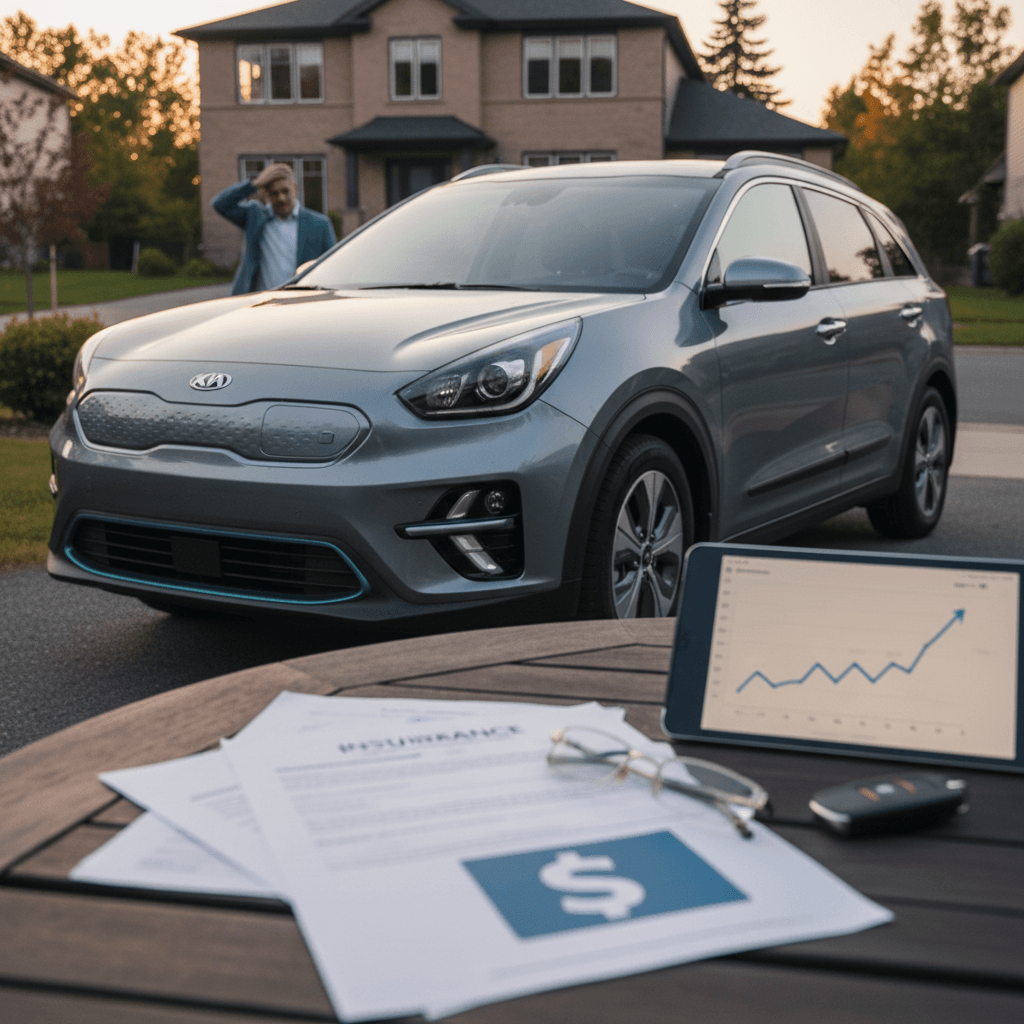
If you’re looking at a Chevy Bolt EV or Bolt EUV, you’re probably drawn to low fueling and maintenance costs. But what about Chevy Bolt EV insurance cost? For many drivers, insurance is the line item that surprises them most, especially on electric vehicles.
At-a-glance: Bolt EV insurance in 2025
What does Chevy Bolt EV insurance cost in 2025?
Exact numbers vary by state, insurer and driver profile, but as of 2025, many U.S. drivers see annual full-coverage premiums on a Chevy Bolt EV and Bolt EUV fall somewhere around the same range as other compact EVs and small crossovers. In many regions, the Bolt prices out a bit higher than an equivalent gas hatchback but under or around what you’d pay for a small crossover or compact luxury car.
Chevy Bolt EV insurance: quick snapshot
Why quotes online differ so much
Chevy Bolt EV vs. Bolt EUV insurance costs
Chevy Bolt EV
- Body style: Compact hatchback
- Value: Typically a bit lower sticker price and used value than EUV
- Insurance impact: Slightly cheaper to insure in many cases thanks to lower replacement cost
Chevy Bolt EUV
- Body style: Slightly larger, crossover-like
- Features: Often better-equipped trims, sometimes with more tech
- Insurance impact: May run a bit higher to insure because of added features and higher repair/replacement cost
Insurers don’t care about the model name as much as what it represents: vehicle value, repair costs, safety ratings, and claim history. A top-trim Bolt EUV with more tech and options could carry a higher comprehensive and collision rate than a base Bolt EV, even though they share a lot of hardware.
Why EV insurance (and the Bolt) can cost more
If you’re coming from a low-cost gas compact, you might see a bump moving into any EV, including the Chevy Bolt. That’s not because the Bolt is unsafe; in fact, it performs well in many crash tests. The issue is repair economics and how insurers think about risk.
What makes EV insurance different
Three realities that shape Chevy Bolt EV premiums
Expensive battery packs
Specialized repair networks
More sensors and tech
The safety upside
Key factors that shape your Bolt EV insurance rate
Some cost drivers are EV-specific, but most are the same fundamentals that affect any car. Understanding them gives you levers to pull when you’re trying to control the Chevy Bolt EV insurance cost line in your budget.
What insurers look at for a Chevy Bolt EV
These are the levers that most directly influence your premium.
| Factor | Why it matters for a Bolt | What you can do |
|---|---|---|
| Location (state & ZIP) | Accident rates, theft rates, medical costs and litigation trends vary widely by region. | Compare quotes before and after a move; ask about garaging, commute distance and usage fields on applications. |
| Driving record | Tickets, at-fault crashes and DUIs push rates up on any vehicle, including EVs. | Drive defensively, consider telematics programs that reward clean driving, and shop around after tickets fall off your record. |
| Credit-based insurance score (where allowed) | In many states, credit is a major rating factor even if you’ve never filed a claim. | Pay bills on time, reduce debt where possible, and ask agents how much credit impacts pricing in your state. |
| Vehicle value & trim | Higher-priced trims and newer model years cost more to repair or replace. | If you’re price-sensitive, consider a well-equipped but not loaded used Bolt EV instead of the priciest EUV trim. |
| Annual mileage & use | Commuting into dense traffic every day creates more exposure than low-mileage local use. | Be honest but accurate about mileage; if your driving drops, update your policy to reflect it. |
| Coverage levels & deductibles | Full coverage with low deductibles costs more than liability-only with higher deductibles. | Right-size coverage for the car’s age and your finances; we’ll dive into this below. |
| Battery recall history & repairs | The Bolt’s battery recall history is well-known. Properly completed recall work reassures insurers. | Verify recall completion and documentation when buying a used Bolt, especially private-party. |
Not every factor is under your control, but you can adjust more than you might think.
Leverage the used Bolt value story
Battery recalls, repairs, and what insurers care about
The Bolt EV and EUV made headlines due to high-profile battery recalls and, in rare cases, fire risk. Most vehicles have now received battery repairs or replacements under manufacturer programs, but that history still shapes how shoppers, and insurers, view the car.
- Insurers generally will not surcharge you just because a specific model had a recall in the past, especially once repairs are complete.
- They do care about whether a car has been properly repaired and whether any open recalls remain.
- Vehicles with severe battery damage from a crash can be totaled more quickly than a gas car because of repair economics and safety protocols.
Buying a Bolt with unresolved recall work
One advantage of buying through a specialist used-EV retailer like Recharged is transparency. Every vehicle includes a Recharged Score Report with verified battery health and recall status, so you can shop with a clear picture of the car’s condition before you ever request an insurance quote.
10 ways to lower your Chevy Bolt EV insurance cost
You can’t rewrite your driving history overnight, but you can be strategic. Here are practical ways Bolt owners commonly cut their premiums without sacrificing protection.
Practical levers to pull on Bolt EV insurance
1. Get quotes from multiple EV-friendly insurers
Different carriers view EVs differently. Some are investing in EV expertise and repair networks and may offer more competitive pricing on a Chevy Bolt EV than legacy carriers who haven’t caught up.
2. Adjust comp and collision deductibles
If you have the savings to handle a higher out-of-pocket in a worst-case scenario, raising your deductibles can trim monthly cost. Just don’t stretch beyond what you could responsibly pay after an accident.
3. Right-size coverage on older used Bolts
A 7- or 8-year-old Bolt EV with high mileage may not justify the same full-coverage limits as a nearly new EUV. Ask your agent to walk through actual-cash-value versus what you’re paying for physical damage coverage.
4. Ask about EV and telematics discounts
Some insurers offer discounts for electric vehicles, advanced safety features, or for sharing driving data through a smartphone app. If you’re a smooth, low-mileage driver, usage-based programs can pay off.
5. Bundle home and auto (including your charger)
Bundling your home or renter’s policy with your auto coverage is a classic discount. Ask how your home charging setup is covered for fire, theft, or vandalism at the same time.
6. Re-check rates after tickets or accidents drop off
Violations usually impact your rate for three to five years. Put a reminder on your calendar to reshop your policy when a major incident ages out of that window.
7. Keep realistic annual mileage estimates updated
If you moved closer to work or started working from home, your real-world miles may have dropped. Updating your mileage can unlock savings, especially on a daily-driven EV like a Bolt.
8. Consider pay-per-mile programs if you drive little
Bolts are popular city cars. If you only drive a few thousand miles per year, a pay-per-mile insurer could undercut traditional policies while still covering you properly.
9. Install anti-theft and tracking devices
Garaging your Bolt, using OEM security features, and adding a tracking device in higher-theft areas can qualify you for extra discounts with some carriers.
10. Shop insurance before you buy the car
Before you sign on a specific Bolt EV or EUV, get a few VIN-specific quotes. Recharged’s specialists can help you gather the information insurers need so there are no surprises after purchase.
Tie insurance into your purchase plan
Ready to find your next EV?
Browse VehiclesChoosing the right coverage for a used Chevy Bolt
New or used, you’re balancing three priorities: protecting your finances, satisfying any lender requirements, and staying within your monthly budget. The right mix for a used Chevy Bolt EV looks different than for a brand-new one.
When full coverage makes sense
- You’re financing or leasing through a lender who requires comprehensive and collision.
- The Bolt EV or EUV still represents a significant share of your net worth.
- You’d struggle to replace or repair the car out-of-pocket after a major loss.
In these cases, err on the side of stronger coverage and adjust deductibles to manage cost.
When liability-only might work
- The Bolt is older, high-mileage, and worth relatively little on the open market.
- You have enough savings to handle repairing or replacing the car yourself.
- You’re comfortable with the risk of not being reimbursed for damage to your own vehicle.
Liability-only policies still protect you if you injure someone or damage their property, which is the most critical financial risk.
Don’t skimp on liability limits
How Bolt EV insurance fits into total EV ownership costs
Insurance is just one line in the total cost-of-ownership story. Many Bolt owners save big on fuel and routine maintenance compared with a gas car, which can offset a slightly higher insurance bill.
Where the Bolt EV often saves you money
Context for your insurance line item
Fuel vs. electricity
Lower routine maintenance
Battery visibility
When you’re comparing a used Bolt from Recharged to another used gas car, look at the all-in monthly number: principal and interest, expected charging costs, maintenance and repairs, plus insurance. That holistic view usually paints a more favorable picture for efficient EVs than a premium comparison alone.
FAQ: Chevy Bolt EV insurance questions, answered
Chevy Bolt EV insurance FAQs
Bottom line: Is Chevy Bolt EV insurance worth it?
A Chevy Bolt EV or EUV might not always be the cheapest vehicle to insure in your garage, but when you factor in fuel and maintenance savings, it often pencils out as a smart ownership play. The key is understanding what drives Chevy Bolt EV insurance cost, tailoring coverage to the car’s age and your finances, and being proactive about shopping for EV-friendly insurers.
If you’re considering a used Bolt, pairing transparent vehicle data with smart insurance shopping is the winning formula. Recharged’s Recharged Score Report gives you verified battery health, recall status, and fair market pricing up front. From there, you can share the VIN and details with insurers, dial in coverage that matches your risk tolerance, and step into EV ownership with eyes wide open, and no surprises in your monthly budget.