If you’re considering a Chevy Bolt EV or EUV, or you already own one, you’ve probably heard the same line: “The Bolt charges slowly.” This Chevy Bolt EV charging speed test walks through what you’ll actually see at a DC fast charger and on Level 2, how long common charge sessions take, and what you can do to cut your stop times without hurting battery health.
Two generations, very different fast charging
Why Chevy Bolt EV charging speed matters
The first‑generation Chevy Bolt EV built its reputation on affordable range, about 259 EPA‑rated miles from a 65 kWh battery. The trade‑off is modest DC fast‑charging speeds compared with newer EVs. Many modern models can briefly spike to 150–250 kW; your Bolt is capped at about 55 kW. That doesn’t kill road trips, but it does change how you plan them.
Who this Bolt charging guide is for
Whether you own or you’re shopping, the numbers work differently than on a 150 kW rocket ship.
Current Bolt owners
Used‑EV shoppers
Budget‑focused buyers
Chevy Bolt EV & EUV charging basics
Chevy Bolt EV & EUV charging specs at a glance
Factory charging limits for 2017–2023 Bolt EV and 2022–2023 Bolt EUV models.
| Model years | Battery (usable) | Max DC fast charge | Typical 10–80% DC time | Max AC Level 2 | Approx. EPA range |
|---|---|---|---|---|---|
| 2017–2020 Bolt EV | ~60 kWh | 55 kW | 45–60 min | 7.2 kW | 238 miles |
| 2020.5–2021 Bolt EV | ~66 kWh | 55 kW | 45–60 min | 7.2 kW | 259 miles |
| 2022–2023 Bolt EV | 65 kWh | 55 kW | 45–60 min | 11.5 kW | 259 miles |
| 2022–2023 Bolt EUV | 65 kWh | 55 kW | 45–60 min | 11.5 kW | 247 miles |
All numbers are maximums; actual speeds depend on battery temperature, state of charge, and charger capability.
Good news on Level 2
DC fast charging speed test: 10–80% in the real world
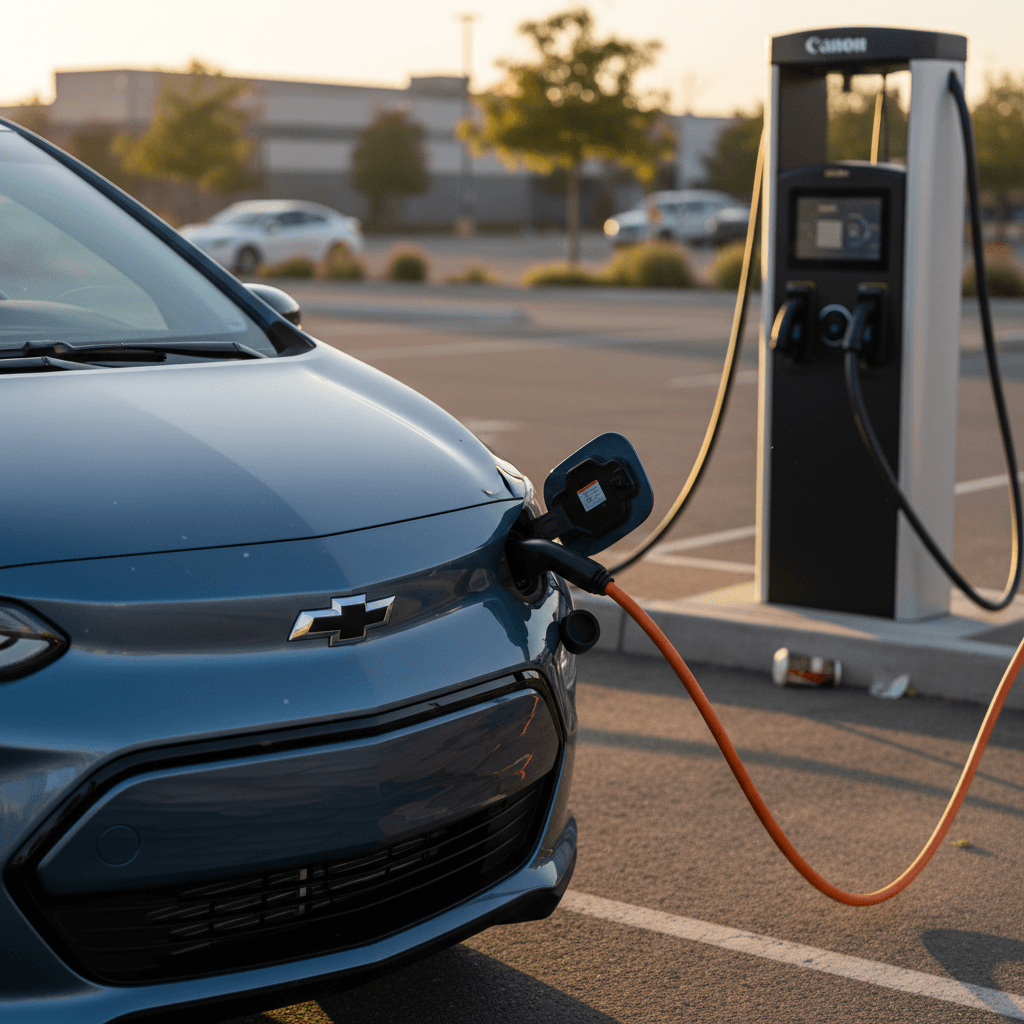
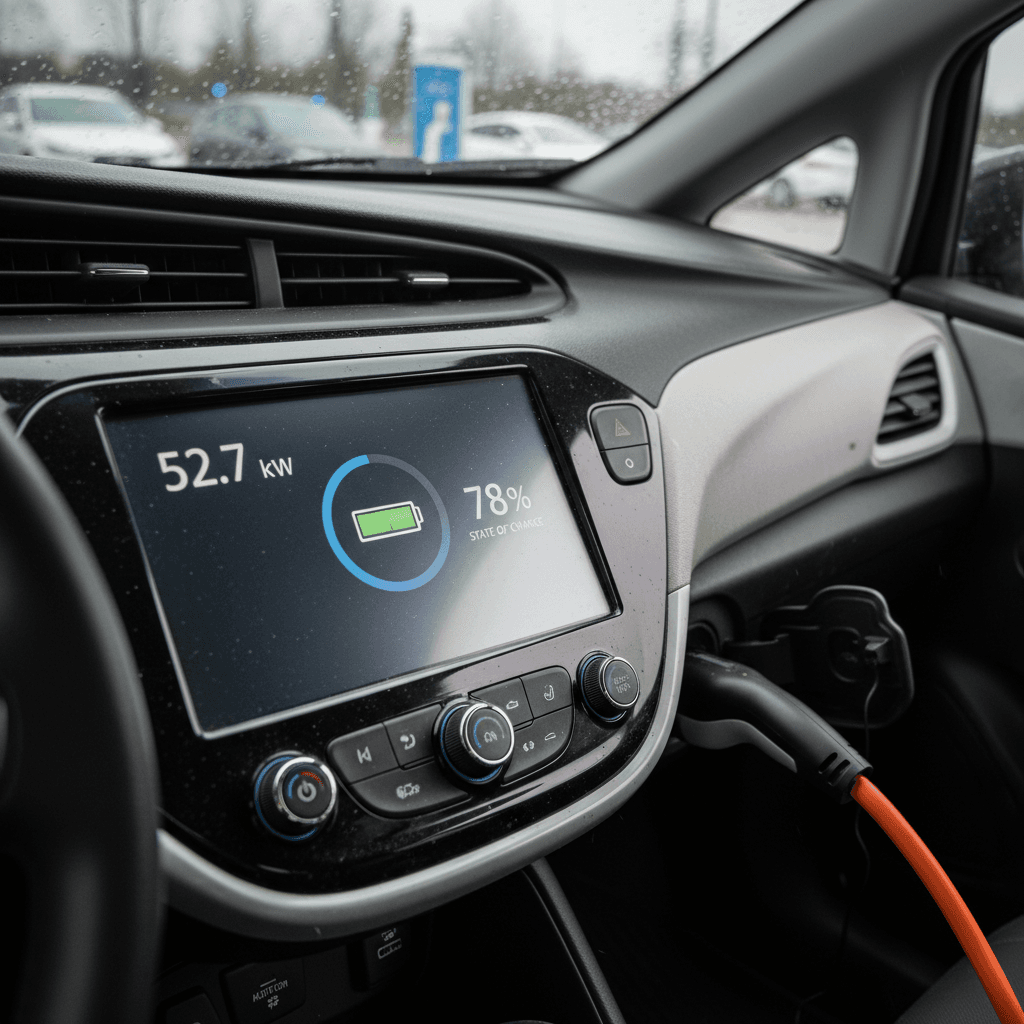
Let’s put numbers to it. Imagine you pull your Bolt EV into a 62.5 kW CCS fast charger on a mild day with the battery at 10% state of charge (SoC). You plug in, start the session, and watch the power climb into the 40–50 kW range. Here’s what a typical real‑world 10–80% session looks like on a healthy Bolt battery when conditions are decent (50–75°F and recent highway driving).
Sample Chevy Bolt DC fast charging speed test (10–80%)
Approximate times and speeds for a 65 kWh Bolt EV/EUV on a 55 kW-capable DC fast charger in good conditions.
| Time into session | Battery % | Charge power (approx.) | Energy added (since start) | Added range (since start) |
|---|---|---|---|---|
| 0–5 minutes | 10% → 25% | 45–55 kW | ~7 kWh | ~28–30 miles |
| 5–15 minutes | 25% → 50% | 45–50 kW | ~15 kWh total | ~60 miles total |
| 15–30 minutes | 50% → 70% | 30–40 kW | ~25 kWh total | ~100 miles total |
| 30–45 minutes | 70% → 80% | 20–25 kW | ~32 kWh total | ~130 miles total |
Your exact results will vary, but these numbers are representative of what many owners report at CCS stations.
What this means in practical terms
Don’t chase 100% on DC fast charging
Chevy Bolt EV charging curve explained
The Bolt’s charging curve, how power rises and falls as the battery fills, is conservative but predictable. Understanding it is the key to planning efficient stops and running your own charging speed tests.
- 0–20% SoC: Power ramps up from low kW into the 40s as the pack and BMS settle. If the battery is cold, it may linger in the 20–30 kW range for a while.
- 20–50% SoC: This is the sweet spot. Many Bolts will hold close to their 45–55 kW peak here if the battery is warm and the charger can supply it.
- 50–70% SoC: Power starts to taper, often into the 30–40 kW range by the high 60s.
- 70–80% SoC: You’re typically down in the 20–25 kW neighborhood, still usable, but no longer “fast.”
- 80–100% SoC: Charge power can fall to 10–15 kW or less, especially in the 90s. This is “top‑off” territory, better done on Level 2 if you have the time.
Bolt EV / EUV (55 kW max)
- Peak around 55 kW for a relatively short window.
- Average power from 10–80% lands near the low‑mid 40 kW range in good conditions.
- Best strategy: shorter, more frequent stops between 10–75% rather than one long charge to 100%.
Newer 150–250 kW EVs
- Can spike much higher (150–250 kW), but often for a brief period.
- Even at 70–80%, they may still be pulling 60–90 kW, 2–3x what a Bolt can.
- Best strategy: fewer, shorter stops because each one adds a lot of miles quickly.
How this feels day to day
Level 2 charging speed test: home and public stations
Most Bolt owners do 90% of their charging on Level 2, either at home or at a workplace or public station. Here’s how long it realistically takes to refill the battery in common scenarios.
Chevy Bolt EV & EUV Level 2 charging speed tests
Approximate times assuming a 65 kWh pack, mild temperatures, and typical energy use; your results will vary slightly.
| Charging setup | Power delivered | Time 20–80% | Time 0–100% | Miles of range per hour |
|---|---|---|---|---|
| Home Level 2 (32A, 240V) | ≈7.7 kW | ~6 hours | ~8.5 hours | ≈25–30 mi/hr |
| Home / public Level 2 (40A, 240V) | ≈9.6 kW | ~5 hours | ~7 hours | ≈30–35 mi/hr |
| Maxed‑out Level 2 (48A, 240V, 2022+) | ≈11.5 kW | ~4 hours | ~6 hours | ≈35–38 mi/hr |
| Shared workplace Level 2 (16A, 240V) | ≈3.8 kW | ~12 hours | ~17 hours | ≈12–15 mi/hr |
For road trips, combine a nightly Level 2 charge with mid‑day DC fast charges for best results.
Why Level 2 makes the Bolt easy to live with
5 factors that make your Bolt charge slower than expected
If you’ve plugged into a big, flashy “350 kW ultra‑fast” charger and only seen 35 kW on the screen, you’re not alone. Here are the biggest reasons your Chevy Bolt EV charging speed test might disappoint, and what you can do about it.
Top reasons your Chevy Bolt EV charges slowly
1. Battery is too cold (or too hot)
Lithium‑ion batteries like the same temps you do, roughly 60–80°F. A Bolt that has sat overnight in winter or baked in summer sun may deliberately limit power. Drive 20–30 minutes before fast charging so the pack naturally warms or cools, and avoid back‑to‑back fast‑charge sessions if the car feels heat‑soaked.
2. You started fast charging too full
Because the Bolt’s charging curve tapers above 50–60%, plugging in at 65–70% can immediately drop you into the 20 kW range. For a fair speed test, and shorter stops, start DC charging around 10–30% and unplug around 70–80%.
3. The charger itself is the bottleneck
Many public stations on road‑trip corridors are 50 kW or 62.5 kW units. If you plug into a 50 kW station, that’s the maximum you’ll ever see, even if your Bolt can handle 55 kW. Check the station’s sticker or app listing for its kW rating, not just the marketing banner on the canopy.
4. Shared power or throttled hardware
Some sites share power between two stalls, so if another EV is plugged into the same power module, both cars get less. Older or overloaded stations may also throttle output. If speed is terrible, try an adjacent stall or a different brand down the road.
5. Battery management and long‑term health
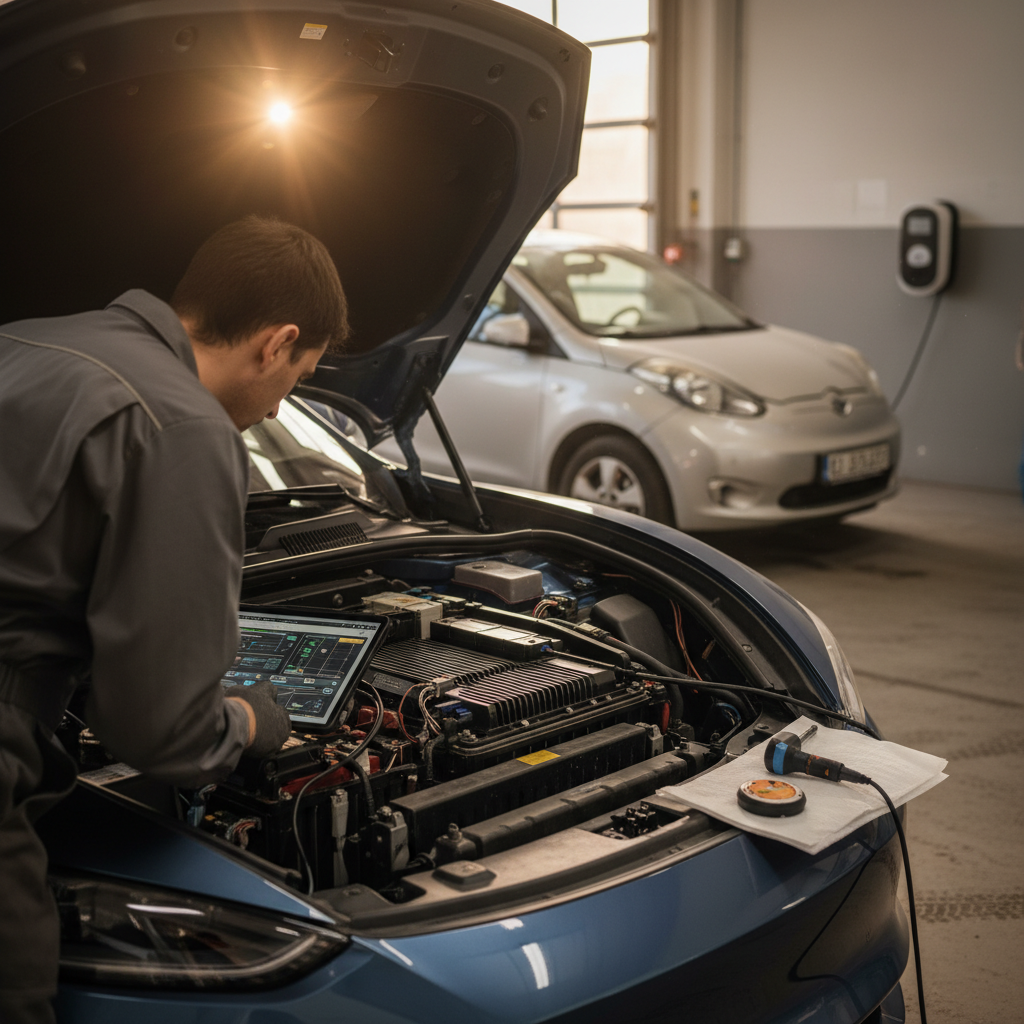
If your Bolt consistently charges much slower than other Bolts at the same station and temperature, the battery or high‑voltage system might be protecting itself. That’s a good time to have the car checked, or, if you’re still shopping, to look for a used Bolt with a professional battery‑health report instead of guessing.
Don’t bypass safety limits
How to plan road trips with a slower‑charging Bolt
A Bolt EV won’t blitz across three states in a day like a 250 kW monster, but with smart planning it can be a comfortable and predictable road‑trip car. The trick is to lean into its strengths, efficiency and range, and work around its DC ceiling.
Road‑trip strategies that work with the Bolt’s charging curve
Plan for more, but not necessarily longer, stops.
Aim for 10–70% “hops”
Match stops to natural breaks
Use multiple charging apps
Sample 400‑mile day in a Bolt
- Start at home: 90–100% after overnight Level 2.
- Drive 140 miles, arrive at ~40%.
- Fast charge 25–30 minutes to ~80% while you eat.
- Drive another 130 miles, arrive ~30%.
- Fast charge 30–40 minutes to ~80% with a walk/stretch.
- Finish last 130 miles, arrive ~20–30% at your destination.
Total DC fast‑charge time: about an hour to an hour and a quarter spread over two natural breaks.
When a Bolt isn’t ideal
- If you routinely do 600–800‑mile days with minimal stopping, a faster‑charging EV will save you meaningful time.
- If your region has sparse CCS coverage, you may have to stretch between stations or charge beyond 80%, which hurts overall pace.
- In those edge cases, consider a newer EV with higher DC limits or future NACS access, or adjust expectations on total travel time.
Charging speed & battery health on a used Chevy Bolt
When you’re shopping used Chevy Bolt EVs, it’s natural to wonder whether an older pack will charge slower. In practice, moderate, normal degradation has only a small impact on DC charging power, but a tired or damaged pack can change the picture.
- A healthy used Bolt with, say, 5–10% capacity loss usually charges at similar power levels to a new one; you just have a slightly smaller “gas tank.”
- If previous owners abused fast charging, regularly overheated the pack, or skipped recall work, the battery management system may limit power more aggressively.
- Because the Bolt’s ceiling is already 55 kW, any further limits, say, down into the 20–30 kW range in the 40–60% band, are a red flag worth investigating.
How Recharged helps with used Bolt batteries
Ready to find your next EV?
Browse VehiclesIf you’re evaluating a used Bolt in a private sale, it’s worth doing your own mini charging speed test before you buy: start a DC session from 20–30%, watch the kW and taper points, and compare them to the tables earlier in this guide. If numbers are dramatically lower in mild weather, budget for a dealer inspection.
Chevy Bolt EV charging speed test: FAQ
Frequently asked questions about Chevy Bolt EV charging speed
Key takeaways for Bolt owners and shoppers
The Chevy Bolt EV and EUV don’t wow on spec‑sheet charging numbers, but when you look at real‑world charging speed tests the story is more nuanced. From 10–80%, you’re usually looking at 45–60 minutes on DC fast charging and overnight refills on Level 2, with the car’s strong efficiency smoothing out day‑to‑day use.
- Use DC fast charging mainly to bridge highway gaps, targeting 10–70% hops for the best overall pace.
- Rely on Level 2 at home or work to make the Bolt feel effortless in daily driving.
- If you’re shopping used, pay close attention to battery health and fast‑charge behavior, not just price and mileage.
- Remember that a slower‑charging EV you can comfortably afford, and confidently charge, often beats a faster one that stretches your budget.
If you’re comparing used Bolts or other EVs, a marketplace like Recharged can simplify the process. Every vehicle includes a Recharged Score Report with verified battery health and transparent pricing, plus EV‑specialist support, financing options, trade‑in offers, and nationwide delivery. That way you can focus less on guessing how a particular car will charge, and more on choosing the EV that best fits your life.