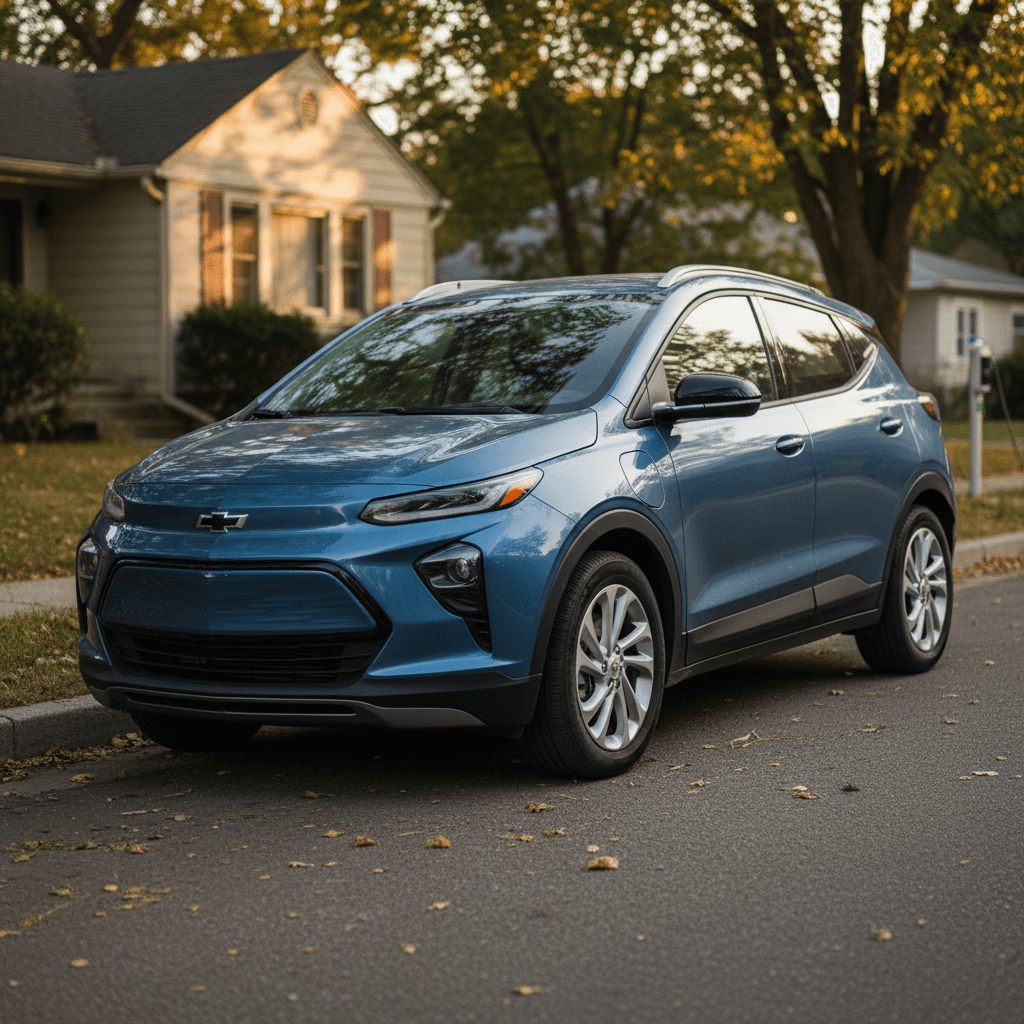
If you’re eyeing a Chevy Bolt EUV as an affordable electric runabout, you’ve probably wondered: “Can I really take this thing on a proper road trip?” This Chevy Bolt EUV road trip review focuses on what matters when you’re hundreds of miles from home, real‑world highway range, slow DC fast‑charging, comfort, and how much planning it actually takes to enjoy long‑distance travel in this compact EV.
Quick verdict
Who this Chevy Bolt EUV road trip review is for
- You’re considering a used Chevy Bolt EUV and want to know how it handles long trips compared with newer EVs.
- You already own a Bolt EUV and are planning your first highway road trip.
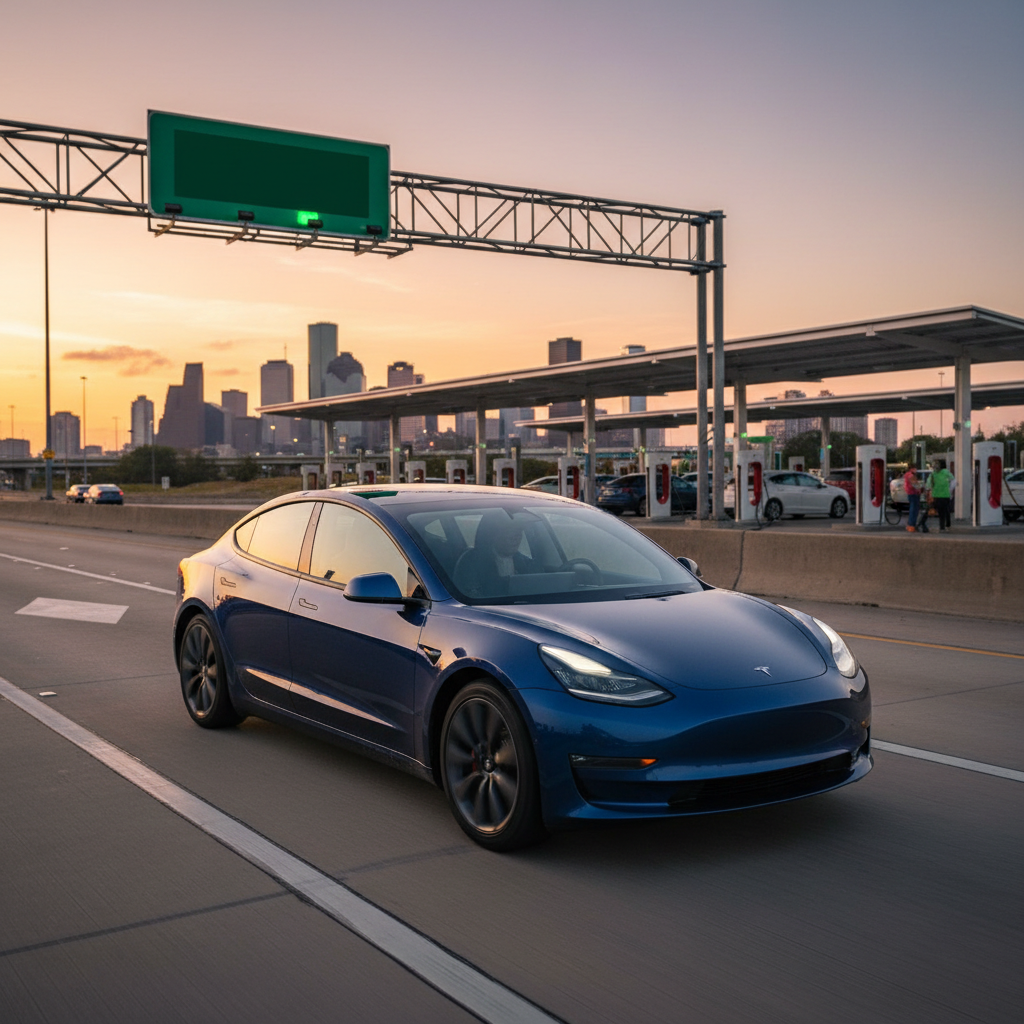
- You’re cross‑shopping the Bolt EUV with rivals like the Hyundai Kona Electric, VW ID.4, or Tesla Model 3 and care about real‑world range and charging more than 0–60 times.
- You want practical advice on how to plan routes, charging stops, and daily mileage to make your trip enjoyable, not stressful.
We’ll focus primarily on the 2022–2023 Chevy Bolt EUV, the models you’ll most commonly see on the used market, because they share the same 65 kWh battery, ~247‑mile EPA range, and 55 kW DC fast‑charging hardware.
Chevy Bolt EUV at a glance: specs that matter on the road
Chevy Bolt EUV road‑trip‑relevant specs
On paper, the Bolt EUV looks competitive for a compact EV: reasonable range, excellent efficiency, and a battery size that keeps charging costs modest. The catch, and the central theme of this road trip review, is that its DC fast‑charging speeds are well behind newer rivals. That doesn’t make it a road‑trip non‑starter, but it does change how you plan your day.
Real-world highway range: what you can actually expect
The Bolt EUV carries a 65 kWh battery and is rated around 247 miles of EPA range. On a road trip, though, your reality is shaped less by the EPA label and more by speed, temperature, wind, terrain, and how low you’re willing to run the pack.
Typical Chevy Bolt EUV highway range scenarios
Assuming a healthy battery and no extreme conditions
Mild weather, 65–70 mph
Realistic range: ~200–230 miles on a full charge.
Many owners report 3.2–3.6 mi/kWh at these speeds in the 50–70°F range. That lines up with roughly 210–230 miles from 100% to near 0%, though on a road trip you’ll typically use 10–80% or 10–90%.
Faster, 70–75 mph
Realistic range: ~180–210 miles.
Push past 70 mph and aerodynamic drag starts to bite. Expect around 2.9–3.3 mi/kWh, which translates to legs closer to 190 miles if you’re using most of the pack.
Cold weather, 30°F and below
Realistic range: ~140–190 miles.
Cabin heat and cold‑soaked batteries reduce efficiency dramatically. Sustained 75 mph with the heat on can drop real‑world range near 150 miles per full charge.
Range rule of thumb
If you slow down a bit, to the right lane at 63–65 mph, the Bolt EUV can surprise you with 220+ mile legs in mild conditions. If you’re trying to keep up with 80 mph traffic in sub‑freezing weather, don’t be shocked if you see 150–170 miles before getting uncomfortable about the remaining range.
DC fast charging on a road trip: the Bolt’s big compromise
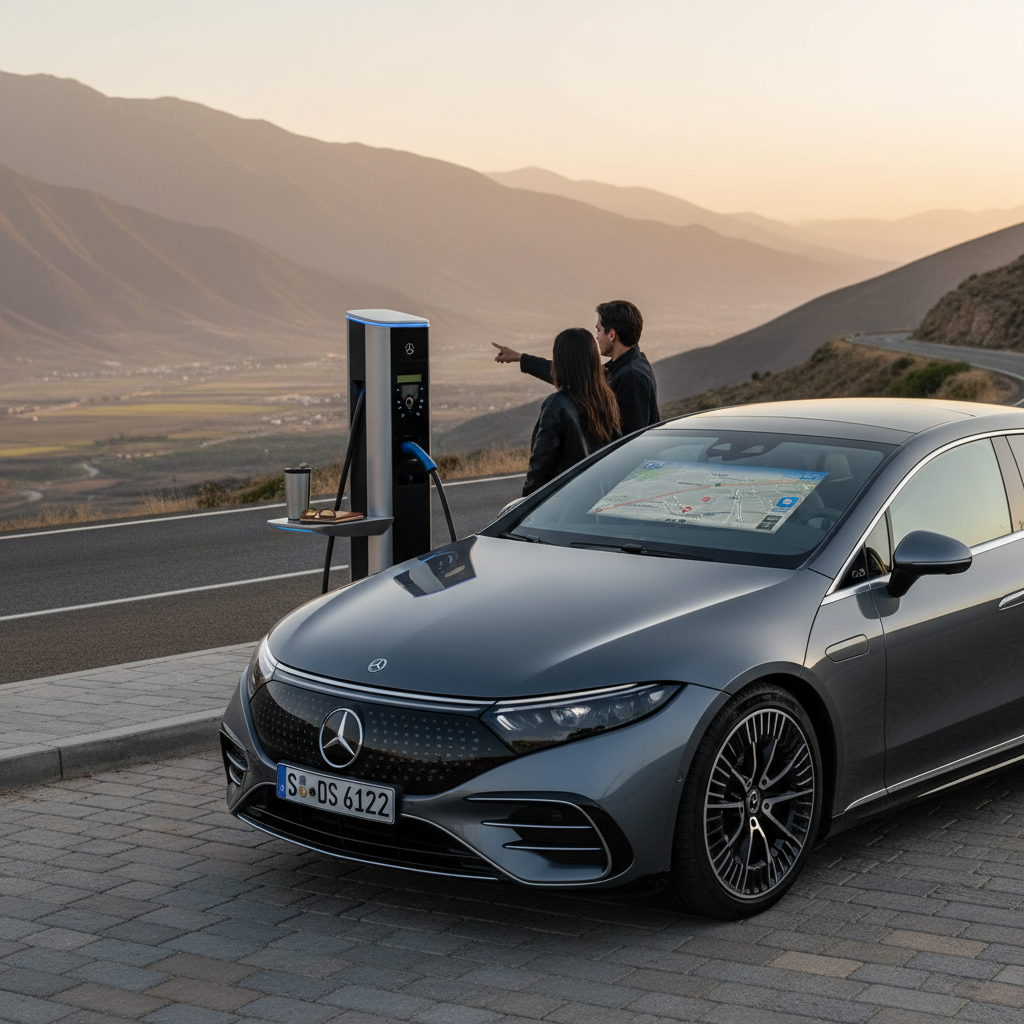
Here’s where the Chevy Bolt EUV’s age shows. While many newer EVs will gulp down power at 120–250 kW, the Bolt EUV tops out around 55 kW DC fast‑charge speed, and it doesn’t hold that near the top of the pack. Think of it as a very efficient car with economy‑class refueling speeds.
DC fast‑charging comparison: Bolt EUV vs common rivals
Approximate peak DC fast‑charging speeds for context
| Model | Battery (kWh) | Peak DC Fast Charge | 10–80% time (approx.) |
|---|---|---|---|
| Chevy Bolt EUV (2022–2023) | 65 | 55 kW | ~45 min |
| Hyundai Ioniq 5 RWD | 77 | 230 kW | ~18 min |
| VW ID.4 | 82 | 170 kW | ~30 min |
| Tesla Model 3 RWD | 57 | 170 kW+ on V3 | ~25 min |
The Bolt EUV’s 55 kW ceiling is usable but significantly slower than most newer EVs.
Charging curve matters more than the headline number
- A 10–80% DC fast charge typically takes about 45 minutes on a properly working 55 kW charger.
- Going from 70% to 80% can take 15 minutes or more by itself, because power often falls into the mid‑20 kW range or less.
- If you run from 10% up to 60–70%, you often get the best balance of speed and usable miles.
- On a busy road‑trip day, you’re realistically planning on 35–50 minute stops every 150–190 miles, depending on speed and weather.
How to minimize charging time
- Use apps like PlugShare, A Better Routeplanner, or your network’s app to target chargers 10–20 miles before you’d hit 5–10% SOC.
- If there are multiple stops along your route, favor more frequent, shorter sessions (10–60%) instead of one big 10–100% charge.
- In cold weather, arrive at the charger after driving at highway speed so the battery is warm enough to accept higher power.
When the slower charging really hurts
- Trips where you need to cover 400+ miles in a single day on tight timing.
- Corridors where the only fast‑charger every 150–200 miles is a single 50–62.5 kW unit, no backups if it’s down.
- When traveling with newer EVs that charge 2–4× faster; you’ll spend more time plugged in than your companions.
Comfort, noise, and space: is the Bolt EUV a good long‑haul companion?
Raw range and charging tell only half the road‑trip story. The other half is whether you actually want to sit in the thing for six hours. The Bolt EUV is a subcompact crossover, so expect more of a cleverly packaged city car than a cushy interstate couch, but it’s better on long drives than its footprint suggests.
Bolt EUV comfort & practicality on long drives
Strengths and weaknesses from a road‑trip perspective
Front seats & driving position
The driving position is upright and visibility is good. Later model years improved the seat padding and bolstering versus early Bolts, though some drivers still find them firm after several hours. If you’re sensitive, budget for a seat cushion.
Noise & ride quality
At 70 mph, the Bolt EUV is quiet enough for conversation, but you’ll notice more wind and tire noise than in larger, heavier EVs. Ride quality is tuned more for control than plushness; broken pavement and expansion joints can feel busy.
Space & storage
The EUV’s slightly stretched body gives rear passengers usable legroom, and the hatch will handle a road‑trip’s worth of luggage for a couple or small family. It’s not huge, but the split‑fold rear seat makes it flexible.
Where the Bolt EUV feels bigger than it is
Super Cruise and driver assistance: where the Bolt EUV shines
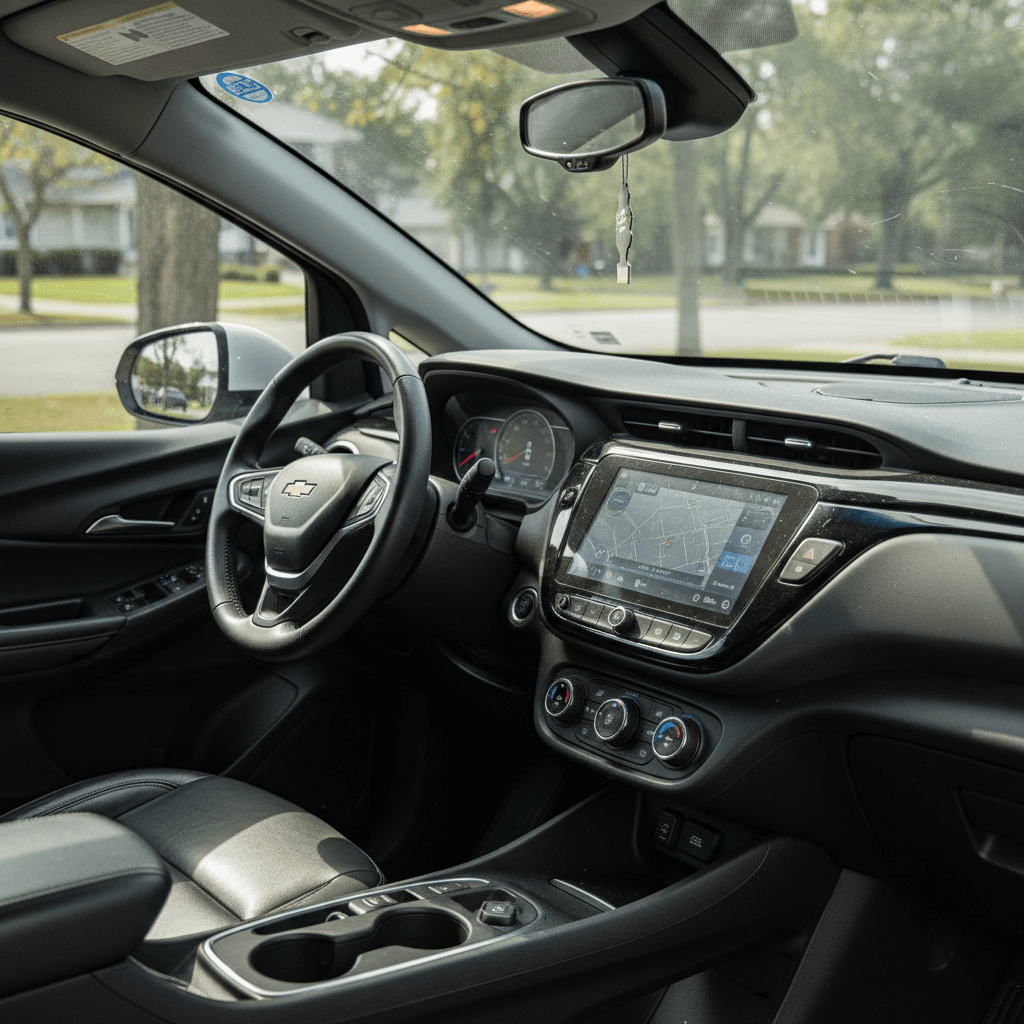
One of the Bolt EUV’s party tricks, especially relevant for road trips, is the availability of GM’s Super Cruise, a hands‑free Level 2 driver‑assistance system on compatible highways. It uses high‑precision maps, radar, and cameras to center the car in its lane and maintain distance, while a driver‑monitoring camera ensures you’re still paying attention.
On a long freeway slog, Super Cruise is the great equalizer. It turns the Bolt EUV from a basic commuter into a surprisingly relaxed long‑distance cruiser, taking the edge off bumper‑to‑bumper traffic and endless straight highways.
- Super Cruise is available on higher‑trim Bolt EUV models; it’s not standard. If you value effortless long‑distance driving, it’s worth seeking out.
- In real‑world tests, Super Cruise has been praised for its smooth lane centering and reduced “ping‑pong” effect compared with some rival systems.
- The system works only on pre‑mapped divided highways, but that still covers a massive chunk of typical American road‑trip routes.
- Even without Super Cruise, the Bolt EUV offers adaptive cruise (on some trims), lane‑keeping assist, and forward‑collision alerts that reduce fatigue.
Shopping tip for road‑trippers
Planning a road trip in a Bolt EUV: step‑by‑step
The Bolt EUV rewards drivers who plan like pilots. You don’t have to obsess over every mile, but you do need a framework so that the car’s slower DC charging doesn’t surprise you.
Bolt EUV road‑trip planning checklist
1. Define your daily mileage goal
For most drivers, <strong>250–350 miles per day</strong> in a Bolt EUV strikes a nice balance between progress and charging time. You can push farther, but expect more time plugged in.
2. Map fast‑chargers along your route
Use apps like PlugShare, ChargePoint, EVgo, and your navigation to identify <strong>reliable DC fast‑chargers every 80–150 miles</strong>. Favor sites with multiple stalls so a single broken charger doesn’t derail your plan.
3. Plan to arrive around 10–15%
Design legs so you roll into fast‑chargers with <strong>roughly 10–20% battery</strong>. You’ll get the best charging speeds and maximize miles added per minute.
4. Target 60–70% charge stops
Instead of charging to 100% each time, plan to <strong>depart around 60–70%</strong> when possible. This keeps you in the faster part of the charging curve and reduces dwell time.
5. Build in a slower Level 2 overnight
Whenever you can, book hotels or rentals with <strong>Level 2 charging on site</strong>. That turns long DC sessions into one simple overnight fill‑up and makes the next day much easier.
6. Adjust speed for weather & terrain
In heavy headwinds, cold temperatures, or hilly terrain, dropping from 75 mph to <strong>65–68 mph</strong> can easily save you a whole extra charging stop over the day.
Sample itineraries: what trips the Bolt EUV does best
Sweet spot: 150–300 mile regional trips
The Bolt EUV is in its element on trips like:
- City to nearby mountains and back over a weekend.
- Visiting family 150–200 miles away with a single mid‑route fast‑charge or overnight Level 2.
- Multi‑stop “triangle” trips where you can charge at your destinations.
Here, you might only need one 35–45 minute DC session per driving day, often aligned with a meal break.
Stretch: 400–600 mile single‑day pushes
Longer hauls are absolutely possible, but you should be comfortable with:
- Two to four fast‑charging stops of 35–50 minutes each.
- Careful attention to charger reliability and backups.
- Adjusting speed for efficiency when chargers are far apart.
If the goal is to blast 800 miles in one day, a Bolt EUV isn’t the ideal tool. But if you’re willing to make a road trip part of the vacation, it can still work.
Used Chevy Bolt EUV road trip checklist: buying with long drives in mind
Because the original Bolt EUV ended production after 2023, you’ll most likely be shopping the used market. The upside: pricing can be very attractive compared with newer long‑range EVs. The key is choosing a car that will still feel confident on a road trip several years from now.
Key things to check on a used Bolt EUV
Especially if you plan to road‑trip regularly
Battery health & history
Real‑world road‑trip range depends heavily on battery health. Look for documentation of recall battery replacements and ask for a recent capacity check.
Every EV listed on Recharged includes a Recharged Score battery health report, so you know how much usable capacity the pack still has before you ever sign anything.
DC fast‑charging behavior
On a test drive, if possible, try a DC fast‑charge session. Confirm the car connects reliably and ramps up to expected speeds. Sudden disconnects or very low power levels may indicate charger or vehicle issues worth investigating.
Driver‑assistance & Super Cruise
If long‑distance comfort matters, prioritize trims with Super Cruise and adaptive cruise control. On the used market, that may mean paying more, but it pays you back in reduced fatigue.
Where Recharged can simplify your Bolt EUV search
Transparent battery health
Every EV on Recharged includes a <strong>Recharged Score Report</strong> with verified battery diagnostics, crucial for understanding whether your future road‑trip range matches the window sticker or has faded over time.
Expert guidance on use case fit
Not sure if a Bolt EUV is right for the way you travel? Our EV specialists can <strong>compare models based on your actual routes</strong> and help you decide if you’re better off with a faster‑charging EV.
Financing, trade‑in, and delivery
Recharged offers <strong>financing, trade‑in options, and nationwide delivery</strong>, plus an Experience Center in Richmond, VA if you prefer to see vehicles in person before your next big trip.
FAQ: Chevy Bolt EUV road trip questions
Chevy Bolt EUV road trip FAQ
Bottom line: should you road trip in a Chevy Bolt EUV?
If you think of the Chevy Bolt EUV as a budget‑minded EV commuter that also happens to be capable of considered road trips, you’ll be delighted. If you expect it to behave like a 250 kW fast‑charging highway rocket, you’ll be disappointed. In the real world, the Bolt EUV delivers solid 180–220 mile highway legs, very low energy costs, and surprisingly good driver‑assistance tech, offset by slower DC charging and a modest, subcompact‑SUV cabin.
For drivers who value affordability, efficiency, and are willing to plan, it’s an EV that can absolutely carry you far from home, just at its own pace. And if you’re shopping used, working with a specialist like Recharged to verify battery health, compare alternatives, and arrange financing and delivery can make that first big trip in your Bolt EUV a lot more relaxing.