If you own or are shopping for a used Chevy Bolt, the battery warranty after the recall is one of the biggest financial questions you need to answer. Between GM’s standard 8‑year/100,000‑mile EV warranty and the special coverage created for recalled packs, it’s easy to get conflicting answers from dealers, forums, and even GM reps.
Quick answer
Chevy Bolt battery warranty after recall: the big picture
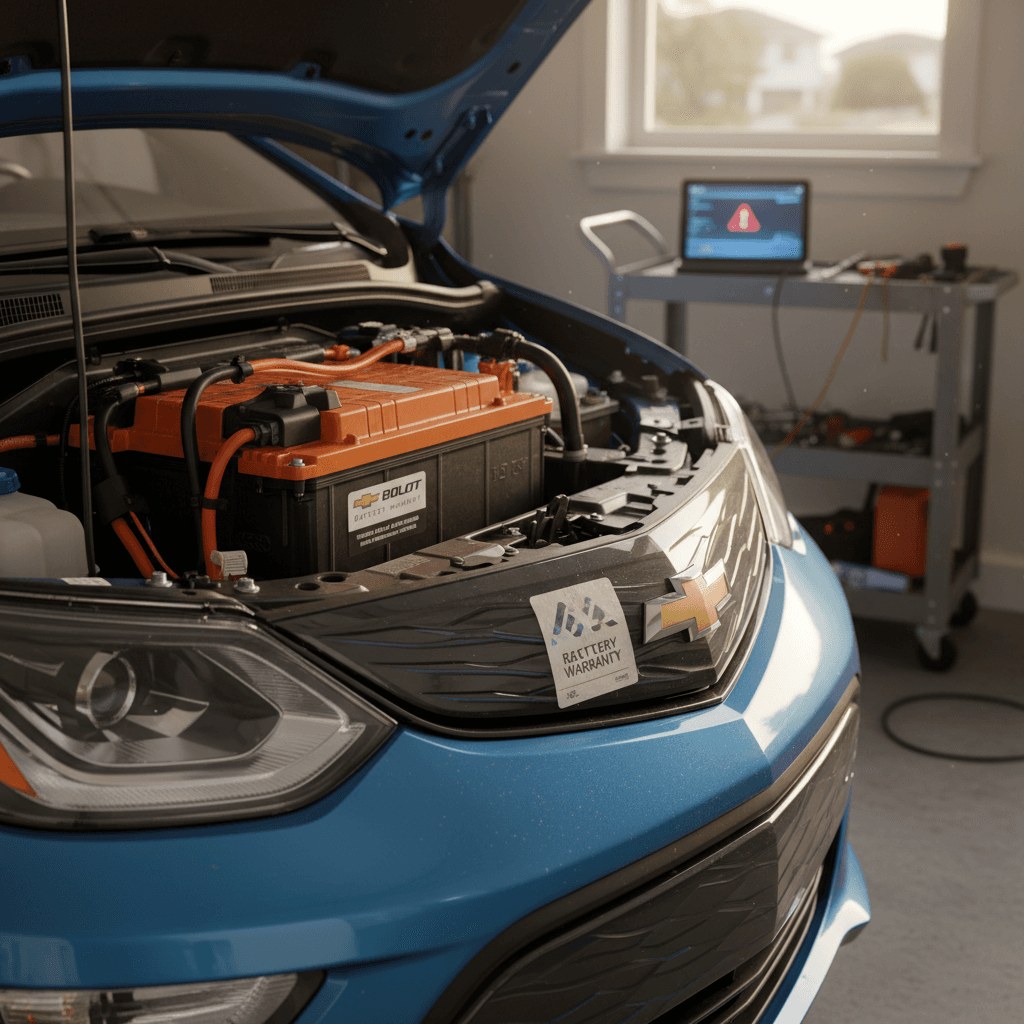
From 2017–2022, most Chevrolet Bolt EV and Bolt EUV models were affected by a high‑profile LG Chem battery recall. GM’s fix had two phases: software limits and, in many cases, full pack replacements. To regain owner confidence, GM added an extra parts warranty on recall-installed packs on top of the normal EV battery coverage.
- Standard Chevy EV battery coverage is typically 8 years/100,000 miles (longer in some CARB states).
- Recall-installed packs get a special “Bolt Battery Limited Part Warranty” that is also 8 years/100,000 miles from the date the new pack is installed.
- If your battery was replaced later as a normal warranty repair (after the recall was closed), it usually does not restart the full 8‑year/100,000‑mile vehicle warranty, only recall replacements get that special reset.
Why this matters for you
What actually changed with the Bolt battery recall
The recall addressed rare but serious fire risks traced to manufacturing defects in certain LG battery cells. GM’s campaign covered 2017–2022 Bolt EV and EUV models and unfolded in stages: first software limits and monitoring, then targeted pack replacements.
Two key phases of the Bolt recall
Understanding which phase your car went through helps explain its warranty today.
Phase 1: Software limits & monitoring
Early in the recall, GM rolled out software that:
- Limited state of charge (often to ~80%).
- Monitored pack behavior for anomaly codes.
- Determined which packs were likely at risk.
If no issues were detected after a set driving window, the car could be restored to normal charge limits without getting a new pack.
Phase 2: Full pack replacement
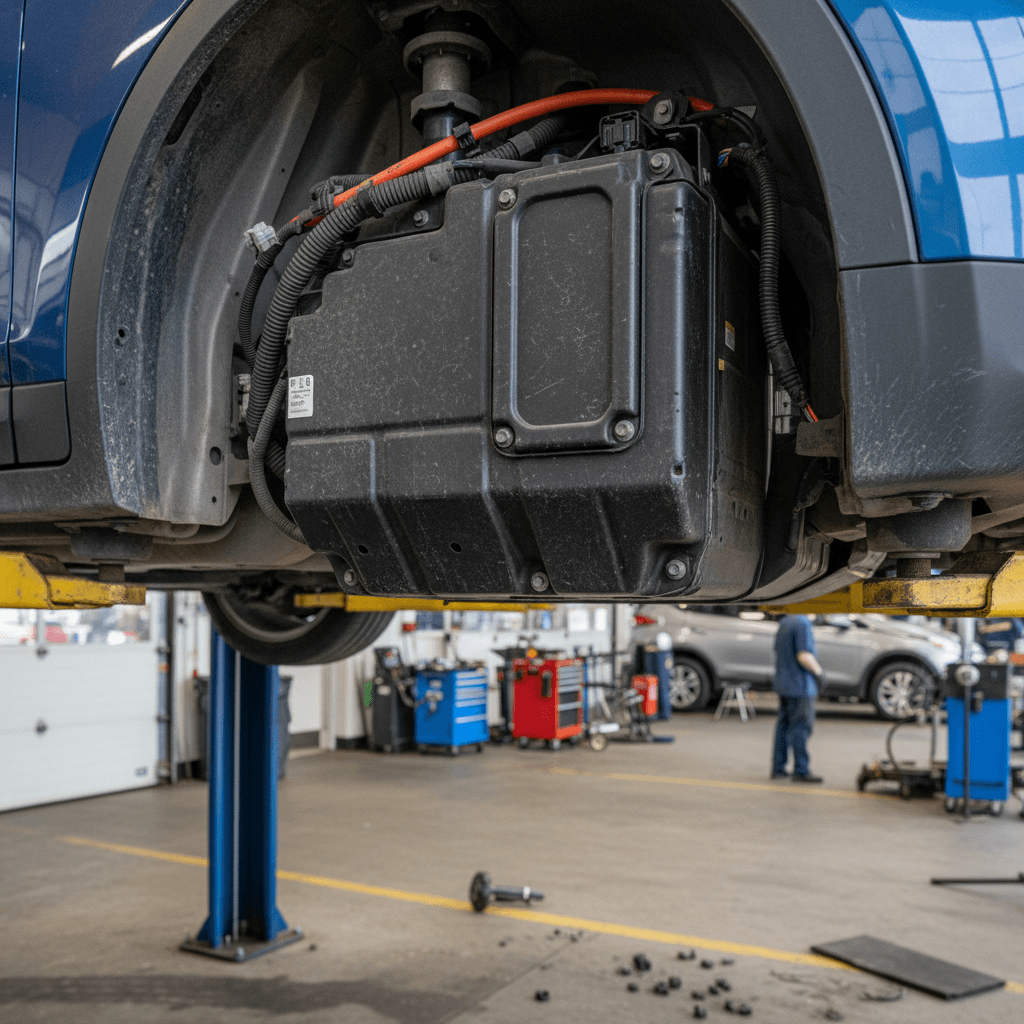
Bolts that triggered certain fault codes or fell within the highest‑risk groups had their entire high‑voltage battery pack replaced with a newer design.
Those replacement packs are what triggered GM’s special 8‑year/100,000‑mile Bolt Battery Limited Part Warranty starting on the date of installation.
Recall fixed ≠ new battery
How the 8‑year/100,000‑mile Bolt battery warranty works
Before the recall, the Bolt followed GM’s standard EV coverage: an 8‑year/100,000‑mile (whichever comes first) warranty on the high‑voltage battery and certain electric drive components, from the date the vehicle was first put into service (sold or leased new). Some CARB states extend the mileage or duration, but 8/100 is the baseline most U.S. owners see.
Chevy Bolt EV/EUV battery warranty basics
These are general patterns; always verify specifics for your VIN and state.
| Item | Typical Coverage | Starts When | Notes |
|---|---|---|---|
| High‑voltage battery (original) | 8 years / 100,000 miles | Original in‑service date | Covers defects in materials/workmanship; not normal degradation. |
| EV Component Limited Warranty | 8 years / 100,000 miles | Original in‑service date | Includes battery plus other major EV components. |
| CARB state variations | Up to 10 years / 150,000 miles | Original in‑service date | Some states require longer emissions‑related coverage. |
| Recall replacement pack | 8 years / 100,000 miles | Recall install date | This is the special Bolt Battery Limited Part Warranty. |
Actual coverage can vary by model year, state, and in‑service date.
Watch the fine print
The special “Bolt Battery Limited Part Warranty” after recall
To restore trust after the fires, GM created a separate coverage line item for recall-installed battery packs. In GM’s internal systems (and sometimes on your online account), this appears as a “Bolt Battery Limited Part Warranty” with its own 8‑year/100,000‑mile clock starting at the time of replacement.
What the recall warranty can look like in practice
Practically, that means a 2018 Bolt that received a new battery in, say, late 2023 under the recall can have battery coverage into 2031, even if the rest of the car’s bumper‑to‑bumper and powertrain warranties expired years earlier.
Good news for used buyers
Recall vs. regular warranty replacement: why it matters
Not every Bolt battery replacement was done under the recall campaign. Some packs are swapped later for unrelated failures under the normal EV Component Limited Warranty. The difference is crucial because it determines whether the clock resets.
1. Replacement under the recall
- Battery is replaced as part of the official LG fire‑risk recall.
- You’ll usually see an extra warranty line called Bolt Battery Limited Part Warranty in GM’s system.
- Warranty clock restarts: 8 years/100,000 miles on that pack from install date.
- Applies regardless of the car’s age, as long as the recall was performed.
2. Replacement under normal EV warranty
- Battery fails later for some other defect, outside the recall scope.
- It’s covered under the standard EV Component Limited Warranty.
- Clock generally does not reset: coverage continues from the original in‑service date, or 12 months parts coverage if that’s longer.
- Think of it like any other replacement part under a new‑vehicle warranty.
Don’t assume any new pack = fresh 8/100
How to check your Bolt’s battery warranty status
Because the recall spanned years and multiple software versions, the only way to know exactly what coverage you have is to look it up by VIN. Fortunately, you don’t need dealership access to get the basics.
Step‑by‑step: Confirm your Bolt’s battery warranty
1. Grab your VIN
Find your 17‑character VIN on the driver’s door jamb, at the base of the windshield, or on your registration/insurance documents.
2. Create or log in to a Chevrolet account
Go to Chevrolet’s owner site, create an account, and add your vehicle using the VIN. This lets you see warranty and recall information tied to your specific car.
3. Check “Applicable Warranties”
Look for entries such as <strong>EV Component Limited Warranty</strong> and, if the pack was replaced under recall, <strong>Bolt Battery Limited Part Warranty</strong>, each with its own expiration date and mileage.
4. Run the VIN through GM’s recall tool
Use GM’s or NHTSA’s recall lookup tools to confirm whether the high‑voltage battery recall is open, completed via software only, or closed with a pack replacement.
5. Call a Chevy EV‑certified dealer
If anything is unclear online, ask the service department to pull the full warranty and campaign history for your VIN and <strong>email you a copy</strong>.
6. Document everything
Save screenshots or PDFs of the warranty page and recall records. If you ever need to make a claim, or sell the car, this proof is valuable.
Shopping used? Ask for proof up front
Used Bolt buyers: what the recall warranty means for you
The recall turned the used Bolt market upside down, for better and worse. Some cars were bought back or branded; many others quietly received new packs and became sleeper values. Understanding which is which can save you thousands over the life of the car.
Three types of used Bolts you’ll see
How the recall history changes risk and value.
1. Original pack, recall complete via software
- No new pack installed.
- Battery warranty runs from the original in‑service date.
- Best for buyers who prioritize lower price over maximum coverage.
2. Recall pack, Bolt Battery Limited Part Warranty
- New pack installed under the recall.
- Has its own 8‑year/100,000‑mile warranty from install.
- Often the sweet spot: older car, newer battery, long coverage.
3. Buyback / branded title
- Previously reacquired by GM or marked as a lemon.
- Some coverage may remain, but warranties can be limited.
- Only consider with clear documentation and a big discount.
How Recharged handles used Bolts
Real‑world scenarios: is this Bolt’s battery still covered?
Putting dates and mileage together can be confusing, so let’s walk through a few example timelines. Adjust the years to match your own situation, but the logic stays the same.
Sample Chevy Bolt battery warranty scenarios
These hypothetical examples assume an 8‑year/100,000‑mile standard warranty and a recall replacement where noted.
| Scenario | Key Dates | What Happened | Battery Warranty End (approx.) |
|---|---|---|---|
| 2018 Bolt, recall pack in 2023 | In‑service: 2018; Pack replaced: Oct 2023 | Battery replaced under recall, Bolt Battery Limited Part Warranty added. | Oct 2031 or +100,000 miles from Oct 2023, whichever comes first. |
| 2020 Bolt, software-only recall | In‑service: 2020; Recall closed 2022 | No pack replacement; only monitoring software update. | 2028 or 100,000 miles from 2020 in‑service date. |
| 2019 Bolt, pack replaced under normal warranty in 2024 | In‑service: 2019; Pack replaced for non‑recall failure in 2024 | Replacement under EV Component Limited Warranty, not recall. | Coverage remains 8/100 from 2019 (or at least 12 months from part install). |
| 2017 Bolt bought used in 2025 with recall pack from 2022 | In‑service: 2017; Recall pack installed: mid‑2022; Purchase: 2025 | Original warranties mostly expired, but recall pack has fresh coverage. | Mid‑2030 or 100,000 miles from 2022 install date. |
Always confirm your specific dates and states, especially in CARB jurisdictions.
Check *both* time and mileage
Range, battery health and what the warranty doesn’t cover
It’s tempting to think of the battery warranty as a promise that your Bolt will always deliver its original EPA range. That’s not how any EV warranty works, not GM’s, and not its competitors’.
- Normal degradation: All lithium‑ion packs lose some capacity over time. Gradual range loss, especially on an older or high‑mileage Bolt, is generally considered normal and not a defect.
- Extreme use: Repeated DC fast charging, frequent 100% charges, hot climates, and heavy loads can accelerate degradation. The warranty usually doesn’t cover abuse or misuse.
- Wear items and 12V battery: The small 12‑volt battery, tires, brakes, and other consumables aren’t part of the high‑voltage battery warranty.
- Cosmetic damage: Rust on underbody brackets, scraped pack shields, or collision damage won’t be covered under the battery warranty.
Use warranty + battery health data together
Chevy Bolt battery warranty after recall: FAQ
Frequently asked questions
Bottom line: making the Bolt recall work in your favor
The Chevy Bolt battery recall created plenty of understandable anxiety, but it also created an unusual opportunity. If your Bolt (or the one you’re considering) received a recall replacement pack, you may now have an older, depreciated EV with a relatively new battery and a long factory warranty still on the clock.
Your job as an owner or shopper is to pin down three things: Was the battery replaced under the recall? When was it installed? and How many miles have been driven since? Once you know those answers, the rest of the warranty math becomes straightforward.
If you’d rather not decode all of that alone, buying through Recharged can help. Every used EV we sell, Bolts included, comes with a Recharged Score battery health report, transparent warranty information, and expert EV specialists who can walk you through what that coverage really means over the next 5–10 years.