If you’re looking at the Chevy Blazer EV LT vs RS vs SS, you’re probably wondering how much performance you really need, how far each trim goes on a charge, and whether the SS’s muscle is worth the premium. The good news: all three feel upscale and quick, but they serve very different types of drivers and budgets.
Quick context
Chevy Blazer EV trims at a glance
Blazer EV LT vs RS vs SS: key numbers (recent model years)
Think of the lineup this way: the Blazer EV LT is your comfortable, value‑oriented daily SUV; the RS is the style and range play with stronger performance; and the SS is a genuine performance EV that happens to be an SUV.
Chevy Blazer EV LT vs RS vs SS overview
High‑level snapshot based on recent U.S. specs. Exact numbers vary by model year and configuration; always verify the specific vehicle you’re shopping.
| Trim | Typical Drivetrains | Approx. Power (hp) | Target Buyer Snapshot |
|---|---|---|---|
| LT | FWD or AWD | ~220–300 | You want an attainable, comfortable EV SUV and don’t need maximum performance. |
| RS | FWD, AWD (RWD briefly offered) | ~300–365 | You want more style, stronger passing power, and the best range options. |
| SS | Dual‑motor AWD | ~595–615 (WOW mode) | You care about acceleration and handling as much as practicality. |
Use this as a directional guide, not a substitute for the official Monroney label.
Trim names vs equipment
Pricing and value: LT vs RS vs SS
Pricing has moved around as Chevy has updated the Blazer EV and responded to the EV market. Here’s how the trims generally stack up on recent model years in the U.S. before tax credits or dealer discounts:
Typical price ladder for Blazer EV trims
Ballpark MSRPs for newer model years (subject to change and local incentives).
Blazer EV LT
Approx. mid–$40,000s to high–$40,000s for front‑wheel drive, with all‑wheel drive adding cost.
Often the sweet spot if you qualify for the federal EV tax credit and don’t need the RS’s extra power.
Blazer EV RS
High–$40,000s to mid–$50,000s, depending on FWD vs AWD and equipment.
Pricing reflects added power, range potential, and premium appearance features.
Blazer EV SS
Low–$60,000s for the performance flagship.
Still undercuts many luxury performance EV SUVs with similar straight‑line speed.
Value perspective
If you’re shopping used, you may see earlier 2LT and 1LT designations plus RS and SS. The same logic applies: LT‑branded trims are value and comfort, RS is the sportier step up, and SS is the halo car.
Performance and powertrain: How fast do you want to go?
All Blazer EVs feel brisk compared with most gas SUVs, but there’s a huge gap between an LT commuter spec and a full‑bore SS. Here’s how the trims generally compare from the driver’s seat.
LT: Smooth and sufficient
- FWD versions use a single motor with power similar to a mid‑pack gas SUV. Acceleration is smooth and quiet rather than thrilling.
- AWD LTs add a second motor and more shove, feeling stronger in passing and on‑ramps.
- Great match for suburban commuting, school runs, and light road‑trip duty without drama.
RS: Noticeably quicker, still comfortable
- With more power than LT, the RS pulls harder from highway speeds and feels more responsive.
- AWD and (on some earlier years) RWD RS models deliver a more rear‑biased, athletic feel.
- You’ll notice the difference merging onto a crowded freeway or passing on a two‑lane road.
SS: Performance EV territory
- Dual‑motor AWD is standard on the SS, giving you all‑weather traction with super‑quick launches.
- Upgraded brakes and suspension tuning help the SS stop and handle better than other trims.
- Drive modes let you dial back to more relaxed responses for daily use, then call up full performance when you want it.
Remember the trade‑offs
Range and battery: Which Blazer EV goes farthest?
Range varies by trim, battery pack, and drive layout (FWD, AWD, or RWD on some RS models). But there are a few clear patterns that can guide your decision.
Typical range patterns by trim (recent model years)
Approximate EPA‑style range estimates reported for newer Blazer EV configurations. Always confirm the exact figure for the VIN you’re considering.
| Trim / Drivetrain | Role in lineup | Approx. Range when new |
|---|---|---|
| LT FWD | Entry efficiency choice | Often toward the lower–middle of the lineup, suited for commuters with home charging. |
| LT AWD | All‑weather confidence | Slightly less range than comparable FWD due to extra motor and weight. |
| RS FWD / AWD | Bread‑and‑butter trims | Solid range that balances power and efficiency; good for mixed city/highway use. |
| RS RWD (limited availability) | Range king | On years it was offered, this was typically the longest‑range Blazer EV configuration. |
| SS AWD | Performance flagship | Strong but generally not class‑leading range; tuned more toward power than maximum miles. |
Use these as directional benchmarks, not guarantees of your real‑world range.
How to think about range
For used buyers, remember that EV range naturally declines a bit with age and mileage. That’s where tools like the Recharged Score, our independent battery‑health and value report, help you understand how much real‑world range a particular Blazer EV still offers today, not just what it was rated for when new.
Design, tech, and comfort differences
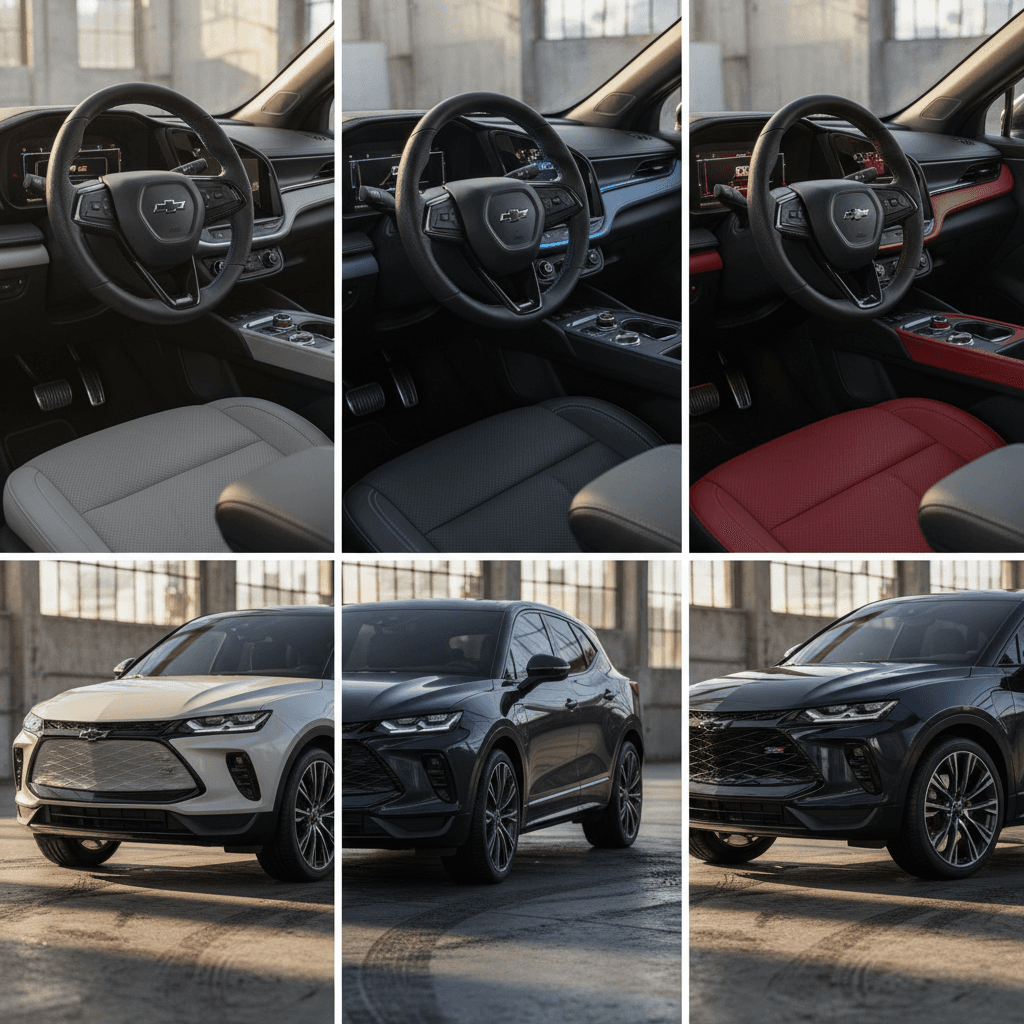
On the outside, all Blazer EVs share the same basic shape, but the LT, RS, and SS send different messages. Inside, tech is largely similar across trims, but materials, styling, and certain features change the feel.
How LT, RS, and SS look and feel
What you’ll notice from the sidewalk and driver’s seat.
LT: Clean and understated
- Body‑color front fascia with a simpler grille treatment.
- Smaller wheel designs aimed at comfort and efficiency.
- Well‑equipped but less flashy, good if you prefer to fly under the radar.
RS: Sporty and upscale
- More aggressive front fascia, blacked‑out trim, and sportier wheels.
- Available contrasting roof and distinctive lighting signatures on some years.
- Interior accents like darker themes and upgraded materials.
SS: Statement piece
- Most aggressive front end with performance cues.
- Larger wheels, often performance‑oriented tires, and unique badging.
- Interior touches that underline the performance mission, plus more standard tech.
Infotainment and driver assistance
From a comfort standpoint, the LT is already roomy and quiet, with plenty of tech. The RS generally adds more visual drama and available features, while the SS layers in performance‑oriented details and, in many cases, more standard equipment that’s optional on lower trims.
Which Blazer EV trim fits which driver?
You don’t choose among LT, RS, and SS the same way you’d pick paint color. Start with how and where you drive, then work backward to the trim that supports that lifestyle at a price you’re comfortable with.
Match your driving style to the right Blazer EV trim
Daily commuters & families
You drive mostly in town with occasional highway trips.
You value comfort, safety, and range more than 0–60 times.
You want to keep payments and insurance reasonable. → <strong>Focus on LT FWD or LT AWD</strong>, and consider RS only if you love the styling and can use the extra power.
High‑mileage highway drivers
You regularly log long highway stretches or road trips.
You have reliable DC fast‑charging access along your routes.
You want strong passing power but don’t need supercar thrust. → <strong>Look hard at RS trims</strong>, especially higher‑range configurations.
Enthusiast & performance‑oriented drivers
You care how a vehicle feels in corners and when you nail the throttle.
You like the idea of a practical SUV that can embarrass sports cars at stoplights.
You’re comfortable paying more for tires, brakes, and insurance. → <strong>The SS is designed for you</strong>, if your budget and charging pattern support it.
Budget‑conscious EV shoppers
You want an EV SUV but you’re stretching to make the numbers work.
You’re open to a lightly used Blazer EV instead of new.
You mainly want low operating costs and modern tech. → <strong>A used LT or RS</strong> with verified battery health (via something like the Recharged Score) can be a smart buy.
Simple rule of thumb
Buying new vs used Chevy Blazer EV
Because the Blazer EV is still relatively new, early owners have already taken the biggest depreciation hit. That makes late‑model used examples, especially RS and SS trims, particularly interesting for value‑minded shoppers.
Why consider new
- Access to the latest software fixes and running changes from GM.
- Full factory warranty, including battery coverage.
- Ability to order the exact color, trim, and options you want.
- Potential eligibility for federal and state EV incentives if you meet income and vehicle rules.
Why consider used
- Let someone else take the initial depreciation hit, especially on higher‑trim RS and SS models.
- You may afford an RS or even SS for similar money to a new LT.
- Real‑world reliability stories and software updates may already be known for that VIN.
How Recharged can help with a used Blazer EV
Recharged also offers financing, trade‑in options, and nationwide delivery, so if you find the right Blazer EV LT, RS, or SS in our marketplace, you can complete the entire process digitally, then just wait for the car to arrive in your driveway.
Checklist: How to choose your Blazer EV trim
Seven steps to the right Blazer EV LT, RS, or SS
1. Set a realistic monthly budget
Factor in not just the payment, but insurance, charging costs, and reserves for tires and maintenance. The SS will usually carry higher insurance and tire costs than an LT.
2. Map your real daily and weekly miles
Write down a typical week of driving. If you rarely exceed 150–200 miles in a day, you don’t need the absolute longest‑range configuration, but highway commuters should still prioritize higher‑range RS setups.
3. Decide how much performance you’ll actually use
Be honest: will you enjoy strong but reasonable acceleration, or are you the kind of driver who will use launch mode every chance you get? That’s the difference between LT/RS and SS ownership.
4. Choose your drivetrain needs
If you live in a snowy climate or drive poorly maintained roads, AWD on an LT or RS, or the SS’s standard AWD, can be worth it. In milder climates, FWD may be more efficient and less expensive.
5. Prioritize must‑have features
Make a short list: Super Cruise, specific wheel size, panoramic roof, towing prep, etc. Some equipment is only available, or standard, on RS or SS, so this can narrow your trim choice quickly.
6. Decide new vs used
If budget is tight, a used RS or SS might cost similar to a new LT. Just make sure you get independent battery‑health data, Recharged’s diagnostics are built for exactly this choice.
7. Test‑drive at least two trims
If possible, drive an LT back‑to‑back with an RS or SS. Pay attention to ride quality, noise, throttle response, and brake feel. The differences often jump out more in person than they look on paper.
Chevy Blazer EV LT vs RS vs SS FAQ
Frequently asked questions about Blazer EV trims
Bottom line: How to decide with confidence
When you line up the Chevy Blazer EV LT vs RS vs SS, you’re really picking among three personalities built on the same solid Ultium EV platform. The LT is the sensible, comfortable choice; the RS is the stylish all‑rounder with extra punch and range; and the SS is the rowdy older sibling that happens to haul people and cargo as well as it hauls down on‑ramps.
Start with your daily driving, your budget, and how much performance you’ll genuinely enjoy. Then decide whether LT, RS, or SS lines up with that reality. If you’d like help comparing real‑world examples, or you’re curious what a used Blazer EV with verified battery health should cost, Recharged can walk you through options, financing, and nationwide delivery so you end up in the right trim for the right price.