If you’ve bought, or are eyeing, a Genesis GV60, you’re probably wondering how it really behaves on a long highway run. The official range numbers look good on paper, but long-distance driving is all about real-world highway range, smart charging stops, and how you set the car up. This guide pulls together platform data, real owner experience, and practical road-trip tactics so you can drive your GV60 farther with less stress.
Quick GV60 long-distance snapshot
Why the Genesis GV60 is great for long trips
GV60 strengths that really help on the highway
The spec sheet only tells part of the story, here’s why the GV60 punches above its weight on road trips.
Ultra-fast DC charging
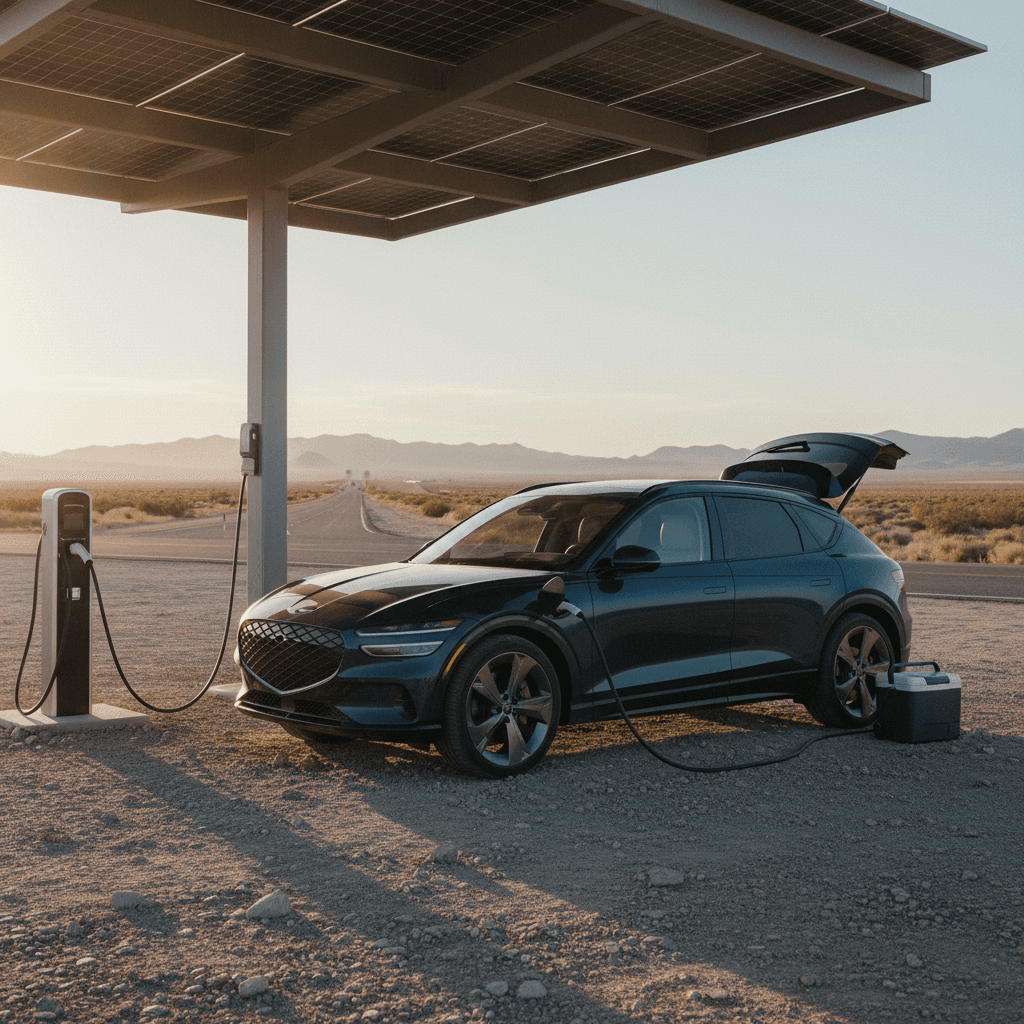
The GV60’s 800‑V system can spike above 200 kW on a 350‑kW DC fast charger and average close to 190 kW from 10–80% in ideal conditions. That translates to roughly an 18–20 minute 10–80% stop when everything is working well, among the quickest in the market for its class.
Comfortable, quiet highway manners
Genesis tuned the GV60 more like a luxury crossover than a track toy. Cabin noise is well controlled, the seats are supportive, and the driver-assistance suite makes long stints on the interstate much less tiring.
Predictable real-world range
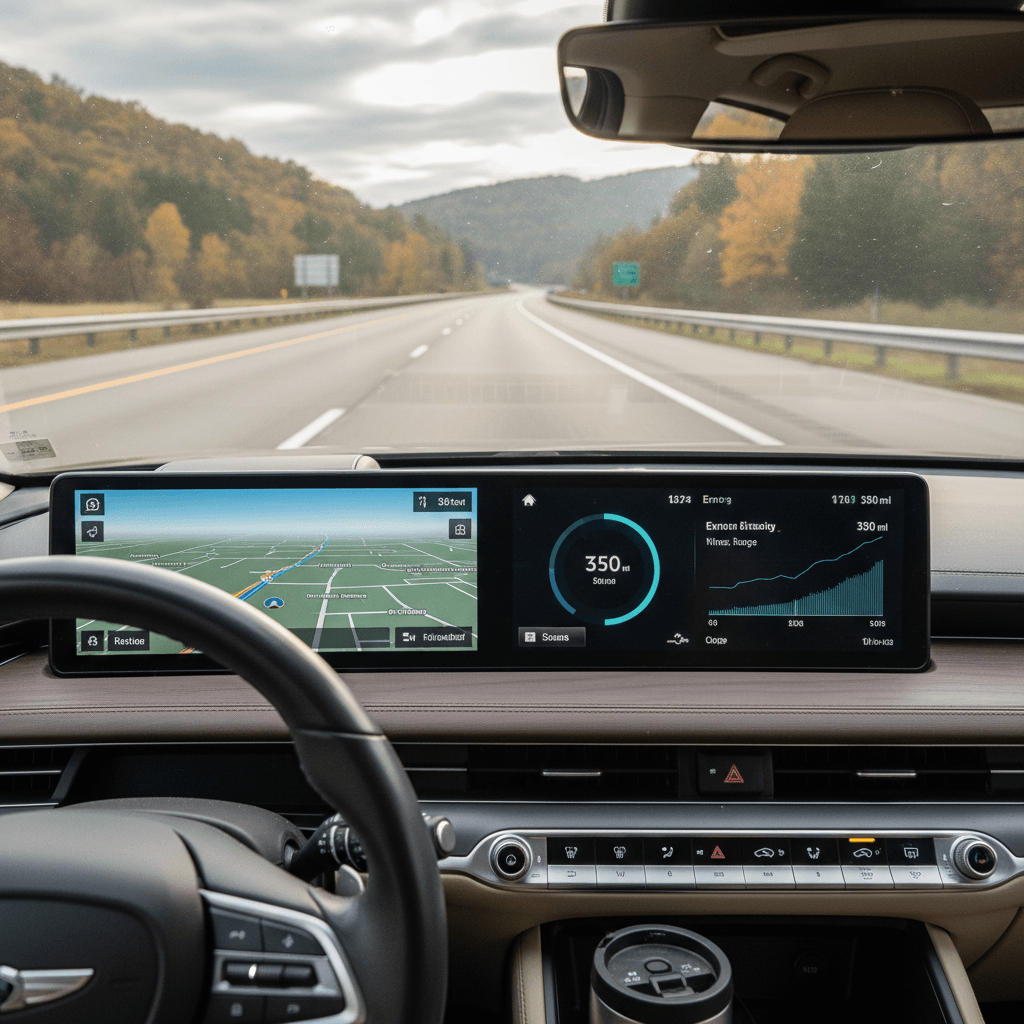
On the highway at 70–75 mph, most owners see roughly 70–85% of the official EPA range in normal weather, depending on trim, wheels, and how heavily the car is loaded. Once you know your personal baseline, planning becomes very straightforward.
Key Genesis GV60 highway and charging numbers
Know your GV60’s real-world highway range
The single biggest long-distance driving tip for any EV, including the Genesis GV60, is to ignore the glossy marketing number and get comfortable with your own real-world highway range. EPA figures assume a mixed driving cycle and lower average speeds than you’ll typically see on U.S. interstates.
- Most 2023–2025 GV60s in the U.S. use a ~77.4‑kWh pack with official EPA ratings roughly in the 235–294 mile range depending on trim and wheel size.
- At 70–75 mph, expect about 70–85% of that EPA number in mild weather, so something like 205–250 miles between 100% and low single digits for many configurations.
- Add roof boxes, 21‑inch wheels, headwinds, or heavy loads and your usable highway range can shrink another 10–15%.
Establish your personal highway baseline
How speed affects GV60 range
The E‑GMP platform is very efficient at moderate speeds, but like any EV, aerodynamic drag starts to dominate above 60 mph. Pushing from 65 mph to 80 mph can easily cost you 20–30% of your range without saving much time once you factor in extra charging stops.
Example: Conservative cruise
Imagine you have a GV60 rated near 280 miles of EPA range. At a steady ~65 mph in good weather, you might realistically see something like 3.1–3.3 mi/kWh, translating to ~220–240 miles of practical highway range from full to very low.
That lets you comfortably plan 150–180 mile legs with a healthy buffer, which often lines up nicely with restroom and snack breaks.
Example: Fast cruise
Run the same car at 78–80 mph and that efficiency can drop closer to 2.4–2.7 mi/kWh, shrinking realistic range into the 170–200 mile window. You’ll still get there, but you’ll be charging more often and arriving with less margin for weather or detours.
Smart charging strategies for long-distance driving
Long-distance driving in the Genesis GV60 isn’t just about how far you go on a charge, it’s about how quickly you add miles back. This is where the GV60’s 800‑V fast‑charging hardware really shines, but only if you use it strategically.
Optimize your GV60 fast-charging stops
1. Live in the 10–60% (or 10–70%) window
The GV60 charges quickest at low to mid state of charge (SoC). Time‑wise, you’re usually better off chaining multiple 10–60% or 10–70% stops than charging from 10% all the way to 100%, where the charge curve slows dramatically.
2. Plan for 18–25 minute DC stops
On a healthy 150–350 kW station, expect about 18–20 minutes from 10–80% in ideal conditions, and maybe 20–25 minutes if the pack is cold or the site is busy. Treat that as your default bio break: restroom, snack, quick stretch, back on the road.
3. Arrive low, not empty
Navigation apps will often route you to arrive with 5–10% SoC. That’s ideal for speed, because the GV60 pulls the most power when the pack is nearly empty. Just give yourself extra buffer in winter or in areas with sparse charging.
4. Don’t sweat occasional 90–100% charges
On certain rural stretches or if the next charger looks sketchy, it’s fine to sit longer and charge higher. Just know that those last 10–20% take <strong>disproportionately more time</strong>, so plan them only when they actually reduce total trip time or stress.
5. Prefer reliable networks you trust
In practice, road-trip ease comes down to whether plugs actually work. If you’ve learned that a certain network or site is consistently reliable for your GV60, bias your route toward those even if it means slightly shorter legs.
6. Use scheduled charging at night
For multi‑day trips where you have Level 2 at a hotel or friend’s house, use the car or charger’s schedule function to charge cheaply overnight to 80–90% so you start each morning with a nearly full battery.
Watch the 0–5% zone
Drive modes, tires, and climate control settings that matter
On long highway drives you’re not chasing lap times, you’re chasing consistency and comfort. The Genesis GV60 gives you multiple dials to tune that balance: drive modes, regenerative braking, wheel and tire choices, and climate settings.
Settings that help the GV60 sip power on the highway
You don’t have to baby it, but small tweaks pay big dividends over hundreds of miles.
Use Eco or Comfort on the highway
Eco mode softens throttle response and optimizes climate for efficiency, great for long, steady cruising. Comfort mode is a fine default if Eco feels too lazy; it’s still efficient if you’re not constantly mashing the accelerator.
Tweak climate control, don’t suffer
Cabin heat is a big load at freeway speeds in the winter. Use seat and steering‑wheel heaters first and set cabin temperature a couple of degrees lower than you would in a gas car. In summer, use normal A/C but avoid constantly opening windows at high speed, which hurts aero.
Pick tires and wheels for trips, not just looks
If you have a choice between 19‑ and 21‑inch wheels, the smaller wheel / taller tire setup usually yields better efficiency and a softer ride. Aggressive summer tires or oversized wheels look great but can cost you 10–15% of range at highway speeds.
Let smart cruise do the boring work
Packing and aero tips to stretch your range
Aerodynamics and weight are often bigger range killers than people expect. The GV60’s slippery shape works in your favor, but anything you bolt to it, or cram inside it, can chip away at efficiency.
- Avoid roof boxes and external racks unless you truly need them. A big box on the roof can easily cost you 10–20% range at 70–75 mph.
- If you must carry bikes or bulky cargo, a compact hitch rack is usually better for aero than a tall roof setup.
- Remove crossbars when you’re not using them; they add noise and drag for surprisingly little convenience.
- Pack the cabin sensibly. Hundreds of pounds of extra stuff, tools, coolers, luggage you don’t really need, adds up to real energy over 500+ miles of driving.
- Keep tires properly inflated before your trip. Slightly underinflated tires are efficient at low speed but waste energy and heat up at highway speeds.
Use the frunk for dense items
Planning your route: apps, stations, and target speeds
A little bit of upfront planning makes a huge difference in how relaxing your GV60 road trip feels. The car’s built‑in nav can route to chargers, but pairing it with one or two good planning tools gives you much better visibility into backup options, station reliability, and realistic arrival SoC.
Popular tools for planning GV60 long-distance trips
Use at least two sources: one for planning the route at home, another for live status and backups on the road.
| Tool | Best use | Key advantages | Watch-outs |
|---|---|---|---|
| A Better Routeplanner (ABRP) | Pre-trip planning | Detailed EV‑specific planning, custom GV60 profiles, weather and speed assumptions | Takes a little time to dial in your car’s exact efficiency |
| PlugShare | Finding stations + reviews | Crowdsourced check‑ins, photos, reliability reports | Data quality varies by area; always read recent check‑ins |
| Network apps (EA, EVgo, etc.) | Live status + payment | Shows stall availability and pricing, handles payment and loyalty perks | Each app only shows its own network |
| Google Maps / Apple Maps | General navigation | Good for traffic routing and basic EV charger search | Less detail on connector types, power levels, and real reliability |
No single app is perfect everywhere, combining them gives you redundancy when you need it most.
Pick an intentional cruise speed
On long days behind the wheel, pick a target speed that fits your priorities. If you’d rather minimize charging sessions and enjoy a quieter cabin, 65–70 mph is often the sweet spot. If you’re comfortable adding an extra stop or two, 72–75 mph can still be reasonable in a GV60.
The important thing is to commit to that speed so your planning tools can predict consumption accurately.
Build in a realistic energy buffer
For most routes, planning to arrive with 10–15% SoC at each major DC stop is a good balance between efficiency and peace of mind. In remote areas, harsh winter weather, or on unfamiliar mountain passes, bump that target up to 20% or more.
Your time loss from a slightly higher arrival SoC is usually negligible compared with the stress of limping to a charger on 1–2%.
Winter and bad-weather driving in a GV60
Cold temperatures, rain, and strong winds are the real stress tests for long‑distance EV driving. The Genesis GV60 has the hardware to handle this, heat pump, efficient motors, traction aids, but you need to plan like the elements are your co‑driver.
Winter and poor-weather tips for GV60 road trips
1. Expect 25–35% range loss in real cold
In sub‑freezing temperatures at highway speeds, it’s normal for the GV60 to lose around a quarter to a third of its nominal range, especially on the first leg after a cold soak. Plan shorter legs and more frequent stops on the coldest days.
2. Precondition while plugged in
If you can, <strong>preheat the cabin and battery while the car is still charging</strong>. That moves energy load from the battery to the grid and improves fast‑charge speed on the first stop.
3. Use heaters smartly
Rely more on seat and wheel heaters, and set the cabin a couple of degrees cooler than you’re used to in a gas car. The GV60’s heat pump is efficient, but cabin heating is still one of the biggest winter loads.
4. Respect snow tires and slush
Winter tires are fantastic for traction but can cost efficiency. Deep slush or standing water at speed adds huge rolling resistance. Combine these and it’s easy to see another 10% range hit on top of the cold‑weather penalty.
5. Add extra buffer for the first leg
The first drive of the day, leaving a cold pack, is where range and charging are most impacted. Plan that leg conservatively with more buffer and a slightly lower cruise speed, then adjust once everything is warmed up.
Don’t rely on the guess-o-meter in deep cold
Charging etiquette and dealing with unreliable stations
If you’re new to EV road trips, the biggest culture shock isn’t usually range, it’s sharing charging infrastructure. The GV60’s fast charge speeds mean your sessions can be short; that’s great for you and for everyone around you if you follow some basic etiquette and have a plan B when hardware misbehaves.
- Always move your GV60 once you’ve hit your target SoC and the charge rate has tapered. Don’t treat a DC fast charger as a parking spot.
- If a station has multiple power “pairs” (like 1A/1B, 2A/2B), avoid plugging in right next to another car when the site is busy; you may share power and both charge slower.
- Check recent user check‑ins in apps like PlugShare before relying on a site you’ve never visited. If the last few check‑ins mention dead stalls, low power, or payment issues, have a backup in mind.
- When possible, choose sites with more stalls than you need and amenities you actually want, restrooms, food, decent lighting, so the 20 minutes genuinely feels like a break, not a chore.
- If a station is clearly having issues, don’t be afraid to leave early for a more reliable site even if that means arriving with a lower SoC than you’d prefer. That’s where the GV60’s strong peak charge rate can bail you out.
Be the driver others are happy to share with
Extra considerations for used Genesis GV60s
If you’re looking at a used Genesis GV60 or already own one with some miles under its belt, long‑distance driving raises a couple of extra questions: How healthy is the battery, and will it still charge as quickly as advertised? That’s where a structured inspection, and good data, matter more than anecdotes.
Battery health and real-world range
Like most modern EVs, the GV60 manages its battery conservatively. Moderate degradation over the first few years is normal, but big drops in displayed range or uneven cell behavior can impact your highway plans.
Before committing to a cross‑country trip in a used GV60, it’s worth getting a quantitative battery health check rather than guessing from the dash estimate alone.
How Recharged can help with a used GV60
Every EV sold through Recharged comes with a Recharged Score Report that includes verified battery health, charging performance, and fair‑market pricing. If you’re considering a GV60 as your road‑trip companion, that report gives you a clear picture of how much usable capacity and charging speed you can realistically expect on day one.
Recharged also offers EV‑specialist support, financing, trade‑ins, and nationwide delivery, so you can shop for a road‑trip‑ready GV60 entirely online and have it show up at your door.
Genesis GV60 long-distance driving FAQ
Common questions about taking a Genesis GV60 on road trips
Bottom line: Making the most of your GV60 on the road
The Genesis GV60 is one of the most capable long‑distance EVs in its class, thanks to ultra‑fast charging, a comfortable cabin, and a well‑engineered battery system. To get the most out of it on road trips, focus on learning your real highway efficiency, planning 150–200 mile legs with smart buffers, and leaning into short, frequent fast‑charge stops instead of chasing 100% every time.
Treat speed as a knob you can turn depending on how busy you are, pack and drive with aero in mind, and give winter the respect it deserves. With those habits, the GV60 turns from an unknown into a predictable, confidence‑inspiring travel tool. And if you’re still shopping for a GV60, or another used EV that can handle real road‑trip duty, Recharged can help you find one with verified battery health, fair pricing, and EV‑savvy support from first search to the end of your first 500‑mile day.