When you look at the window sticker on a Chevy Blazer EV, it’s easy to focus on MSRP and monthly payment. But the long-term ownership cost, what you’ll actually spend over 5–10 years on depreciation, charging, maintenance, insurance, and taxes, tells a very different story. If you’re comparing a Blazer EV to a gas SUV or debating whether to buy new or used, understanding that total cost of ownership is critical.
Quick take
Why long-term costs matter for the Blazer EV
Electric SUVs like the Chevy Blazer EV often carry a higher upfront price than gas crossovers. But they also offer much lower day-to-day running costs. Over a 5–10 year period, the biggest expenses you’ll face are usually: - Depreciation (how fast the vehicle loses value) - Energy (electricity vs gasoline) - Insurance and taxes - Maintenance and unexpected repairs The twist with EVs: battery health drives a big portion of resale value and repair risk. That’s why buying a used Blazer EV with verified battery diagnostics can materially change your long-term cost picture.
Key long-term cost drivers for a Blazer EV
Chevy Blazer EV price and depreciation
Exact pricing and incentives can change frequently, but the Blazer EV generally sits in the mid-to-upper price band for mainstream electric SUVs, especially in well-equipped trims. That makes depreciation, the single largest ownership cost for most EVs, something you should pay close attention to.
How the Blazer EV is positioned on price
Why its starting price matters for long-term cost of ownership
Segment: midsize electric SUV
Higher trims, higher risk
EV price volatility
Depreciation reality check
Energy cost: gas vs charging for the Blazer EV
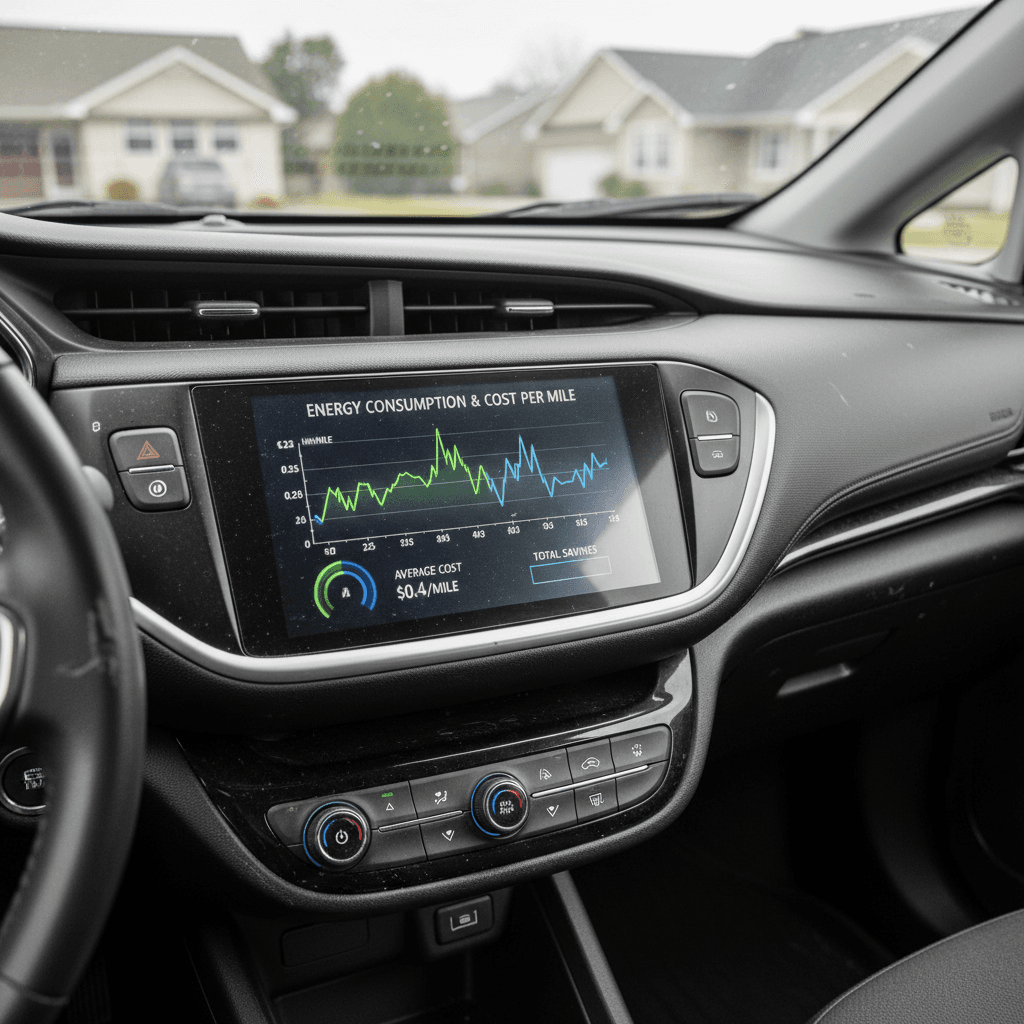
Energy is where the Chevy Blazer EV can quietly save you thousands over time. While exact efficiency figures and electricity rates vary, you can think in terms of cost per mile rather than cost per gallon.
Illustrative energy cost: Blazer EV vs similar gas SUV
Approximate example using common U.S. averages to show directional differences in long-term cost. Your actual numbers will depend on local electricity and gas prices, driving style, and how often you use DC fast charging.
| Vehicle type | Energy cost per mile* | Annual miles (example) | Annual energy cost | 5-year energy cost |
|---|---|---|---|---|
| Chevy Blazer EV (mostly home Level 2) | Low | 12,000 | Low | Lowest |
| Comparable gas midsize SUV | Higher | 12,000 | Higher | Significantly higher |
EVs like the Blazer EV are usually cheaper to “fuel” per mile than gas SUVs, especially if you can charge at home on off-peak rates.
About these numbers
Home charging: your best cost control lever
If you install or already have Level 2 charging at home, you can usually charge your Blazer EV overnight at a lower effective rate than most public fast chargers. Many utilities also offer time-of-use (TOU) plans with cheaper off-peak rates, which pushes your cost per mile down even further.
Over 5–10 years, that can translate into thousands of dollars in savings versus fueling a similarly sized gas SUV.
Frequent DC fast charging: more convenient, more expensive
If you rely heavily on DC fast charging (for example, using highway networks for long commutes or frequent road trips), your energy cost per mile will be higher than with home charging. It can still be competitive with gas, but it narrows the advantage.
In your long-term cost math, estimate what share of your driving will be home vs public charging. The closer you get to 80–90% home charging, the more the Blazer EV’s energy cost advantage shows up.
Maintenance and repairs: what you’ll actually service
One of the biggest financial perks of owning a Blazer EV is the simpler powertrain. There’s no engine oil, spark plugs, or complex transmission. Over the long term, that means fewer routine services and fewer chances for big-ticket mechanical failures compared with a gas SUV.
Typical long-term maintenance for a Blazer EV
What stays, what disappears, and what’s different vs a gas SUV
Tires & alignment
Brakes (usually less often)
No oil changes, fewer fluids
Keep an eye on software and recalls
Insurance, registration, and taxes
Insurance premiums for the Chevy Blazer EV can run higher than a basic gas crossover but may be comparable to other midsize SUVs with similar price and performance. Insurers consider vehicle value, repair complexity, and safety tech when setting rates.
- Newer, higher-priced trims can push premiums up compared with older gas models.
- Advanced driver-assistance and crash-avoidance tech can help offset some of that through lower risk.
- As the Blazer EV ages and more repair data becomes available, insurance pricing usually stabilizes.
- State and local EV incentives can reduce registration or annual fees in some regions, helping offset higher insurance.
Pro move: get EV-specific quotes
Battery health and resale value
For any used EV, especially a fairly new model like the Blazer EV, battery condition is the single most important long-term cost variable. A healthy pack preserves range and performance and keeps resale value higher. A degraded or abused pack can lead to costly repairs, limited range, and a much steeper depreciation curve.
Battery health signals that affect long-term cost
1. Realistic range compared to original estimates
Look at real-world range at your typical highway speeds. Significant deviation from what similar Blazer EVs achieve can signal degradation or previous fast charging abuse.
2. Consistency of state-of-charge behavior
Sudden jumps or drops in the charge gauge, or an EV that “hangs” at certain percentages, may indicate underlying battery management issues that will matter over years of ownership.
3. Fast-charging history and usage patterns
Frequent DC fast charging, especially in high heat, can accelerate wear. A Blazer EV that lived mostly on home Level 2 will usually have better long-term battery health.
4. Independent diagnostics, not just a dash readout
On a used Blazer EV, relying only on the dash range estimate is risky. A <strong>structured battery health report</strong> can help quantify remaining capacity and likely degradation path.
How Recharged helps here
Ready to find your next EV?
Browse VehiclesNew vs used Blazer EV ownership cost comparison
A brand-new Blazer EV gives you the latest software, full warranty coverage, and the emotional appeal of being first owner. A used Blazer EV can dramatically reduce your upfront cost and depreciation hit, but only if you choose carefully.
Owning a new Blazer EV long term
- Pros: Full new-vehicle warranty, freshest software and features, known history from day one.
- Cons: Steeper early depreciation, higher sales tax and insurance in many cases, more capital tied up.
- Best for: Drivers who plan to keep the vehicle 7–10+ years and are comfortable absorbing early value loss.
Owning a used Blazer EV long term
- Pros: Lower purchase price, someone else already paid the steepest depreciation, better total cost picture if battery is healthy.
- Cons: More variation in battery health, warranty may be shorter or expired on some systems, condition depends on prior owner habits.
- Best for: Value-focused buyers who want midsize EV capability with reduced financial risk, especially when they can verify battery and pricing through a trusted marketplace.
Why used often wins on long-term cost
How to lower your Chevy Blazer EV long-term ownership cost
You can’t control everything, market shifts, future incentives, gas prices, but you can influence most of the major cost drivers for your Blazer EV. Here are practical levers you can pull.
Practical playbook for minimizing Blazer EV ownership costs
1. Charge mostly at home, off-peak when possible
Install Level 2 home charging or ensure you have access to reliable workplace charging. Shift your charging to off-peak hours if your utility offers discounted rates to maximize energy savings.
2. Choose your trim and options with resale in mind
Heavily optioned or niche trims can lose value faster. Consider mainstream configurations that more used buyers will want down the road to protect your resale value.
3. Drive and charge in a battery-friendly way
Avoid constantly fast charging from a very low state of charge to 100%, and minimize prolonged exposure to extreme heat when possible. Small habits like stopping DC fast charging around 80–90% can benefit long-term battery health.
4. Shop used with verified battery diagnostics
On a used Blazer EV, a strong, independently verified battery report can be worth thousands in avoided risk. Buying through a platform that provides a <strong>transparent battery health score</strong> reduces the chance of surprise degradation issues.
5. Run true cost-of-ownership math before buying
Compare a Blazer EV to the gas SUV you’re considering over a 5–10 year window. Include purchase price, incentives, financing, energy, maintenance, and insurance. Don’t just compare MSRPs, compare <strong>total dollars spent</strong>.
6. Use EV-savvy financing and trade-in options
Leverage lenders and marketplaces that understand EV values and battery health. At Recharged, you can <strong>finance, trade in, or get an instant offer</strong> on your current vehicle, all with EV specialists who speak this language daily.
Frequently asked questions: Chevy Blazer EV ownership costs
Chevy Blazer EV cost FAQs
Bottom line: Is the Chevy Blazer EV expensive to own long term?
If you only look at the sticker, the Chevy Blazer EV can feel pricey next to some gas midsize SUVs. But once you factor in lower energy and maintenance costs, plus the right purchase strategy, its long-term ownership cost becomes far more competitive, and in many scenarios, better. The keys are managing depreciation, understanding your charging mix, and taking battery health seriously, especially if you’re shopping used.
Buying used through a platform that specializes in EVs changes the equation even more. At Recharged, every vehicle, including models like the Blazer EV, comes with a Recharged Score Report that verifies battery health, benchmarks pricing against the market, and walks you through condition and history. Pair that with EV-savvy financing, trade-in options, and nationwide delivery, and you’re not just buying a Blazer EV, you’re buying clarity on its true long-term ownership cost before you ever sign.