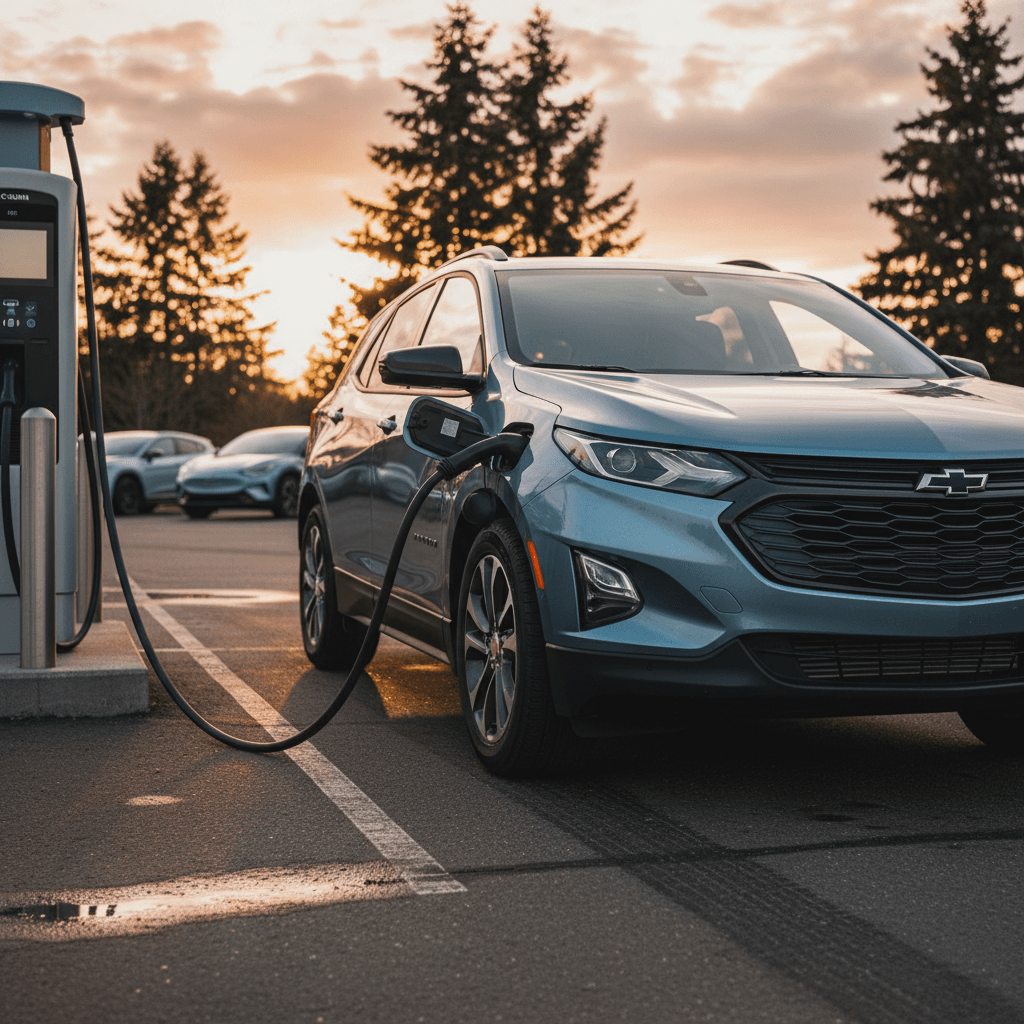
If you’re considering a Chevy Blazer EV, or already own one, charging speed is probably near the top of your list. The spec sheet promises up to 150–190 kW DC fast charging and strong home-charging capability, but what does a real Chevy Blazer EV charging speed test look like on the road?
At-a-glance charging verdict
Chevy Blazer EV charging speed: what to expect
Headline Blazer EV charging numbers
Those are the high‑level numbers. To really understand the Blazer EV’s charging performance, you need to look at its battery sizes, trims, and how the charging curve behaves in the real world, both on public DC fast chargers and at home.
Ultium battery, trims and charging hardware basics
The Blazer EV rides on GM’s Ultium platform, and that matters because battery size and chemistry shape everything about charging speed. Early Blazer EVs have come mainly in RS and 2LT flavors, with two battery sizes in play:
- A smaller Ultium pack around 85 kWh usable (seen in some RS AWD models) rated for about 150 kW peak DC fast charging.
- A larger Ultium pack around 102 kWh usable (RS RWD and SS) capable of up to 190 kW peak DC fast charging in Chevy’s own specs.
Across all trims, you get an 11.5 kW onboard AC charger, so home Level 2 charging is the same experience whether you’re in a dual‑motor RS or a future SS performance model. On the DC side, real‑world testing shows peak power in the 175–183 kW range on the higher‑spec cars, which is close to, but not quite matching, the brochure numbers.
Trim differences matter
DC fast charging speed tests: 5–80% and 5–100%
Let’s talk about how the Blazer EV behaves on a modern high‑power charger. Independent outlets have done structured Blazer EV charging speed tests, typically running the battery from about 5% up to 80% and then all the way to 100% on 250–350 kW DC fast chargers.
Real‑world Blazer EV DC fast‑charging tests
Approximate results from independent testing of a 2025 Blazer EV RS RWD with the larger Ultium pack on high‑power DC chargers. Times are rounded for simplicity.
| Test scenario | Charger type | Battery window | Time | Peak power | Average power | Highway range added* |
|---|---|---|---|---|---|---|
| Test A | 350 kW DC fast charger | 5–80% | ~46 min | ~183 kW | ~111 kW | ~212 mi at 70 mph |
| Test B | 350 kW DC fast charger | 5–100% | ~98 min | ~183 kW | ~68 kW | ~334 mi (full rated range) |
| Test C | Tesla V3 Supercharger (250 kW via NACS adapter) | 5–80% | ~50 min | ~180 kW | ~101 kW | ~195 mi at 70 mph |
| Test D | Tesla V3 Supercharger (250 kW via NACS adapter) | 5–100% | ~99 min | ~180 kW | ~67 kW | ~241 mi at 70 mph |
Your exact results will vary with temperature, state of charge, charger quality and driving style, but these numbers are a realistic baseline.
How the charging curve looks
From a driver’s standpoint, what matters is time. On a healthy high‑power charger in moderate weather, you can plan on roughly 45–50 minutes to go from 5% to 80%, and a bit over an hour and a half if, for some reason, you absolutely need 100%.
Fast‑charging takeaways from these tests
1. Peak power is competitive
The Blazer EV’s ~180 kW peak is strong for a 400‑volt SUV, even if it doesn’t reach the very top of the class.
2. Average power matters more
With roughly 100–110 kW average from 5–80%, you’re looking at mid‑pack real‑world charge times among family EV crossovers.
3. Don’t chase 100% on DC
The last 20% can nearly double your stop time. For road trips, aim to leave around 70–85% and charge again later.
4. Highway range refills quickly enough
Adding about 90–100 miles in 15–16 minutes means realistic coffee‑and‑restroom stops line up nicely with charge needs.
Blazer EV on Tesla Superchargers vs other fast chargers
Using Tesla Superchargers (NACS)
GM now provides NACS adapters so Blazer EV drivers can plug into thousands of Tesla Superchargers. In detailed tests on a V3 Supercharger cabinet, a Blazer EV RS RWD:
- Peaked around 180 kW at ~14% state of charge.
- Added about 92 miles of indicated range in 15 minutes.
- Took about 50 minutes to reach 80% and 99 minutes to reach 100% from 5%.
The important part: charge times were only a few minutes slower than on a 350 kW non‑Tesla unit, and station reliability was far better.
On 350 kW CCS fast chargers
On non‑Tesla networks like Electrify America, the Blazer EV can tap into 350 kW hardware through its CCS port. In controlled testing on a 350 kW cabinet, the same Blazer EV:
- Peaked around 183 kW, slightly higher than on V3 Tesla hardware.
- Added roughly 97 miles in the first 15 minutes.
- Cut the 5–80% time down to about 46 minutes.
The difference is measurable on paper but modest in real life. What you’ll notice more is which network is available, reliable, and not congested on your route.
Planning your stops
Home charging performance: Level 1 and Level 2
Fast charging gets headlines, but most Blazer EV owners will do the bulk of their charging at home. Here’s how the SUV behaves on household power:
Blazer EV home charging options
How long you’ll actually be plugged in overnight
Level 1 (120V outlet)
Best for: Occasional top‑offs, very low‑mileage drivers.
- Charging rate: ~3–4 miles of range per hour.
- Time 10–90% (large pack): well over 30 hours.
Good as a backup, but not ideal long‑term for an SUV‑sized pack.
Level 2 (240V, 32–40A)
Typical home setup with a 40‑amp circuit or moderate wallbox.
- Charging rate: ~7–9 kW delivered.
- Time 10–90% (large pack): ~9–11 hours.
Plenty to refill a depleted battery overnight for most commuters.
Level 2 (240V, 48A / 11.5 kW)
Maximizing the onboard charger on a 60‑amp circuit.
- Charging rate: up to 11.5 kW into the car.
- Time 0–100% (large pack): about 9–10 hours; less for smaller packs.
This is where the Blazer EV shines at home: a true “empty‑to‑full overnight” experience.
Right‑sizing your home charger
How charging speed ties into real-world range
The Blazer EV’s DC fast‑charging performance only tells half the story. The other half is range, how far you get between those stops. Early RS AWD models with the smaller pack carry an EPA estimate around 279 miles, while the RS RWD with the big battery stretches into the low‑to‑mid‑300‑mile zone in EPA ratings.
Independent highway range tests at a steady 70–75 mph have seen real‑world numbers in the 240–320‑mile window depending on trim and conditions. That dovetails with user reports: conservative drivers often see better‑than‑EPA range, while heavy highway driving in winter drags it down.
Why range per minute matters
7 ways to make your Blazer EV charge faster in the real world
Practical tips to cut your Blazer EV’s charge times
1. Arrive with a low but safe state of charge
Fast chargers work fastest when the battery is low. For road trips, plan to hit DC chargers between about 5–20% state of charge. That’s where you’ll see the Blazer EV’s ~180 kW peaks and highest average power.
2. Target 60–80% on long drives
Above roughly 80%, the Blazer EV steps power down sharply. Instead of waiting an extra 30–40 minutes for a full charge, unplug around 70–80% and drive to the next charger. You’ll save time across the entire trip.
3. Use battery preconditioning before fast charging
In cold or very hot weather, use the Blazer EV’s <strong>Fast Charge Prep</strong> or preconditioning feature in the myChevrolet app or in‑car menus. Warming or cooling the pack before you plug in helps the car hit and hold higher power levels.
4. Prioritize reliable networks, not just highest kW
A rock‑solid 150–250 kW charger that just works will beat a flaky 350 kW unit every time. In many regions, that means favoring well‑maintained Tesla Superchargers (with your NACS adapter) or the newest locations from major networks.
5. Avoid back‑to‑back 0–100% DC sessions
High‑power DC charging heats the pack and stresses the cells. Occasional full charges are fine, but try not to run from 0–100% on rapid chargers repeatedly. It won’t hurt trip logistics to stop a bit earlier and finish at home on Level 2.
6. Keep software and navigation up to date
GM continues to refine charging behavior through software updates. Keeping your Blazer EV updated and using built‑in navigation for charging‑aware routing can improve both arrival state of charge and preconditioning logic.
7. Check charger health before you settle in
If the station has multiple cabinets, don’t hesitate to unplug and move if you see abnormally low power (e.g., stuck at 30–40 kW with a warm battery at low SOC). Sometimes a neighboring stall delivers full power and saves you 20 minutes.
Temperature is the silent enemy
Is the Blazer EV "fast enough" at charging?
Where the Blazer EV shines
- Solid peak and average power around 180 kW peak and 100+ kW average from 5–80% on the big‑battery trims.
- Strong real‑world range that makes each stop less frequent, especially on RS RWD models.
- Excellent home charging with an 11.5 kW onboard AC charger, better than some competitors.
- Access to Tesla Superchargers via NACS adapter dramatically improves station coverage and reliability.
Where rivals are quicker
- 800‑volt SUVs like the Hyundai Ioniq 5 can complete 10–80% DC sessions in the low‑20‑minute range on a strong charger.
- Some rivals average 150+ kW from 10–80%, versus the Blazer EV’s ~100–110 kW average.
- If you frequently run back‑to‑back high‑speed legs on interstate road trips, those few extra minutes per stop may matter to you.
Bottom line on charging performance
Buying a used Chevy Blazer EV? What to look for in charging performance
If you’re shopping the used market, charging performance and battery health should be on the same level as price, miles, and features. A Blazer EV that looks identical on the outside may charge quite differently depending on how it’s been used and which trim you’re considering.
Used Blazer EV charging checklist
Questions to ask and data to gather before you buy
Ask about fast‑charging history
Heavy DC fast‑charging won’t necessarily kill an Ultium pack, but it can accelerate wear if the car lived on 350 kW chargers from day one. Ask the seller:
- How often they used DC fast charging vs home Level 2.
- Typical charge targets, did they always go to 100% on DC?
Review recent charging behavior
If you can, plug the vehicle into a known‑good DC fast charger during your test drive:
- Does it ramp quickly to 100+ kW at low state of charge?
- Are there unusual drop‑offs even with a warm battery?
One slow session doesn’t prove a problem, but a car that never climbs above ~70–80 kW on multiple chargers may warrant deeper inspection.
Compare expected charge times
On a healthy Blazer EV with the larger pack, you should still see roughly 45–55 minutes for a 5–80% DC session on a strong charger. If a seller’s real‑world logs show much longer times in mild weather, it’s worth asking why.
Get a battery health snapshot
On a platform like Recharged, every used EV listing includes a Recharged Score Report with verified battery health and charging data. That lets you compare one Blazer EV to another based on more than just odometer and sticker price.
How Recharged can help
Chevy Blazer EV charging speed test: FAQ
Frequently asked questions about Blazer EV charging speed
The Chevy Blazer EV won’t set new records in fast‑charging tests, but it doesn’t have to. With realistic 5–80% DC times around 45–50 minutes, the ability to add close to 100 miles of highway range in about a quarter of an hour, and a strong 11.5 kW home‑charging setup, it delivers a balanced ownership experience that fits how most people actually drive. If you’re weighing a Blazer EV, especially on the used market, pay attention to trim, battery size, and how the previous owner charged the car. And if you want a clearer picture of battery health and real‑world charging performance before you commit, buying through a platform like Recharged gives you the data and expert guidance to make a confident decision.