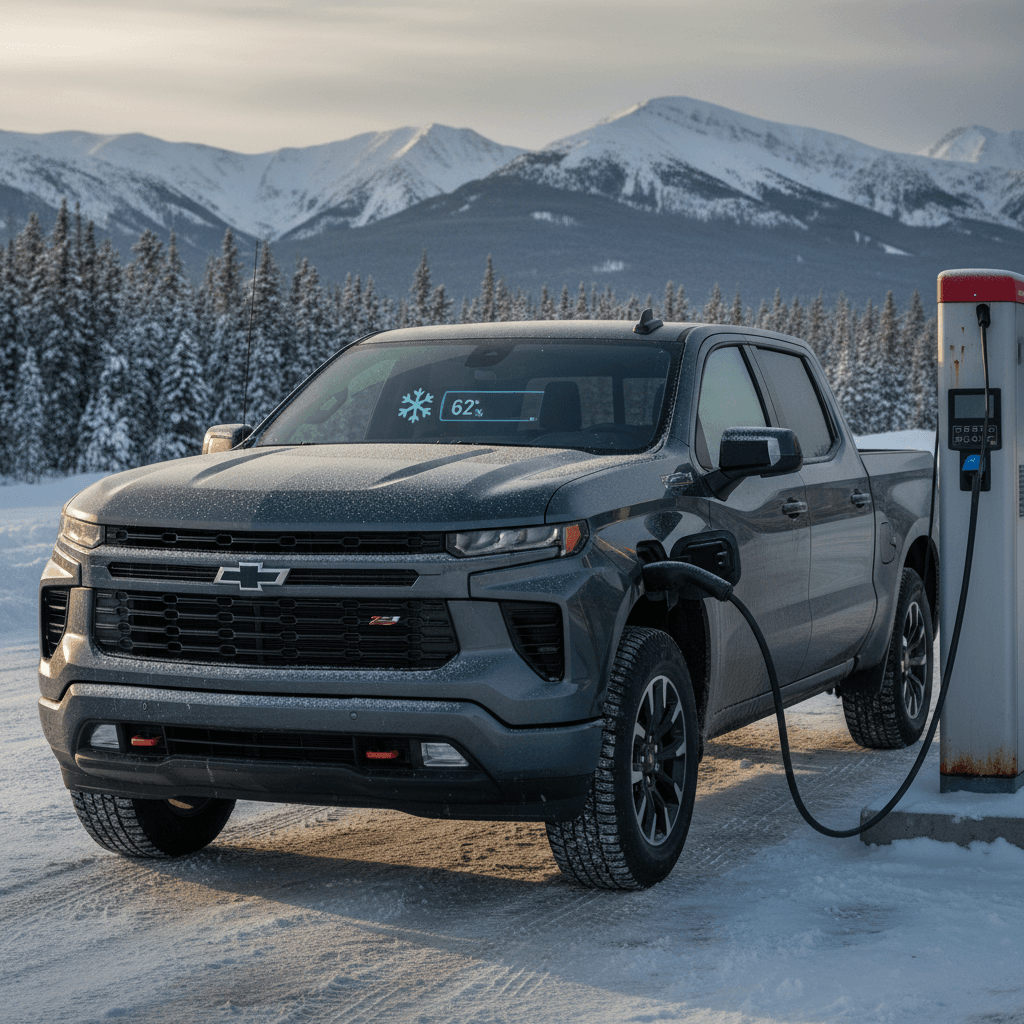
If you live where winter actually feels like winter, you’re right to wonder how much range the **Chevrolet Silverado EV** will lose when the thermometer dives. Early tests and owner reports suggest the Silverado EV is one of the *better* performers in the cold, but no electric truck escapes physics. Let’s walk through the real-world **Chevrolet Silverado EV winter range loss percentage**, what that looks like in miles, and how you can keep your truck useful when it’s 10°F and sleeting sideways.
Quick takeaway
Silverado EV winter range loss at a glance
Chevrolet Silverado EV winter range in numbers
Those percentages land differently when you’re looking at a nearly 450‑mile truck. A **20% winter hit** still leaves you with more usable range than some electric pickups have in perfect summer weather. That’s one of the reasons early testers have called the Silverado EV a surprisingly calm companion in January.
How much range the Silverado EV loses in winter
Let’s put some concrete numbers to that **Chevrolet Silverado EV winter range loss percentage**. Exact results depend on your trim, tires, speed, temperature, and how you use the cabin heat, but there’s enough real data now to give you a realistic band instead of wishful thinking.
Estimated Chevrolet Silverado EV winter range loss by condition
Approximate real‑world range and loss percentages for a long‑range Silverado EV (EPA rating around 440–450 miles). Numbers are rounded for clarity and assume a healthy battery.
| Conditions | Example Temp & Use | Estimated Range Loss | Approx. Usable Range |
|---|---|---|---|
| Mild chill | 40°F, mixed city/highway, preconditioned | 10–15% | 375–400 mi |
| Typical winter day | 25–32°F, mixed driving, heater set to 70°F | 15–25% | 330–375 mi |
| Deep cold commuter | 5–15°F, short trips, parked outside, little preconditioning | 25–35% | 290–335 mi |
| Deep cold highway | 5–15°F, 70–75 mph, crosswinds, heavy heat | 30–35%+ | 275–315 mi |
Use this as a planning baseline, not a promise. Your driving style, cargo, and climate can swing these numbers up or down.
In independent cold‑weather testing that compared multiple EVs, the **Silverado EV posted roughly a 14% drop from its rated range** – right at the top of the class for winter efficiency. That’s remarkable for a full‑size truck with a big frontal area to push through dense winter air.
Don’t chase a single magic number
Why the Silverado EV handles cold better than many EV trucks
On paper, the Silverado EV should be a winter villain: it’s huge, heavy, and has the aerodynamic grace of a brick silo. Yet early data keeps putting it near the front of the pack for winter range retention. Here’s why.
Design features that help the Silverado EV in the cold
You can’t beat physics, but you can stack the deck in your favor.
Massive Ultium battery
Thermal management
Efficient cabin heating
Add in a fairly slippery underbody for a body‑on‑frame truck and well‑tuned regen, and you get a pickup that shrugs off moderate winter conditions better than many earlier EVs. That doesn’t mean you’ll never see an ugly number on a polar‑vortex commute, but it does mean your bad days are less catastrophic than they might be in a smaller‑battery truck.
Real-world examples of Silverado EV winter range
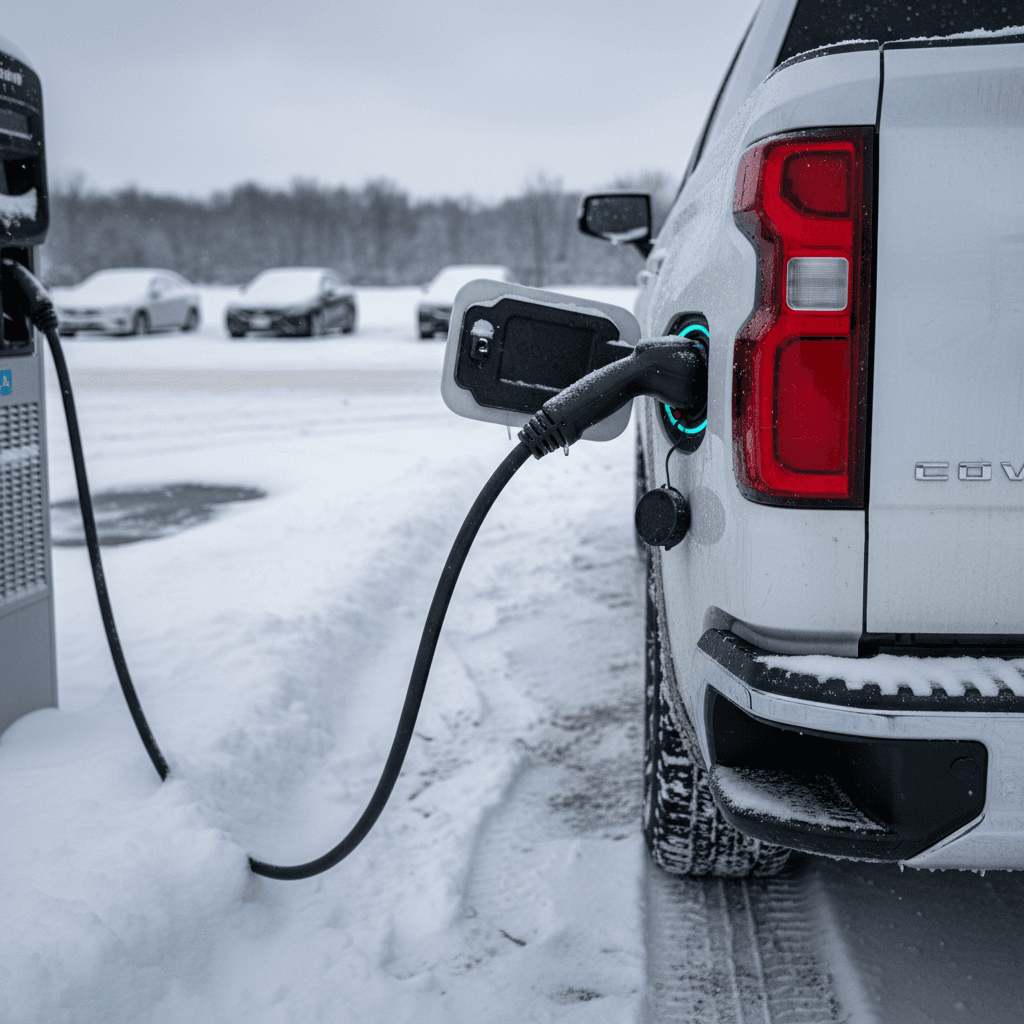
The lab numbers are encouraging, but owners and testers are already putting winter miles on these trucks. Their experiences line up with that 15–30% band and show how much conditions matter.
- A long‑distance cold‑weather test at highway speeds in below‑freezing temps saw the Silverado EV lose **roughly a mid‑teens percentage** versus its rated range – one of the best results in the test group.
- Owners driving at **75 mph around 5°F** report seeing real‑world losses closer to **30%**, especially with a cold‑soaked pack and toasty cabin settings.
- Some drivers doing longer, steady‑state highway trips around freezing report **little noticeable drop** from their usual summer highway range once the truck and battery are properly warmed up.
Watch the *mi per kWh* more than the guess‑o‑meter
Estimating your own Silverado EV winter range loss percentage
You don’t have to guess. After a few weeks of winter driving, you can work out your **personal Chevrolet Silverado EV winter range loss percentage** with some simple back‑of‑the‑envelope math.
Quick way to calculate your winter range loss
1. Start with your EPA rating
Look up your trim’s **EPA combined range** – for example, around 440–450 miles for some long‑range Silverado EV work truck trims. That’s your warm‑weather baseline.
2. Record a real winter trip
On a typical cold day, reset your trip meter, drive at least 50–100 miles, then note how many miles you actually drove and what percentage of battery you used.
3. Convert battery use to implied range
If you go 120 miles and use 40% of the battery, that implies about **300 miles of range** in those conditions (120 ÷ 0.40).
4. Compare to the EPA number
Take your implied winter range (300 mi) and divide by the EPA range (say 440 mi). That’s **68% of rated range**, or about a **32% winter loss**.
5. Repeat in different conditions
Try the same exercise in milder weather, with and without preconditioning, and at different speeds. You’ll build your own mental map of what the truck can really do.
What “good” looks like
7 ways to cut winter range loss in your Silverado EV
You can’t make January behave like June, but you *can* decide whether you’re losing 15% or 35%. The Silverado EV gives you enough tools that driver behavior really matters. Here are the big levers to pull.
Practical tips to protect Silverado EV winter range
Focus on what you can control – the truck will handle the rest.
1. Keep it plugged in
2. Schedule preconditioning
3. Use seat & wheel heaters
4. Slow down a little
5. Watch wind & weather
6. Minimize roof racks & junk in the bed
- 7. **Avoid lots of short, cold starts.** A dozen 3‑mile errands from a cold start will murder efficiency because the truck keeps reheating a cold battery and cabin. Batch errands into one longer drive when you can.
Respect low state of charge in deep cold
Silverado EV vs other electric trucks in winter
If you’re cross‑shopping electric pickups, winter performance might be the tiebreaker. Across multiple winter studies and owner reports, a pattern is emerging: **electric pickups as a class lose more percentage range in winter than many crossovers**, but the Silverado EV tends to sit at the *better* end of the truck spectrum.
Where Silverado EV shines
- Smaller winter percentage loss in controlled cold tests than many EVs, especially impressive for its size.
- Very high starting range, so even a 25–30% hit leaves you with useable truck range.
- Strong DC fast‑charging performance in the cold, making it easier to top up on winter road trips.
Where it’s still a truck
- Big, tall body means more aero drag in dense winter air than a sleek sedan or crossover.
- Wide tires and heavy weight add rolling resistance, especially on cold pavement or snow tires.
- Boxy shape plus roof/bed accessories can erase some of its efficiency advantage if you’re not careful.
If you’re moving from an F‑150 Lightning or thinking about swapping a big gasoline HD truck for a Silverado EV, remember this: your gas truck quietly loses **20–25%** of its winter range too. The difference is, with an EV you see it **in clean numbers on a screen** instead of at the pump once a week.
Used Silverado EV winter shopping checklist
Shopping used and worried about winter? That’s smart. Cold weather exaggerates any underlying battery or charging weaknesses, so a thorough checkup matters even more on a pre‑owned Silverado EV.
Key winter questions to ask about a used Silverado EV
Battery health & history
Ask for **battery health documentation** so you know how much capacity the pack still has. Every Silverado EV sold through Recharged comes with a <strong>Recharged Score Report</strong> that quantifies battery health and expected range – hugely helpful for winter planning.
DC fast‑charging behavior
If possible, look at how the truck behaves on a **fast charger in cool weather**. A healthy Silverado EV should ramp up quickly and hold strong charging speeds unless the pack is extremely cold.
Preconditioning & app features
Verify that **preconditioning works properly** via the truck and the app. Being able to warm the pack and cabin from your phone while plugged in is a massive winter advantage.
Tires & wheels
Check whether the truck is on **all‑season, all‑terrain, or winter tires**. Aggressive off‑road rubber and oversized wheels can knock several more percent off winter range.
Charging setup at home
Think through where the truck will live. If it’ll park outside in a cold climate, plan for a **reliable Level 2 home charger** and regular preconditioning to keep winter range reasonable.
Typical daily route
Map your **worst‑case winter day**: temperature, distance, cargo, and speed. Compare that to a 25–35% winter loss scenario to make sure the Silverado EV leaves you a comfortable margin.
How Recharged can help
FAQ: Chevrolet Silverado EV winter range loss
Frequently asked questions about Silverado EV winter range
Bottom line: what to expect from Silverado EV winter range
Put it all together, and the story is reassuring: the **Chevrolet Silverado EV is one of the most winter‑capable electric trucks on the road**. You should still budget for a **15–25% hit in normal winter weather** and respect the limits in deep cold, but you’re starting from such a generous range that the truck stays genuinely useful even when the forecast is ugly.
If your daily driving falls well inside a **300‑mile bubble**, the Silverado EV can handle four real seasons without drama as long as you lean on preconditioning, smart charging, and a little speed discipline when it’s truly frigid. And if you’re considering a **used Silverado EV**, pairing this winter‑range playbook with a detailed **Recharged Score Report** on battery health gives you a clear, confidence‑inspiring picture of what the truck will really do when January rolls around.