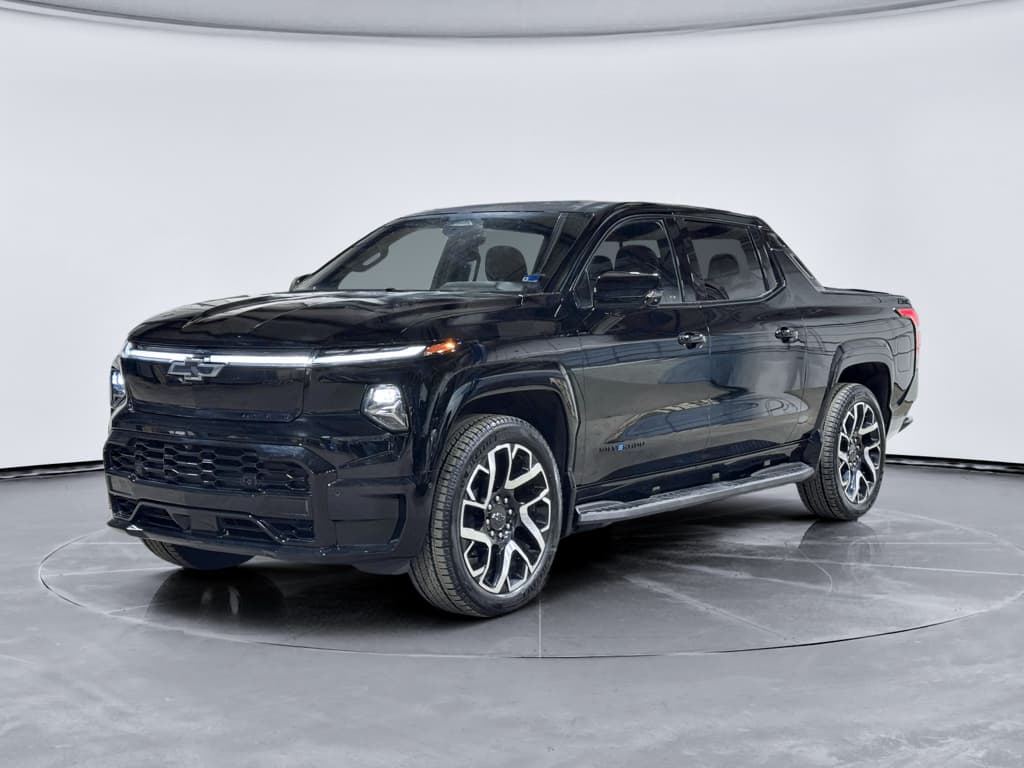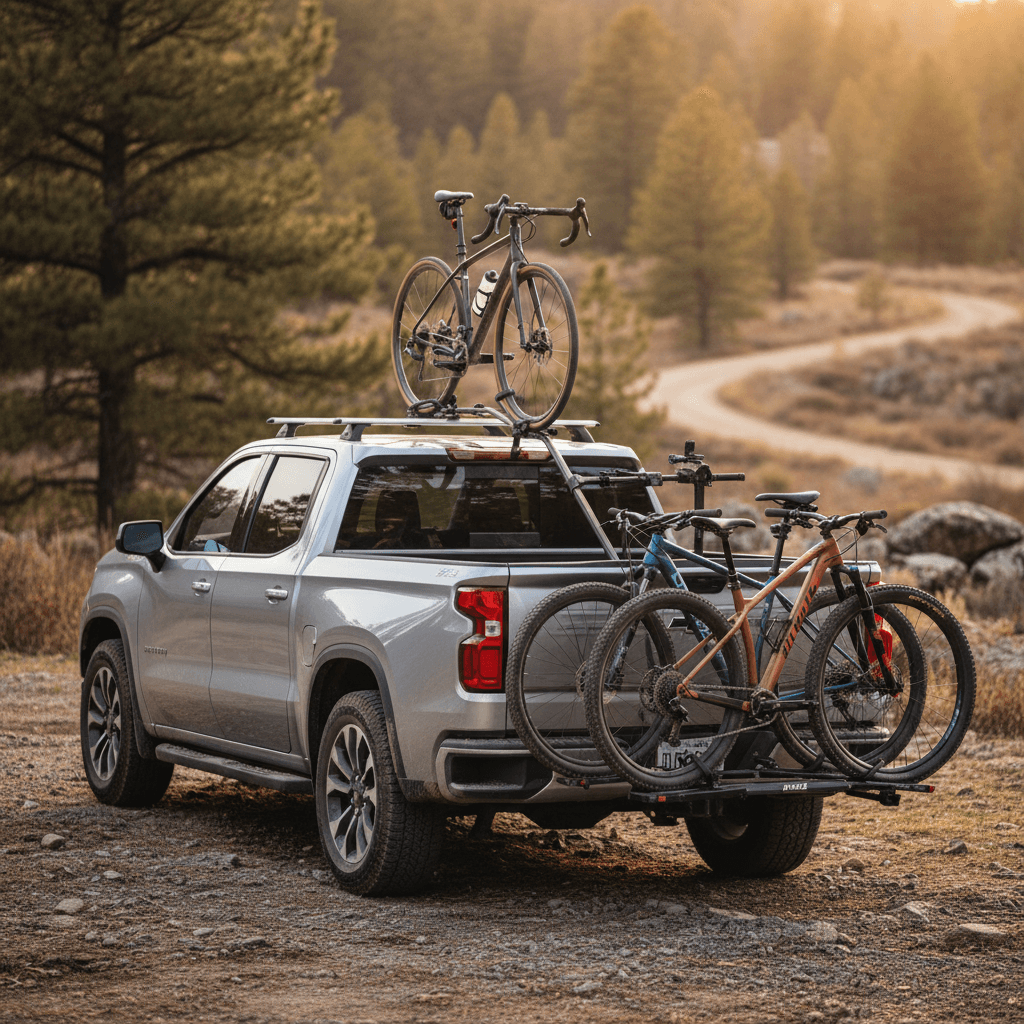
If you’re eyeing a Chevrolet Silverado EV as your adventure rig, bikes are probably part of the picture. The good news: you have plenty of Chevrolet Silverado EV bike rack options, from stout hitch platforms to clever in‑bed systems, if you know what fits and how it affects range, payload and towing.
Why bike racks on an EV truck are different
Silverado EV bike rack overview
Under the skin, the Silverado EV is more tech flagship than farm implement: battery under the floor, independent suspension, long wheelbase and a lot of software watching everything around the truck. Most mainstream racks that work on a gas Silverado will bolt up, but the ownership experience changes in an EV. Range, over‑the‑air updates and sensitive parking sensors all have a say.
- Best all‑around: a quality 2" hitch‑mounted platform rack, ideally with tilt or swing‑away function.
- Best budget/occasional: a tailgate pad if you have the pickup bed and mostly haul mountain bikes locally.
- Most aero‑friendly: in‑bed rail systems that keep bikes low and behind the cab.
- Last resort: roof racks, functional, but they hurt range and add wind noise.
Think about your use case first
Key fitment details for the Silverado EV
Useful hard‑points on the Silverado EV
The Silverado EV’s frame‑mounted receiver hitch is your best friend here. It’s strong, widely supported by rack makers, and, unlike the bed or roof, doesn’t raise the truck’s center of gravity. Where you need to be careful is tongue weight: the combined weight of the rack plus all bikes cantilevered off the back of an already‑heavy EV.
Double‑check your specific truck’s specs
Hitch-mounted bike racks: Best overall choice
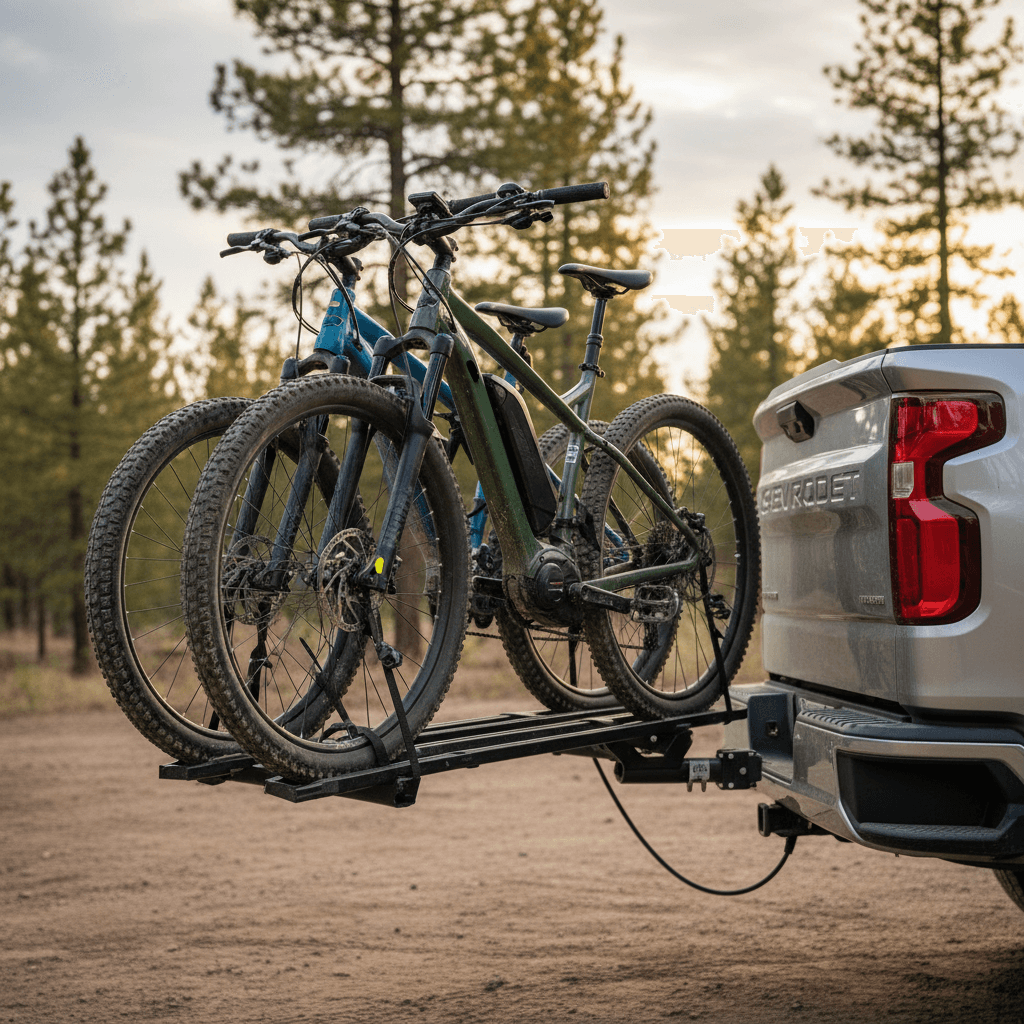
A high‑quality hitch rack is the default answer for most Chevrolet Silverado EV bike rack options. It keeps weight low, has minimal aero drag compared to roof setups, and works with everything from kids’ bikes to 70‑lb e‑MTBs. The Silverado EV’s 2‑inch receiver opens the door to almost every heavy‑duty rack on the market.
Main hitch rack styles for Silverado EV
Pick the one that matches your bikes, budget and parking situation.
Platform racks
Best for most owners. Bikes sit in trays and are secured by arms at the wheels or frame.
- Very stable at highway speeds
- E‑bike friendly if weight rating is high enough
- Heavier and more expensive, but worth it for an electric truck
Hanging (mast) racks
Budget choice. Bikes hang from the top tube on arms.
- Lighter and cheaper
- Not ideal for step‑through frames or many e‑bikes
- More sway; can confuse rear parking sensors
Swing‑away & tilt racks
Best for tailgate access. Rack tilts or swings out so you can open the Multi‑Flex tailgate.
- Great for camping and daily use
- Extra hardware adds weight
- Check that the mechanism is rated for your full bike load
What to look for in a Silverado EV hitch rack
Why hitch racks pair well with EVs
- Aero friendly: Bikes sit in the low‑pressure zone behind the truck, which hurts efficiency far less than roof racks.
- Easy loading: Key if you’re lifting heavy e‑bikes, no shoulder‑height heroics required.
- Simple to remove: Pop the rack off when you’re not riding to reclaim every mile of range.
Potential downsides on the Silverado EV
- Length and parking: Add a four‑bike rack and your already‑long truck becomes a light‑duty city bus.
- Sensors and cameras: Rear park sensors, cross‑traffic alerts and backup cameras may be partially blocked.
- Departure angle: Steep driveways and trailside access roads can threaten a low‑slung platform rack.
Quick EV‑friendly hitch rack tips
Tailgate pads and in-bed systems
If you’re a mountain biker, you already know the code: drop the tailgate pad, stack the bikes, head for the trail. The Silverado EV bed will feel familiar, but the details, especially the Multi‑Flex tailgate and optional Midgate, mean you should be a little choosier about what you throw back there.
Common in‑bed bike options
Great for keeping bikes out of the airflow, and out of thieves’ sight lines.
Tailgate pads
Thick, padded covers that drape over the tailgate so you can hang bikes by the front wheel.
- Fast to load multiple mountain bikes
- Best for short drives and rough trailheads
- Watch paint rub and brake‑lever scuffs on the Multi‑Flex sections
In‑bed fork mounts & rails
Tracks or fork mounts that bolt to the bed or use the cargo tie‑downs.
- Extremely stable and low‑profile
- Bikes stay mostly behind the cab for better aerodynamics
- More setup work, and you lose some bed utility when mounted
Mind the Midgate and tailgate joints
For long highway trips, in‑bed systems shine. They keep bikes out of the worst airflow, don’t extend the truck’s length, and can be used with a locking tonneau cover for security. The trade‑off is setup time and a bit more contortion when loading and unloading inside the bed.
Roof-mounted racks on an electric truck
Roof racks on a tall, heavy EV pickup are a bit like wearing a backpack on a backpack: technically possible, rarely pleasant. Yes, you can add crossbars and upright trays or fork mounts to the Silverado EV’s roof, but you’ll pay in range, wind noise and sheer effort every time you hoist a bike aloft.
Roof racks vs hitch / in‑bed racks on an EV
Why roof racks are the niche choice for most Silverado EV owners.
| Factor | Roof rack | Hitch rack | In‑bed system |
|---|---|---|---|
| Range impact | Highest (bikes in clean airflow) | Moderate (bikes in truck’s wake) | Lowest (mostly behind cab) |
| Wind noise | Noticeable at highway speeds | Mild | Minimal |
| Loading effort | High, lifting over shoulder height | Low, waist height | Moderate, step up to bed |
| Garage clearance | Easy to forget, easy to break things | No change | No change |
| Best use case | Bed full of camping gear; occasional bikes | Most everyday bike hauling | Road trips, secure storage under tonneau |
Use roof racks when you must carry other cargo in the hitch or bed, not as your default solution.
Garage clearance is not a theoretical problem
E-bike and heavy bike considerations
Electric trucks attract e‑bikes like a magnet. Unfortunately, that means you’re stacking one heavy electric thing onto another. Between the Silverado EV’s curb weight and a pair of 65‑lb e‑MTBs, you can get uncomfortably close to tongue‑weight limits if you cheap out on the rack or ignore the numbers.
Checklist for hauling e‑bikes on a Silverado EV
1. Confirm individual bike weights
Look up the real weight of each e‑bike with batteries installed. Many “50‑lb” bikes magically tip the scales closer to 60 or 70 when you actually weigh them.
2. Add rack + bikes vs. tongue rating
Add up the rack weight plus every bike. Stay well under your Silverado EV’s maximum tongue weight, and give yourself a margin for rough roads and hard braking.
3. Choose a rack with a true e‑bike rating
Many racks list a per‑bike capacity but quietly dial it back for e‑bikes in the fine print. Look for models explicitly tested for heavy, long‑wheelbase e‑bikes.
4. Use ramp‑equipped or low‑lift racks
Backs don’t have over‑the‑air updates. A ramp or very low trays makes loading heavy bikes realistically sustainable.
5. Secure batteries and controls
Use frame straps for control cables, and consider removing battery packs for very long or rough drives. Loose weight bounces, and bouncing stresses the rack.
6. Lock everything properly
Integrated locks are great, but add a separate, high‑quality U‑lock or chain around the frame and rack when you’re parked at trailheads or hotels.
Think about insurance and liability
Protecting your range and battery while hauling bikes
Any rack and bike combo will dent your efficiency; the question is how much. Roof racks with upright bikes are the worst offenders. Hitch and in‑bed setups are kinder, but a rack loaded with four downhill rigs is still a small barn door punching a hole in the air.
- Prefer hitch or in‑bed racks over roof racks whenever possible.
- Remove front wheels or drop seatposts to shrink the bikes’ frontal area.
- Take the rack off the truck when you’re not using it, especially for daily commuting.
- Stick to 65–70 mph on the highway; aero drag and energy use climb fast above that.
- Use the truck’s energy screen to track how much the rack and bikes change consumption so you can plan charging stops realistically.
Expect a range hit, plan charging accordingly
Installation, safety and compatibility checklist
A Silverado EV will happily accept a bad rack just as quickly as a good one. Before you swipe the card, run through this sanity checklist so the hardware you buy actually plays nicely with your truck, and your life.
Silverado EV bike rack installation & safety checklist
Confirm receiver size and rating
Verify that you have a 2" receiver and note the maximum tongue weight from the door jamb or owner’s manual. Avoid adapters that shrink a 2" receiver to 1.25" just to reuse an old rack.
Check tailgate and camera interference
Mock up the rack (and bikes, if possible) at the dealer or driveway. Open the Multi‑Flex tailgate, test camera views and ensure brake lights and license plate remain visible.
Consider your charging routine
If you DC fast‑charge often, picture backing into tight stations with bikes on the back. A swing‑away rack can make plugging in much easier in cramped stalls.
Test sensor settings
Load the rack and take a short drive around the block. Adjust parking assist, cross‑traffic and trailer settings so you’re not serenaded by constant beeping.
Use proper torque and hardware
Install with the manufacturer’s specified bolts, washers and torque values. A loose hitch pin or under‑torqued clamp can turn an expensive rack into road shrapnel.
Re‑inspect regularly
Every few trips, check all bolts, straps and lock mechanisms. EV torque and regenerative braking produce different load patterns than you may be used to from a gas truck.
Chevrolet Silverado EV bike rack FAQ
Frequently asked questions about Silverado EV bike racks
Final thoughts and where Recharged fits in
Set up correctly, a Silverado EV with the right bike rack is a rolling base camp, quiet, quick, and capable of hauling friends, bikes and camping gear without breaking a sweat. The trick is matching your rack style to how you actually ride, respecting tongue‑weight and sensor limits, and paying attention to how racks and bikes affect your range and charging routine.
If you’re still deciding whether a Silverado EV, or any electric truck, is right for your riding life, Recharged can help. Every used EV on our marketplace comes with a Recharged Score Report that verifies battery health and fair pricing, plus EV‑savvy guides who can talk through real‑world range with racks, bikes and gear in the mix. You can shop online, explore financing and trade‑in options, or even visit our Experience Center in Richmond, VA to get a feel for how an electric truck will slot into your weekend adventures.