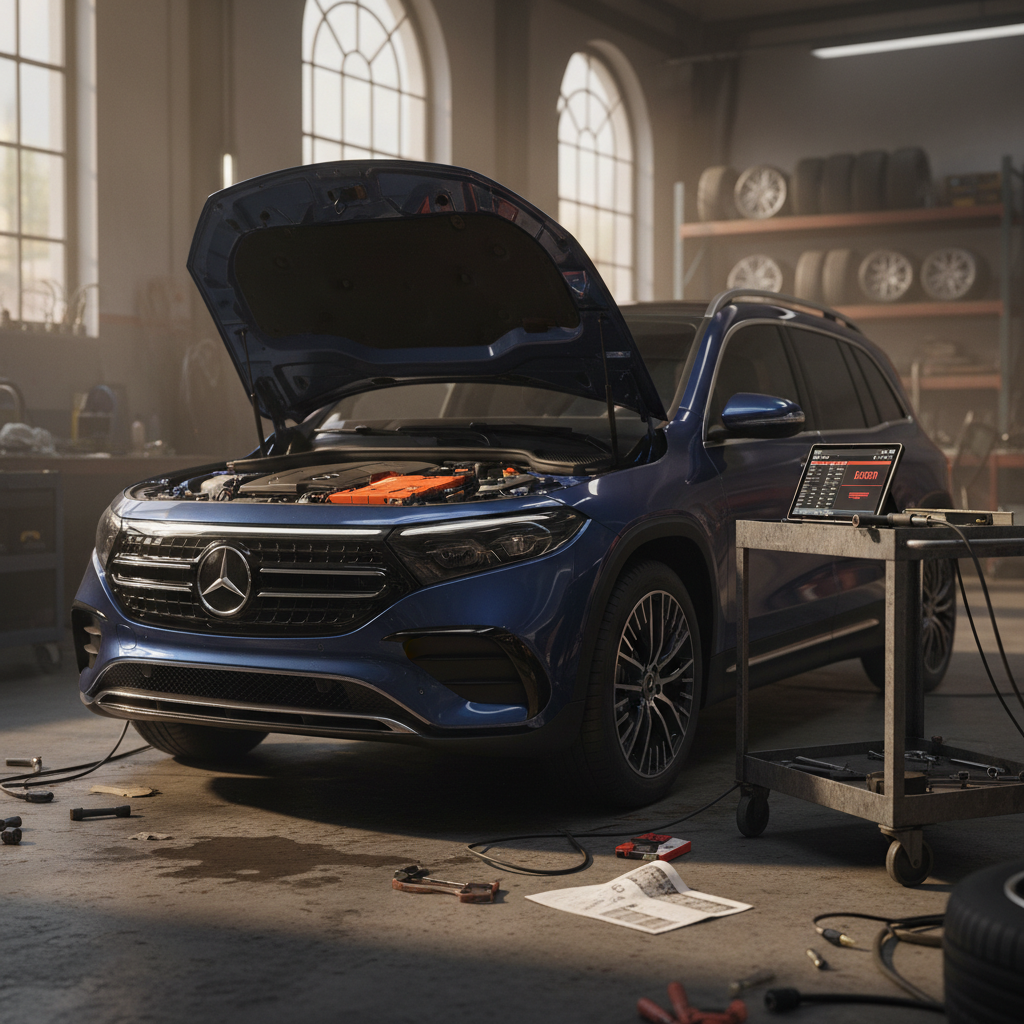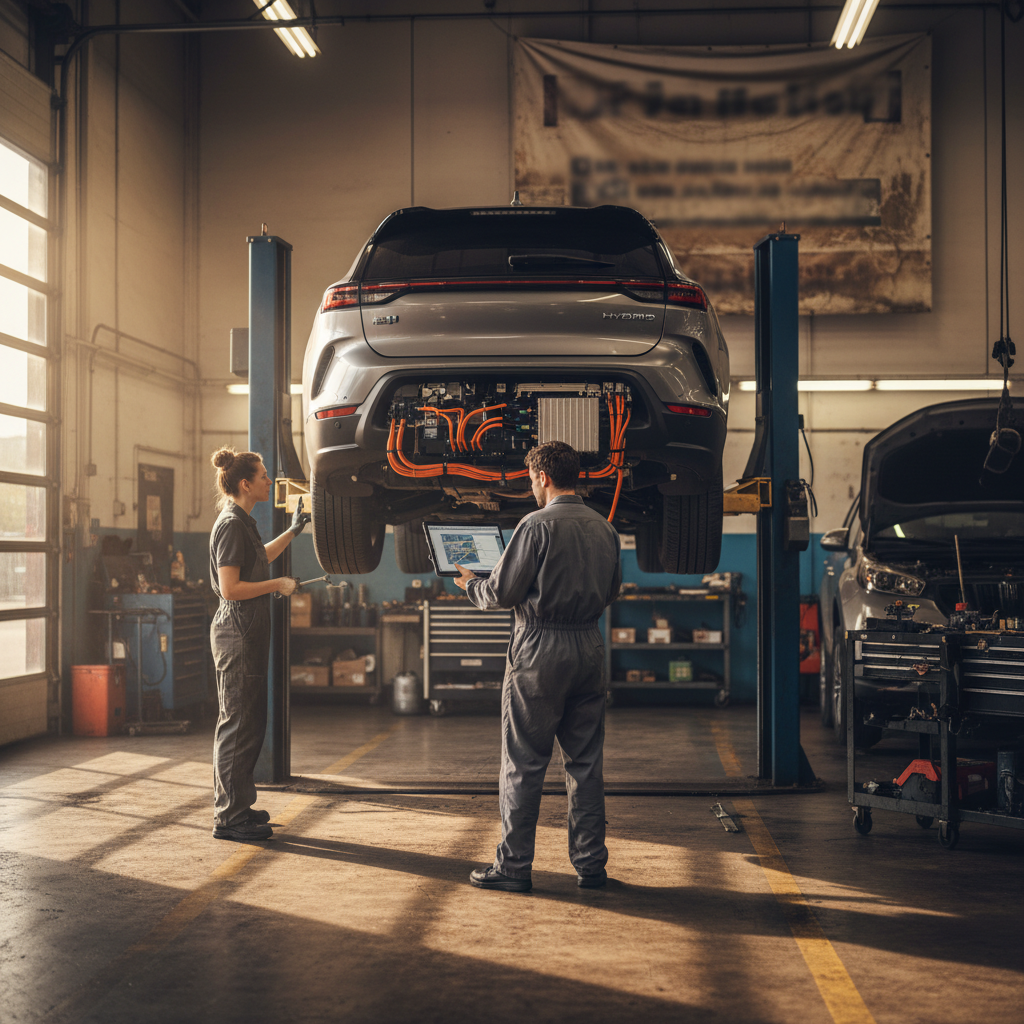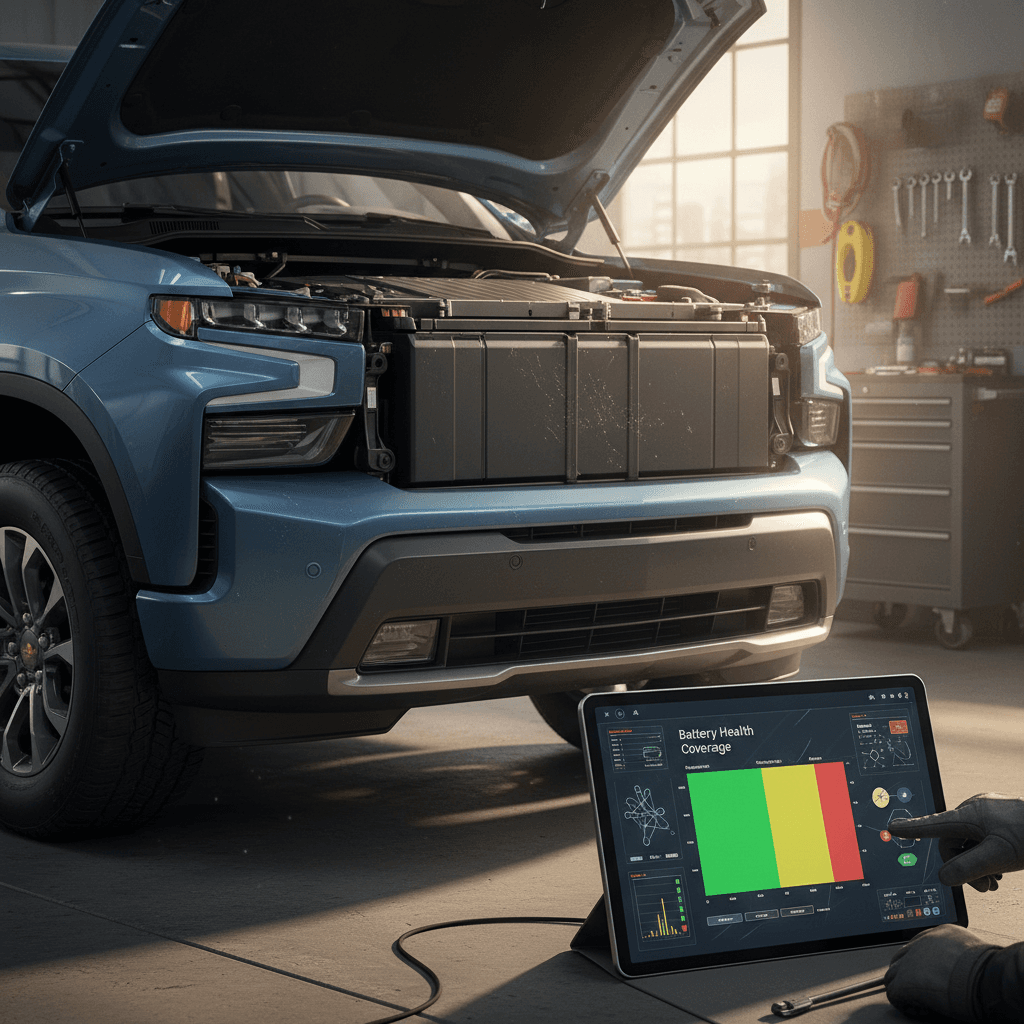
If you’re considering a Chevrolet Silverado EV, the high‑voltage battery is the single most expensive component in the truck. Understanding the **Chevrolet Silverado EV battery warranty, what it covers, how long it lasts, and what’s excluded**, is crucial whether you’re buying new or shopping used.
GM’s standard EV battery coverage
Silverado EV battery warranty at a glance
Chevy Silverado EV battery warranty: fast facts
Chevrolet structures coverage for the Silverado EV the same way it does for its other modern Ultium‑based EVs. You get a **basic bumper‑to‑bumper warranty**, a **powertrain warranty**, and **separate EV propulsion coverage** that specifically addresses the high‑voltage battery and related components. We’ll focus on that last part here, then explain how the other warranties interact.
How long the Silverado EV battery warranty lasts
For U.S.‑market Silverado EV trucks, Chevrolet’s electric‑vehicle FAQ and warranty guides indicate that **“certain electric propulsion components… including the high‑voltage battery” are covered for 8 years or 100,000 miles, whichever comes first**. That’s the same 8‑year/100,000‑mile EV coverage GM publishes for its other Ultium trucks and SUVs.
- Time limit: 8 years from the truck’s original in‑service date (the date it was first sold or leased to a retail customer).
- Mileage limit: 100,000 miles on the odometer, even if the truck is less than 8 years old.
- Coverage applies to: factory‑installed battery and covered EV propulsion components, as long as the failure is due to a defect in materials or workmanship.
Watch the in‑service date, not just model year
What the Silverado EV battery warranty actually covers
The EV battery warranty is really a **propulsion‑system warranty**. It’s designed to protect you if key high‑voltage components fail because of a manufacturing defect, not because of normal wear, neglect, or damage. For a Silverado EV owner, that typically includes:
Key components usually covered under Chevy’s EV battery warranty
Exact wording can vary by model year, always verify in your Warranty & Owner Assistance booklet.
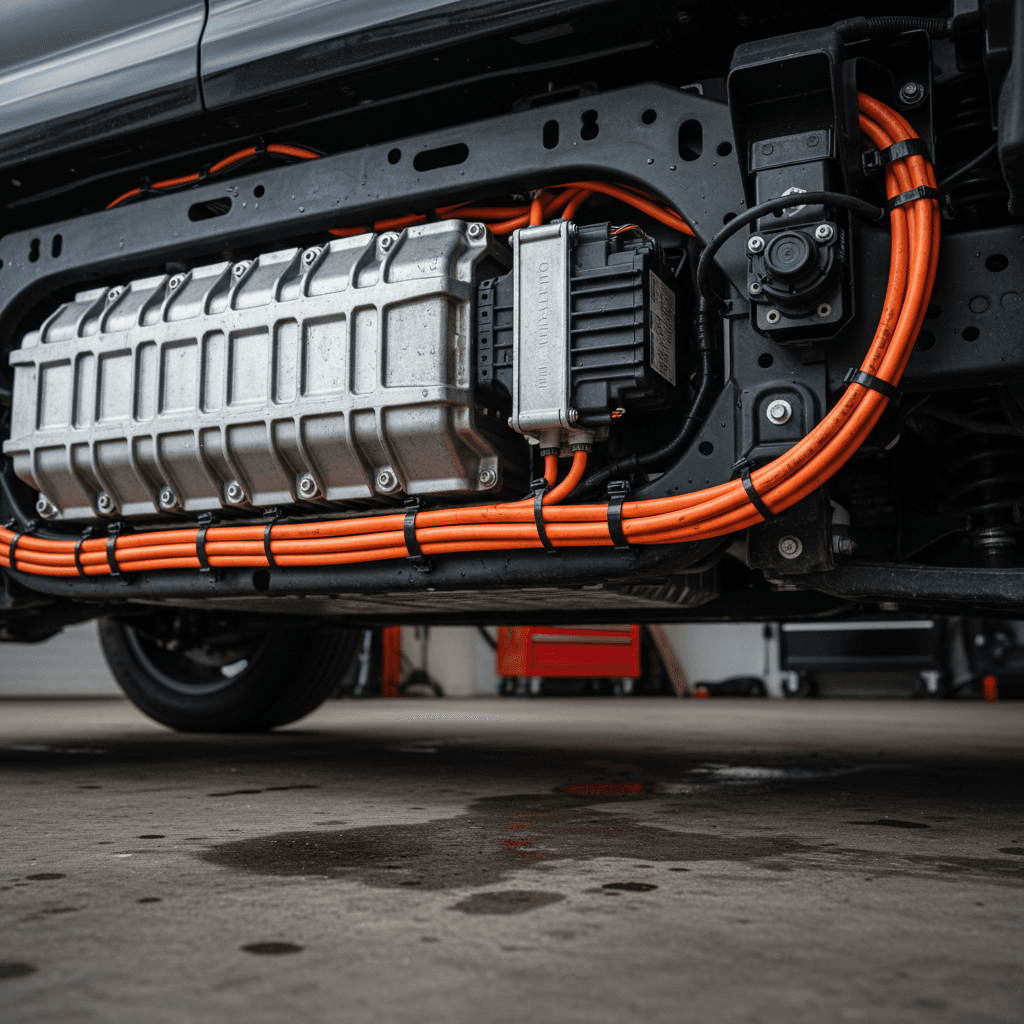
High‑voltage battery pack
This is the big Ultium battery under the truck floor that stores energy for driving.
- Internal battery modules and cells
- Battery pack housing and internal wiring
- Pack sensors and battery management electronics (when integrated)
High‑voltage control modules
Electronics that control charging and power delivery from the battery to the motors.
- Battery energy control module
- High‑voltage contactors and junctions
- Certain power electronics integrated with the pack (model‑dependent)
Electric drive unit
The electric motor assembly that turns the wheels, plus associated reduction gears.
- Drive motor(s)
- Integrated gearbox
- Some high‑voltage cabling to the drive unit
Thermal management parts
Parts that keep the battery at a safe operating temperature.
- Battery coolant lines and manifolds
- Some valves, pumps, and sensors tied directly to the pack
- Related hardware when specified in the EV warranty booklet
Repairs or replacement are GM’s call
What isn’t covered: common warranty surprises
A factory battery warranty isn’t a blank check. Owners are often surprised by exclusions when they read the fine print. With the Silverado EV, expect language very similar to other Chevrolet EVs, which generally **do not cover**:
- Damage from collisions, road debris, or off‑road impact to the pack or cooling system.
- Water intrusion from deep‑water fording or flooding beyond the truck’s design limits.
- Modifications to the high‑voltage system (aftermarket lift kits that pinch cooling lines, unauthorized wiring, non‑GM tuning, etc.).
- Improper towing or jacking that physically damages the pack or high‑voltage cabling.
- Normal **wear and tear** items like tires, brake pads, and wiper blades, even though the truck is an EV.
- Cosmetic concerns such as light surface corrosion on unexposed battery hardware that doesn’t affect function.
Abuse and neglect can void coverage
Battery degradation coverage and range loss
One of the biggest concerns for any EV owner is **battery degradation**, the gradual loss of capacity and driving range over time. For most modern EVs, including Chevrolet’s Ultium trucks, the warranty is aimed at **defects**, not guaranteeing that the pack will hold the same range years down the road.
What’s typically covered
- Abnormal capacity loss that GM determines is due to a defect, not normal aging.
- Battery modules that fail internal diagnostics or trigger repeated high‑voltage error codes.
- Safety‑related defects such as internal short circuits or insulation faults traced to the pack.
What’s usually considered normal
- Gradual range loss over many years or tens of thousands of miles.
- Seasonal range swings from hot or cold weather.
- Range impacts from larger tires, lift kits, roof racks, or heavy towing loads.
Is there a specific capacity guarantee?
How bumper‑to‑bumper and powertrain warranties interact
Beyond the dedicated EV propulsion coverage, your Silverado EV also carries **conventional new‑vehicle warranties** that handle the rest of the truck. Understanding where one coverage ends and another begins can clear up a lot of confusion.
Typical Silverado EV warranty structure (U.S. market)
Exact terms can vary slightly by model year and trim. Always confirm in the Warranty & Owner Assistance booklet for your VIN.
| Warranty type | Typical term* | Mainly covers | Examples on Silverado EV |
|---|---|---|---|
| Bumper‑to‑Bumper Limited | 3 years / 36,000 miles | Most components due to defects in materials or workmanship | Infotainment system, interior trim, sensors, switches, many electronics |
| Powertrain Limited | 5 years / 60,000 miles | Engine/drive systems on gas trucks; on EVs, some drivetrain components not already under EV coverage | Drive axle hardware, some transmission/reduction gear components, depending on model year language |
| EV Propulsion & Battery | 8 years / 100,000 miles | High‑voltage battery and electric drive components | Ultium battery pack, EV drive unit, select high‑voltage electronics and thermal parts |
Think of the battery warranty as sitting on top of the basic and powertrain coverage, not replacing them.
Use the longest warranty that applies
Roadside assistance and towing for battery issues
Chevrolet bundles **24/7 roadside assistance for 8 years or 100,000 miles** with its EV ownership benefits. That means if your Silverado EV develops a high‑voltage fault or simply runs out of charge, help is usually a phone call or app tap away.
- Towing to the nearest Chevrolet dealer when a covered EV component failure leaves you stranded.
- Assistance if the truck will not accept a charge or displays “Service High Voltage Battery.”
- Towing to a nearby compatible charging station if the truck is simply out of energy (limitations and dollar caps apply).
- Lock‑out service, flat‑tire changes, and basic roadside help similar to gas Chevy trucks.
Roadside help doesn’t extend warranty time
Buying a used Silverado EV: how the battery warranty transfers
The good news for used buyers: **Chevy’s EV battery warranty is fully transferable** to subsequent owners, as long as the truck hasn’t been salvaged or had the title branded. That makes warranty status one of the most important data points to verify before you sign on the dotted line.
Checklist: evaluating battery warranty on a used Silverado EV
1. Confirm the in‑service date
Ask the seller for service records or use GM’s owner portal to confirm when the truck was first sold or leased. Subtract that date from today and you’ll know how many of the 8 years are left.
2. Check current mileage
Compare the odometer to the 100,000‑mile cap. A five‑year‑old work truck with 95,000 miles has far less remaining coverage than a three‑year‑old weekend truck with 25,000 miles.
3. Look for salvage or branded titles
Most automakers, including GM, severely limit or void battery coverage on vehicles with salvage, flood, or rebuilt titles. Run a vehicle history report before relying on any warranty.
4. Ask about prior battery work
If the pack has been repaired or replaced, request paperwork. Some GM battery replacements carry their own parts warranty, but they generally don’t restart the original 8‑year/100,000‑mile clock unless stated in writing.
5. Pull a dealer warranty printout
A Chevrolet dealer can run the VIN and print **official warranty end dates**. This is the final word on how much coverage is left, and it’s worth doing before you buy.
6. Get independent battery health data
Warranty coverage is helpful, but it’s even better to know how healthy the pack is today. A platform like the <strong>Recharged Score</strong> uses battery diagnostics to show real‑world health and expected future performance on used EVs.
How Recharged can help on a used Silverado EV
Ready to find your next EV?
Browse VehiclesProtecting your coverage, and your battery
You can’t control every variable in EV ownership, but a few smart habits will both **protect your Silverado EV battery warranty** and help the pack age gracefully.
Simple habits that support your Silverado EV battery (and warranty)
None of these are complicated, but together they add up over years of use.
Charge thoughtfully
- Use DC fast charging when you need it, not every day.
- Aim to live between about 20%–80% state of charge for daily driving.
- Rely on Level 2 charging at home or work whenever possible.
Manage extreme temps
- Park in shade or a garage in very hot climates.
- Use pre‑conditioning while plugged in during cold snaps.
- Avoid letting the truck sit at 0% or 100% for long periods.
Document maintenance
- Keep records of software updates and EV system checks.
- Address warning lights promptly at a Chevrolet dealer.
- Note any high‑voltage repairs or coolant work in your file.
Follow the book, literally
FAQ: Chevrolet Silverado EV battery warranty
Frequently asked questions about the Silverado EV battery warranty
Bottom line on the Silverado EV battery warranty
The **Chevrolet Silverado EV battery warranty** is competitive with the broader EV market and offers real peace of mind: 8 years or 100,000 miles of coverage on the Ultium battery pack and critical propulsion components. But it’s not unlimited. Physical damage, abuse, and normal range loss usually fall outside of what Chevy is obligated to fix.
If you’re buying new, take a few minutes to read the Electric Vehicle Limited Warranty booklet so you know exactly what’s promised. If you’re shopping used, combine **remaining warranty life** with **objective battery‑health data**, that’s where tools like the Recharged Score and EV‑specialist guidance can turn a confusing spec sheet into a confident purchase decision. Either way, knowing what the warranty covers before you sign makes owning a Silverado EV simpler, more predictable, and a lot less stressful.