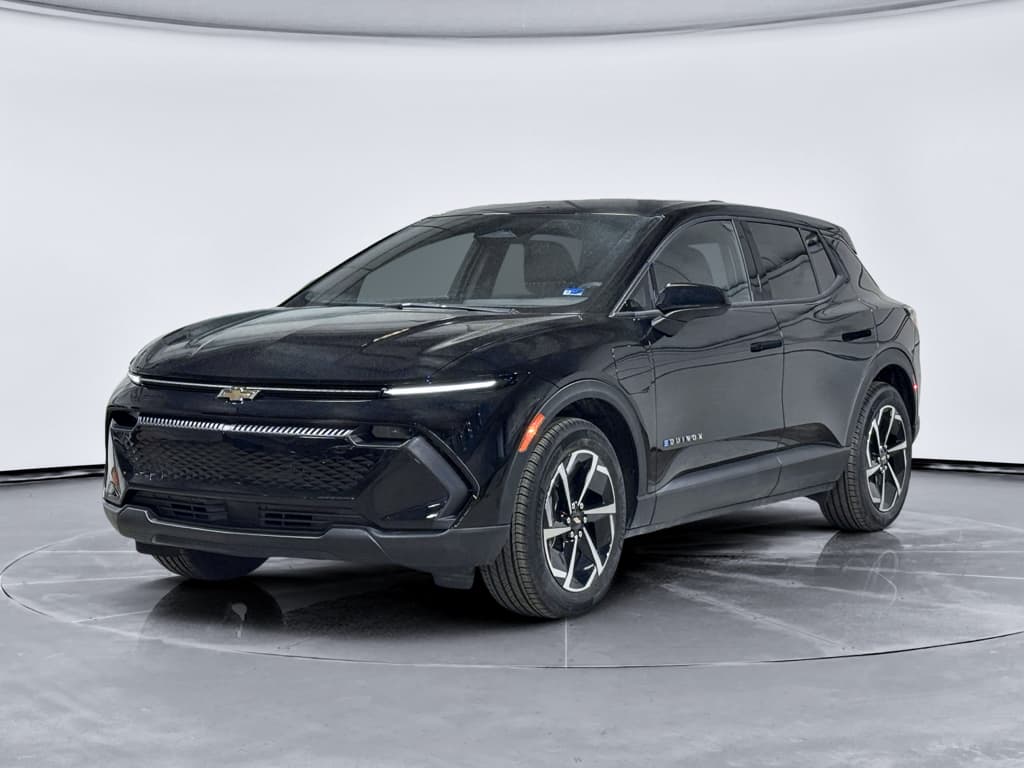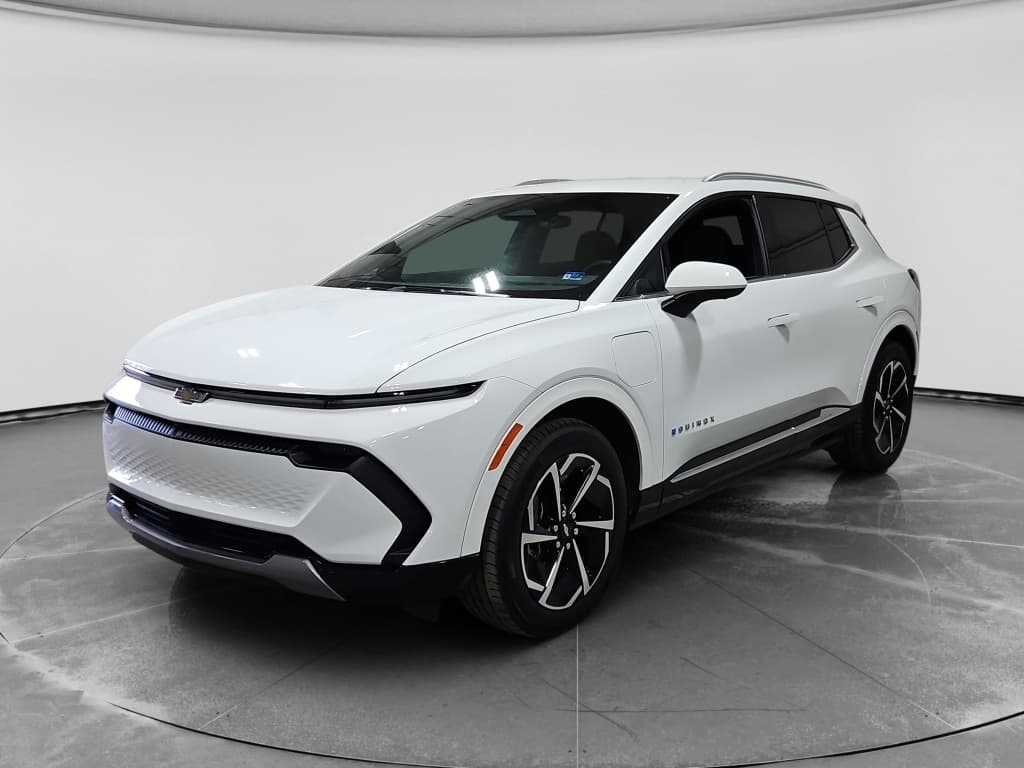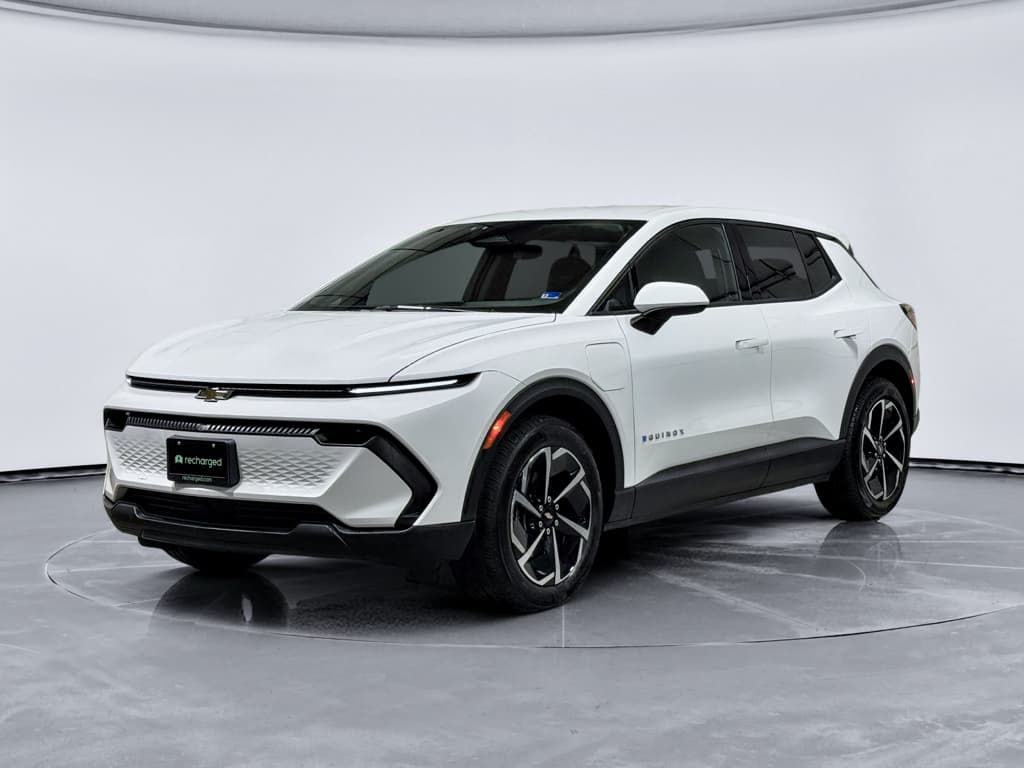
If you’re considering a Chevrolet Equinox EV and you own a small camper, utility trailer, or pair of jet skis, you’re probably asking two questions: what’s the real towing capacity, and how much range will I lose when towing? This guide walks through the Equinox EV towing numbers, explains realistic range loss, and helps you decide whether it fits your lifestyle before you sign a contract, especially if you’re shopping the growing used EV market.
Quick answer
Chevrolet Equinox EV towing overview
The Equinox EV rides on GM’s Ultium platform and slots into the popular compact SUV class. It’s designed first as an efficient daily driver, not a heavy-duty tow rig. That said, Chevrolet does provide a modest factory tow rating on properly equipped models, making it a solid match for light-duty towing like small cargo trailers, single-axle utility trailers, or lightweight teardrop campers.
Chevrolet Equinox EV towing & range at a glance
Always verify your specific vehicle
Tow ratings by trim and configuration
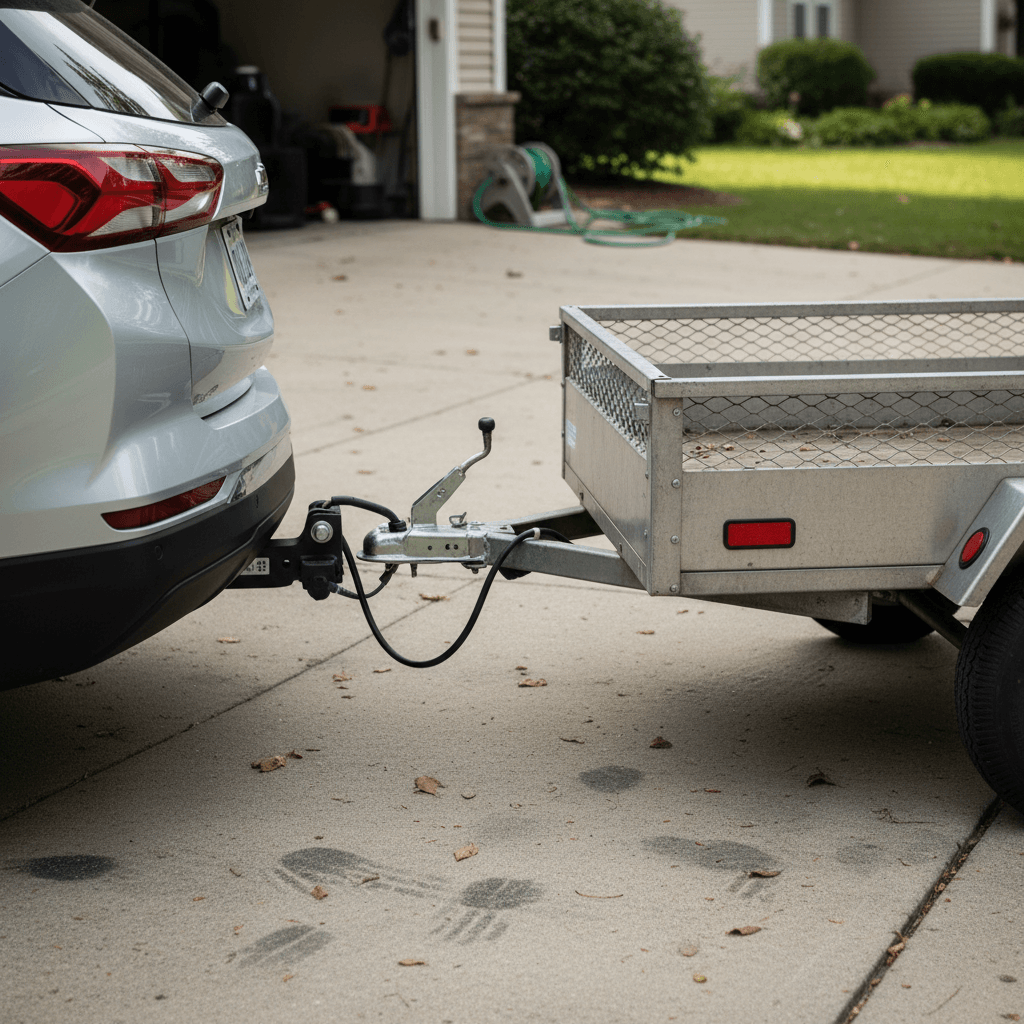
Because the Equinox EV lineup is evolving quickly, it’s helpful to think in terms of patterns rather than memorizing every trim-code. Most U.S. configurations with the factory towing package land around the same light-duty rating.
Typical Chevrolet Equinox EV tow configurations
Approximate tow ratings and best uses based on common U.S. configurations. Always confirm against your specific vehicle’s documentation.
| Configuration | Drivetrain | Typical Tow Rating* | Best For | Notes |
|---|---|---|---|---|
| LT / RS with towing package | FWD | ≈1,500 lb | Small utility trailer, small teardrop, pair of jet skis | Most common rating for light-duty Equinox EV towing |
| LT / RS with towing package | eAWD | ≈1,500 lb | Similar light-duty loads | Extra traction, but same basic tow envelope in many cases |
| Models without tow package | Any | 0 lb (no rating) | Bike racks on hitch-only accessories (if installed) | No factory tow rating, don’t assume you can tow |
| Max tongue weight (typical) | Any | ~150 lb | Tongue load on hitch | Heavy tongue weight can overload the rear axle even if overall trailer weight is low |
Use this as a directional guide, not a substitute for your owner’s manual.
No tow package, no towing
Don’t forget payload
Your Equinox EV can only carry so much total weight between passengers, cargo, and tongue weight from the trailer. Even with a 1,500‑pound tow rating, overloading the cabin and cargo area can push you past the vehicle’s Gross Vehicle Weight Rating (GVWR).
Why the limit seems low
Compared to gasoline Equinox models that can tow more, the EV’s battery weight and efficiency priorities keep tow ratings conservative. GM would rather under‑promise than risk overheated components or unhappy road‑trippers watching range evaporate while towing too much trailer.
How towing affects Equinox EV range
Any vehicle loses efficiency when towing, but on an EV you notice it more because you start with fewer total miles of range than an equivalent gas tank might provide. The key drivers of range loss while towing are:
- Trailer weight (mass you have to accelerate and pull uphill)
- Aerodynamics (how “boxy” the trailer is and how high it sits in the airflow)
- Speed (wind resistance climbs quickly above about 60 mph)
- Terrain (steep climbs burn energy; long descents can partially recharge via regen)
- Weather (cold temperatures and headwinds can stack on additional losses)
Typical EV towing penalty
A simple formula for estimating Equinox EV range loss
You don’t need engineering software to plan a towing trip. Start with your real, unloaded highway range, not the most optimistic EPA number or ideal-city scenario. For many Equinox EV drivers, that might look like roughly 260–300 miles of real-world highway range on a full charge, depending on the battery, drivetrain, and conditions.
- Estimate your honest unloaded highway range (for example, 280 miles).
- Choose a conservative loss band based on your trailer size: 30–40% for very small and low; 40–60% for a typical small camper; 60%+ for anything big and boxy near the 1,500‑lb ceiling.
- Multiply your real range by the remaining percentage. A 50% loss on 280 miles means about 140 miles of towing range in similar conditions.
- Then apply an extra safety margin of 10–20% so you’re not arriving at fast chargers nearly empty.
Back-of-the-envelope example
Realistic range estimates with common trailers
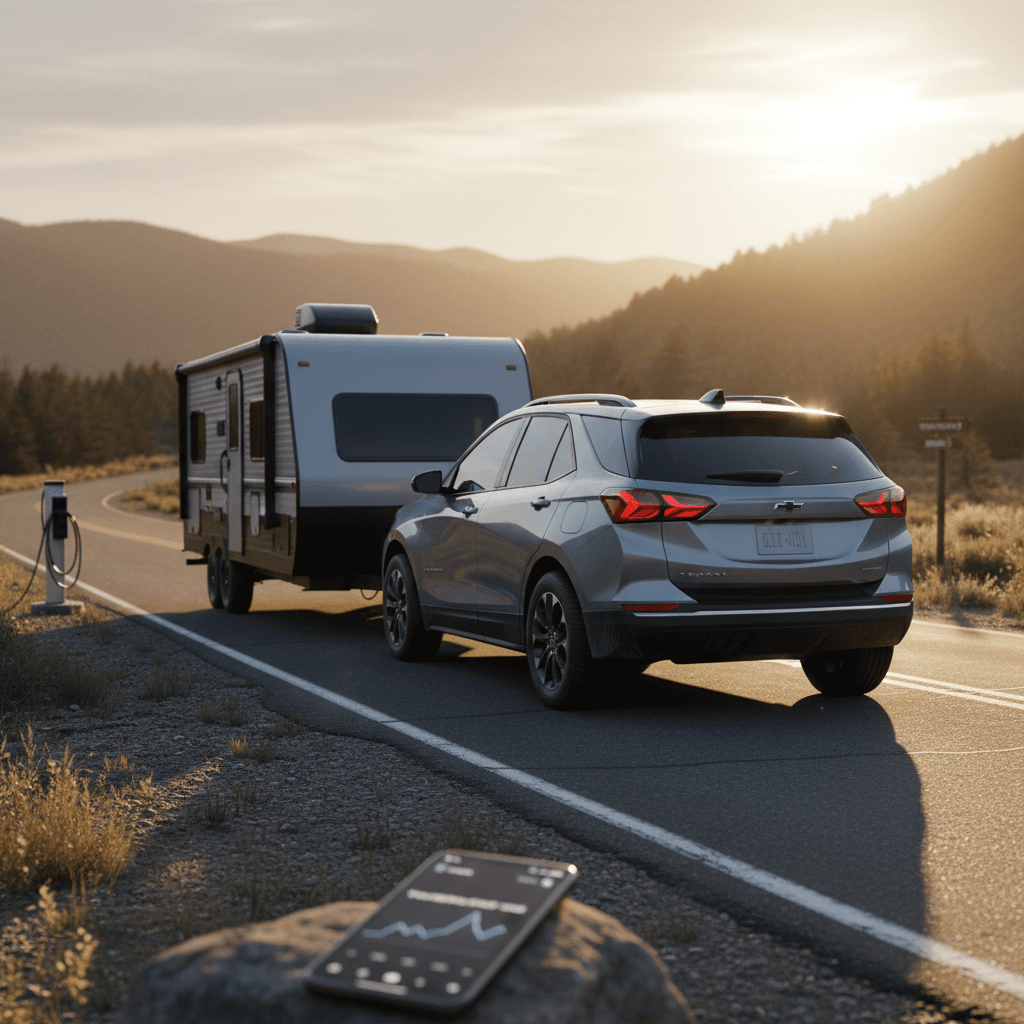
To put that into something you can actually use, let’s walk through a few typical light-duty towing scenarios that fit within the Equinox EV’s capabilities. These are illustrative estimates, not promises, but they’ll get you in the right ballpark.
Sample Equinox EV towing scenarios
Approximate range expectations assuming a ~280‑mile real-world unloaded highway range in mild weather.
1. Small utility trailer
Example: 4x8’ open trailer with lawn equipment or household items, ~800–1,000 lb total.
- Range loss band: 30–40%
- Estimated towing range: 170–195 miles
- Comfortable leg planning: 130–150 miles
2. Lightweight teardrop camper
Example: Aerodynamic teardrop, 1,200–1,500 lb loaded.
- Range loss band: 40–55%
- Estimated towing range: 125–170 miles
- Comfortable leg planning: 100–130 miles
3. Tall boxy trailer (near limit)
Example: 5x8’ enclosed trailer or tall camper approaching 1,500 lb with lots of frontal area.
- Range loss band: 55–65%+
- Estimated towing range: 100–125 miles
- Comfortable leg planning: 80–100 miles
Cold weather makes it worse
City vs. highway towing range
Around town at lower speeds, say 30–50 mph, you may see a smaller percentage penalty than on the interstate, because aerodynamic drag doesn’t rise as fast. But the moment you’re towing at 65–75 mph, that front wall of the trailer becomes a very expensive sail.
Trip-planning strategies when towing
The good news is that the Equinox EV’s Ultium platform supports competitive DC fast charging. That means towing road trips are absolutely possible, you just need to adapt your planning compared with a gasoline SUV.
Smart towing trip-planning with an Equinox EV
1. Use a towing-aware planner
EV route-planning apps often let you dial in a manual efficiency factor. Reduce your expected efficiency by 40–60% in the app to approximate towing impact, then refine after your first leg.
2. Shorten your legs
Instead of 180–220‑mile legs you might run unloaded, think in terms of <strong>80–140 miles</strong> between DC fast chargers, depending on your trailer and weather.
3. Prioritize high-power chargers
Because your Equinox EV can accept high DC power when the battery is warm and low, pick reputable networks and stations that support at least 150 kW to keep stops reasonable, especially with passengers and gear on board.
4. Precondition the battery
Use built-in “fast charge prep” or route planning so the battery is warm when you arrive. That helps the car reach its higher charge rates faster, critical when every minute at a charger matters.
5. Think about charger layout
Some charging stations have pull-through spots that make it easier to charge without dropping the trailer. If not, you may need to temporarily unhook in the parking lot to reach the cable.
6. Book overnight charging where possible
When camping, a 240‑volt hookup or even a reliable 120‑volt outlet can slowly refill the pack overnight so you’re starting each morning with maximum range.
Blend DC fast charging with slower overnight charging
Protecting your Equinox EV battery while towing
Towing works your battery, motors, and cooling system harder than solo driving. That doesn’t mean you’re destroying the pack, but it does mean you should be thoughtful, especially if you’re planning to keep the vehicle long-term or you’re shopping a used Equinox EV and want to preserve value.
Battery-friendly towing habits
Small habits that add up over years of ownership.
Avoid repeated 0–100% fast charges while towing
On a big towing day, try to work between about 10–80% state of charge at DC fast chargers. If you need 100% for a remote stretch, that’s fine, just don’t make it a daily habit.
Watch temperatures in extreme heat
In very hot weather, a heavy trailer can make the cooling system work hard. If you get thermal warnings or see charge speeds fall off a cliff, slow down or take a break, and avoid parking the vehicle fully charged in direct sun for long periods.
Drive smoother, not slower (within reason)
Gentle acceleration and using cruise control where appropriate helps keep current draw and heat in check. You don’t need to crawl, but cutting 5–10 mph off your cruising speed can make a big difference in both range and battery stress.
Inspect hardware regularly
Check the hitch, wiring, tires, and trailer brakes (if equipped) before each towing trip. Extra rolling resistance from underinflated tires or dragging brakes will steal range and overwork the powertrain.
Battery health and resale
Ready to find your next EV?
Browse VehiclesCharging while towing: what to expect
The Equinox EV’s battery can accept competitive DC fast-charging power, but your real experience will depend on battery temperature, state of charge, and the charging station’s capabilities. When you’re towing, you’ll typically arrive at chargers with a warmer pack and a lower state of charge, both of which can actually help you see higher charge rates at the start of a session.
Practical charge-time expectations
- Arriving around 10–20% and charging to about 70–80% is often the sweet spot for road trips.
- Depending on conditions and charger quality, expect that 10–80% towing stop to take roughly 30–45 minutes, enough time for a restroom break and meal.
- If you must charge to 90–100% for a long remote stretch, budget extra time because the charge rate slows dramatically above ~80%.
Plan for trailer logistics at chargers
- Scout charger layouts in your apps ahead of time so you’re not stuck backing out of tight corners with a trailer.
- Some locations offer pull-through stalls or can be used that way outside peak times, huge quality-of-life upgrades when you’re towing.
- Where that’s not possible, consider dropping the trailer in an adjacent space while you charge, if allowed, and re-hitch afterward.
Watch cable reach
Is the Equinox EV right for your towing needs?
Whether the Chevrolet Equinox EV is the right tow vehicle for you comes down to how often you tow and what you’re towing. For many households, it’s the perfect balance: efficient everyday EV that can pull a small trailer on weekends. For others, especially those with larger campers or very long-distance towing plans, a bigger EV with a higher tow rating and battery capacity, or a second, tow-focused vehicle, might be more comfortable.
Who the Equinox EV towing setup fits best
Match your use case to the right expectations.
Occasional adventurer
Profile: You tow a small teardrop or utility trailer a few weekends a year and take one or two longer trips.
Fit: Excellent. Plan conservative range, use reliable fast-charging corridors, and you’ll likely be happy.
Frequent camper, small trailer
Profile: You camp monthly in a compact trailer and run a few 500–800‑mile trips per year.
Fit: Good if you enjoy route planning and don’t mind more frequent, shorter charging stops.
Large camper or heavy trailer
Profile: You want to tow a big travel trailer, car hauler, or equipment near the max rating regularly.
Fit: Not ideal. Consider an EV or plug-in truck/SUV with a higher tow rating and bigger battery.
If you’re shopping used, companies like Recharged can help you compare the Equinox EV against other tow-capable EVs, run the numbers on towing range, and pair you with financing or a trade-in offer so you’re not guessing your way into a vehicle that doesn’t match your use case.
Checklist: before you tow with an Equinox EV
Pre-trip checklist for towing with a Chevrolet Equinox EV
Confirm your tow rating and equipment
Read your owner’s manual, check the door-jamb label, and verify that you have the factory-rated hitch, wiring, and, if required, trailer brakes.
Weigh your trailer and cargo
Use a public scale or manufacturer data to verify that your loaded trailer is safely under the Equinox EV’s tow rating and tongue-weight limits.
Set realistic range expectations
Estimate your unloaded highway range, choose a conservative 40–60% loss band based on trailer size, and plan 80–140‑mile legs with buffer.
Plan your charging route
Use EV routing tools to pre-select DC fast chargers with good reviews and, ideally, layouts that make life easier with a trailer.
Check tires, brakes, and lights
Verify tire pressures on both vehicle and trailer, test trailer lights, and confirm brake-controller operation if your trailer has brakes.
Pack charging and safety essentials
Bring gloves, wheel chocks, a flashlight, and any charging adapters you might need, plus your roadside-assistance information.
Chevrolet Equinox EV towing FAQ
Frequently asked questions about Equinox EV towing capacity and range loss
Bottom line: living with an Equinox EV as a tow vehicle
If you match the Chevrolet Equinox EV’s towing capacity to the right trailer and go in with realistic expectations about range loss, it can be a highly satisfying dual-purpose vehicle, efficient commuter during the week, light-duty tow rig on the weekend. The key is honest planning: understand your true unloaded range, derate it generously for towing, and build trips around reliable fast-charging corridors.
If you’re evaluating whether an Equinox EV, or any used EV, fits your towing lifestyle, consider working with a specialized EV retailer like Recharged. You’ll get transparent battery health data via the Recharged Score, fair market pricing, financing and trade-in options, and expert guidance on how towing, charging, and long-term ownership pencil out for your specific situation.