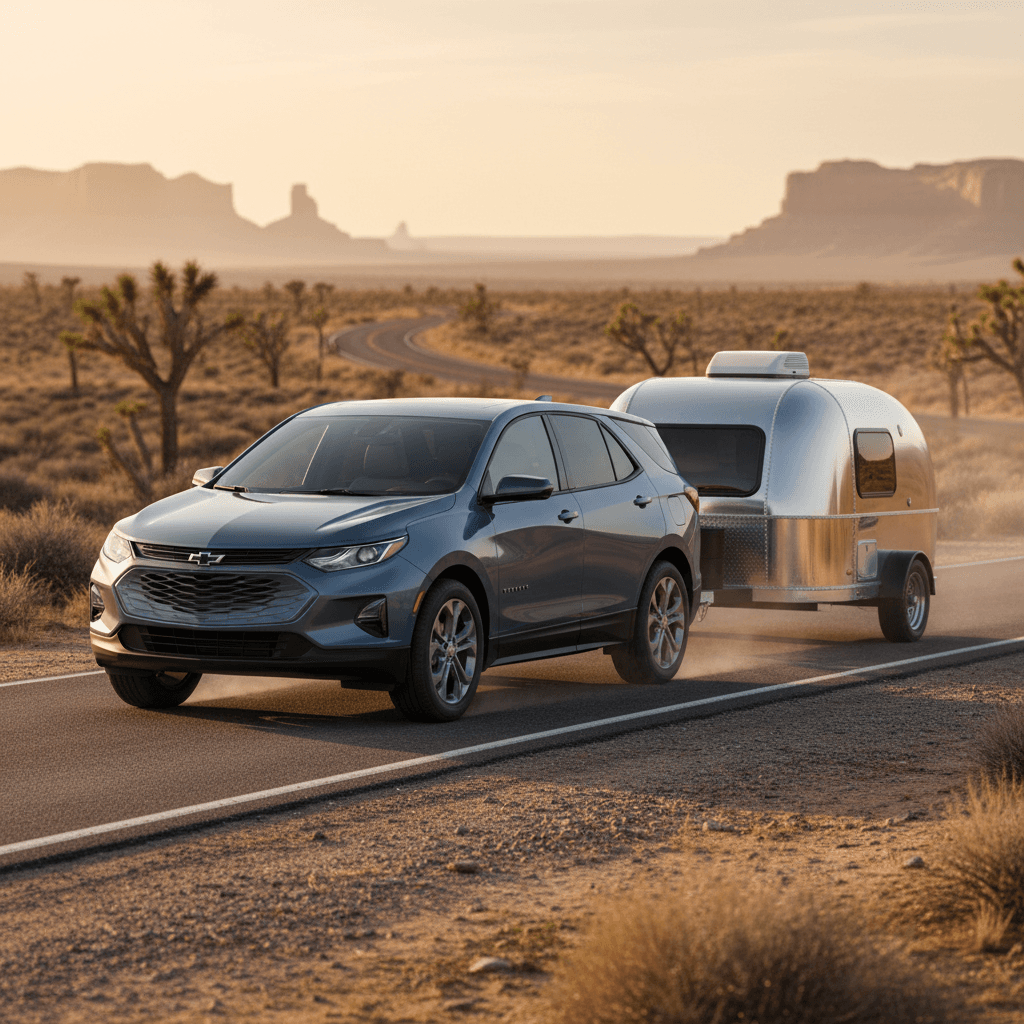
If you’re eyeing a Chevrolet Equinox EV but also need to tow a small trailer, you’re probably asking a simple question with a slightly complicated answer: can the Equinox EV tow, and if so, how much and how far? The short version is that Chevy does rate the Equinox EV for towing, but it’s designed for light‑duty jobs, not serious toy‑hauler duty.
EV towing is different from gas towing
Can the Chevrolet Equinox EV Tow? Quick Answer
Yes. The Chevrolet Equinox EV is rated to tow up to 1,500 pounds when properly equipped. That rating applies to both front‑wheel‑drive and all‑wheel‑drive models across recent model years when you add the correct hitch and wiring. At that weight, you’re in the realm of small utility trailers, a single PWC, or a lightweight camping setup – not big boats or full‑size travel trailers.
“Rated to tow” vs. “has a hitch”
Chevy Equinox EV Towing Capacity and Key Specs
Equinox EV Towing & Range at a Glance
On paper, the Equinox EV’s 1,500‑lb towing capacity lines up with the outgoing gasoline Equinox and other compact crossovers. The difference is that you have a large Ultium battery under the floor, a single‑ or dual‑motor electric drivetrain, and curb weights in the 4,800–5,000‑lb range. That weight and the aerodynamics of your trailer are what really determine how the Equinox EV feels when towing – and how far it can go between charges.
Chevrolet Equinox EV Towing‑Relevant Specs
Key specs that matter when you’re deciding if an Equinox EV fits your towing needs.
| Spec | Front‑Wheel Drive Equinox EV | All‑Wheel Drive Equinox EV |
|---|---|---|
| Max tow rating (when equipped) | 1,500 lb | 1,500 lb |
| EPA range (no trailer) | Up to ~319 miles | High‑200‑mile range |
| Battery pack | Ultium, ~85 kWh usable | Ultium, ~85 kWh usable |
| Drive motors | Single front motor | Dual motors (front + rear) |
| Typical wheel size | 19–21 in | 19–21 in |
Always confirm exact numbers in your owner’s manual and door‑jamb sticker for your specific model year and trim.
How to confirm your tow rating
What Can a 1,500‑lb‑Rated Equinox EV Actually Tow?
A 1,500‑lb rating doesn’t tell you much until you translate it into real objects. The key is to look at fully loaded trailer weight – empty trailer plus cargo, water, propane, and gear – not just the sticker on the side.
Common Loads an Equinox EV Can Tow
Examples assume you stay comfortably under the 1,500‑lb limit with a margin for safety.
Small utility trailer
Think a 4x6 or 5x8 steel or aluminum utility trailer.
- Empty: ~300–600 lb
- Use case: mulch, appliances, building materials
- Tip: Keep total weight under ~1,200–1,300 lb fully loaded.
Single PWC or small boat
Personal watercraft or a small aluminum fishing boat.
- Trailer + PWC: ~900–1,300 lb
- Ramp traction: AWD helps on slippery ramps
- Avoid: Larger twin‑engine PWCs or big deck boats.
Ultra‑light camper or teardrop
Only the very lightest campers qualify.
- Teardrops: Many are 1,000–1,300 lb dry
- Reality: Gear and water add up fast
- Rule: Look for loaded weight well under 1,500 lb.
If you’re serious about small‑trailer camping with an Equinox EV, focus on designs marketed to sub‑compact crossovers – teardrops, minimalist off‑grid pods, or custom builds in the 900–1,100‑lb dry range. Once you load camping gear, food, and water, that typically pushes you close enough to the 1,500‑lb rating that you have almost no headroom left. That’s the point where many owners decide the Equinox EV is better as a light‑duty tow vehicle than a true road‑trip tow rig.
Do not exceed the rating
Equipment You Need to Tow With an Equinox EV
Towing safely with a Chevrolet Equinox EV is less about raw power – Ultium torque isn’t the limiting factor here – and more about having the right hardware and software in place. From the factory, many trims don’t show up on dealer lots with a hitch installed, so you’ll want to confirm whether your vehicle has the trailering provisions package.
Equinox EV Tow‑Ready Equipment Checklist
1. Factory trailering provisions
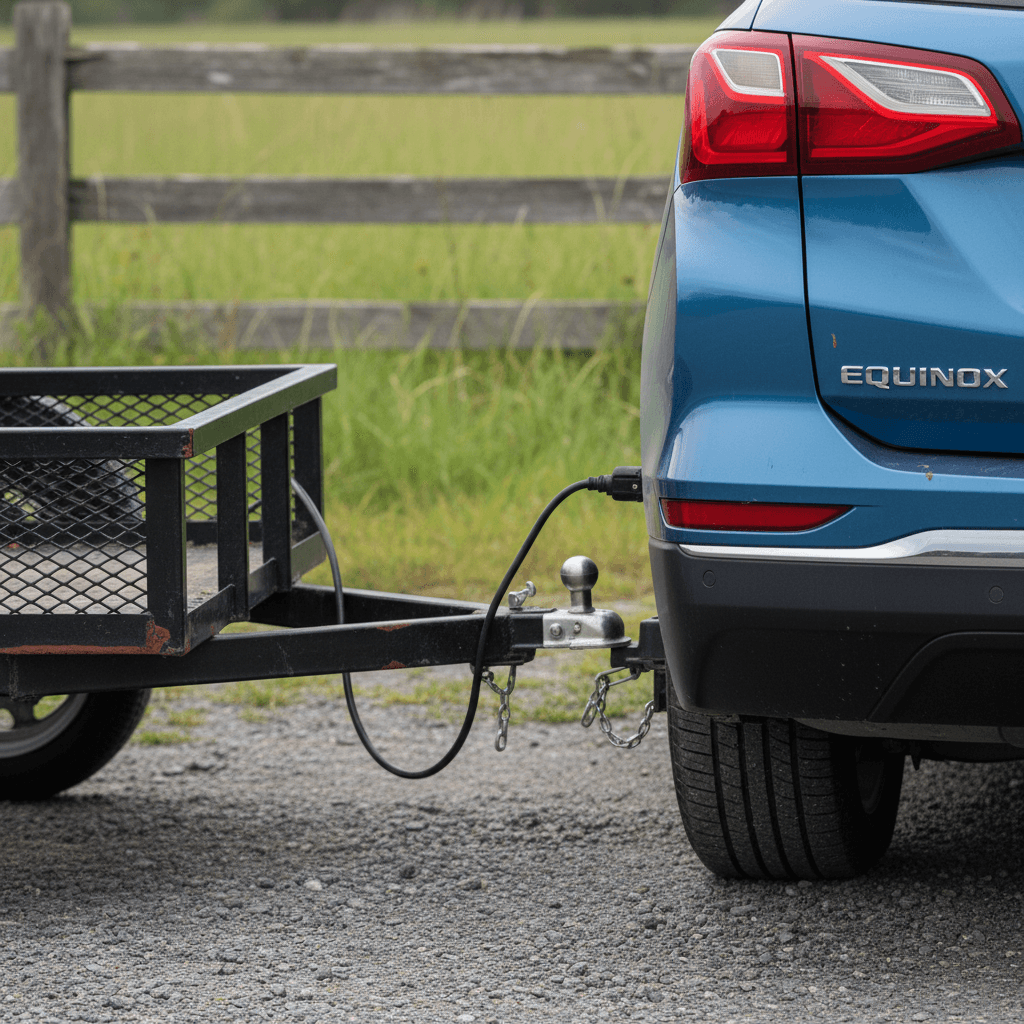
Newer Equinox EVs can be ordered with trailering provisions that include wiring, software calibration, and camera integration. This is the cleanest way to get a tow‑ready vehicle and ensures the car knows when a trailer is connected.
2. Accessory or dealer‑installed hitch
Chevy offers an accessory hitch designed for the Equinox EV. Many owners have dealers install this after purchase so they get the correct receiver, fascia cut‑out, and rated hardware rather than a generic aftermarket solution.
3. 4‑pin or 7‑pin trailer wiring
Even if the vehicle is physically capable of pulling the load, you need functioning lights (and brakes if your trailer has them). Make sure the wiring harness is compatible with the Equinox EV’s electronics and installed in a way Chevy will stand behind.
4. Trailer with working brakes (when required)
At this weight class, some states don’t require trailer brakes, but they’re always a good idea near the limit. Check your local laws and aim for a trailer with brakes if you’re anywhere close to 1,500 lb loaded.
5. Proper hitch ball, mount, and class
Use a hitch ball and ball mount rated comfortably above 1,500 lb, and match the receiver size (typically 1.25 or 2 inches). Keep the trailer riding level for predictable handling and even weight distribution.
6. Correct tire pressures and load settings
Before towing, set your Equinox EV’s tires to the recommended pressures for heavy load, and verify the trailer tires are at their specified PSI. EVs are sensitive to rolling resistance, so under‑inflated tires hit both safety and range.
Be cautious with aftermarket wiring
How Towing Affects Equinox EV Range
The single most important difference between towing with an EV versus a gas SUV is range impact. Hook up a boxy trailer behind a battery‑electric crossover and you’re fighting both weight and wind drag. The Equinox EV is no exception: your 280–319 miles of EPA‑rated range quickly becomes something closer to 150–200 miles – or less – when towing at highway speeds.
Light, low‑profile trailers
Think open utility trailers or very small teardrops that sit low behind the tailgate.
- Expect roughly 30–40% range loss at moderate highway speeds.
- Planning around 180–200 miles between fast charges is realistic for a FWD Equinox EV starting at ~300 miles.
- Slowing from 75 mph to 65 mph can noticeably improve range.
Boxy or near‑limit loads
Now you’re in the realm of tall campers or fully loaded trailers near the 1,500‑lb cap.
- Range losses of 40–50% (or more) aren’t unusual.
- You may be planning for only 120–160 miles between ideal fast‑charge stops.
- Hills, headwinds, and cold weather can add another big hit on top.
Plan charging stops more conservatively when towing
Towing Limits: Weight, Tongue Weight, and Payload
The 1,500‑lb number is an upper bound, not a target. To tow comfortably with an Equinox EV – and preserve some range – you want to leave room under the rating and pay attention to tongue weight and payload as well as trailer weight.
- Trailer weight: Total weight of the trailer and everything on it. Stay comfortably under 1,500 lb; many owners target 1,000–1,200 lb loaded.
- Tongue weight: The downward force the trailer puts on the hitch. With small crossovers, tongue weight ratings often land around 150 lb. Loading the trailer nose‑heavy can exceed that even if the trailer is under 1,500 lb.
- Payload: How much weight you can carry inside the Equinox EV – passengers, cargo, and tongue weight all count. A full cabin plus a heavy tongue load can exceed payload well before you hit the tow rating.
Easy way to sanity‑check your setup
Driving Tips When Towing With an Equinox EV
Once your Equinox EV is properly equipped and hitched, the actual driving experience is generally calm and composed – Ultium torque and regenerative braking work in your favor. But you are adding a lot of mass and aerodynamic drag, so it pays to adjust your habits.
Best Practices for Towing With an Equinox EV
1. Use the recommended tow/haul or trailer settings
Later‑model Equinox EVs can adjust stability control, regen, and driver‑assist behavior when they detect a trailer. Follow the owner’s manual for how to enable any tow‑specific modes before you set off.
2. Slow down, especially in crosswinds
EVs are very sensitive to speed when towing. Knocking 5–10 mph off your normal cruising speed can dramatically stabilize the trailer and bring range back into a comfortable window.
3. Maximize regen, but don’t rely on it alone
Regenerative braking is great for recapturing energy on grades, but it’s not a substitute for good trailer brakes and proper following distances. Use regen as your first line of slowing and friction brakes as backup.
4. Leave extra following distance
The Equinox EV’s brakes are sized for the vehicle’s weight, not a heavy trailer. With a load on the hitch, give yourself more room and anticipate traffic so you’re not constantly stomping the pedal.
5. Watch temperature and state of charge on big hills
Long, steep grades can warm up batteries, motors, and brakes. If you see warnings or feel the car limiting power, back off the pace and give the system time to cool.
6. Practice maneuvering and backing up
Find an empty parking lot before your first real trip and practice low‑speed turns, lane changes, and backing maneuvers. This is especially important if you’re new to towing or your trailer has poor rearward visibility.
Where the Equinox EV shines as a tow vehicle
Is the Equinox EV a Good EV for Towing?
Strengths for light towing
- Plenty of low‑speed torque: Electric motors make moving off the line with a small trailer feel effortless.
- Stable, low center of gravity: The battery pack keeps the Equinox EV planted, which helps stability with modest trailers.
- Quiet, smooth towing: No engine noise means you often notice issues (like a noisy trailer wheel bearing) sooner.
- Simple around‑town range math: For local towing, the range hit is manageable and easy to work around.
Limitations you should know
- Low 1,500‑lb ceiling: Many modern campers and toy haulers are simply too heavy once loaded.
- Significant range hit on the highway: Plan for roughly half your normal road‑trip range with a full‑size, boxy load.
- Charging logistics with a trailer: Not every fast charger is laid out for pull‑through charging, so you may need to unhitch at some sites.
- Better as an occasional tow vehicle: If you tow heavy or far on a regular basis, you’ll want a different tool for the job.
Viewed through that lens, the Chevrolet Equinox EV is a great daily driver that can tow, not a tow rig that happens to be electric. For many households, that’s actually perfect: you get an efficient, comfortable family EV that can also handle runs to the dump, a single jet ski, or a minimalist camper without needing a second vehicle.
If you’re shopping the used market, this is exactly where a platform like Recharged comes in. Every used EV we list includes a Recharged Score battery health report, transparent pricing, and expert guidance so you’re not guessing how much usable range you’ll have before you ever add the drag of a trailer. If you know towing will be part of your life, you can work with a specialist to find an Equinox EV – or another EV – that matches your mix of daily driving and weekend hauling.
FAQ: Chevrolet Equinox EV Towing
Frequently Asked Questions About Equinox EV Towing
The bottom line is that the Chevrolet Equinox EV can tow – but only within a fairly narrow lane. Treat it as a capable daily driver that occasionally pulls a small, well‑matched trailer, respect the 1,500‑lb limit, and plan your range with towing in mind, and it will serve you well. Push beyond those boundaries, and you’ll quickly run up against physics, range constraints, and Chevy’s ratings. If you keep those realities front‑of‑mind while you’re shopping – especially in the used market – you can match the right EV to your towing needs instead of hoping a compact electric crossover will do the work of a dedicated tow rig.