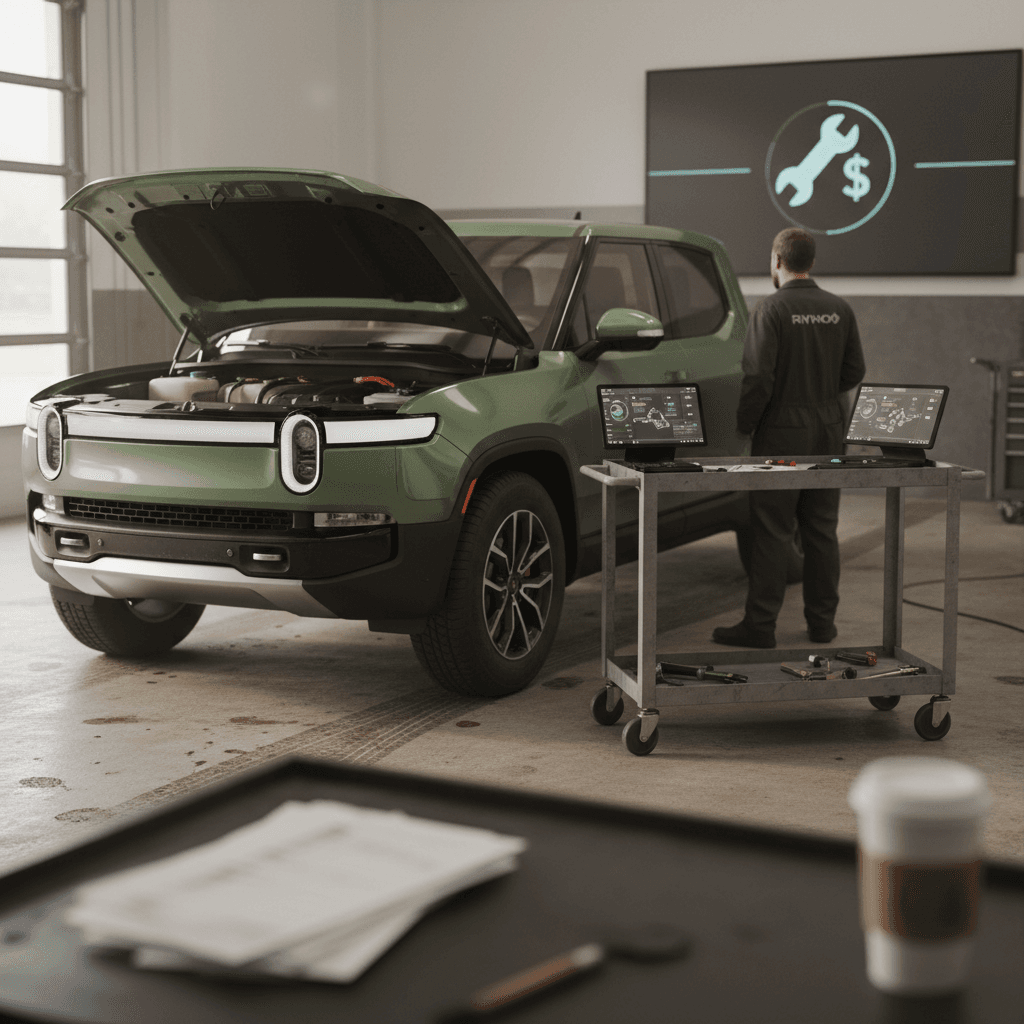
If you’re eyeing a Rivian R1T in 2026, whether new or used, you’re probably wondering what the *real* maintenance costs look like once the honeymoon period is over. The good news: the Rivian R1T maintenance cost in 2026 is still well below what a comparable gas truck usually runs. The bad news: heavy trucks eat tires, out‑of‑warranty repairs can sting, and skipping basic service is a fast way to burn money on a six‑figure EV.
Where the numbers in this guide come from
Rivian R1T maintenance cost in 2026: the short version
Rivian R1T maintenance at a glance (2026)
For a typical Rivian R1T owner driving around 12,000–15,000 miles a year, a sensible 2026 planning number is $300–$500 per year for routine maintenance, things like inspections, tire rotations, cabin filters, and a brake‑fluid change every three years. That’s broadly in line with independent EV‑cost studies that peg EV maintenance at roughly half the cost of gas vehicles on average.
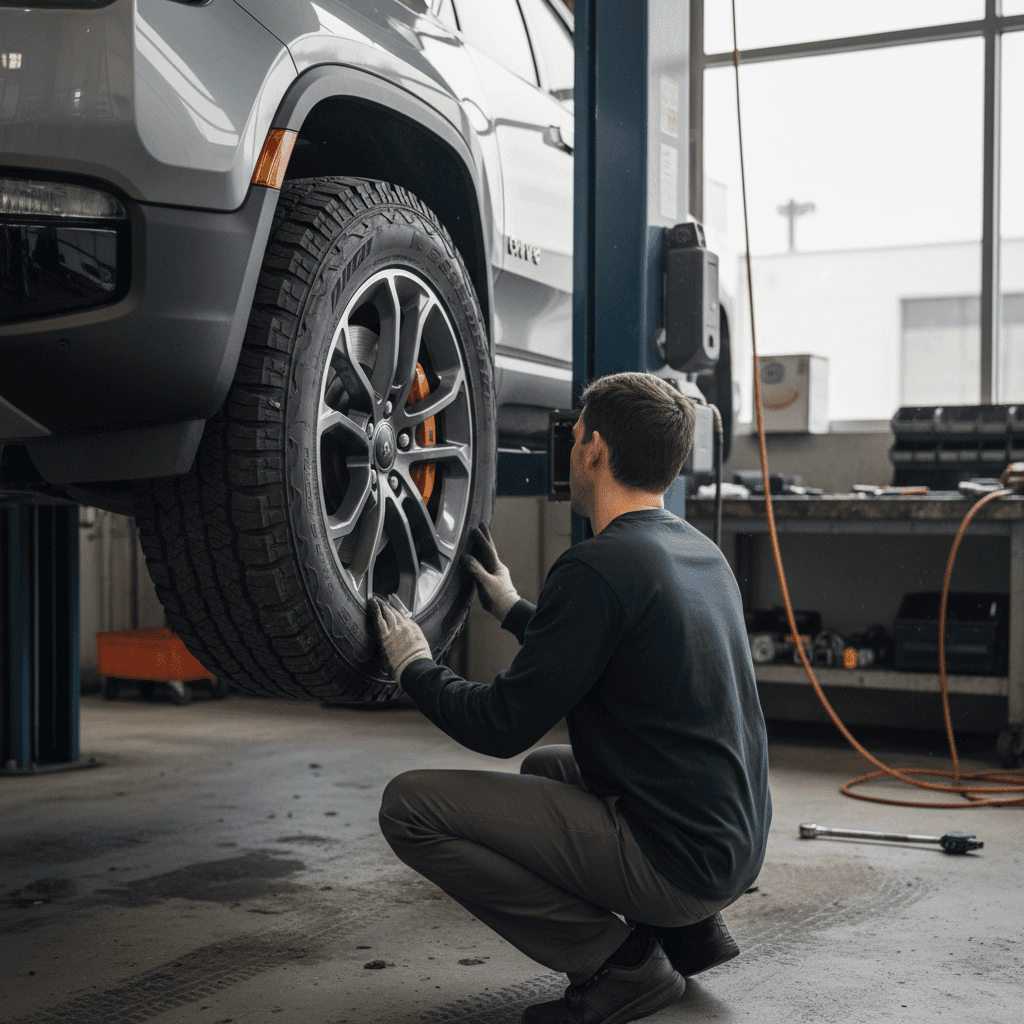
The big wildcard: tires
How Rivian R1T maintenance compares to gas trucks
EV truck (Rivian R1T)
- No oil changes, no spark plugs, no timing belts, no transmission fluid service.
- Regenerative braking means pads and rotors can last significantly longer than on a comparable gas truck.
- Most routine care is inspections, tires, and brake fluid.
- Annual maintenance of roughly $300–$500 is common for EVs at today’s prices, excluding tires.
Gas full‑size truck
- Oil and filter changes every 5,000–7,500 miles, plus transmission, coolant, and differential service.
- More moving parts: exhaust, fuel system, belts, and fluids all add up over time.
- It’s common to see $900–$1,500 per year in maintenance and repairs on modern gas trucks as they age.
- Brake jobs are more frequent without strong regenerative braking.
Put simply, the R1T trades the complexity of an internal‑combustion powertrain for expensive but long‑lived components like the battery pack and drive units. Over a normal 5‑ to 8‑year ownership window, most drivers see meaningfully lower maintenance outlay than in a gas truck, even before counting fuel savings. The key is to avoid false economy: ignoring alignment, fluid changes, or early warning signs is how you turn a low‑maintenance EV into a high‑expense one.
Rivian R1T maintenance schedule for 2026
Rivian has already tweaked its maintenance guidance for R1T trucks a few times, so always confirm in the in‑vehicle app or the latest service literature. As of 2024–2025, most of the schedule for 2022–2025 R1T models looks like this in practice:
Typical Rivian R1T maintenance intervals (2022–2025 models)
Representative intervals for U.S. Rivian R1T trucks; always verify for your build year and configuration.
| Item | Suggested interval | Notes |
|---|---|---|
| Tire rotation & inspection | Every 5,000–7,500 miles | Crucial for even wear on heavy trucks; many owners rotate more often if they tow or off‑road. |
| Cabin air filter | About every 2 years | More often in dusty climates or if you’re sensitive to odors/allergens. |
| Brake fluid replacement | Every 3 years | Rivian’s updated guidance calls for a 3‑year flush to protect corrosion‑sensitive brake components. |
| High‑voltage system check | At major service visits | Battery and drive units are inspected via diagnostics; usually bundled into multipoint inspections. |
| Alignment check | When tires show uneven wear or after impacts | Heavy EV trucks are sensitive to alignment; catching issues early saves tires. |
| Drive unit fluid change (quad‑motor only) | Around 112,500 miles | Applies to many 2022–2024 quad‑motor trucks; doesn’t recur often for typical owners. |
Most R1T owners will see costs cluster around tire care, inspections, and a 3‑year brake‑fluid service.
Use Rivian’s app to watch for interval changes
Building a realistic 2026 R1T maintenance budget
To make this concrete, let’s translate the schedule into a rough 5‑year cost picture for a Rivian R1T driven 15,000 miles per year. These numbers assume you’re out of the complimentary service window and paying normal retail rates, whether through Rivian’s mobile service or a service center.
Illustrative 5‑year Rivian R1T maintenance budget (excluding tires)
Approximate 2026 U.S. costs for a typical driver. Labor rates and taxes vary by region.
| Year | Key items | Estimated cost |
|---|---|---|
| Year 1 | Tire rotation(s), basic inspection | $150–$250 |
| Year 2 | Tire rotations, cabin filter, inspection | $200–$350 |
| Year 3 | Tire rotations, brake‑fluid flush, inspection | $300–$500 |
| Year 4 | Tire rotations, inspection, possible alignment | $200–$400 |
| Year 5 | Tire rotations, cabin filter, inspection | $250–$450 |
Tires, wheel damage, and non‑routine repairs sit on top of this baseline budget.
Across five years, that puts you in the $1,500–$2,000 ballpark for maintenance, or roughly $300–$400 per year. That aligns with broader EV maintenance data from 2024–2026 showing that battery‑electric vehicles typically run about 40–50% cheaper to maintain than comparable gas vehicles over the same distance.
What’s *not* in those numbers
The biggest Rivian R1T wear items: tires, brakes, suspension
Where Rivian R1T owners actually spend money
Three systems that dominate real‑world maintenance conversations
Tires
With curb weights north of 7,000 pounds and instant torque, the R1T is engineered fun, but also a tire’s worst enemy.
- All‑terrain OE tires can last 25,000–35,000 miles in mixed use.
- High‑performance or 22‑inch wheel setups may wear even faster.
- A full set of quality replacements commonly runs $1,200–$2,000 installed.
Brakes
Regenerative braking dramatically reduces pad and rotor wear, especially in daily driving.
- Many EV owners report pads still healthy past 60,000 miles.
- However, lack of use can cause corrosion on rotors in salty or wet climates.
- Periodic hard stops and the 3‑year brake‑fluid change help keep things moving freely.
Suspension & alignment
Big wheels, heavy curb weight, potholes, and off‑road use are a tough combo.
- Misalignment can chew through a set of tires in a single season.
- Air suspension components and control arms are costly once out of warranty.
- Budget for the occasional alignment check, especially after hard impacts.
Easy tire‑life wins for R1T owners
Rivian R1T warranty coverage and what it really protects
For 2024–2025 R1T models, Rivian’s U.S. warranty structure is typical for modern EVs and is likely to carry forward for 2026 builds with only minor tweaks:
- New Vehicle Limited Warranty: 4 years / 50,000 miles – covers most non‑wear components and electronics.
- Battery Pack Limited Warranty: 8 years / 150,000 miles – covers defects in the high‑voltage battery and pack enclosure, typically including excessive capacity loss beyond Rivian’s stated threshold.
- Drivetrain Limited Warranty: 8 years / 150,000 miles – covers motors, gearboxes, and related high‑voltage drive components.
- Wear items like tires, wiper blades, and brake pads are generally excluded, as are damage from accidents, modifications, or improper maintenance.
Why this matters for maintenance costs
Maintenance costs for used Rivian R1T buyers
If you’re shopping the used market in 2026, many early R1Ts will be on their second or third owners and edging toward the back half of their warranty window. That doesn’t automatically mean big maintenance bills, but it does mean you should be more deliberate about what you buy and what you budget.
Used Rivian R1T maintenance checklist for 2026 shoppers
1. Confirm tire and brake condition
Look for uneven wear, mismatched tires, or low tread. Ask for any brake service records, especially in rust‑prone regions where calipers and rotors can seize from lack of use.
2. Ask for documented brake‑fluid service
You want proof that the 3‑year brake‑fluid change has been done (or budget to do it immediately). Skipping this can shorten the life of calipers, ABS components, and lines.
3. Check suspension and alignment history
Any history of curbed wheels, off‑road use, or pothole damage should prompt a careful suspension inspection and alignment, preferably before you finalize the deal.
4. Review warranty start date and in‑service history
Rivian’s 4‑year/50,000‑mile and 8‑year/150,000‑mile warranties start from the original in‑service date, not the model year. Make sure you know how much coverage is left.
5. Get independent battery health data
Battery capacity and fast‑charging behavior affect long‑term costs and range. A third‑party battery‑health report helps you avoid trucks with unusual degradation or previous abuse.
6. Factor in software and connectivity
Some issues are software‑driven rather than purely mechanical. Ensure the truck is on current firmware and that all driver‑assist and charging functions behave as expected on a test drive.
How Recharged helps used R1T buyers
Ready to find your next EV?
Browse VehiclesPractical ways to lower your R1T maintenance costs
Five high‑impact habits to keep costs down
None of them are glamorous, but together they make a real difference.
Follow a tire‑rotation cadence that matches your usage
If you tow, off‑road, or run aggressive tires, rotate closer to every 5,000 miles instead of waiting until 7,500 miles. Consider a 5‑tire rotation if you have a full‑size matching spare.
Don’t ignore early alignment clues
Feathered tread, a steering wheel that’s off‑center, or a truck that drifts on flat roads are all reasons to schedule an alignment before you burn through a $1,500 tire set.
Respect the 3‑year brake‑fluid interval
Brake‑by‑wire hardware and ABS components don’t like moisture‑contaminated fluid. Spending a few hundred dollars every three years is much cheaper than replacing seized calipers or modules.
Use drive modes intelligently
High‑performance and off‑road modes are great tools, not default settings. Running softer tire compounds and air suspension at max height all the time increases wear and energy use.
Leverage software and mobile service
Use the Rivian app to stay ahead of recall work and service campaigns that may address issues before they become failures. Mobile service can also bundle minor items into a single visit.
Plan for big‑ticket items instead of reacting
Assume you’ll need at least one full tire set in the first 30,000–40,000 miles and another around 70,000–80,000 miles, depending on use. Start setting money aside early so it’s not a surprise.
Rivian R1T maintenance cost FAQ (2026)
Frequently asked questions about Rivian R1T maintenance in 2026
Key takeaways for 2026 Rivian R1T owners and shoppers
Owning a Rivian R1T in 2026 doesn’t have to mean bracing for exotic maintenance bills. If you plan on roughly $300–$500 per year for routine service, plus a realistic tire budget, you’ll be ahead of most first‑time EV truck owners. The real advantage shows up over time: fewer moving parts and long battery/drivetrain warranties mean fewer opportunities for the kind of cascading failures that plague aging gas trucks.
If you’re shopping used, especially, focus less on cosmetic extras and more on documentation: tire history, brake‑fluid changes, alignment records, and verifiable battery health. That’s exactly what Recharged’s Recharged Score Report is built to surface for every EV we sell, including the R1T, so you can compare trucks on the things that actually drive long‑term costs. Do that well, and the R1T’s blend of performance, utility, and relatively low maintenance can make it one of the more financially rational ways to drive an adventure‑ready truck in 2026.