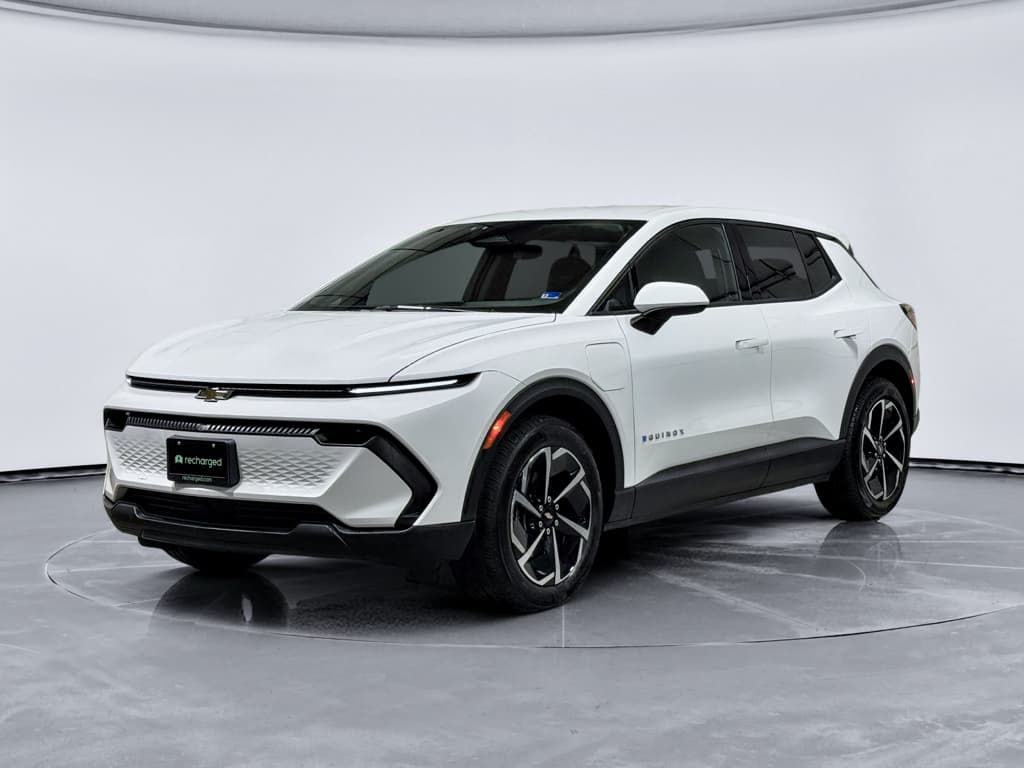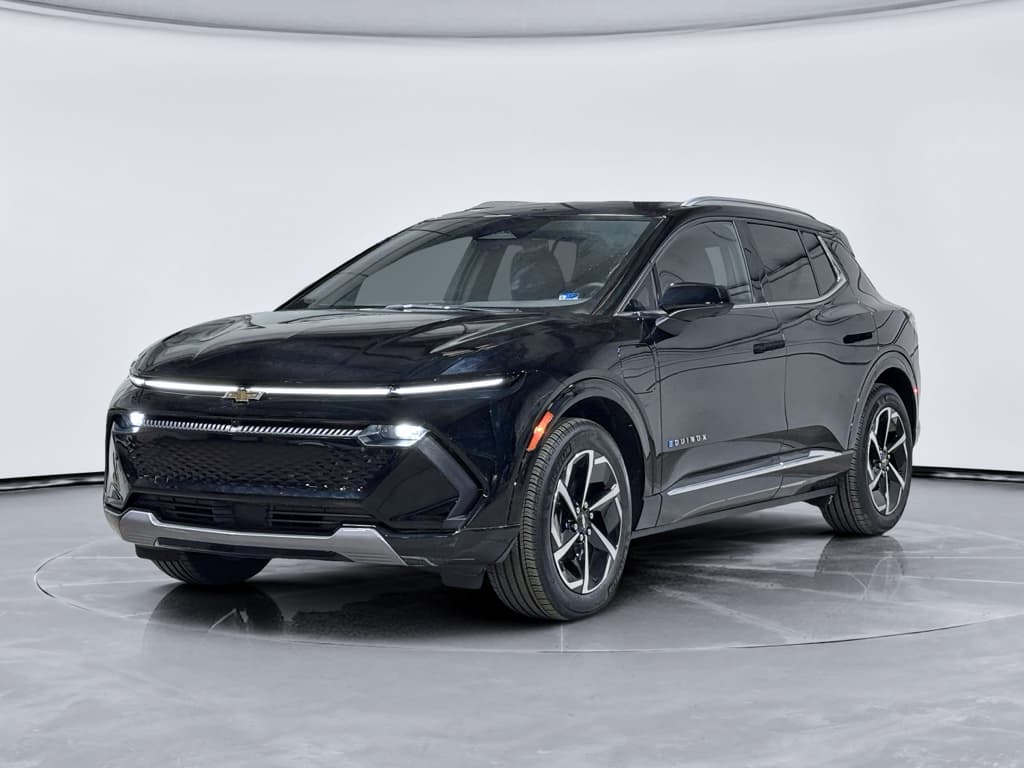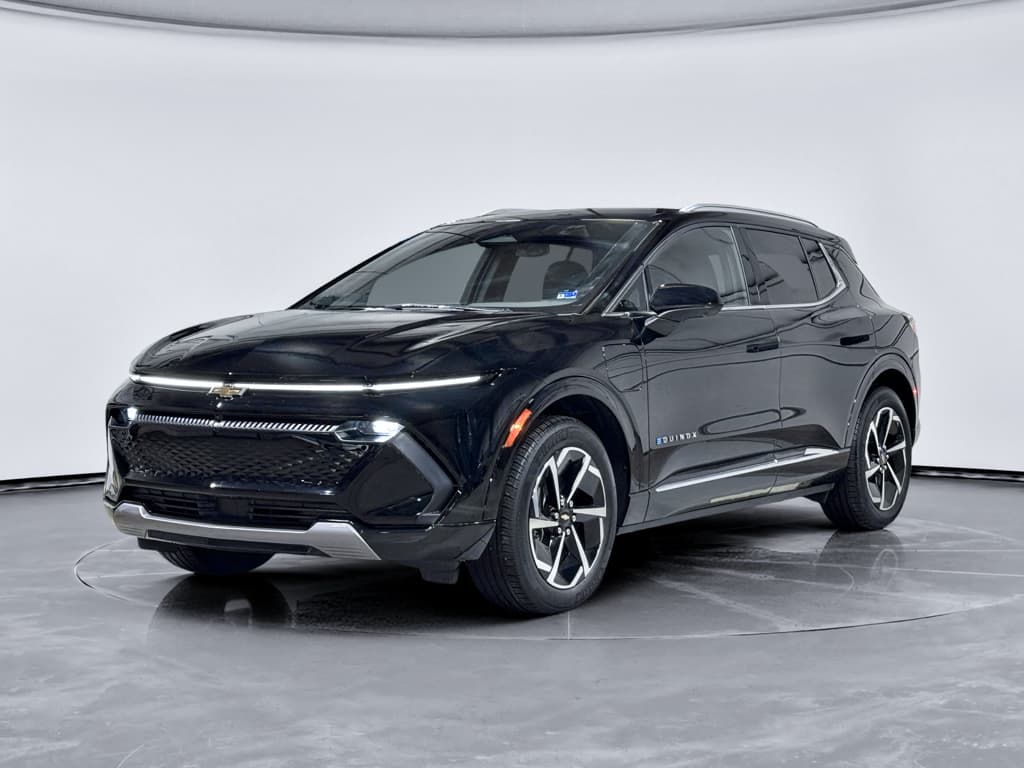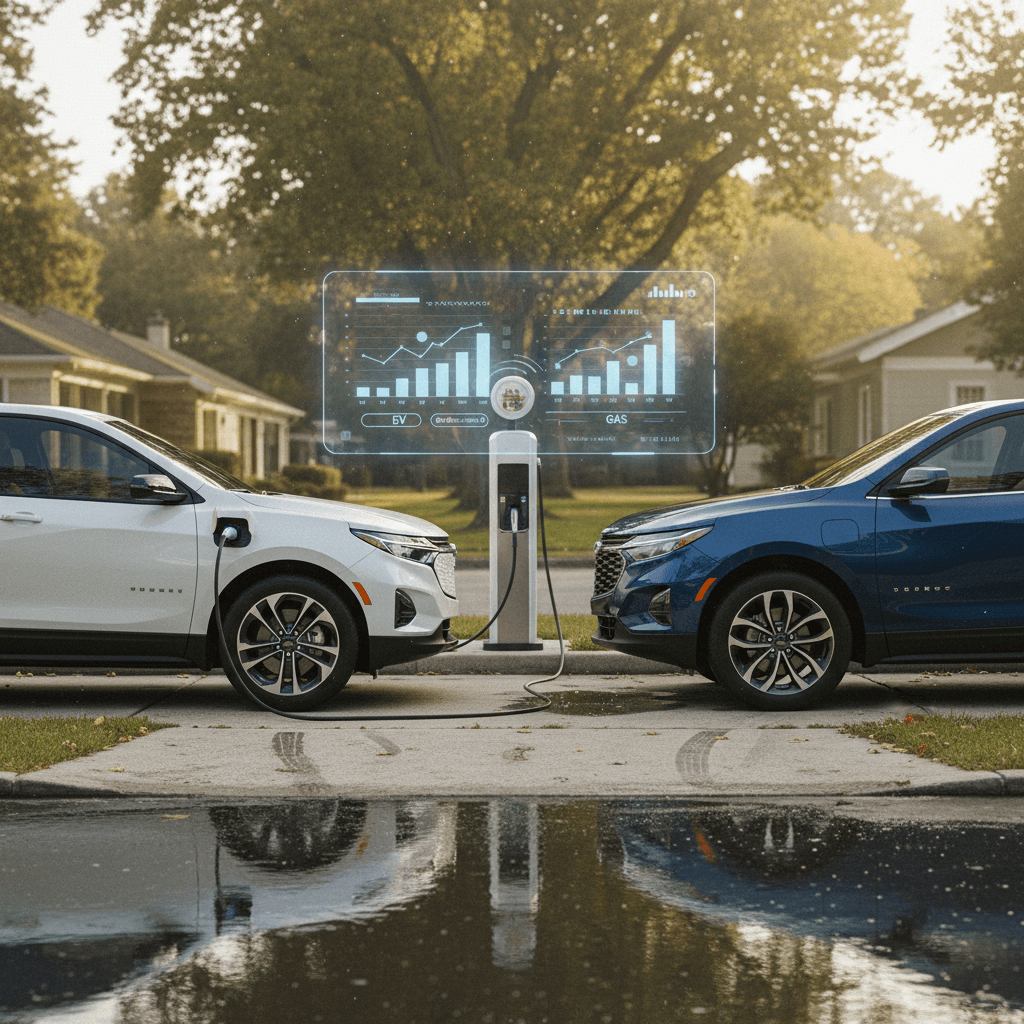
If you’re cross‑shopping the Chevrolet Equinox EV against a gas‑powered Equinox, sticker price only tells part of the story. What really matters is total cost of ownership: how much you’ll actually spend over several years once you factor in fuel, maintenance, insurance, and resale value. This guide walks through a clear, numbers‑driven comparison so you can see whether an Equinox EV or a gas Equinox is the better financial fit for you.
Today’s price backdrop matters
Why compare the Equinox EV to a gas Equinox?
If you like the size, packaging, and brand familiarity of the Chevrolet Equinox, your real choice today isn’t “EV or not?”, it’s which Equinox drivetrain pays off over time. The current Equinox EV is a compact, two‑row SUV with range in the low‑300‑mile ballpark, while the gasoline Equinox has long been a staple family SUV with mid‑20s combined MPG. Looking at total cost for the same basic vehicle shape takes a lot of guesswork out of the decision.
Who this Equinox EV cost comparison is for
Use this if you’re deciding what to actually buy or lease, not just reading specs.
Gas Equinox owner debating your next move
First‑time EV shopper
Budget‑focused used‑car buyer
Chevrolet Equinox EV vs gas: key specs that drive cost
Equinox EV vs gas Equinox: simplified spec snapshot
These high‑level specs shape how much you’ll spend on energy and upkeep.
| Item | Equinox EV (FWD) | Equinox EV (AWD) | Gas Equinox (FWD) | Gas Equinox (AWD) |
|---|---|---|---|---|
| EPA / estimated range or MPG | ~319 miles range (FWD) | ~307 miles range (AWD) | 28 mpg combined | 26 mpg combined |
| Energy use | ~29 kWh/100 miles (real‑world mix) | ~31 kWh/100 miles (real‑world mix) | , | , |
| Fuel type | Electricity (home & public charging) | Electricity (home & public charging) | Regular gasoline | Regular gasoline |
| Typical new‑car MSRP band* | Higher than gas, but still mainstream | Highest of the four | Lowest entry price | Slightly higher than FWD |
Specifications are representative and rounded for clarity. Always check window stickers for exact figures on a specific vehicle.
MSRP isn’t the whole story
Realistic assumptions behind this cost comparison
No two households drive or pay for energy in exactly the same way, but you need a common baseline to compare the total cost of ownership for an Equinox EV versus a gas Equinox. Here are the assumptions this guide uses so you can quickly adjust them to your own situation.
Key 5‑year ownership assumptions
1. Mileage: 12,000 miles per year
That’s close to the U.S. average annual mileage. Over 5 years, we assume 60,000 miles driven.
2. Energy prices: $4.00/gal gas, $0.18/kWh electricity
We use a national average of about $4.00 for regular gasoline and 18 cents per kWh for residential electricity. If your local prices are very different, your numbers will shift.
3. Charging mix: 90% home, 10% public fast charging
Most EV owners do the bulk of their charging at home. We assume a modest 10% of miles are powered by more expensive DC fast charging during road trips and busy weeks.
4. Trim choice: volume models, not bare‑bones or fully loaded
We compare mainstream trims, not the absolute cheapest build or the most expensive performance or appearance package.
5. Time horizon: 5 years, then resale or trade‑in
Many households either sell or trade vehicles within 5–7 years. We use 5 years to keep the math simple and focus on the period when EVs save the most on running costs.
Adjust the math to your situation
Electricity vs gasoline: cost per mile for Equinox EV and gas
Let’s start with the line item you feel every week: what it costs to move an Equinox EV or gas Equinox down the road. We’ll stick with simple, transparent math so you can see how each assumption affects the bottom line.
Estimated energy cost per mile (Equinox EV vs gas Equinox)
Step‑by‑step energy cost math
Here’s how those cents‑per‑mile figures come together for 60,000 miles over 5 years.
| Scenario | Key assumption | Cost per mile | 5‑year (60,000‑mile) fuel cost |
|---|---|---|---|
| Equinox EV – mostly home charging | 29 kWh/100 mi × $0.18/kWh | $0.052 | ≈ $3,120 |
| Equinox EV – 80% home, 20% fast charging | Blended effective rate ≈ $0.20/kWh | $0.058 | ≈ $3,480 |
| Gas Equinox FWD | 28 mpg, $4.00/gal | $0.143 | ≈ $8,580 |
| Gas Equinox AWD | 26 mpg, $4.00/gal | $0.154 | ≈ $9,240 |
All figures rounded for clarity. Actual costs will vary with driving style, weather, and local prices.
Fuel savings in plain English
What if electricity is cheap where you live?
If your utility offers time‑of‑use EV rates or super‑off‑peak plans under 10 cents per kWh, your per‑mile cost can drop toward 3 cents per mile. In that world, the Equinox EV can cut your fuel bill to roughly one‑fifth of the gas version.
What if gas prices fall back?
If regular gas slides closer to $3.00 per gallon over the next five years, the gas Equinox’s cost per mile improves. But even at $3.00, you’re still likely spending close to twice as much per mile on fuel as you would with an Equinox EV charged at home.
Maintenance: where the Equinox EV really saves money
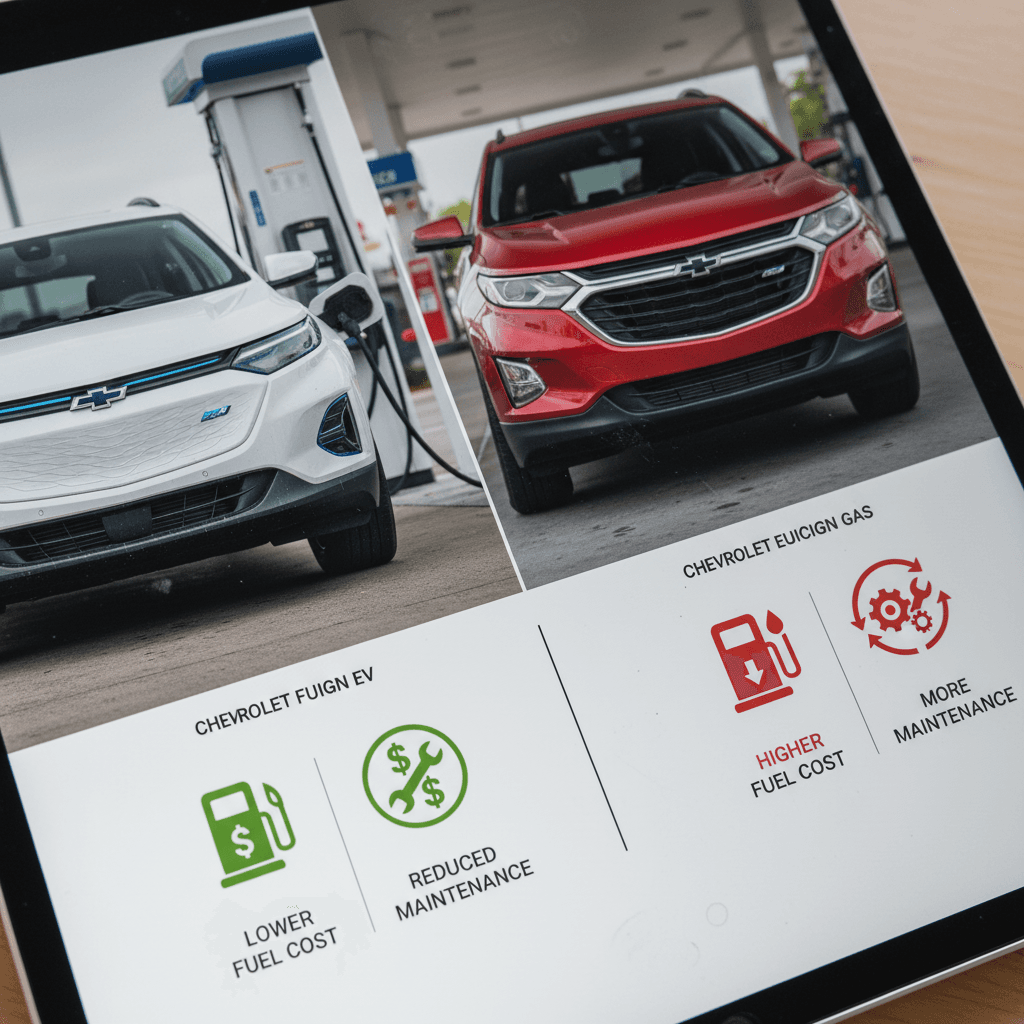
Energy is only half the equation. The Equinox EV has far fewer moving parts than the gas Equinox, no oil changes, spark plugs, timing belts, or complex multi‑gear automatic transmission. Over a 5‑year window, that simplicity usually translates into hundreds of dollars of savings, and it makes predictable budgeting much easier.
Typical maintenance differences: Equinox EV vs gas Equinox
Exact schedules vary, but the pattern is consistent.
Equinox EV
- No oil or filter changes
- Minimal brake wear thanks to regenerative braking
- Fewer fluids and filters to service
- Tire rotations, cabin air filter, brake fluid checks
Gas Equinox
- Regular oil and filter changes
- Transmission fluid service over time
- More frequent brake service
- Additional wear items tied to engine and exhaust
Estimated 5‑year routine maintenance costs
Representative, not brand‑official, numbers for a mainstream compact SUV driven 12,000 miles per year.
| Item | Equinox EV (estimate) | Gas Equinox (estimate) |
|---|---|---|
| Oil & filter changes | $0 | $600–$900 |
| Engine & transmission‑related service | $0 | $400–$700 |
| Brake service | $200–$300 (pads last longer) | $400–$600 |
| Misc. fluids, filters, inspections | $400–$600 | $500–$700 |
| Total 5‑year routine maintenance | ≈ $700–$1,000 | ≈ $1,900–$2,900 |
Does not include out‑of‑warranty repairs or tire replacement, which both vehicles will need eventually.
Budget tire costs for both
Insurance, taxes, and fees: EV vs gas Equinox
Insurance and registration can lean slightly higher for the Equinox EV because of its higher initial value and the cost of collision repairs for EV‑specific components. On the other hand, some states reduce registration fees for EVs or add small annual EV road‑use charges in place of fuel taxes. Over 5 years, these effects usually net out to a modest difference rather than a swing factor.
- Insurance: many carriers price EVs a bit higher than equivalent gas models, but shopping around and taking advantage of telematics or multi‑policy discounts can narrow the gap.
- Registration & taxes: some states offer reduced registration fees or one‑time purchase incentives for EVs, while others charge special EV fees. Check your DMV and state energy office before you buy.
- Home charging installation: if you install a Level 2 charger at home, expect roughly $700–$1,500 for hardware and typical installation. Spread over 5 years, that’s often $150–$300 per year, still leaving the EV ahead on total running costs.
Don’t forget federal and state incentives
Resale value, battery health, and depreciation
Depreciation is the single biggest expense for almost any new vehicle, including the Equinox EV and the gas Equinox. The open question for many shoppers is how well an EV’s battery will hold up and what that does to resale value. Modern EV packs, including those in GM’s Ultium‑based vehicles, are engineered for long service lives and carry lengthy warranties, typically 8 years or 100,000 miles or more on the pack.
How the Equinox EV might depreciate
EV pricing has been volatile over the last few years, but as more buyers seek out electric SUVs, well‑spec’d EVs with good range tend to hold value reasonably well. If public charging improves and more regions adopt stricter emissions rules, demand for used EVs like the Equinox EV could strengthen, supporting higher resale values than early EV skeptics expect.
How the gas Equinox might depreciate
The gas Equinox is a known quantity with long‑established resale patterns. If fuel prices stay elevated or climb, though, 20–25‑mpg compact SUVs can lose some favor, especially in urban markets where EV charging is easier to access. That can soften used values versus more efficient or fully electric options.
Battery health checks are crucial for used EVs
5‑year total cost: Equinox EV vs gas Equinox side by side
Now let’s put the big pieces together. We’ll look at a simplified 5‑year ownership snapshot for a typical buyer, focusing on running costs rather than trying to predict exact resale values for specific trims and options.
Illustrative 5‑year total cost of ownership (excluding purchase price and resale)
Shows where money actually flows during ownership: fuel, maintenance, and typical add‑on costs.
| Category (5 years) | Equinox EV | Gas Equinox |
|---|---|---|
| Fuel / energy | ≈ $3,300–$3,800 | ≈ $8,600–$9,200 |
| Routine maintenance | ≈ $700–$1,000 | ≈ $1,900–$2,900 |
| Home charger (amortized) | ≈ $800–$1,200 (hardware + install) | $0 (if you don’t add equipment) |
| EV‑specific fees & taxes | Varies by state (often a few hundred dollars over 5 years) | Built into fuel taxes |
| Total non‑depreciation costs | ≈ $4,800–$6,000 | ≈ $10,500–$12,100 |
Numbers are rounded and illustrative. Your results will vary, but the relationships between EV and gas costs are what matter.
Big picture: thousands saved even after buying a charger
When the Equinox EV clearly wins, and when gas still competes
Which Equinox is cheaper for you to own?
Tie the numbers to real‑world situations.
Mostly home charging, average mileage
Long freeway commutes, no home charger
Rural driving and cheap local gas
Don’t buy an EV you can’t conveniently charge
How buying a used Equinox EV changes total cost
Many of the sharpest total‑cost wins show up when you let someone else take the first years of depreciation and you buy used. That’s true for both the Equinox EV and the gas Equinox, but the EV’s lower running costs make the used‑EV equation especially compelling if the battery pack is healthy.
Used Equinox EV advantages
- Lower purchase price than new, but you still get modern range and safety tech.
- You capture most of the ongoing fuel and maintenance savings versus gas.
- Battery degradation after a few years is often modest if the car was cared for.
Used gas Equinox considerations
- Lower entry price than a comparable EV, and maintenance shops are everywhere.
- But as mileage climbs, maintenance and repair costs rise, especially as the vehicle ages out of warranty.
- If gas prices stay high, operating costs remain a meaningful monthly expense.
How Recharged reduces used‑EV uncertainty
Chevrolet Equinox EV vs gas: frequently asked questions
Frequently asked questions about Equinox EV total cost vs gas
Bottom line: should you choose the Equinox EV or gas?
When you add it all up, fuel, maintenance, and typical ownership expenses, the Chevrolet Equinox EV generally undercuts a comparable gas Equinox on 5‑year total cost if you can charge at home and drive an average number of miles each year. The gas Equinox still has a role for drivers in charging‑desert regions, those with extremely cheap gasoline, or households that can’t realistically plug in on a regular basis.
If you’re open to a used EV, the math gets even more interesting. A well‑priced Equinox EV with a healthy battery can deliver low running costs and a smaller up‑front investment than new, often beating a similar‑age gas Equinox on monthly cost once you factor in fuel. That’s exactly where a platform like Recharged shines: you get verified battery health, fair market pricing, and expert EV guidance so you can choose the powertrain, and the specific vehicle, that fits your budget and your life, not just the window sticker.