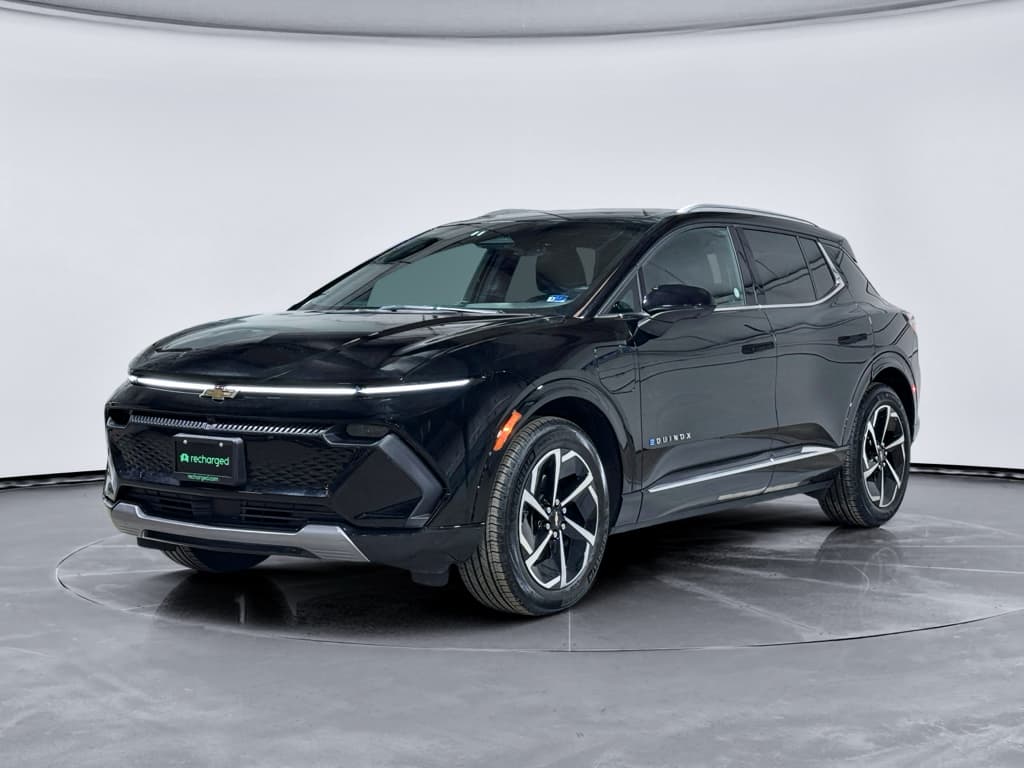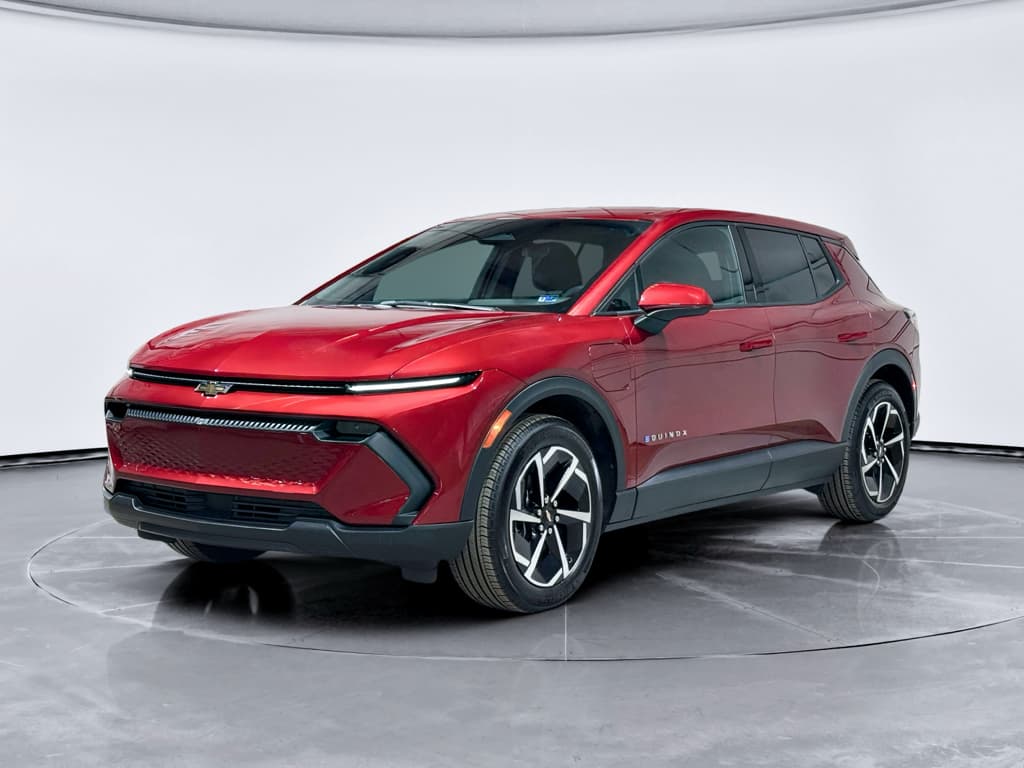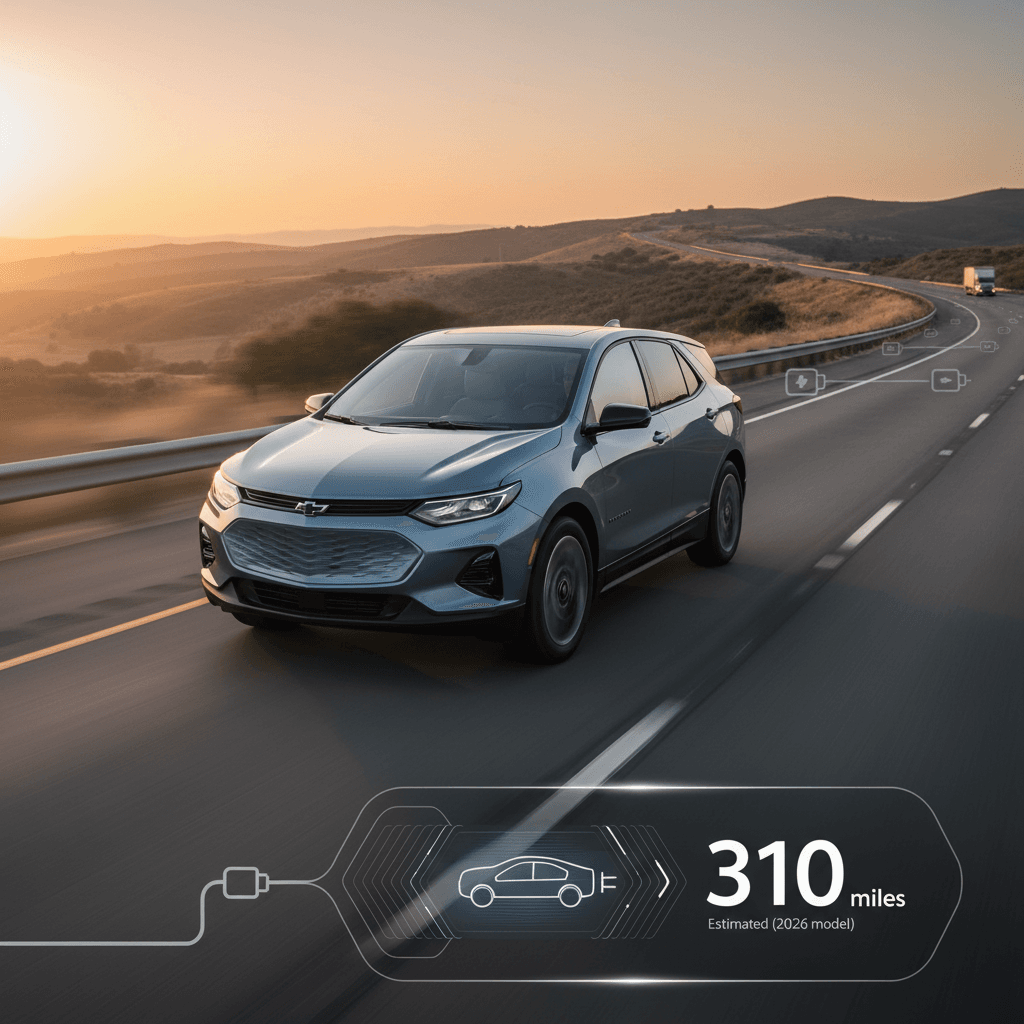
If you’re considering a Chevrolet Equinox EV in 2026, the spec sheet’s 319‑mile EPA range looks like the headline. But what you really care about is how far it goes on an actual day: 75‑mph highway runs, winter commutes, family road trips with bikes or a roof box. This guide pulls together the latest testing and owner data to show the Equinox EV’s real-world range in 2026, and what that means if you’re buying new or used.
Why real-world range matters more than the window sticker
Chevrolet Equinox EV range overview for 2026
Headline Chevrolet Equinox EV range numbers
Under the skin, the Equinox EV rides on GM’s Ultium platform with a large battery (around mid‑80s kWh usable) and relatively slippery aero for a compact SUV. For the 2025 model year and beyond, all FWD trims share the larger pack, and GM quotes roughly 319 miles of EPA combined range for front‑drive configurations. All‑wheel drive trims trade some of that for extra traction and power, landing closer to the high‑200‑mile range on paper.
Good news for 2026 shoppers
EPA rating vs real-world range: where the Equinox EV lands
Start with the basics: the EPA combined rating for most Equinox EV FWD trims is about 319 miles. What’s interesting is that some independent tests have beaten that number in moderate conditions. Edmunds, for example, saw a front‑drive Equinox EV run well into the mid‑300‑mile range on its standardized mixed‑driving loop, outperforming the label by roughly 10–15% in calm California weather with careful driving. On the other end of the spectrum, multiple 75‑mph highway tests, including our own analysis at Recharged, land closer to 260 miles of real‑world highway range from 100% to near‑empty in still air.
What the EPA number actually means
- Blended city and highway, with average speeds well below real‑world interstate travel.
- Assumes moderate weather and relatively light HVAC loads.
- Great for relative comparison between EVs, but not a promise of what you’ll see at 75 mph.
What most owners see day-to-day
- Daily commuting and errands: high‑200s to low‑300s miles per full charge in mild temps.
- Sustained highway at 70–75 mph: around 230–270 miles, depending on wind, temps and load.
- Cold‑weather highway with heat blasting: 180–230 miles can be more realistic.
Don’t judge range by the “guess‑o‑meter” alone
City vs highway: how driving profile changes range
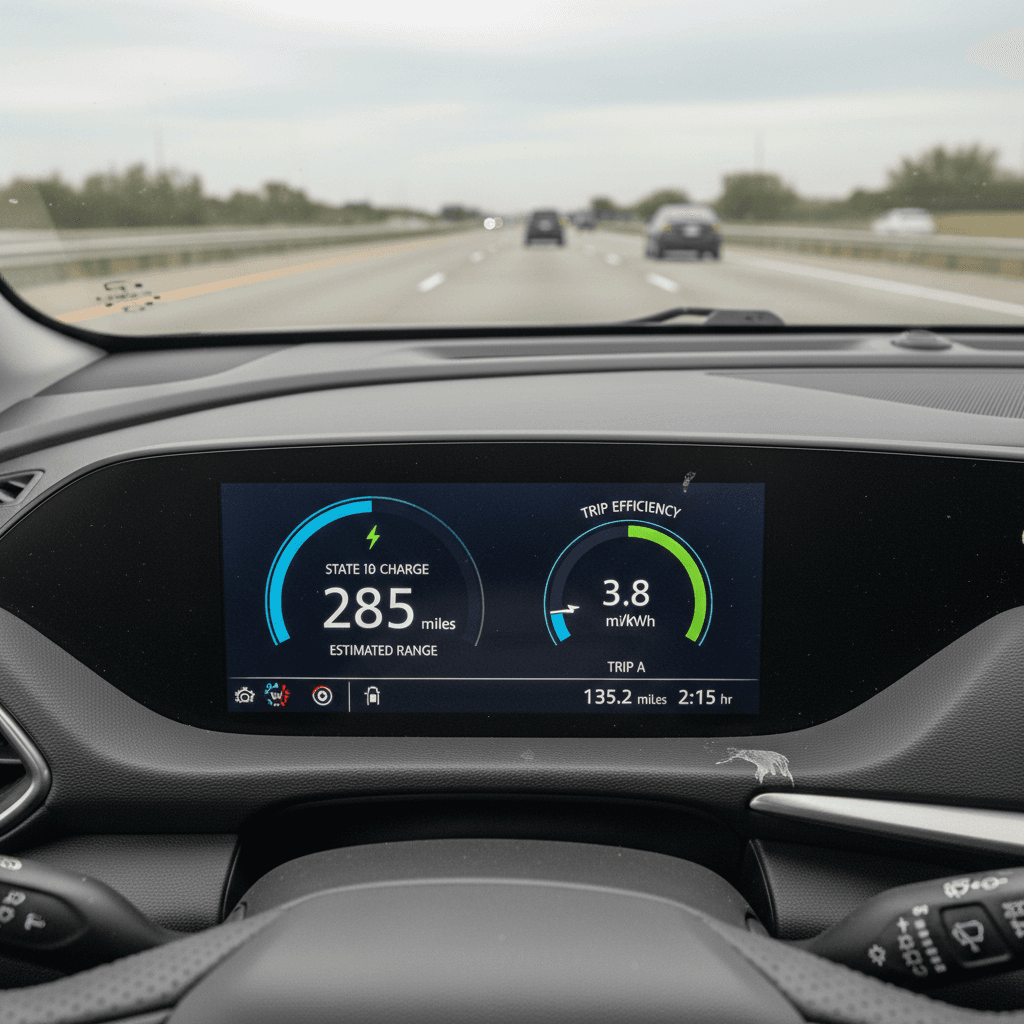
Like most modern EVs, the Equinox EV can look almost miraculous in low‑speed, stop‑and‑go driving and merely average at U.S. interstate speeds. Around town, with lots of opportunities for regenerative braking, owners commonly report 3.3–4.0 miles per kWh. On an 80‑something‑kWh pack, that translates into an easy 280–320 miles if you’re not hammering the throttle. Shift to a 75‑mph highway cruise, and that efficiency can drop into the high‑2s mi/kWh or worse, trimming realistic range down toward that 260‑mile ballpark.
Equinox EV real-world range snapshot by use case
Approximate ranges assume a healthy battery and moderate loads in 2025–2026 model‑year Equinox EVs.
| Scenario | Typical efficiency (mi/kWh) | Approx. usable battery | Estimated real-world range |
|---|---|---|---|
| Calm suburban / urban, 35–45 mph | 3.5–4.0 | ~80 kWh | 280–320 mi |
| Mixed commute, 60% city / 40% freeway at 65 mph | 3.1–3.4 | ~80 kWh | 250–290 mi |
| Steady 70–75 mph highway, mild weather | 2.7–3.1 | ~80 kWh | 215–260 mi |
| Winter freeway, 70–75 mph, heater on | 2.2–2.6 | ~80 kWh | 175–215 mi |
Think in terms of efficiency (mi/kWh) first, then translate that into miles of range for your particular routes.
The 70 vs 80 mph difference
FWD vs AWD and wheel size: what configuration matters most
By 2025, Chevy consolidated the Equinox EV lineup around the larger battery pack but still offers both front‑wheel drive (FWD) and all‑wheel drive (AWD). As usual, the extra motor adds weight and driveline losses, shaving range. Early EPA and owner data suggest roughly a 10–15% hit going from FWD to AWD, which lines up with real‑world highway tests that see both versions arrive near 260 miles when run from full to near‑empty at 75 mph, but with the AWD car starting from a lower official rating.
How configuration choices affect Equinox EV range
If range is your top priority, start with these decisions before you even leave the lot.
FWD vs AWD
FWD delivers the longest range and is more than adequate for most climates with good all‑season tires. AWD adds confidence in snow and quicker launches, but expect to give up roughly 20–40 miles of real‑world highway range.
Wheel & tire package
Larger wheels and wider, stickier tires look great but add rolling resistance. If you care about range, skip the heaviest wheel options and consider switching to low‑rolling‑resistance all‑season tires when it’s time to replace the factory rubber.
Ride height & accessories
Roof boxes, bike racks and lift kits all add drag or weight. A permanent roof box can easily trim another 5–10% off highway range at 75 mph. Remove accessories when you’re not using them if highway range is tight.
Best spec for range-focused buyers
Weather, climate control and seasonal range changes
The Ultium platform gives the Equinox EV a modern thermal management system and heat pump, which helps in both summer and winter. But physics still wins: heating or cooling the cabin, warming a cold battery, and punching through dense winter air all cost energy. In 2026, real‑world Equinox EV owners continue to report 20–35% range loss in cold weather highway driving, especially for short trips where the car keeps reheating the cabin and pack from scratch.
Cold weather patterns
- Short urban trips with frequent preconditioning: modest hit; the car stays warm between errands.
- Long highway drives starting from a cold soak: range often falls into the low‑200s unless you slow down.
- Seat and wheel heaters use far less energy than blasting the cabin heat, lean on them heavily.
Heat and A/C impact
- Modern heat pumps are efficient, but full‑blast A/C at 100°F still costs a few percent of range.
- Parking in the shade or a garage reduces how hard the A/C must work when you start driving.
- Use scheduled preconditioning while plugged in so cabin cool‑down or warm‑up doesn’t come out of your battery.
Use scheduled preconditioning to “cheat” the weather
Charging strategy, DC fast charging and road-trip range
Range isn’t just about how far you can go on a single charge, it’s also about how quickly you can recover miles on a road trip. In our Equinox EV DC fast‑charging analysis, we’ve seen peak charging power briefly touch the advertised ~150 kW before tapering into a more sustainable 90–110 kW band over much of the 10–80% window. In practice, that means the car can add roughly 70–80 miles of highway range in about 10 minutes when you arrive reasonably low on charge, and roughly 100 miles in the first 15–20 minutes of a well‑planned stop.
Road-tripping an Equinox EV: smart charging patterns
1. Live between 10–80% state of charge on trips
The Equinox EV, like most modern packs, charges fastest in the middle of the battery. Plan legs that drop you to around 10–20% and stop charging once you’re near 70–80% unless the next leg is truly long.
2. Use DC fast charging for big jumps only
At its best, a 10–80% DC session can take 35–40 minutes, averaging around 90–100 kW. For shorter hops or when you have time, an overnight Level 2 stop at a hotel or family member’s house is easier on the battery and your schedule.
3. Plan around realistic highway range, not EPA
Assume roughly <strong>230–260 miles of comfortable highway range</strong> in mild weather if you’re starting in the 80–90% window. That leaves a buffer and avoids stretching down into single‑digits on state of charge.
4. Prefer networks your car and route like
By 2026, access to Tesla Superchargers and other high‑reliability networks is improving, but not all sites are equal. Check recent check‑ins and photos on apps like PlugShare, and have a backup charger on every leg.
5. Avoid charging to 100% daily
Save 100% charges for road‑trip days. For home charging, target 70–80% as your daily cap, enough buffer for surprises without keeping the battery at high voltage for no reason.
Road-trip reality check
How Equinox EV range compares to Tesla Model Y and others
If you’re cross‑shopping the Equinox EV, you’re probably looking at a Tesla Model Y, Hyundai Ioniq 5, Kia EV6, or VW ID.4. On paper, many of those offer similar or slightly higher EPA range in their long‑range trims. In independent testing though, the Chevy has surprised people: that Edmunds result put an affordable Equinox EV near the top of their range leaderboard, ahead of some more expensive crossovers. In 75‑mph highway tests, the FWD Equinox EV’s ~260‑mile result is competitive with similar‑size rivals, though it trails the very longest‑legged variants of the Model Y and Ioniq 5 that can push significantly beyond 300 miles at speed.
Where the Equinox EV fits in the 2026 range landscape
Approximate real-world highway results from major players, based on independent testing and owner data.
Chevrolet Equinox EV (FWD)
EPA: ~319 mi
Real 75‑mph highway: ~260 mi
Takeaway: Strong efficiency for the price, especially in mixed driving, but not the king of long‑range highway cruising.
Tesla Model Y Long Range
EPA: mid‑300s mi
Real 75‑mph highway: often 280–320 mi
Takeaway: More outright highway range and denser fast‑charging network, but higher purchase price.
Hyundai Ioniq 5 / Kia EV6
EPA: high‑200s to low‑300s mi
Real 75‑mph highway: low‑ to mid‑200s mi
Takeaway: Superb ultra‑fast charging; range roughly on par or slightly below Equinox EV at speed depending on trim and wheels.
VW ID.4 and similar
EPA: around 275–290 mi
Real 75‑mph highway: often 220–250 mi
Takeaway: Equinox EV is broadly competitive or slightly better on both efficiency and total miles per dollar.
Miles of range per dollar
Shopping used in 2026: battery health and range expectations
By 2026, the first waves of 2024 and 2025 Equinox EVs are appearing on the used market. The big question: how much range have they lost? Early Ultium‑platform data across GM’s EVs suggests that with normal charging habits, mostly Level 2, limited DC fast charging, and avoiding constant 100% parking, degradation tends to be modest in the first few years. A healthy 2‑year‑old Equinox EV might show only single‑digit percentage loss in usable capacity, translating into perhaps 10–25 miles less real‑world range than new.
Used Equinox EV range checklist for 2026 shoppers
1. Ask for a detailed battery health report
Look for more than a dash estimate. A proper diagnostic, like the <strong>Recharged Score battery health report</strong> we run on every vehicle, measures pack capacity and cell balance so you know how much range is really left.
2. Review DC fast charging history
Frequent high‑power fast charging, especially to 100%, can accelerate degradation. It’s not a deal‑breaker by itself, but you’ll want to factor it into your expectations and negotiate accordingly.
3. Compare indicated range to your needs
Even if a used Equinox EV now comfortably does “only” 260 miles in mixed driving, that’s still overkill for many daily routines. Focus on whether its <strong>adjusted real‑world range</strong> fits your longest regular trips rather than chasing the new‑car EPA number.
4. Test it on your actual routes
If possible, take an extended test drive along your normal commute or highway segment. Watch energy use (kWh/100 mi) and project real range from that rather than relying on the fluctuating range estimator.
5. Evaluate tires and alignment
Worn, misaligned, or mismatched tires can drag efficiency down enough to make a healthy battery look weak. A good used‑EV inspection includes a thorough check of the rolling gear.
How Recharged simplifies used Equinox EV range shopping
Ready to find your next EV?
Browse VehiclesPractical tips to maximize Equinox EV real-world range
- Keep daily charge targets around 70–80% unless you truly need more for a specific trip.
- Use Eco or efficiency‑oriented drive modes when cruising; they typically soften throttle response and optimize climate use.
- Precondition the cabin and battery while plugged in, especially in extreme heat or cold.
- Rely on seat and steering‑wheel heaters instead of blasting cabin heat in winter.
- Reduce cruising speed by 5–10 mph on marginal legs; that alone can add 20–40 miles of range at highway speeds.
- Remove unused roof boxes, racks and unnecessary cargo to cut drag and weight.
- Check tire pressures monthly and stick with low‑rolling‑resistance all‑season tires if range matters more than ultimate grip.
- Plan trips around realistic 230–260‑mile highway legs, not the 319‑mile EPA number, to keep buffers healthy.
“The Equinox EV shows how far mainstream EVs have come: you no longer have to spend luxury‑car money to get real‑world range that works for long U.S. highway days.”
Chevrolet Equinox EV real-world range: 2026 FAQ
Frequently asked questions about Equinox EV real-world range in 2026
Range is where EV marketing and EV reality most often part ways. The Chevrolet Equinox EV is a good illustration: on paper it’s a 319‑mile crossover; in the real world it’s a roughly 260‑mile highway car that can stretch much farther in gentle mixed driving, and still cover serious road‑trip miles with smart charging strategy. If you understand how speed, weather, configuration and battery health shape those numbers, you can decide whether an Equinox EV, or a specific used example, fits your life. And if you’d rather not do that homework alone, Recharged’s verified battery diagnostics, pricing transparency, and EV‑specialist support are built to make that decision a lot easier.