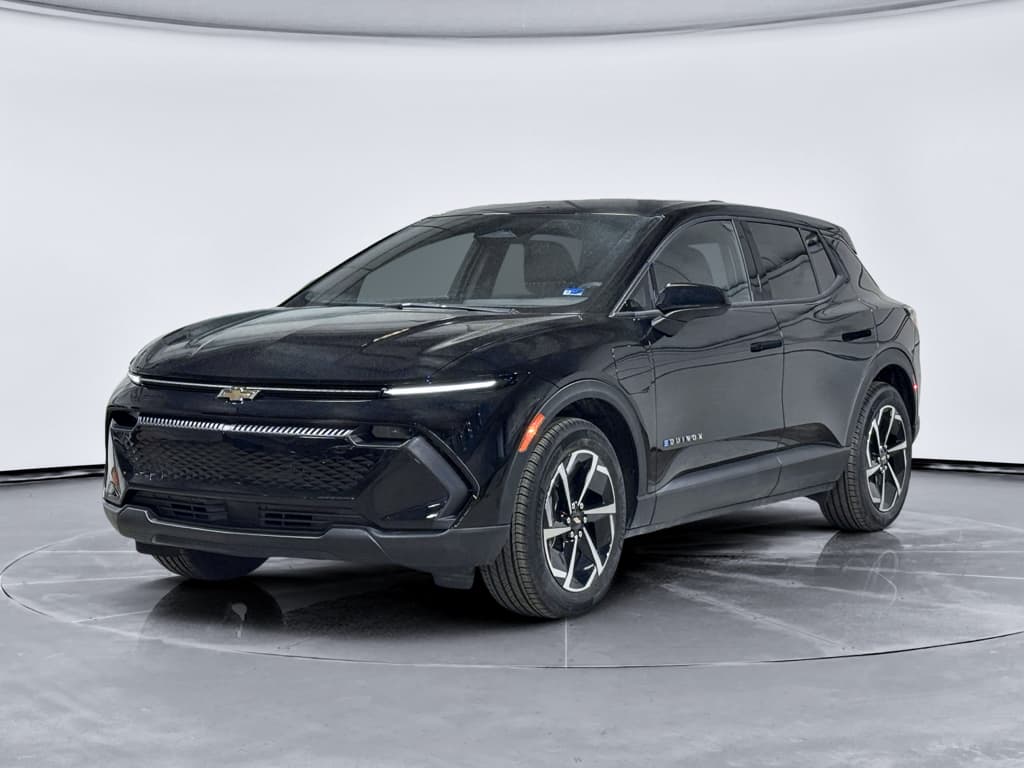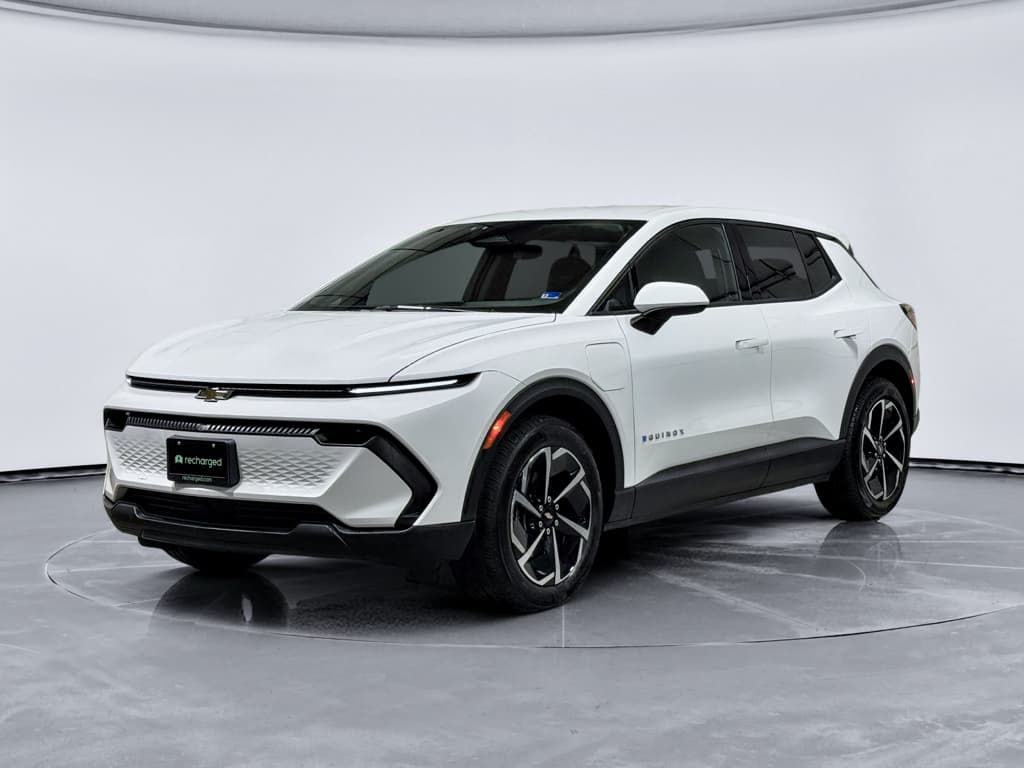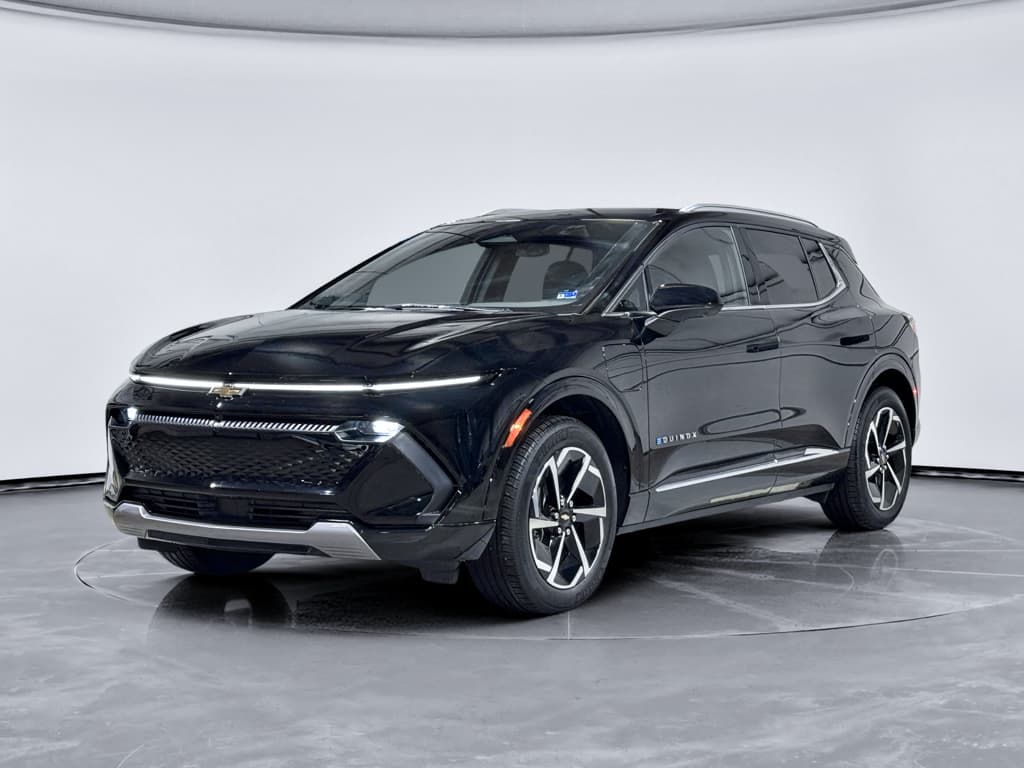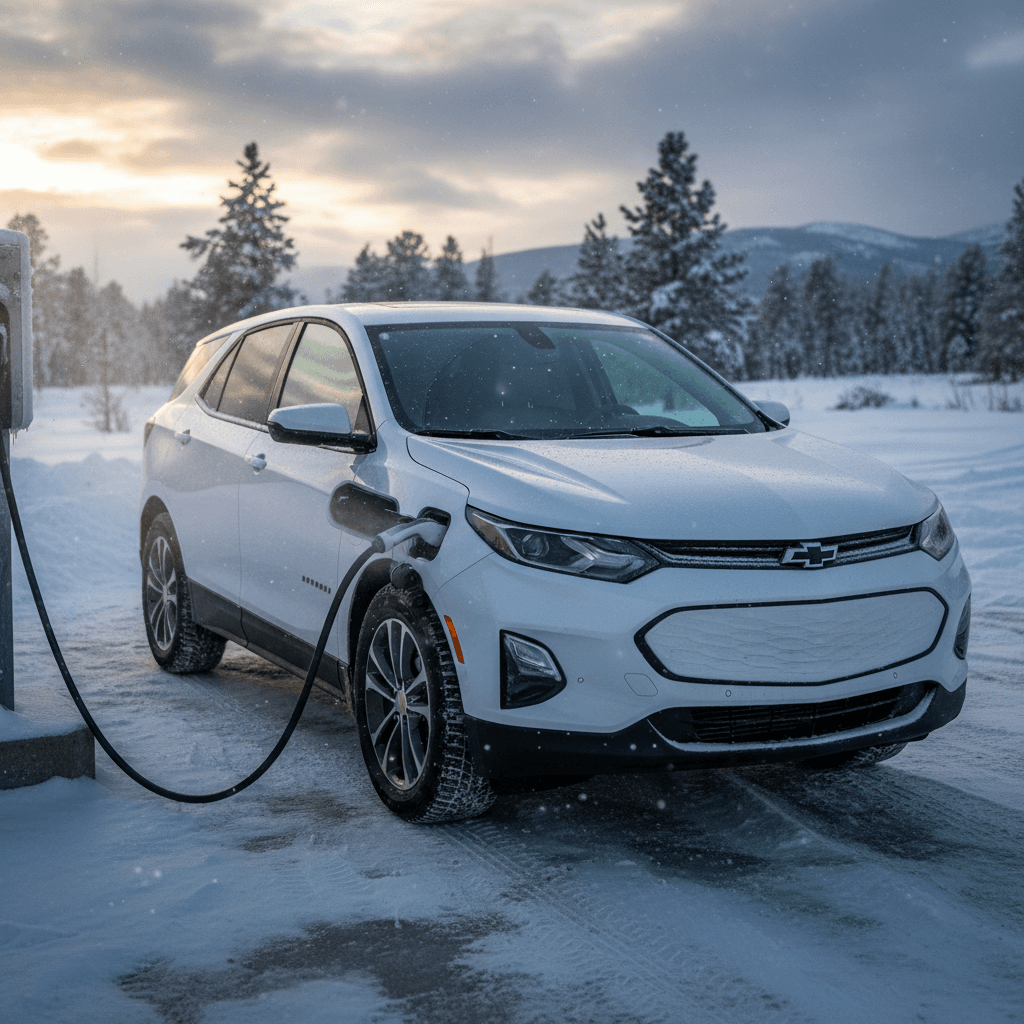
If you live where winters are real, think freezing temps, road salt, and dark commutes, you’re probably wondering how the Chevrolet Equinox EV’s range holds up in cold weather. The brochure might promise 300+ miles, but January in Minnesota or upstate New York tells a different story. This guide breaks down what you can realistically expect from an Equinox EV in winter, why range drops in the cold, and how to drive and charge smarter so the weather doesn’t control your plans.
Quick takeaway
Chevrolet Equinox EV winter range: the big picture
The Equinox EV is built on GM’s Ultium platform and marketed as an affordable, long‑range electric SUV. Front‑wheel‑drive trims carry an EPA estimate in the low‑ to mid‑300‑mile range, while all‑wheel‑drive versions come in just over 300 miles, depending on model year and configuration. In moderate weather, that makes the Equinox EV one of the more competitive compact electric SUVs for range.
In cold weather, though, every EV pays an efficiency penalty. Batteries don’t like the cold, and keeping the cabin warm uses a surprising amount of energy. Government and industry testing, plus owner reports across many models, show that winter conditions can trim usable range by 20–40% depending on temperature, speed, and how you use the climate system. The Equinox EV is no exception, though its heat pump, Ultium thermal management, and decent efficiency help keep it from being a worst‑case outlier.
Equinox EV range: paper vs. winter pavement
Short trips are hardest on winter range
Official Chevrolet Equinox EV range ratings by trim and drivetrain
First, it helps to separate what Chevy advertises from what you’ll see in January. For the 2025–2026 model years, the Equinox EV lineup in the U.S. looks roughly like this for new, fully charged vehicles under EPA test conditions (moderate weather, mixed driving):
Chevrolet Equinox EV EPA range ratings (approximate)
These are label values under standardized test conditions, not winter road‑trip numbers.
| Model year & trim | Drivetrain | Battery configuration | EPA‑estimated range |
|---|---|---|---|
| 2025–2026 Equinox EV LT/RS (most FWD trims) | FWD | Large Ultium pack | ≈319–326 miles |
| 2025–2026 Equinox EV LT/RS (eAWD) | AWD | Large Ultium pack | ≈307 miles |
| Lower‑range 1LT variants (earlier announcements) | FWD | Smaller pack (limited availability) | ≈250–300 miles |
Use these official ratings as a starting point; winter driving will reduce them.
Why the numbers move around
Those EPA ratings are useful for comparing models, but they don’t account for 15°F mornings or lake‑effect snow. To forecast winter range, you have to understand where the energy goes when temperatures drop.
How cold weather cuts Equinox EV range
Cold weather hurts EV range in three main ways: the battery chemistry itself, the energy needed to warm the cabin, and higher drag from dense, messy winter air and roads. The Equinox EV’s Ultium pack and heat‑pump HVAC system help, but they can’t rewrite physics.
Three main reasons your Equinox EV loses range in winter
Understanding the causes makes it easier to manage them.
1. Cold battery chemistry
Lithium‑ion batteries are less efficient when cold. Internal resistance rises, so the pack can’t deliver or accept energy as effectively.
Result: Higher energy use per mile and slightly slower fast‑charging until the pack warms up.
2. Cabin heating load
Unlike a gas engine, an EV doesn’t have waste heat to warm the cabin. The Equinox EV uses a heat pump plus electric resistance when needed.
At 0–20°F, HVAC can pull several kW, cutting range noticeably, especially on short trips.
3. Winter roads & conditions
Cold, dense air increases aerodynamic drag. Snowy or slushy pavement also adds rolling resistance.
Throw in winter tires and higher speeds, and your highway efficiency drops versus a mild‑weather day.
Extreme cold is a different animal
Real-world Equinox EV range estimates in winter
So what does that actually look like in miles? Owner reports and cold‑weather testing from multiple EVs show a wide range of outcomes, but they tend to cluster in predictable bands once you control for temperature and driving style. The Equinox EV’s efficiency is competitive with other compact electric SUVs, so it’s reasonable to apply those patterns to Chevy’s Ultium crossover.
Typical U.S. winter day (20–32°F)
- FWD Equinox EV (EPA ≈ 319–326 mi): Many drivers will see 225–260 miles from 100% to near empty on mixed driving if they precondition and drive reasonably.
- AWD Equinox EV (EPA ≈ 307 mi): Expect roughly 210–245 miles in similar conditions.
- Short, stop‑and‑go trips: Heavy HVAC use on a cold battery can push losses toward the 30–35% end of the spectrum.
Harsh winter (0–15°F, lots of heat)
- FWD: Range can fall into the 190–220‑mile band if you’re running full heat on the highway and not preconditioning.
- AWD: Plan on roughly 180–210 miles between charges under similar conditions.
- Frequent remote starts and short hops: It’s easy to see 35–40%+ range loss if you’re always reheating a cold cabin.
Use percentage, not just miles
Equinox EV heat pump, HVAC quirks, and cabin comfort
The Equinox EV uses a modern heat‑pump–based HVAC system with an electric resistance backup heater. That setup is efficient in moderate cold but feels different from a traditional gas SUV, and some early owners have noted that warm air can take a bit longer than they expected, or that airflow behavior in AUTO mode feels odd.
- Heat pump advantages: In the 25–45°F range, the heat pump can keep the cabin comfortable using far less energy than a pure resistance heater, which helps preserve range on longer drives.
- Slow warm‑up feel: You may feel cool air from the vents at first even when the system is adding heat. That’s partly how heat pumps work and partly software calibration. Preconditioning cuts this pain dramatically.
- Backup resistance heat: In very low temps or when faster warm‑up is needed, the Equinox EV will blend in resistance heat. That improves comfort but can spike energy use for a while.
- Ongoing software tweaks: Like many new EVs, HVAC logic may improve over time via over‑the‑air updates, smoothing out some early complaints about intermittent or weak heat.
If cabin heat feels truly broken
Driving strategies to reduce winter range loss
You can’t stop physics, but you can decide how much it hurts. A few practical habits in your Equinox EV can turn a 40% winter hit into something closer to 20–25%, which is much easier to live with on a daily basis.
Winter driving habits that help your Equinox EV go farther
1. Precondition while plugged in
Use the myChevy app or in‑car settings to warm the cabin and (where supported) the battery <strong>before</strong> you leave, while the car is still on the charger. That pushes most of the heating load onto the grid instead of the battery.
2. Start your trip warm, not hot
Aim for a comfortable but not toasty cabin, think 68–70°F, plus seat and wheel heaters. Blasting 78°F air will eat range faster than you think, especially on short hops.
3. Use seat and steering‑wheel heaters
These sip power compared to air heat. If you can stay comfortable by lowering the cabin setpoint a few degrees and leaning on heated surfaces, you’ll keep more miles in the pack.
4. Moderate your speed
Aerodynamic drag rises with the square of speed, and dense cold air makes it worse. Dropping from 75 mph to 65 mph can save a meaningful chunk of winter range on the Equinox EV.
5. Choose ECO or gentle drive modes
Softer throttle mapping and smoother torque delivery help you avoid wasteful bursts of acceleration and regen, improving net efficiency, especially on slick roads.
6. Combine errands into one warm run
Cold‑soaked batteries and cabins are the enemy. One 40‑mile errand loop will use far less energy than four separate 10‑mile trips with full reheat cycles in between.
Good news for commuters
Charging your Equinox EV in cold weather
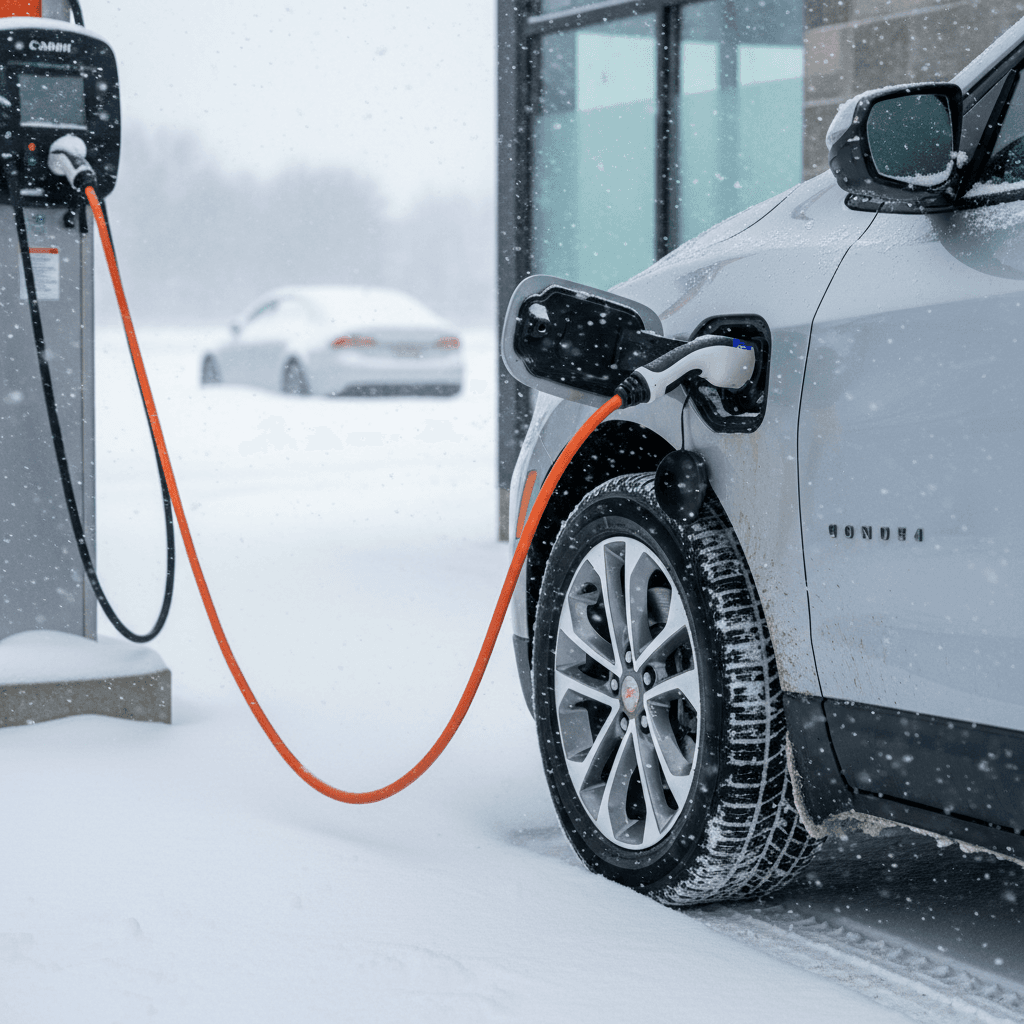
Cold affects charging as much as it affects driving. When the Equinox EV’s battery is cold, it can’t accept charge as fast, so both DC fast‑charging on road trips and overnight Level 2 home charging look different compared with a mild spring evening.
How cold changes charging for the Equinox EV
Plan for slower initial charging and use preconditioning to your advantage.
DC fast charging (road trips)
- Expect slower peak speeds until the battery warms, especially if you arrived with a cold pack.
- Use built‑in navigation to a DC fast charger when possible so the car can pre‑warm the battery on the way.
- Plan your stops around 10–60% in winter, beyond that, charge speeds taper sharply and you’re mostly wasting time.
Home & workplace charging
- On Level 2 (around 11.5 kW for the Equinox EV), a full overnight session is usually enough even in winter.
- Consider scheduling charging to finish near your departure time so the pack is naturally warmer when you leave.
- In very cold climates, parking indoors, even in an unheated garage, can noticeably improve both charging speed and morning range.
Watch the first 10–15 minutes
Protecting Equinox EV battery health in winter
Range is one thing; long‑term battery health is another. The Equinox EV’s Ultium pack is liquid‑cooled and managed by robust software, which helps protect it from abuse. Still, a few winter‑specific habits can keep the pack happier over a decade of cold seasons.
- Avoid frequent DC fast‑charging from 0% in extreme cold. Let the car precondition first or arrive at the charger with at least some warmth in the pack when you can.
- Don’t obsess over 100% daily charges. In winter, charging to roughly 80–90% for everyday use is a good balance between range and longevity, unless you need full range for a trip.
- Whenever possible, store the vehicle in a garage or at least out of strong wind. Even a few degrees warmer helps the pack and cuts overnight losses.
- Use scheduled departure and climate features so the pack is warm and ready rather than deep‑soaked at low state of charge on icy mornings.
Recharged and battery confidence
Is the Chevrolet Equinox EV a good winter SUV?
From a range and hardware standpoint, the Equinox EV is fundamentally well‑suited to winter duty. It offers competitive EPA range, available all‑wheel drive, a modern heat pump with resistance backup, and DC fast‑charging that can add meaningful miles in a short stop once the pack is warm. It’s not a miracle worker, the laws of thermodynamics still apply, but it compares well against other compact electric SUVs when temperatures drop.
Winter strengths
- Solid highway range even after a typical 20–30% winter haircut.
- eAWD option for traction in snow and slush.
- Heat pump HVAC that’s more efficient than older EVs with only resistance heat.
- Ultium thermal management designed for hot and cold extremes.
Winter limitations
- Like any EV, short, cold starts with max heat are range‑inefficient.
- Some owners report HVAC quirks that may require software updates or dealer attention.
- Fast‑charging in deep cold is slower without good route‑based preconditioning.
- EPA rating can be misleading if you expect those numbers in January.
If your winter life includes a mix of commuting, errands, and the occasional road trip, the Equinox EV can absolutely handle it, as long as you plan around realistic winter range rather than the window sticker. Learn how your specific trim behaves at your typical temps, build in a buffer on longer drives, and lean on preconditioning and efficient climate use. If you’re cross‑shopping used EVs, an Equinox EV with a healthy battery and eAWD sits in a particularly attractive sweet spot for cold‑climate drivers.
Thinking about a used Equinox EV?
Ready to find your next EV?
Browse Vehicles