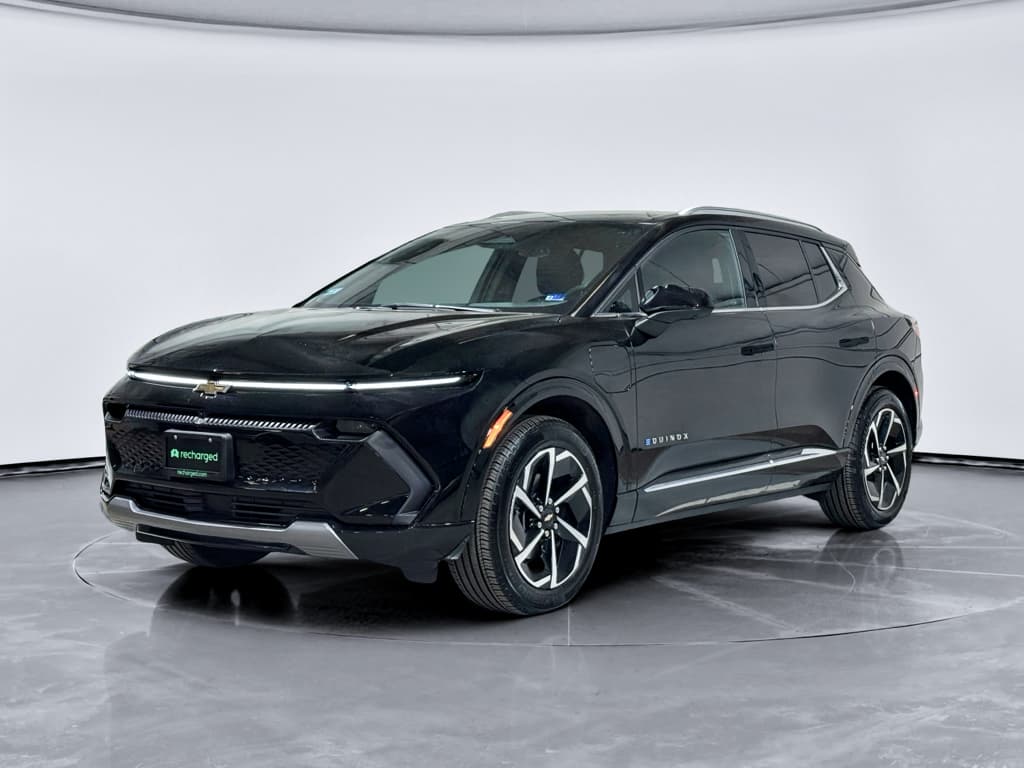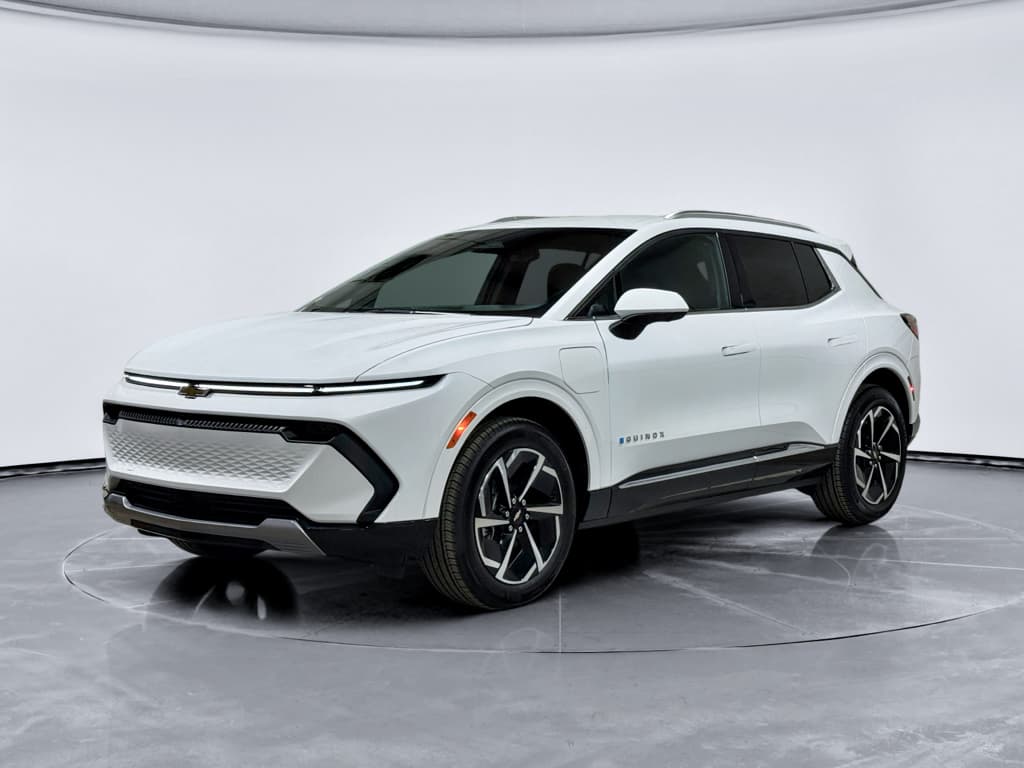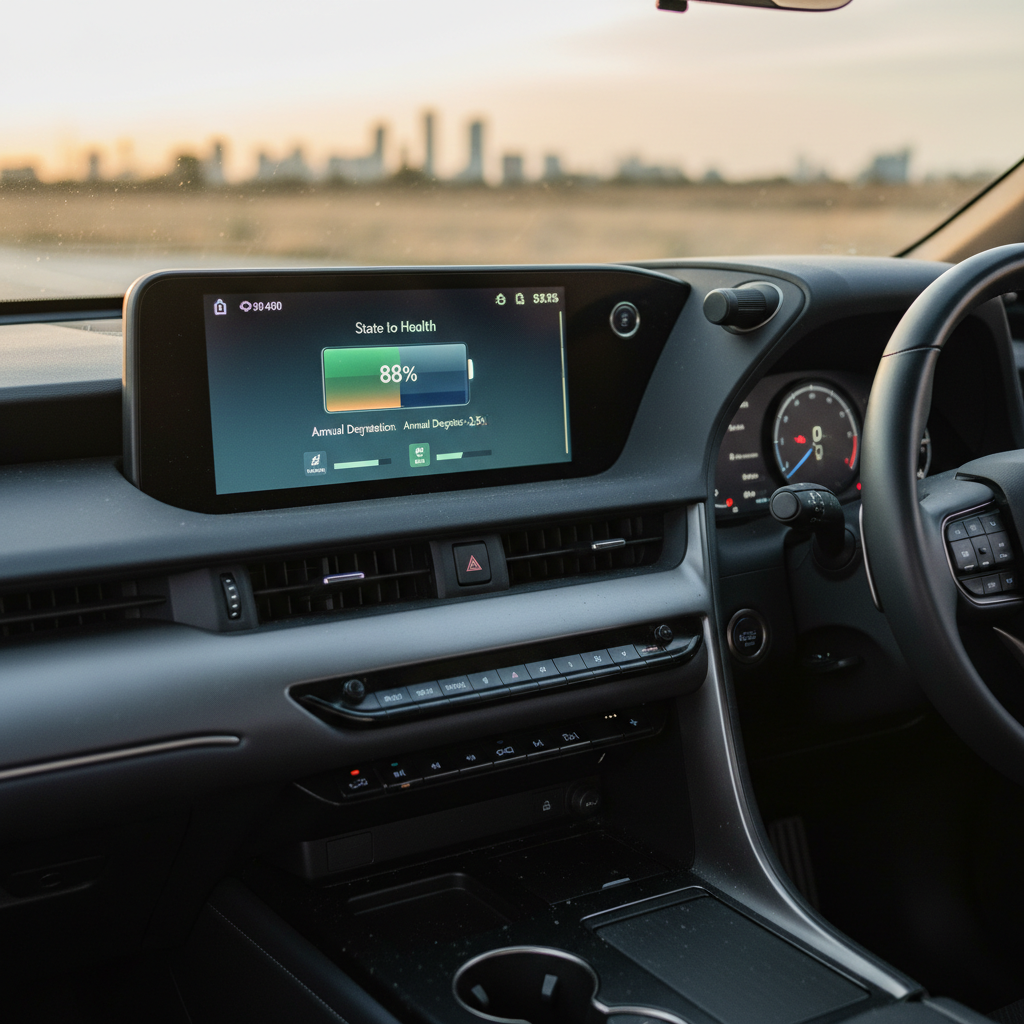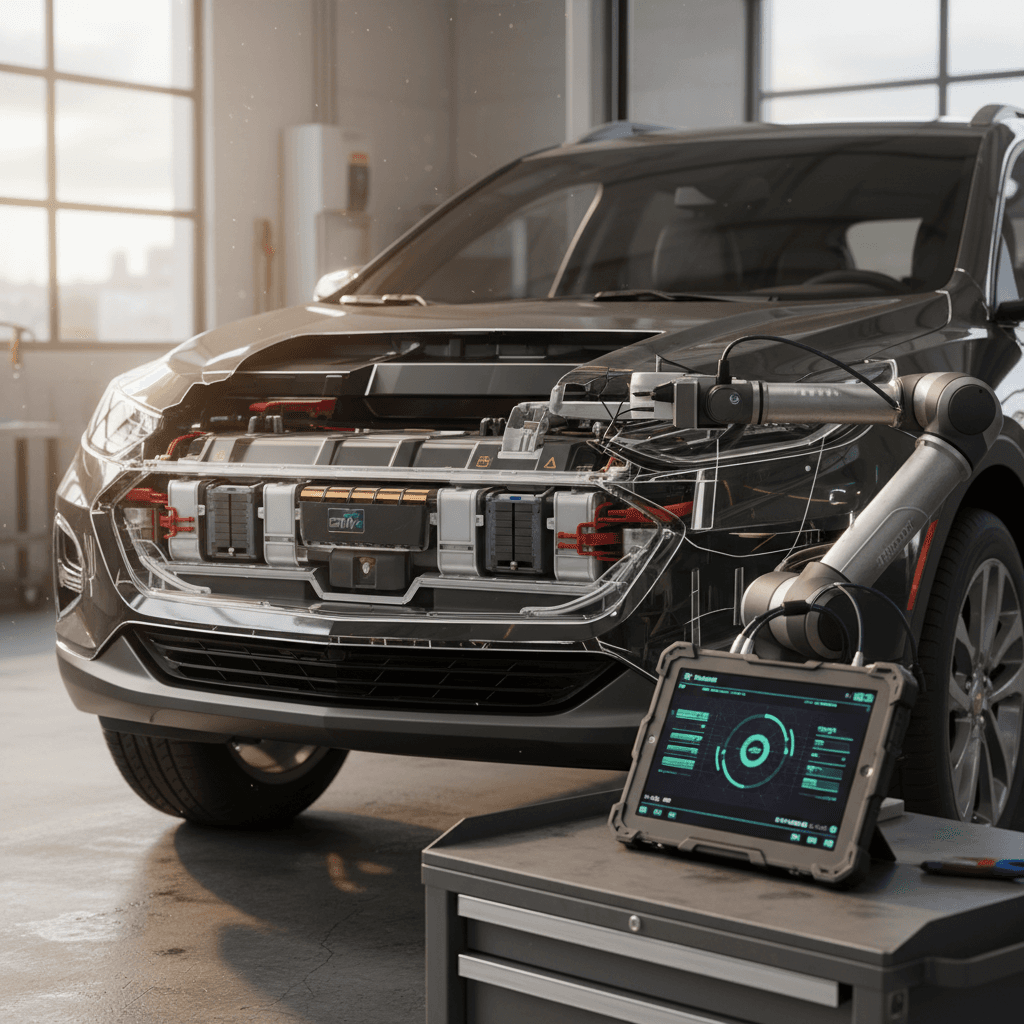
If you’re looking at a Chevrolet Equinox EV, whether new or used, the big question on your mind is probably “how long will the battery last?” The Equinox EV’s Ultium pack is the most expensive component in the vehicle, so understanding its lifespan, warranty coverage, and real-world degradation is crucial before you buy.
Quick take
Equinox EV battery lifespan at a glance
Chevrolet Equinox EV battery: key numbers
The Equinox EV is built on GM’s Ultium platform, which was designed from the start for long service life and modular repairs. While we don’t yet have 10‑year real-world data on Ultium packs, we do have decades of lithium‑ion field experience and early reports from first‑wave Ultium vehicles that point toward solid longevity when the car is used and charged sensibly.
What kind of battery is in the Chevrolet Equinox EV?
Every Chevrolet Equinox EV uses a Ultium lithium‑ion battery pack mounted in the floor. For U.S. models, GM pairs the Equinox EV with an ~85 kWh usable battery, giving FWD models an EPA‑estimated range of up to 319 miles and AWD trims about 307 miles on a full charge.
- Ultium NCMA chemistry (nickel‑cobalt‑manganese‑aluminum), similar to other GM EVs like the Blazer EV and Honda Prologue
- Pack is liquid‑cooled and actively managed by a sophisticated battery management system (BMS)
- Modular design: individual modules can be serviced or replaced instead of the entire pack
- Large buffer at the top and bottom of the state‑of‑charge window to limit cell stress
Hidden buffer is your friend
GM Ultium warranty: how long is the Equinox EV battery covered?
GM backs the Equinox EV’s high‑voltage battery with an 8‑year / 100,000‑mile limited warranty (whichever comes first). That coverage is broadly in line with other mainstream EVs and is separate from the basic bumper‑to‑bumper warranty.
Chevrolet Equinox EV high-voltage battery warranty summary
How GM’s Ultium warranty applies to your Equinox EV battery.
| What’s covered | Term | Capacity threshold | Notes |
|---|---|---|---|
| High-voltage battery pack | 8 years / 100,000 miles | ~70% usable capacity | If capacity falls below roughly 70% within the warranty window, GM may repair or replace modules or the pack. |
| Electric drive components (varies by model) | Often 8 years / 100,000 miles when tied to HV system | n/a | Coverage details can differ by model year; check your warranty booklet. |
| Basic bumper-to-bumper | 3 years / 36,000 miles | n/a | Covers most non‑battery components and electronics. |
Always read the official warranty booklet for the exact terms that apply to your model year and region.
Warranty ≠ expected lifespan
So how long will a Chevrolet Equinox EV battery actually last?
Because the Equinox EV only launched in 2024, we don’t have a cohort of 15‑year‑old examples yet. But between early owner reports, data from GM’s earlier Bolt EVs, and broader EV fleet studies, we can make reasonable, conservative expectations.
Realistic Equinox EV battery lifespan scenarios
Assuming typical U.S. driving (10,000–12,000 miles per year) and sensible charging habits.
8 years / 100,000 miles
By the end of the warranty period, many Equinox EVs should still have around 80–90% of original capacity, meaning a FWD car that started at 319 miles might still deliver ~260–285 miles on a full charge.
10–12 years of use
For a typical driver, that’s roughly 120,000–150,000 miles. A well‑treated pack could still be around the 75–85% capacity range, very usable for daily commuting and most road trips with charging stops.
Beyond 150,000 miles
At this point, more variation appears. Some packs may still feel strong; others may be closer to the warranty threshold. But even 70% of 319 miles is still ~220+ miles of range, which is plenty for many owners.
How EVs age vs. gas cars
6 key factors that affect Equinox EV battery lifespan
Not all Equinox EV batteries will age the same way. Two identical SUVs driven in different climates and charging patterns can end up with very different range after 8–10 years. Here are the big levers you control.
What really impacts Equinox EV battery life
1. Average state of charge (SoC)
Keeping the pack at or near 100% for long periods raises cell voltage and accelerates chemical aging. Letting the car live mostly between roughly 20–80% SoC is easier on the battery than charging to full every night and leaving it there.
2. DC fast charging frequency
Occasional DC fast charging is fine, that’s what the Equinox EV is built for. But making high‑power fast charging your primary routine (especially back‑to‑back sessions) will increase long‑term degradation compared with mostly Level 2 home charging.
3. Climate and temperature extremes
Hot climates are hardest on lithium‑ion batteries, especially if the car sits fully charged in the sun. Very cold weather mostly affects temporary range, but repeated deep cold‑soaked operation can add some long‑term wear too.
4. Annual mileage and duty cycle
A ride‑hail or delivery Equinox EV doing 25,000+ miles a year will accumulate cycles faster than a 7,500‑mile‑per‑year commuter. High‑mileage use isn’t automatically bad, but it does bring you to the same cycle count sooner.
5. Storage habits
If you’re storing the car for weeks or months, parking it at a moderate charge (around 40–60%) in a cool place is far better than leaving it at 100% or near empty.
6. Software and thermal management
GM’s BMS and liquid cooling do a lot behind the scenes, managing pack temperature, limiting power when cold, and controlling charge taper. Keeping software updated and not overriding sensible limits (for example, repeatedly forcing max charge in heat) helps the pack age gracefully.
Day-to-day charging habits that help your battery last longer
Battery-friendly habits
- Use Level 2 at home for most charging; reserve DC fast charging for trips.
- Set a daily charge limit (for example, 70–80%) for ordinary commuting.
- Precondition the cabin while plugged in during very hot or very cold weather.
- Drive soon after reaching 100% if you need a full charge for a trip instead of leaving it full for hours.
- Park in the shade or a garage when possible, especially in hot climates.
Habits that accelerate wear
- Charging to 100% every night for a short commute and leaving it plugged in for hours.
- Relying on DC fast charging multiple times per week for routine local driving.
- Letting the battery sit near 0% for long periods.
- Regularly fast charging straight from a long high‑speed drive when the pack is already hot.
- Storing the vehicle at very high SoC in intense heat.
Don’t overthink it
Range loss over time: what Equinox EV owners can realistically expect
Battery health is best thought of in terms of usable range, not just percentage numbers in an app. The Equinox EV’s 319‑mile FWD rating sets a strong baseline; the question is how that changes as the pack ages.
Illustrative Equinox EV range over time (FWD, originally 319 miles EPA)
Approximate scenarios based on typical EV fleet data and reasonable assumptions for Ultium packs. Real‑world results will vary.
| Age / mileage | Approx. capacity | Estimated full-charge range | What this feels like day-to-day |
|---|---|---|---|
| New (0–2 years) | ~95–100% | 305–319 miles | You can easily match or beat EPA on highway-heavy trips in good weather. |
| 5 years / ~60,000 miles | ~90–95% | 285–305 miles | Most owners notice little to no range change in daily use. |
| 8 years / 100,000 miles | ~80–90% | 255–285 miles | Road trips may need slightly more frequent stops; commuting is largely unaffected. |
| 10+ years / 120–150,000 miles | ~75–85% | 240–270 miles | Still strong for most use cases; some owners may start planning around the reduced buffer on long winter drives. |
These are estimates for planning, not guarantees. Driving style, climate, and charging habits all matter.
Cold weather vs. permanent loss
Battery replacement, second life, and resale value
The natural follow‑up question to “how long will it last?” is “what happens if it doesn’t?” Full pack failures are rare on modern EVs, but they do happen, and capacity loss eventually makes some owners consider replacement.
What to know about Equinox EV battery replacement and value
Even as the pack ages, the Equinox EV usually has a long second life.
Replacement costs
GM doesn’t publish fixed Equinox EV pack prices, but based on other Ultium vehicles, a full out‑of‑warranty replacement could easily be five figures before labor. In practice, GM prefers module-level repairs when possible, which can be substantially cheaper.
Second-life uses
Even when an automotive pack has dropped to ~70% of its original capacity, it’s still valuable for stationary storage. That second‑life value helps support future recycling and keeps whole‑pack replacements from becoming pure waste.
Impact on resale
Battery health is already one of the biggest drivers of used EV pricing. A well‑documented Equinox EV with healthy capacity will hold its value better than a similar car with heavy degradation or unclear history.
How Recharged handles battery health
Ready to find your next EV?
Browse VehiclesBuying a used Equinox EV? Battery checklist
If you’re reading this because you’re eyeing a used Equinox EV, especially once 2024–2025 models start hitting the market in volume, the battery should be at the center of your due diligence. Here’s a practical checklist to bring to any test drive or online listing.
Used Chevrolet Equinox EV battery checklist
1. Verify model year and mileage
Battery tech and software evolve; note the exact model year, build date (if available), and total miles. A 2‑year‑old Equinox EV at 40,000 miles has had a very different life than a 2‑year‑old at 10,000 miles.
2. Confirm remaining HV battery warranty
Ask for the original in‑service date so you can calculate how many years and miles remain on the <strong>8‑year / 100,000‑mile</strong> battery warranty. A dealer or seller should be able to provide this.
3. Check battery and charging history
Look for service records related to battery or charging system issues. Ask how the car has typically been charged (home Level 2 vs. frequent DC fast charging) and where it has lived (hot/cold climate).
4. Observe displayed range at high SoC
After a full or near‑full charge, compare the displayed estimated range to the original EPA figure for that trim. A modest gap is normal; a huge shortfall could indicate heavy degradation or simply very aggressive driving history.
5. Scan for warning lights or reduced power messages
On the test drive, make sure there are no persistent battery, charging, or powertrain warnings. Sudden power limits or high‑voltage system alerts are red flags that warrant a professional inspection.
6. Get an independent battery health report
Whenever possible, use a trusted third‑party assessment. On Recharged, the <strong>Recharged Score</strong> includes a battery health snapshot so you can compare one Equinox EV to another with real data, not gut feel.
Chevrolet Equinox EV battery lifespan FAQ
Frequently asked questions about Equinox EV battery life
Bottom line: is Equinox EV battery life a deal-breaker?
For most shoppers, Chevrolet Equinox EV battery lifespan isn’t a deal‑breaker, it’s a strength. The Ultium pack, conservative warranty thresholds, and modern thermal management all point toward a battery that should outlast a typical 8‑year finance term and then some, especially if you avoid a few simple bad habits.
If you’re buying new, think of the battery as a long‑term asset that will slowly lose range rather than an engine waiting to catastrophically fail. If you’re shopping used, the key is transparency: know the model year, mileage, charging history, and measured battery health before you sign. That’s exactly what platforms like Recharged are built around, pairing verified battery diagnostics, fair pricing, and EV‑specialist guidance so you can step into an Equinox EV with clear expectations about how long the battery will serve you.