If you’re driving, or shopping for, a Chevrolet Equinox EV, the single most expensive component in the vehicle sits under the floor: the Ultium battery pack. A smart Chevrolet Equinox EV battery health check helps you understand how much range you can really expect today, how much life is left in the pack, and whether that used Equinox EV you’re eyeing is as healthy as it looks in the photos.
Good news for Equinox EV owners
Why Equinox EV battery health matters
On the 2024–2025 Chevrolet Equinox EV, the Ultium pack is the heart of the car and a major part of its value. New front‑wheel‑drive models are rated around 319 miles of EPA range, with all‑wheel drive a bit lower in the mid‑280s. That range assumes a healthy battery, mild weather, and conservative driving. As the pack ages, you can lose some usable capacity, which reduces both range and resale value.
- Battery health determines how far you can drive between charges in real life, not just on the window sticker.
- Degraded packs can mean more time at public fast chargers and a lot less convenience on road trips.
- For used buyers, battery health is the difference between a great deal and an expensive mistake.
- The battery pack is covered under a separate long‑term warranty; understanding it protects your wallet.
Battery health ≠ dashboard percentage
Equinox EV battery basics: specs and warranty
Key Chevrolet Equinox EV battery facts
What you’re working with under the floorpan
Ultium battery pack
The Equinox EV rides on GM’s Ultium platform with a lithium‑ion pack of roughly mid‑80s kWh nominal capacity and about 90 kWh usable, according to independent testing. It feeds either a single front motor (FWD) or dual‑motor all‑wheel drive.
Range when new
EPA estimates put FWD Equinox EVs at up to 319 miles of range on a full charge, with AWD trims in the 280–285‑mile neighborhood. Real‑world highway testing often lands around 260–300 miles depending on wheels, tires, and conditions.
Battery warranty
GM backs the Equinox EV’s electric components, including the high‑voltage battery, for 8 years or 100,000 miles (whichever comes first). The warranty is generally triggered if capacity falls below a defined threshold, often around 70%, within that period.
You also get an 11.5 kW onboard charger for home Level 2 charging and DC fast‑charging capability around 150 kW peak, which can add roughly 70–80 miles of range in about 10 minutes on a capable public charger. Those charging speeds are healthy, but how quickly your battery fills up, and how far that charge carries you, will change slowly over the life of the pack.
Ultium chemistry, briefly
How Equinox EV battery health is actually measured
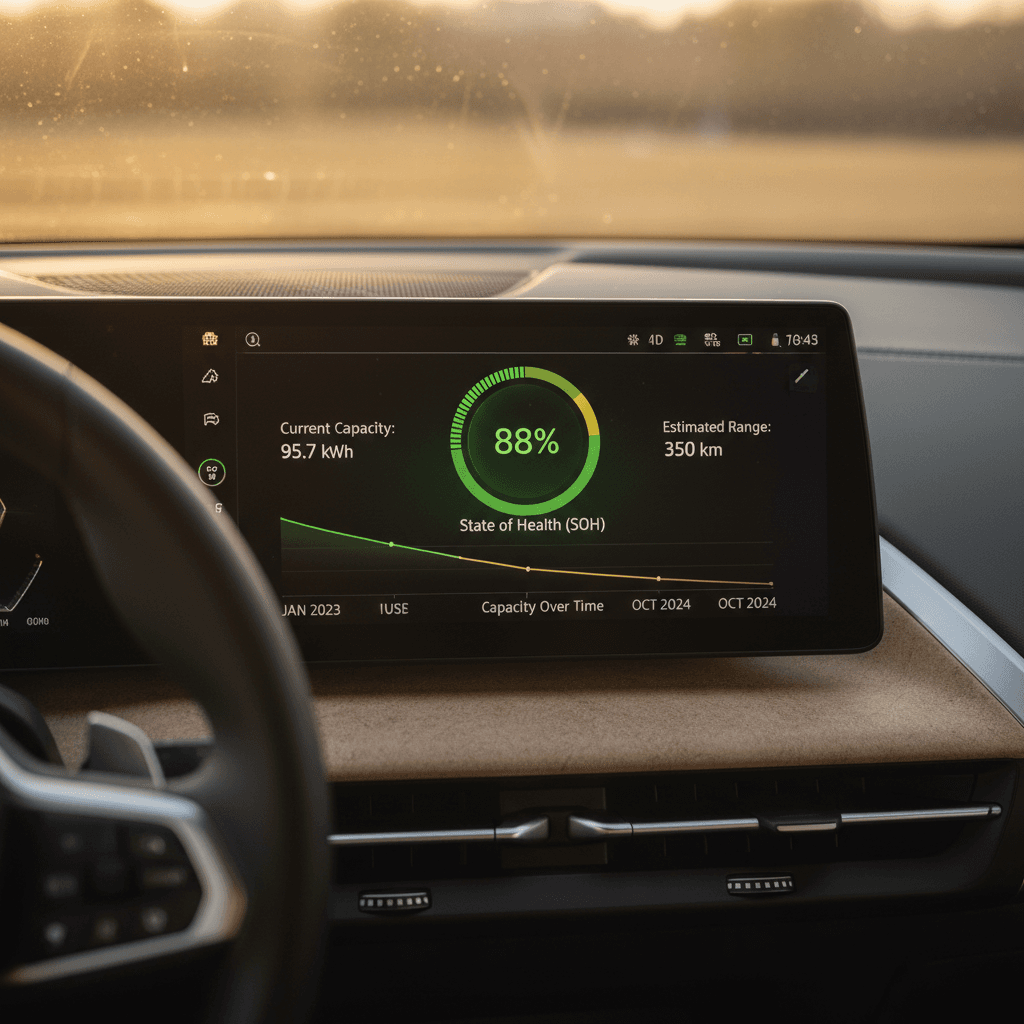
Battery health is usually expressed as State of Health (SOH), a percentage of the original usable capacity the pack still holds. A brand‑new Equinox EV is near 100% SOH. Over time, that number glides down: 95%, 92%, 88%, and so on. There’s no single on‑dash "SOH" readout today, but the car’s battery management system (BMS) is constantly estimating it in the background.
- State of charge (SoC): How full the "tank" is right now (the % you see on the dash).
- State of health (SOH): How big the tank still is compared with when the vehicle was new.
- Usable capacity: How many kilowatt‑hours the BMS actually lets you tap from 0–100% on the gauge.
Think of it like a fuel tank
Step-by-step Chevrolet Equinox EV battery health check
You don’t need a lab or an engineering degree to get a solid sense of your Equinox EV’s battery health. You do need a little time, a consistent route, and a willingness to jot down numbers. Here’s a practical home‑brew process that works whether you already own the car or are test‑driving a used one.
DIY Equinox EV battery health check
1. Start with a known state of charge
Ideally, charge the Equinox EV to <strong>100%</strong> overnight on Level 2 at home or at a reliable public charger. Note the percentage and the estimated range shown on the dash. If you can’t reach 100%, start from at least 80% and write that down.
2. Pick a repeatable route
Choose a familiar loop, say 30–60 miles, mixing city and highway that you can drive at consistent speeds. Avoid huge elevation changes and wild weather swings. The steadier the conditions, the better your comparison over time.
3. Log starting and ending data
Before you leave, record: state of charge (%), estimated range, odometer, and outside temperature. When you return, note the new state of charge, odometer, and how many miles you actually drove.
4. Calculate energy use and implied range
Divide miles driven by % used (converted to decimal). For example, if you used 25% (0.25) to drive 70 miles, that’s 70 ÷ 0.25 = 280 miles of implied range for a full pack under those conditions. Compare that against the EPA rating for your trim.
5. Repeat in different conditions
Do the same test on a similar route in mild weather (around 65–75°F) and again in hotter or colder temps. Batteries are sensitive to climate; repeating the test helps you separate weather effects from true long‑term degradation.
6. Watch for trends, not one‑offs
A single low‑range drive in a headwind doesn’t mean your battery is failing. You’re looking for a pattern: if the car consistently delivers, say, 15–20% less range than when new in mild conditions, you may be seeing early‑stage degradation, or you may simply drive faster than the EPA cycle assumes.
Cold and hot weather will fool you
Understanding real-world range vs. when the Equinox EV was new
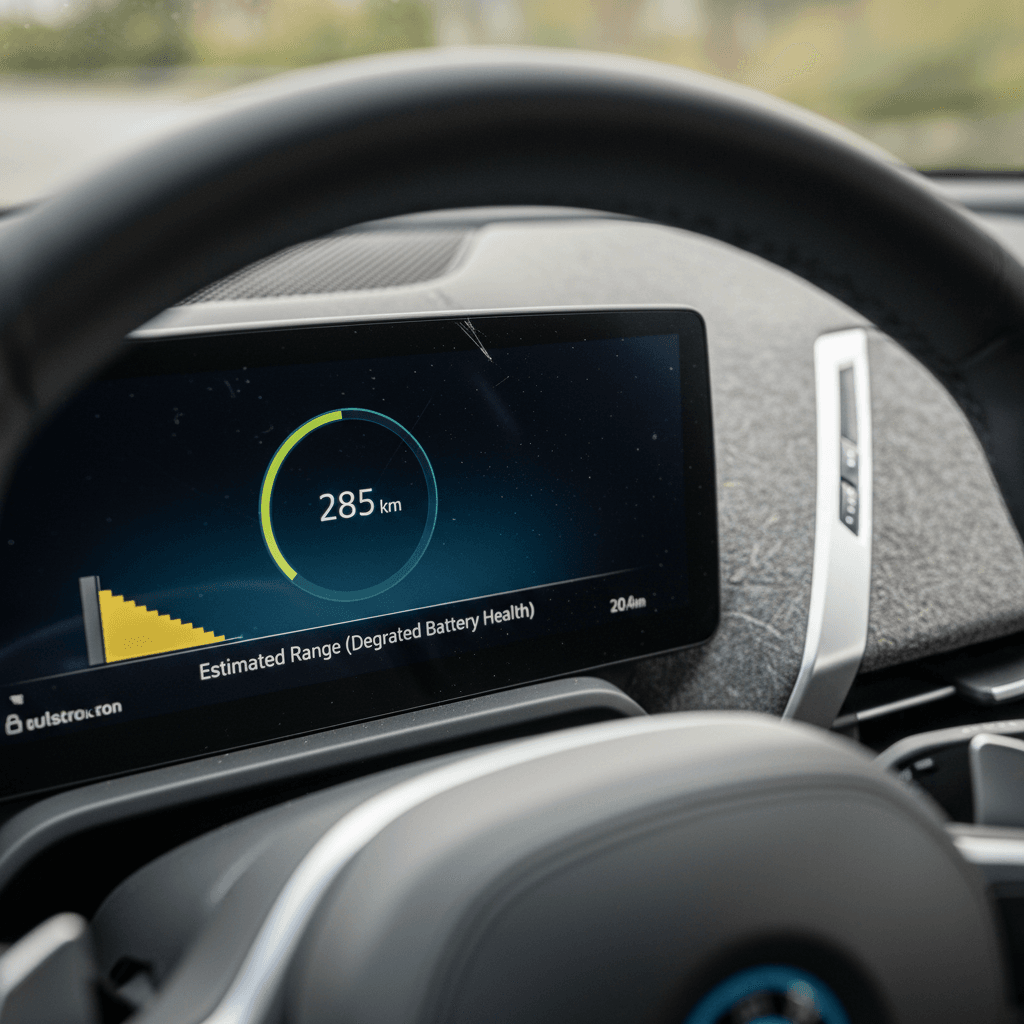
On paper, your Chevrolet Equinox EV may promise 319 miles (FWD) or roughly 285 miles (AWD). On the interstate at 75 mph, with big wheels and mountain winds, that number shrinks. A healthy Equinox EV often delivers 260–300 miles of real‑world highway range when new, depending on configuration. That’s the benchmark you should mentally file away.
New vs. worn battery: what the numbers suggest
These examples assume moderate temperatures and steady driving. Your mileage will vary, but the pattern is what matters.
| Scenario | Implied full‑pack range | What it may mean |
|---|---|---|
| New FWD Equinox EV, 19" wheels | 300–319 miles | Healthy or near‑new pack, normal driving style. |
| Two‑year‑old FWD, mixed driving | 270–290 miles | Mild degradation or simply faster driving than EPA test. |
| Three‑year‑old AWD, big wheels | 240–260 miles | Some combination of aero/rolling losses and 5–10% capacity fade. |
| Any trim consistently under 220 miles in mild weather | Possible issue | Heavy degradation, aggressive driving, or a fault, worth deeper diagnosis. |
Use implied full‑pack range from your own tests to roughly infer battery health.
Use the EPA rating as a ruler, not a verdict
What to look for on a used Chevrolet Equinox EV
Shopping a used Equinox EV is a little different from kicking the tires on a gas Equinox. Paint and upholstery still matter, but the battery and charging history are where the real story lives. Here’s how to read it.
Used Equinox EV battery checklist for shoppers
What to ask, what to test, and what to walk away from
1. Ask for service and charging history
Request maintenance records and, if available, any EV‑specific service notes. Look for frequent DC fast‑charging in hot climates, long periods of storage at 100% state of charge, or any battery‑related warranty work. None of these are automatic deal‑breakers, but they’re important context.
2. Examine charging behavior in person
On a test drive, plug into a known good Level 2 or DC fast charger. Confirm the car ramps to reasonable power (given the charger’s rating) and doesn’t immediately throttle or throw warnings. An Equinox EV that refuses to fast‑charge or charges far below expectations needs a closer inspection.
3. Compare real range to EPA figures
Use the quick‑and‑dirty range test from earlier. Even one solid 30–50‑mile loop in mild weather will tell you whether the car behaves like a lightly used EV or something that’s aged hard. A seller who resists this kind of test is telling you something.
4. Verify remaining battery warranty
Check mileage and in‑service date against the 8‑year/100,000‑mile battery warranty. On a three‑year‑old Equinox EV with 36,000 miles, you still have years of coverage if capacity drops below the manufacturer threshold.
Red flags when buying used
When to worry, and when you can relax
Situations that usually aren’t a problem
- Noticeable range loss during a cold snap that returns in spring.
- Small day‑to‑day swings in estimated range at the same state of charge.
- Occasional DC fast‑charging on road trips, mixed with mostly Level 2 at home.
- Using one‑pedal driving aggressively; strong regen by itself doesn’t hurt the pack.
Situations that deserve attention
- Consistently low range in mild weather versus what similar Equinox EVs report.
- Frequent rapid DC fast‑charging in very hot climates, especially to 100%.
- Warning messages about high‑voltage systems, reduced power, or charging limits.
- A seller unwilling to let you perform a basic range test or independent battery check.
A little degradation is normal
How Recharged checks battery health on used Equinox EVs
If you’d rather not run your own experiments in a parking lot, this is where a structured inspection makes a difference. At Recharged, every used EV we list, including the Chevrolet Equinox EV, goes through a standardized Recharged Score process that focuses heavily on high‑voltage health.
Inside a Recharged Equinox EV battery health report
What we look at so you don’t have to guess
Deep diagnostic scan
We use specialized tools and data from the vehicle to estimate battery state of health, looking for imbalances between modules, unusual voltage behavior under load, and any history of battery‑related fault codes.
Range and charging analysis
We cross‑check the scan with range expectations for that model year, trim, and wheel/tire combo, and verify the vehicle charges and discharges as expected on Level 2 and DC fast chargers where applicable.
Transparent Recharged Score report
Every car sold through Recharged includes a Recharged Score Report with battery health findings, fair‑market pricing, and any relevant warranty information, so you can compare one Equinox EV against another without decoding dealer jargon.
Ready to find your next EV?
Browse VehiclesPair that with EV‑specialist support, financing options, trade‑in or consignment, and nationwide delivery, and you get a used‑Equinox‑EV experience that doesn’t rely on crossed fingers and a quick lap around the block.
Frequently asked questions about Equinox EV battery health
Chevrolet Equinox EV battery health: FAQ
Bottom line on Equinox EV battery health checks
A Chevrolet Equinox EV battery health check isn’t about chasing a perfect number, it’s about knowing what you’re getting into. A few simple range tests, a good look at charging behavior, and an understanding of the 8‑year/100,000‑mile Ultium warranty will tell you whether your Equinox EV is aging gracefully or asking for help.
If you’re shopping used, that same approach, backed by an objective Recharged Score Report, EV‑savvy inspection, and transparent pricing, can make the difference between a crossover you love living with and one you can’t wait to get rid of. Treat the battery like the investment it is, and the Equinox EV can return the favor with years of quiet, electric miles.