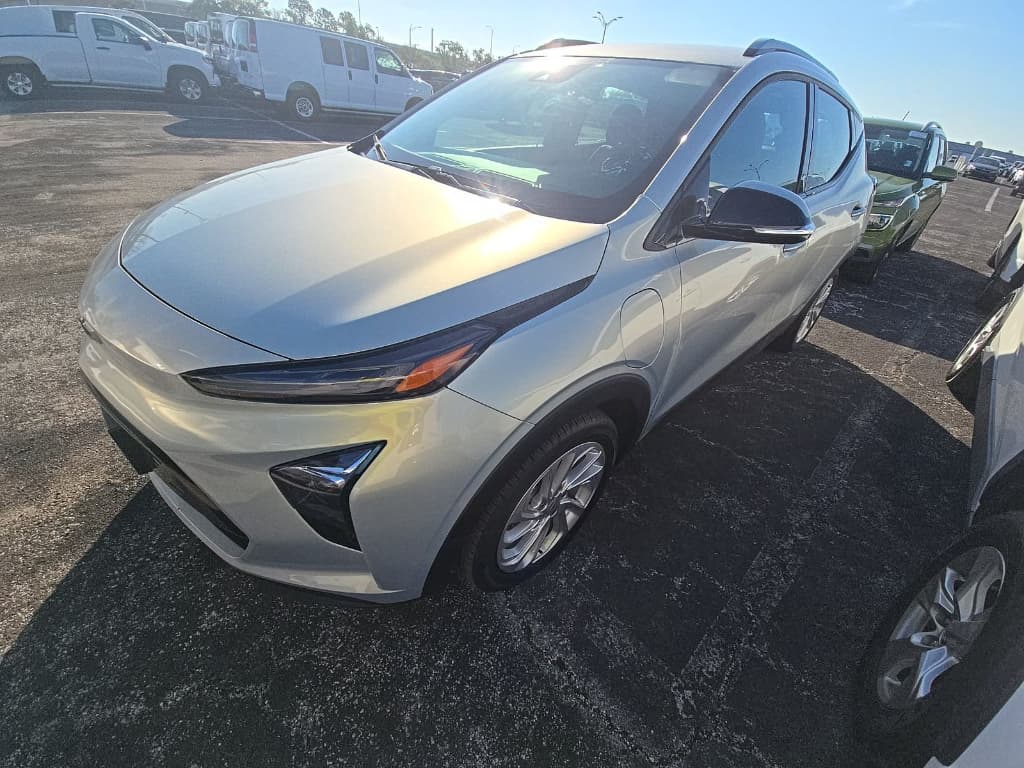
If you’re cross‑shopping a Chevrolet Bolt and a Toyota Prius, you’re already ahead of the game: both are extremely efficient commuter cars. The real question is which one wins on total cost of ownership once you factor in energy, maintenance, insurance, and resale over several years.
EV vs hybrid: both are cheap to run
Why compare the Chevrolet Bolt vs Toyota Prius on total cost?
On paper, the Chevrolet Bolt EV and Toyota Prius hybrid appeal to the same kind of driver: you want something compact, efficient, and inexpensive to keep on the road. But the way they save you money is completely different. The Bolt trades gas for electricity and nearly eliminates routine maintenance. The Prius slashes fuel use but still has an engine, exhaust, and transmission to look after.
When you look at the total cost of ownership (TCO), you’re not just comparing stickers. You’re adding up: - Purchase price and depreciation - Electricity vs gasoline costs - Insurance, taxes, and registration - Maintenance and repairs, including potential battery work If you drive typical U.S. mileage, this adds up to tens of thousands of dollars over five years, so choosing correctly has real stakes.
Quick answer: Which is cheaper to own?
Chevy Bolt vs Toyota Prius: 5‑year cost snapshot (estimate)
Bottom line
Assumptions for this Bolt vs Prius cost comparison
Total cost of ownership can swing a lot based on where you live and how much you drive. To keep this comparison practical and apples‑to‑apples, we’ll work with a simple baseline and then talk about how your situation might be different.
- Time horizon: 5 years of ownership
- Annual mileage: 12,000 miles (roughly the current U.S. average)
- Location: U.S. national averages for fuel and electricity prices
- Gasoline price: $3.50 per gallon
- Electricity price: $0.17 per kWh for home charging (roughly recent U.S. residential averages)
- Vehicles: late‑model Chevrolet Bolt EV or Bolt EUV vs a comparable‑year Toyota Prius hybrid (not the plug‑in Prime), both bought in good condition
- Financing: Ignored in the main comparison, since rates and terms vary widely; you can layer that cost on top.
Your numbers will differ
Energy cost: Bolt electricity vs Prius gasoline
Energy is where both the Chevrolet Bolt and Toyota Prius shine compared with a normal compact, but the Bolt usually wins on pure cost per mile.
Chevrolet Bolt: electricity cost per mile
The Bolt EV and EUV are among the most efficient EVs on sale. Real‑world and EPA data cluster around 27–29 kWh per 100 miles, or about 3.5–3.8 miles per kWh.
- Assume 28 kWh/100 miles (0.28 kWh per mile).
- Electricity at $0.17 per kWh.
Energy cost per mile:
- 0.28 kWh × $0.17 ≈ $0.048 per mile (4.8¢)
- Per year at 12,000 miles: about $575
- Over 5 years: roughly $2,875
Toyota Prius: gasoline cost per mile
The latest Toyota Prius is EPA‑rated around 52–56 mpg combined, depending on trim and drivetrain. We’ll use 54 mpg as a reasonable blended figure.
- Assume 54 mpg combined.
- Gasoline at $3.50 per gallon.
Fuel cost per mile:
- $3.50 ÷ 54 mpg ≈ $0.065 per mile (6.5¢)
- Per year at 12,000 miles: about $780
- Over 5 years: roughly $3,900
Energy cost takeaway
Maintenance and repairs: EV simplicity vs hybrid complexity
The Chevy Bolt’s other big advantage is mechanical simplicity. There’s no engine oil, no timing belt, no exhaust, and no multi‑gear transmission. The Prius is far simpler than a regular gas car, but it still has all of that hardware plus a hybrid battery and electronics.
Typical 5‑year maintenance and repair costs
Real‑world estimates for late‑model vehicles at 12,000 miles/year
Chevrolet Bolt (EV)
- Routine service: cabin air filter, brake fluid, tire rotations, coolant checks.
- Regenerative braking means pads and rotors last a long time.
- Independent 5‑year estimates often land around $4,000 for maintenance + repairs, but many owners report spending far less if nothing major fails.
- Big battery failures are rare within the first 8–10 years and typically covered by warranty for earlier years.
Toyota Prius (hybrid)
- Routine service: oil and filter changes, engine air filter, spark plugs (later), brake fluid, tires, coolant.
- Hybrid system is reliable but still adds complexity.
- Published TCO calculators and ownership data often put 5‑year maintenance + repairs in the $4,500–$5,500 range for a modern Prius driven 12,000 miles/year.
- Out‑of‑warranty hybrid battery replacement can run several thousand dollars, but often happens well past 10 years.
Think in dollars per mile
Insurance, taxes, and fees
Insurance is one of the places where EVs can give back a bit of the fuel and maintenance savings. Repairs on late‑model EVs can run somewhat higher due to parts pricing and repair procedures, and insurers price that in.
Estimated 5‑year insurance and fee costs
Illustrative U.S. averages; your state and driving record will move these numbers up or down.
| Cost category | Chevy Bolt (estimate) | Toyota Prius (estimate) | Notes |
|---|---|---|---|
| Insurance (per year) | $1,800 | $1,600 | EVs often carry a modest premium vs similar hybrids |
| Insurance (5 years) | $9,000 | $8,000 | Bolt about $1,000 more over 5 years |
| Registration & fees (5 years) | $1,500 | $1,500 | Assumes no special EV surcharges or credits beyond standard fees |
| Total insurance + fees (5 years) | ≈$10,500 | ≈$9,500 | Used for the total‑cost roll‑up later |
Insurance ranges assume clean records and mainstream coverage on a late‑model vehicle.
Watch for EV road‑use or registration surcharges
Depreciation and resale value
Depreciation, how much value your car loses while you own it, is the single biggest piece of total cost for most buyers. Here, the story flips a bit: Toyota Prius values tend to be extremely stable, while the Bolt’s pricing has been more volatile due to model‑year changes, incentives, and GM’s shifting EV strategy.
Chevrolet Bolt depreciation
- New Bolts historically dropped quickly in the first 3–4 years, in part due to aggressive federal and state incentives on new EVs.
- Because of that, used Bolts are often bargains; a lot of depreciation has already happened before you ever buy in.
- From a total‑cost standpoint, a shopper buying a 2–4‑year‑old Bolt today is usually in a very strong position.
For this article’s 5‑year horizon starting from late‑model used examples, we’ll assume about $11,000–$12,000 in depreciation on an average‑priced used Bolt.
Toyota Prius depreciation
- The Prius has some of the best resale value in the compact segment thanks to its reputation for reliability and low running costs.
- Used prices tend to be firmer, especially in markets where fuel prices are high.
- That said, Prius buyers may pay more up front for the same model‑year and mileage than they would for a Bolt.
For this comparison, we’ll assume about $10,000–$11,000 in depreciation over five years on a comparably‑priced used Prius.
Depreciation: the quiet swing factor
Five‑year total cost: Chevrolet Bolt vs Toyota Prius
Now let’s roll all of these pieces together into a simplified 5‑year total cost comparison. These are not precise predictions for your garage; they’re structured estimates to show how the main cost buckets stack up.
Estimated 5‑year total cost of ownership (12,000 miles/year)
Illustrative example using late‑model used pricing and national average energy costs.
| Cost component (5 years) | Chevy Bolt (estimate) | Toyota Prius (estimate) |
|---|---|---|
| Depreciation | $11,500 | $10,500 |
| Energy (fuel/electricity) | $2,875 | $3,900 |
| Maintenance + repairs | $4,000 | $5,000 |
| Insurance | $9,000 | $8,000 |
| Taxes & registration | $1,500 | $1,500 |
| Estimated 5‑year total | ≈$28,900 | ≈$28,900 |
| Per‑mile cost (60,000 mi) | ≈$0.48/mi | ≈$0.48/mi |
All figures rounded; financing costs not included.
Why the totals look similar
What tends to tilt the cost in favor of each car?
Bolt wins when…
You can charge at home most of the time, your local gas prices are at or above the national average, and you can find a well‑priced used Bolt (helped by earlier incentives and depreciation). Maintenance stays minimal, and you avoid expensive DC fast charging for daily use.
Prius wins when…
You can’t install home charging, live in an apartment with limited access to Level 2 stations, or your local electricity is unusually expensive relative to gas. Insurance and registration may also be slightly cheaper, and you avoid EV‑specific registration surcharges in some states.
Other factors: Range, charging, and practicality
Money isn’t the only part of this decision. How the car fits your day‑to‑day life matters just as much as a few cents per mile on a spreadsheet.
Living with a Bolt vs living with a Prius
Key non‑financial differences that still affect ownership satisfaction
Charging vs fueling
Range and trips
Emissions and noise
Think about where you actually park

How this changes for used Bolt and used Prius buyers
If you’re shopping the used market, as many Recharged customers are, the picture gets even more interesting. You’re no longer locked into MSRP. Instead, you’re comparing real used prices, real battery health, and real‑world condition across specific cars.
- Used Bolts often look cheaper up front. Thanks to earlier price cuts and incentives, a 2–4‑year‑old Bolt with modest miles can be significantly cheaper than a same‑age Prius hybrid.
- Battery health matters. A well‑cared‑for Bolt with documented battery health can be a screaming deal; one with significant degradation or recall history that wasn’t handled correctly can be much less attractive.
- Older Prius hybrids introduce hybrid‑battery risk. A Prius with 150,000+ miles may still run beautifully, but the odds of a multi‑thousand‑dollar hybrid‑battery or engine‑related repair in your ownership window are higher than on a newer car.
Don’t guess on battery condition
How Recharged can help you run the numbers
If you like the idea of “Bolt vs Prius total cost,” but don’t want to live in spreadsheets, this is exactly the kind of problem Recharged is built to simplify.
Make the cost picture clearer with Recharged
Tools and services that take the guesswork out of used EV shopping
Recharged Score battery health report
Transparent pricing & financing
Nationwide delivery & EV experts
Ready to find your next EV?
Browse VehiclesFAQ: Chevrolet Bolt vs Toyota Prius total cost
Frequently asked questions about Bolt vs Prius total cost
When you zoom out, the Chevrolet Bolt and Toyota Prius land much closer in total cost of ownership than their different powertrains might suggest. The Bolt usually wins on energy and maintenance; the Prius fights back with rock‑solid resale, lower insurance in many markets, and the simplicity of gasoline infrastructure. Your real‑world winner will depend on where you live, how you drive, and whether you can plug in where you park. If you’re leaning toward a Bolt or another used EV, using a marketplace like Recharged, with verified battery health data, transparent pricing, and EV‑savvy support, can turn that high‑level math into a confident, concrete decision.