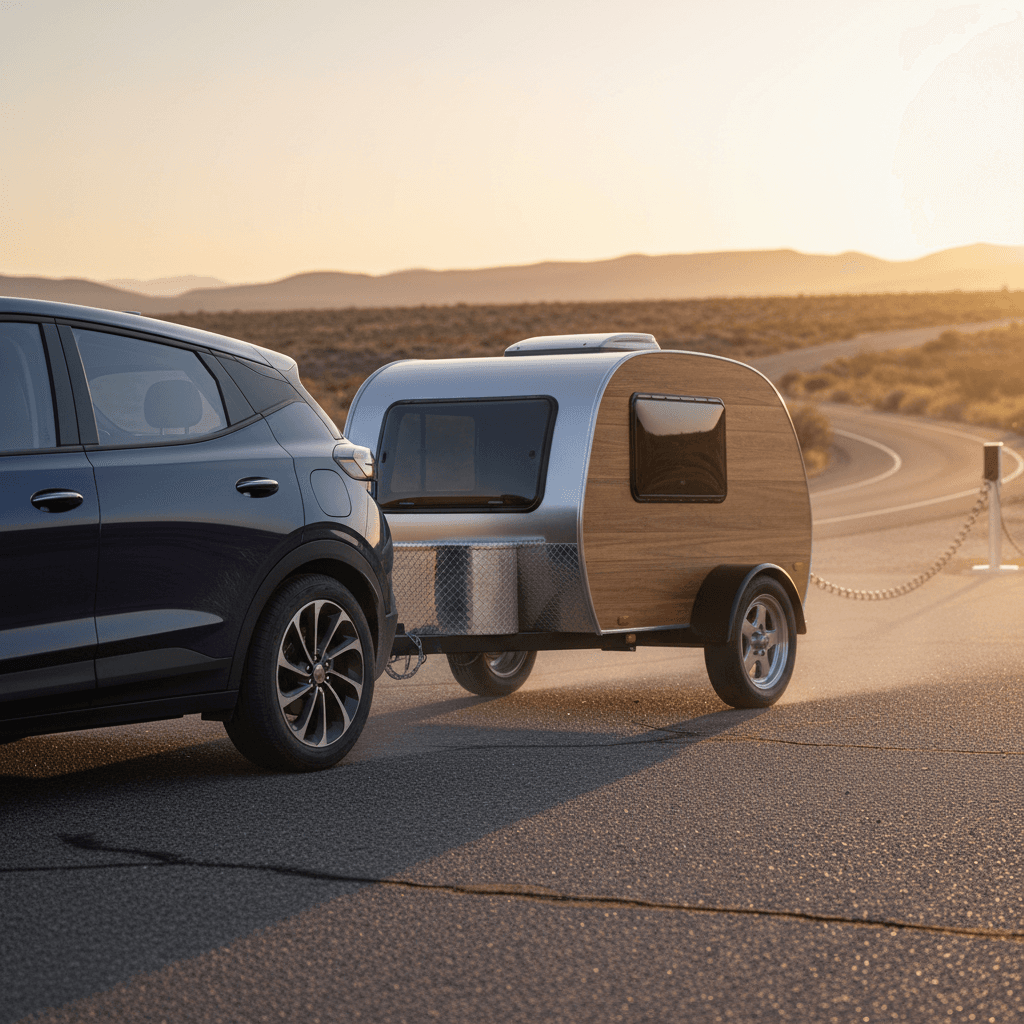
If you own (or are shopping for) a Chevrolet Bolt EV or Bolt EUV, you’ve probably wondered: can it tow a small trailer, and how badly will towing hurt range? Officially, the Bolt was never marketed as a tow vehicle, but in the real world plenty of owners are pulling small campers, cargo trailers, and bike racks with extra weight. This guide breaks down Chevrolet Bolt EV towing capacity and range loss so you can decide what’s realistic, and what’s not.
Key Takeaway
Can the Chevy Bolt EV Tow at All?
Here’s the first, slightly unsatisfying truth: in the U.S. market, Chevrolet does not publish an official tow rating for the Bolt EV or Bolt EUV. The owner’s manual focuses on payload (people and cargo inside the vehicle) and explicitly says you should not use the vehicle for trailer towing in normal consumer use. That’s mostly about liability and how the vehicle was certified, not because the car can’t physically move a trailer.
In practice, the Bolt’s electric motor has plenty of torque at low speeds, and the structure is similar to other compact crossovers that are tow‑rated in Europe. Aftermarket hitch makers have leaned into that reality, selling hitches that bolt to factory mounting points and publish their own tongue‑weight and towing limits. Owners who respect those limits, and drive within common‑sense boundaries, regularly use Bolts for small trailers and hitch‑mounted cargo.
Warranty Reality Check
Tow Ratings for Bolt EV vs. Bolt EUV
Even without a factory tow rating, you still need hard numbers to work with. The most concrete guidance comes from aftermarket hitch manufacturers, who test their hardware and publish conservative limits. For the 2022–2024 Bolt EUV, for example, popular hitches like the EcoHitch list up to 2,000 pounds of trailer weight and around 200–300 pounds of tongue weight, depending on configuration and rating class.
Practical Tow Guidelines for Bolt EV and Bolt EUV
These are conservative, real-world guidelines based on hitch maker ratings and owner experience, not official GM specs.
| Model | Official U.S. Tow Rating | Typical Aftermarket Hitch Rating | Practical Trailer Types |
|---|---|---|---|
| Bolt EV (2017–2023) | None published | 1,500–2,000 lb max, ~200 lb tongue (varies by hitch) | Small utility trailer, bike rack with e‑bikes, lightweight teardrop or cargo box |
| Bolt EUV (2022–2024) | None published | Up to 2,000 lb max, ~200–300 lb tongue (EcoHitch and similar) | Small camper, single‑axle cargo, motorcycles or ATVs on a light trailer |
Use these as a starting point; always confirm your specific hitch’s ratings and stay within your Bolt’s payload limits.
How to Set Your Own Limit
How Much Range Do You Lose Towing a Trailer?
Once you’ve decided what you’re comfortable towing, the next big question is range loss. With any EV, not just the Bolt, towing range is mostly about aerodynamics and speed, not just trailer weight. A low, heavy trailer can be relatively efficient; a tall, boxy camper is like dragging a garden shed through the air.
Typical EV Range Loss While Towing
Those percentages line up with what we see across EVs in Recharged’s own towing analysis and broader road‑test data: most drivers see a 40–60% range hit when towing something close to their tow limit at normal U.S. highway speeds. For a relatively small‑battery EV like the Bolt (about 65 kWh usable and ~250 miles EPA range for later model years), that matters more than it does in a 300‑mile crossover.
Highway Range Solo
On a recent‑generation Bolt EV or EUV, a realistic highway range without a trailer is around 200–230 miles on a full charge if you cruise at 65–70 mph in mild weather.
That’s already less than the 259‑mile EPA rating, because the test mix is gentler than a real‑world highway slog.
Highway Range With Trailer
Now apply a typical towing penalty:
- 30% loss (small, low trailer): 200 miles × 0.70 ≈ 140 miles.
- 50% loss (boxier camper): 200 miles × 0.50 ≈ 100 miles.
To protect the battery and your sanity, you usually don’t run to 0%. If you aim to keep 10–20% in reserve, your practical towing legs may be closer to 70–110 miles between fast charges.
A Simple Rule of Thumb
Real-World Bolt EUV Towing Examples
Owner reports and long‑distance tests with the Bolt EUV paint a consistent picture. Drivers who tow smart, light trailers, careful speeds, and well‑planned charging, find that the little Chevy can handle real trips, just with shorter legs and more planning than a truck‑based tow rig.
- A Bolt EUV towing a lightweight camper on a multi‑thousand‑mile trip typically saw 30–50% range loss, depending on speed, elevation, and wind.
- Owners pulling small utility trailers with kayaks or bikes often report surprisingly modest penalties, sometimes 10–25% loss at slower speeds on back roads.
- Once speeds creep into the 70s or you’re fighting headwinds, range can drop sharply, sometimes approaching that 50–60% hit even with a compact trailer.
EV vs. Gas: The Range Penalty Is Similar
What Kind of Trailers Make Sense for a Bolt?
Best and Worst Trailer Matches for a Bolt
Pick for aerodynamics first, weight second.
Best: Low Utility Trailers
Small single‑axle utility trailers with low sides are ideal:
- Carry lumber, landscaping gear, or camping gear.
- Minimal frontal area, modest range penalty.
- Easy to keep under 1,000–1,500 lb loaded.
Good: Tiny Teardrops
Compact teardrop campers that barely stick above the roofline can work:
- Smoother shape, less drag than a boxy RV.
- Plan for 40–50% range loss at highway speeds.
- Look for models under ~1,500 lb when loaded.
Avoid: Tall Box Trailers
Tall enclosed cargo trailers and big travel trailers are a poor match:
- Huge aerodynamic penalty, think mobile billboard.
- Range can drop 60–70% or more.
- Likely to exceed safe tongue weight and payload.
Don’t Let the Hitch Rating Fool You
Planning Range and Charging Stops in a Bolt
Towing any distance in a Bolt is really a charging and routing problem. You’re trying to line up shorter, more frequent fast‑charging stops with a car that isn’t optimized for trailer pull‑through sites. A bit of planning up front makes the difference between a fun, slow‑travel road trip and a stressful slog.
Step-by-Step: How to Plan a Bolt Towing Trip
1. Start From Your Real Solo Highway Range
Use what you actually see at 65–70 mph today, not the EPA number. If your real solo range is 210 miles, that’s your high‑water mark.
2. Apply a Conservative Towing Factor
For a small, low trailer, multiply your solo range by 0.6–0.7. For a taller camper, use 0.4–0.5. This gives you a working towing range on a full charge.
3. Build in a 15–20% Energy Reserve
Plan legs so you arrive at chargers with at least 10–20% battery remaining. That buffer protects the pack and covers headwinds, detours, and cold temps.
4. Map Chargers With Trailer Access
Use PlugShare, Chargeway, or your favorite app to find <strong>pull‑through‑friendly sites</strong>. Many DC fast chargers are in tight parking lots that require you to unhook or back in awkwardly.
5. Target 10–80% Fast-Charge Windows
The Bolt charges fastest from roughly 10–60%, then tapers. Stopping more often to add 30–40% can be quicker than blasting from 5% to 100% at each station.
6. Drive a Trailer-Friendly Pace
Speeds over 65 mph and aggressive passing are range killers. In a Bolt, towing is a 55–65 mph game; slowing down a bit can save an entire extra stop.
Hitches, Warranty, and Safety Considerations
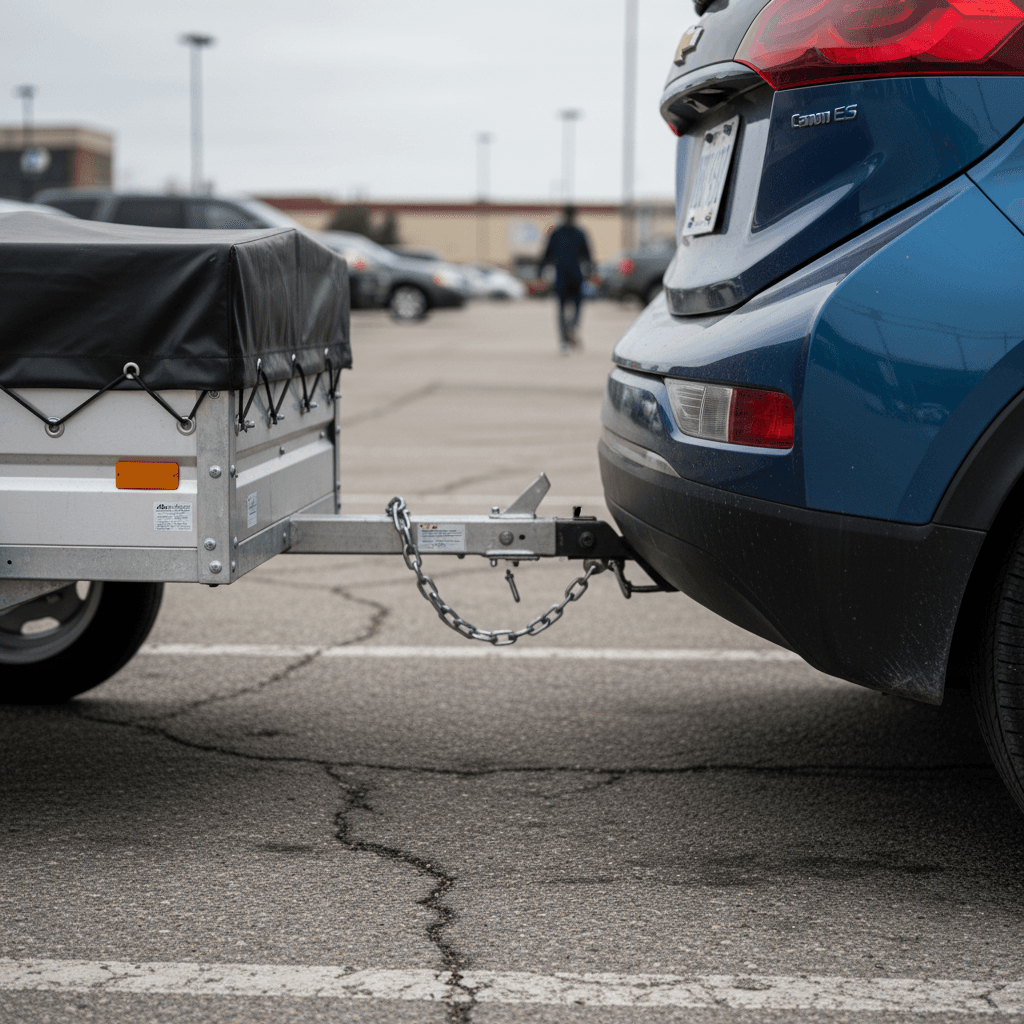
To tow with a Bolt, you’ll need a properly engineered hitch installed to the manufacturer’s specs. Reputable options are designed to bolt into existing structural points on the rear of the car and include ratings for both gross trailer weight and tongue weight. Many owners also add a 7‑pin or 4‑pin wiring harness for trailer lights and, on some setups, electric brake controllers.
- Have the hitch installed by a shop that understands EVs and doesn’t drill or weld into high‑voltage components or crash structures.
- Make sure the sum of passengers, cargo, and tongue weight stays under the Bolt’s payload rating on the door jamb sticker.
- If your trailer weighs more than about 1,500 pounds, strongly consider trailer brakes; the Bolt’s friction brakes and regen weren’t engineered for repeated heavy downhill stops with a big trailer.
- Check torque on hitch bolts periodically, especially after the first 500–1,000 miles of towing.
Payload Math Matters
Protecting Battery Health While Towing
Towing won’t instantly “kill” a Bolt’s battery, but it does ask more from the pack and thermal system. You’re pulling higher power for longer stretches than normal, which generates more heat and slightly more wear over time. The good news is that if you tow occasionally and charge thoughtfully, you can keep battery health in a comfortable zone.
Battery-Friendly Towing Habits
Small changes go a long way over years of ownership.
Watch Temperature and Grade
Long climbs in hot weather at high speeds are the hardest case:
- Slow down a bit on steeper grades.
- Take breaks at scenic pullouts to let temps normalize.
- If the car warns of reduced power, heed it.
Avoid Always Charging to 100%
For day‑to‑day towing, try to:
- Live mostly in the 20–80% window on DC fast charge days.
- Use 100% charges mainly when you truly need the full range.
- Let the car cool for a bit before fast charging after a hard towing pull, when possible.
How Recharged Helps You Judge Battery Health
Bolt EV vs. Other EVs for Towing Duty
Compared with bigger EV crossovers and trucks, the Bolt simply has less battery and less mass to work with. That doesn’t make it a bad tow vehicle; it just means it’s best suited to lighter duty.
Chevy Bolt EV / EUV
- ~65 kWh battery.
- No official tow rating in U.S.
- Best with small trailers and short hops.
- Frequent charging stops on long trips with trailer.
EV Crossovers (Ioniq 5, Model Y, etc.)
- 70–80+ kWh batteries.
- 2,000–3,500 lb tow ratings.
- Still lose ~40–60% range towing.
- Better suited for medium campers.
Electric Trucks (F‑150 Lightning, Rivian)
- Big packs (100+ kWh).
- 7,000–11,000 lb tow ratings.
- Massive range hit with big RVs.
- Best if towing is a core part of your life.
Think of the Bolt as a Swiss Army Knife, Not a Heavy-Duty Truck
Is a Used Bolt EV a Good Idea if You Plan to Tow?
If you’re mainly looking for an affordable EV and like the idea of towing a light trailer a few times a year, a used Bolt EV or EUV can be a great value. Prices are typically lower than comparable crossovers, and you get a compact package that’s easy to park but still practical with a hitch.
Where you need to be careful is matching your expectations to reality. If you’re hoping to tow a full‑height camper across the Rockies every summer, the Bolt will feel limiting. But if your trailer looks more like a small cargo box, teardrop, or utility trailer, the Bolt’s limitations are manageable with some planning.
How Recharged Fits In
Ready to find your next EV?
Browse VehiclesChevy Bolt Towing FAQ
Frequently Asked Questions About Bolt EV Towing
Bottom Line on Bolt EV Towing
Towing with a Chevrolet Bolt EV or EUV sits in a gray area: GM doesn’t rate it for towing, but owners and hitch makers have proven that, within conservative limits, the car can do meaningful work. If you keep trailer weights low, favor aerodynamic shapes, drive at modest speeds, and plan for a 30–50% range penalty, the Bolt can double as an occasional tow rig for bikes, gear, or a tiny camper.
The real key is honesty about your needs. If towing is central to your lifestyle, shop for a bigger EV with a factory tow rating. If it’s an occasional accessory to an efficient daily driver, a used Bolt, especially one with a strong Recharged Score, can be a smart, budget‑friendly solution. Either way, knowing how towing affects range and how to stay within safe limits will make every trip smoother, safer, and more enjoyable.