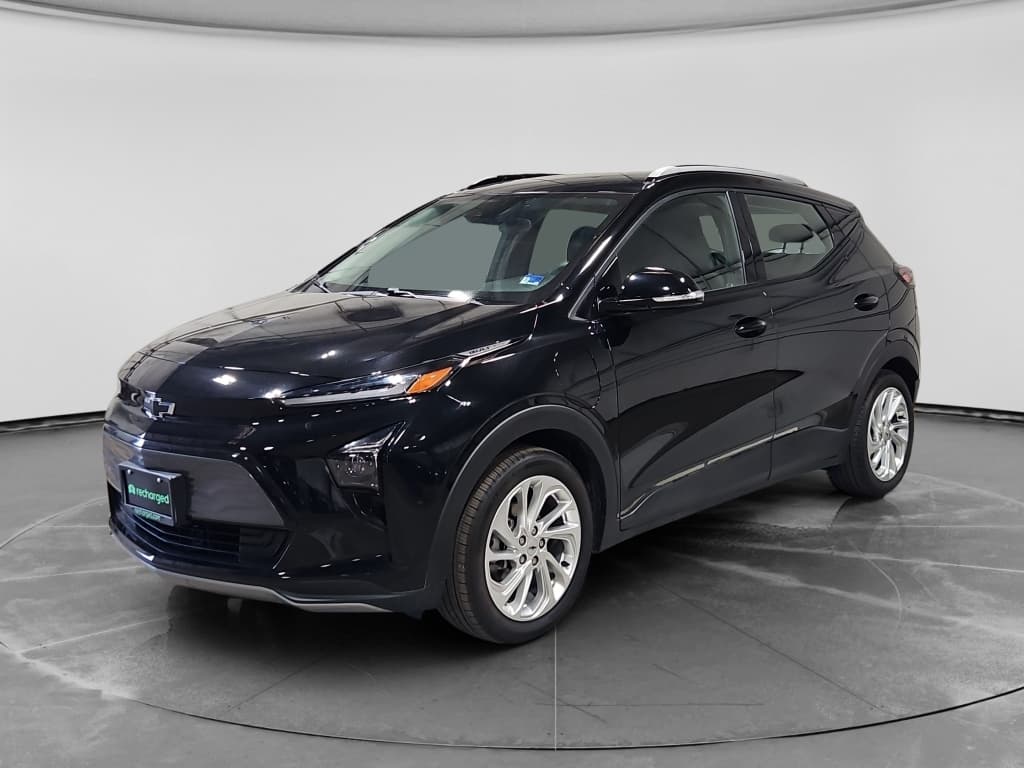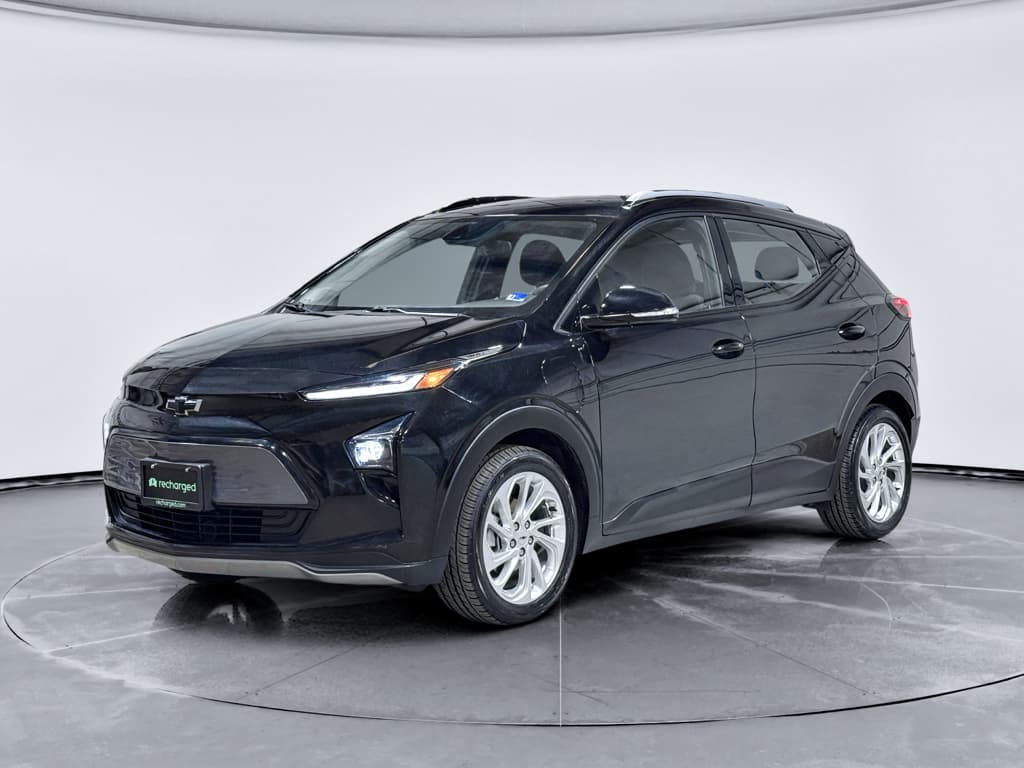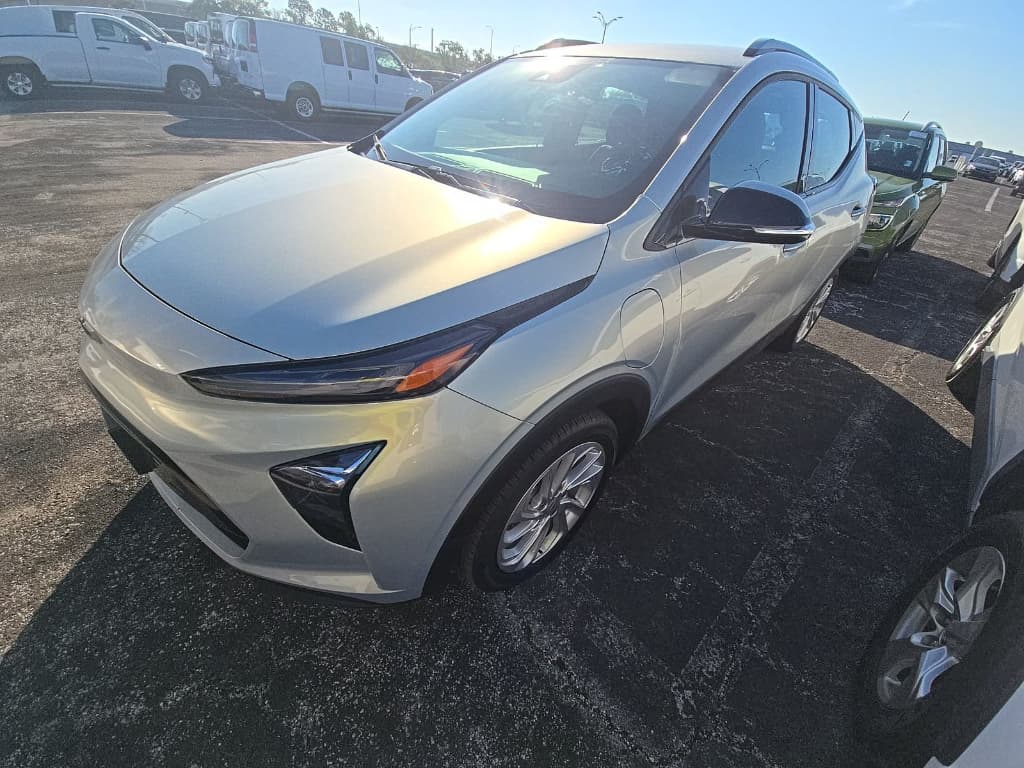
If you’re considering a used Chevrolet Bolt EV or Bolt EUV, you’ve probably heard two things: the range is solid, but charging can be slower than newer EVs. This Chevrolet Bolt EV charging speed guide breaks down exactly how fast the car charges on Level 1, Level 2, and DC fast chargers, how long common charge sessions take, and what that means for your daily driving and road trips.
Key takeaway
Chevrolet Bolt EV charging speed overview
Chevy Bolt EV & EUV charging at a glance
On paper, the Bolt’s charging numbers look modest next to newer 150–250 kW EVs. In practice, its combination of a relatively efficient powertrain and a 65–66 kWh battery makes it easy to live with if you can charge at home or work. The real trade‑off comes on road trips, where the 55 kW peak and conservative charging curve translate into longer stops than you’d see in faster‑charging rivals.
Bolt EV vs. Bolt EUV: charging hardware by model year
Bolt EV & EUV charging hardware by generation
Use this to understand what your specific Chevy Bolt can do on Level 2 and DC fast charging.
| Model / years | Battery (usable) | Max Level 2 AC | DC fast hardware | Max DC fast |
|---|---|---|---|---|
| Bolt EV 2017–2019 | ~60 kWh | Up to ~7.7 kW (32A @ 240V) | Optional CCS1 | ≈ 50–55 kW |
| Bolt EV 2020–2021 | ~66 kWh | Up to ~7.7 kW | Optional CCS1 | ≈ 50–55 kW |
| Bolt EV 2022–2023 (facelift) | 65 kWh | Up to ~11 kW (48A @ 240V) | Standard CCS1 | ≈ 55 kW |
| Bolt EUV 2022–2023 | 65 kWh | Up to ~11 kW | Standard CCS1 | ≈ 55 kW |
All Bolt EV and EUV models that have DC fast charging use the CCS1 connector and top out around 50–55 kW peak on DC fast charge.
Check for DC fast‑charging option on early cars
The 2022–2023 Bolt EV and Bolt EUV got standard DC fast charging and a stronger onboard AC charger, which is why you’ll see higher quoted Level 2 speeds for those models. But regardless of year, the top‑end DC fast rate remains roughly the same, Bolt owners live in a 55 kW world.
Level 1 charging: slow but workable for light drivers
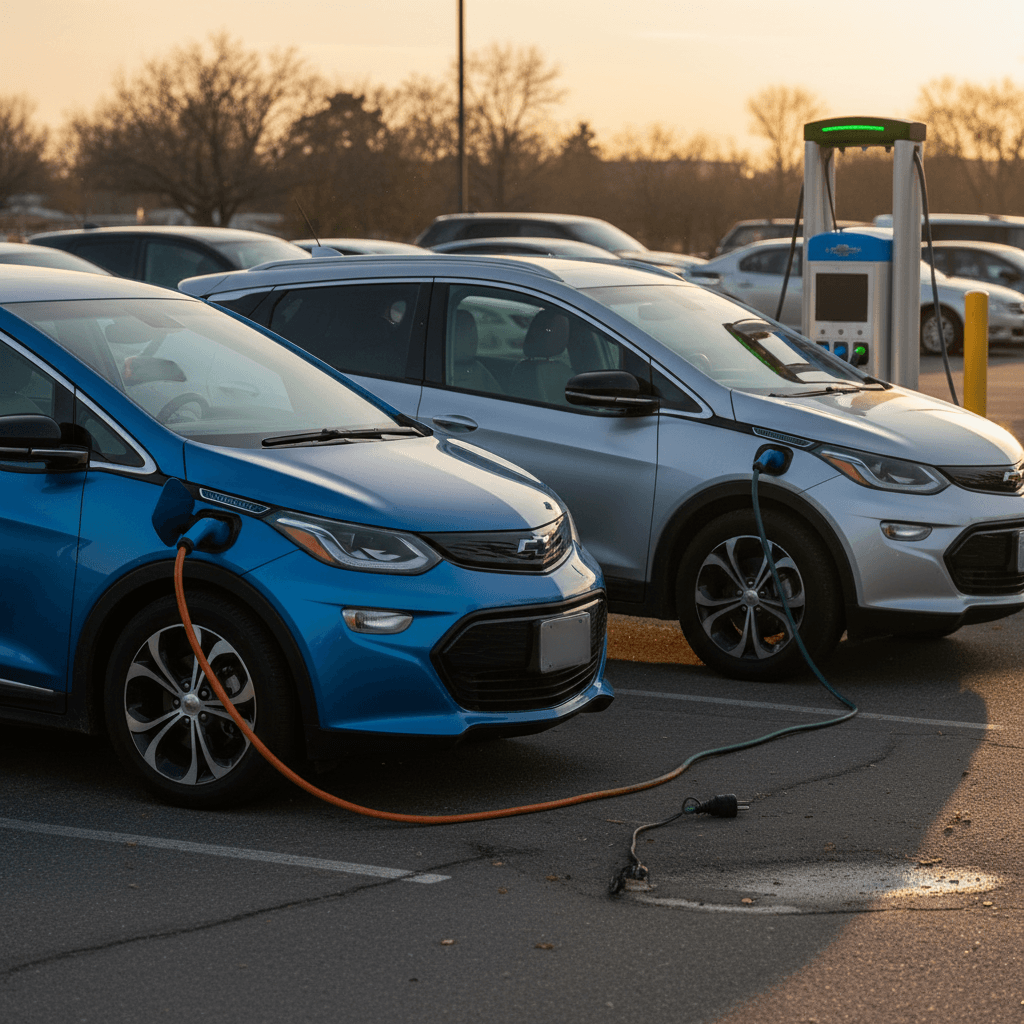
Level 1 uses a standard 120‑volt household outlet and the portable cord that comes with the car (or came with it when new). This is the slowest way to charge a Chevy Bolt EV, but for very short commutes it can be enough.
- Power: typically ~1.2 kW (120V, 12A) on a standard circuit
- Typical rate: about 3–4 miles of range per hour of charging
- Full charge from empty: roughly 50–60 hours, depending on model year and conditions
- Best use case: apartment or street parkers topping up 20–40 miles overnight
When Level 1 is enough
Level 2 charging speeds: home and workplace
Level 2 charging uses 240 volts, similar to an electric dryer or oven circuit, and is where most Bolt owners do the bulk of their charging. This can be a hard‑wired wall unit or a plug‑in portable EVSE on a 240‑volt outlet.
Chevy Bolt Level 2 charging: what to expect
Charging times assume starting near empty and charging to about 100% on a healthy battery.
Older Bolt EV (2017–2021)
Onboard charger: ~7.7 kW max
Common home setup: 32A @ 240V
- 0–100%: ~9–10 hours
- 30–80%: ~5–6 hours
- Typical overnight top‑up: easily done
2022–2023 Bolt EV
Onboard charger: up to ~11 kW
Common home setup: 40A–48A @ 240V
- 0–100%: ~7–8 hours on a 48A charger
- 30–80%: ~4–5 hours
- Heavy commuters benefit most
2022–2023 Bolt EUV
Onboard charger: up to ~11 kW
Same hardware as refreshed Bolt EV
- Real‑world times similar to 2022–2023 Bolt EV
- Overnight charges are rarely an issue
Charger rating vs. car rating
For most used‑Bolt shoppers in the U.S., the sweet spot for home charging is a 32A–40A Level 2 circuit, which comfortably refills the battery overnight and keeps installation costs reasonable. If you expect to consistently arrive home nearly empty and then turn around for long drives, springing for a 48A setup on a 2022–2023 car can trim an hour or two off charge times.
DC fast charging: what 55 kW really looks like
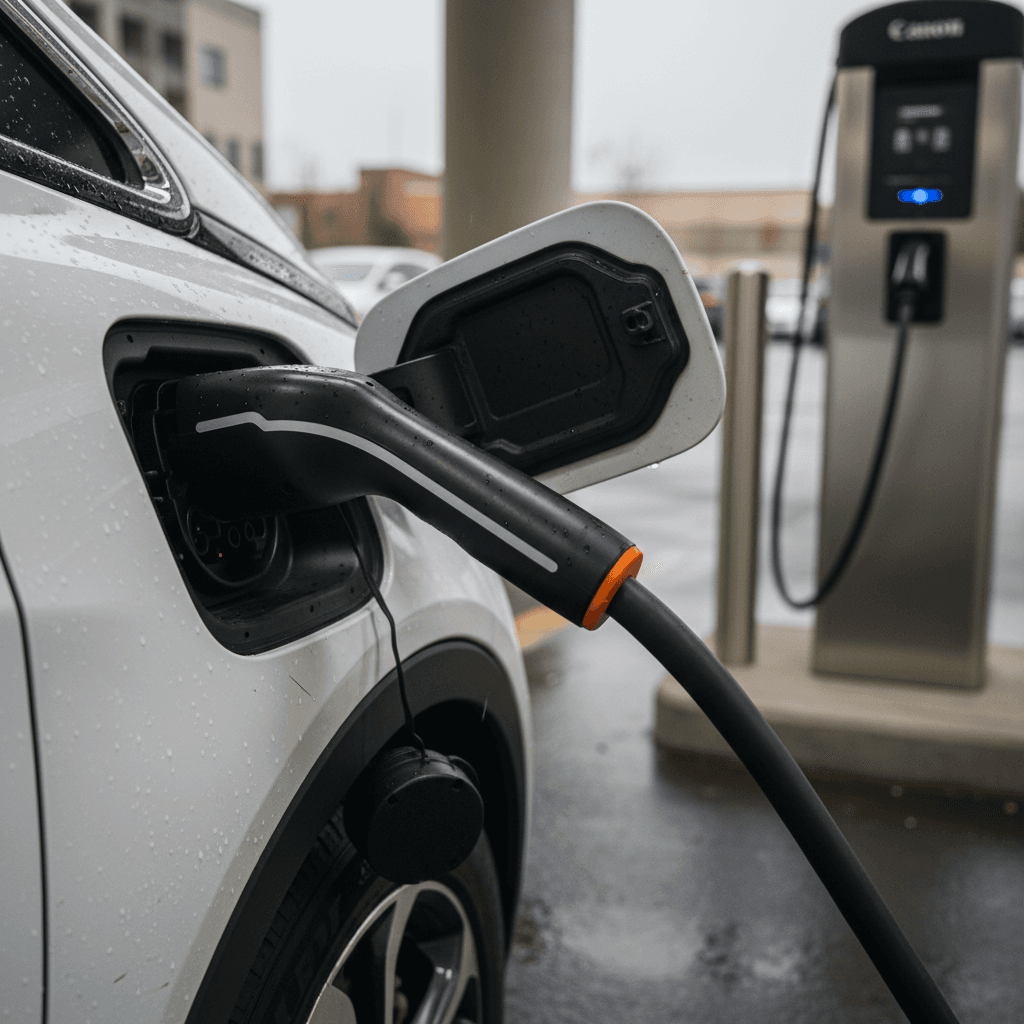
All Chevy Bolt EV and EUV models with the DC fast‑charge port use the CCS1 standard and top out around 50–55 kW peak on a capable DC fast charger. That’s modest by 2026 standards, but it’s still much quicker than Level 2 when you’re on the road.
Typical Bolt DC fast‑charging sessions
Approximate times and range added under good conditions on a healthy battery, starting with a warm battery and a strong 50–150 kW charger.
| State of charge | Time on DC fast | Energy added | Approx. range added* |
|---|---|---|---|
| 10% → 60% | ≈ 35–40 min | ~30 kWh | ≈ 110–120 miles |
| 10% → 80% | ≈ 55–65 min | ~40 kWh | ≈ 150–170 miles |
| 20% → 80% | ≈ 45–55 min | ~35 kWh | ≈ 130–150 miles |
| 40% → 80% | ≈ 30–40 min | ~25 kWh | ≈ 90–110 miles |
These are ballpark figures. Real‑world times vary with temperature, charger quality, and how busy the station is.
The famous “100 miles in 30 minutes” claim
Where the Bolt falls behind newer EVs is not the absolute peak, 55 kW is usable, but how long it can hold that speed. Many drivers report seeing 30–40 kW for a large portion of a session, especially above 50% state of charge, and a noticeable slowdown once you cross roughly 70–80%.
Understanding the Chevy Bolt charging curve
Like all EVs, the Bolt doesn’t charge at one constant power level. Instead, it follows a “charging curve” that depends on state of charge (SoC), temperature, and battery management decisions. GM tuned the Bolt’s curve for battery longevity and safety, which is good for long‑term durability but means slower DC fast charging compared with some rivals.
Typical DC charging curve behavior
- 0–20%: Power ramps up quickly as the car and charger handshake.
- 20–50%: Often the fastest segment, with the Bolt peaking near 50–55 kW on a good station.
- 50–70%: Power usually steps down into the 30–40 kW range.
- 70–80%: Further taper; speeds in the 20–30 kW range are common.
- 80–100%: Slowest phase; the car protects the battery by sharply reducing power.
What this means for trip planning
- Stopping more often and charging only from 20–70% is usually faster across a whole trip than one long 10–100% session.
- There’s little benefit to waiting past ~80% on DC unless you need every mile.
- Because the Bolt is efficient, even a mid‑speed DC session can add 90–120 miles relatively quickly.
- On cold days, expect lower initial power until the pack warms up, preconditioning and driving before plugging in help.
Cold battery = slow DC fast charging
How long it takes to charge in real life
Specs are one thing. What most shoppers really care about is, “Will this work for my life?” Here are some realistic scenarios for a healthy Bolt EV or EUV with convenient charging access.
Real‑world Chevy Bolt charging scenarios
All times assume moderate temperatures and a battery that isn’t extremely degraded.
Daily commuter (40–50 miles/day)
Home Level 2 (32A):
- Arrive home at ~60% SoC.
- Plug in overnight for 4–6 hours.
- Wake up at ~90–100% with no drama.
Even a modest Level 2 setup is more than enough.
Weekend road trip (220 miles each way)
Plan on one DC fast stop each way:
- Start near 100% at home.
- Stop around 15–20% SoC.
- Charge to ~75–80% in ~50–60 minutes.
You’ll spend a bit longer at stops than in faster‑charging EVs, but it’s workable if you build it into meal or rest breaks.
Apartment dweller with mixed charging
Mix of Level 1, workplace Level 2, and occasional DC:
- Overnight Level 1 adds 20–40 miles.
- One or two workplace Level 2 sessions top you back to 80–90%.
- Occasional DC fast stops cover heavy‑use days.
The key is predictable access to at least some Level 2 charging each week.
Bolt EV vs. newer fast‑charging rivals
How to get the fastest charging speeds from your Bolt
Optimize your Chevy Bolt charging speeds
1. Right‑size your home charging
If you own or control your parking, prioritize installing at least a <strong>32A Level 2 circuit</strong>. For 2022–2023 models, a 40A–48A charger lets the stronger onboard charger shine.
2. Keep your battery in the “happy” SoC window
For DC fast charging on road trips, aim to plug in between <strong>10–30%</strong> and unplug around <strong>70–80%</strong>. That’s where the Bolt spends the most time at useful power levels.
3. Warm the pack before fast charging
In cold weather, drive for 15–30 minutes before you fast charge, and use any available preconditioning features. A warmer pack can dramatically improve DC fast‑charge speeds.
4. Choose strong charging stations
When possible, pick sites with <strong>50 kW or higher</strong> CCS stations from major networks. Older or heavily shared units may not deliver full power, and your Bolt will charge more slowly even though the car could take more.
5. Avoid sitting at 100% for long periods
For daily use, charging to <strong>80–90%</strong> is plenty and gentler on the pack. Save 100% charges for trips where you’ll start driving soon after the car finishes charging.
6. Monitor charging performance on a test drive
If you’re evaluating a used Bolt, try a short Level 2 or DC fast session during the test drive. Look for stable operation and power levels that roughly match the expectations in this guide.
Don’t try to “hack” higher DC speeds
Charging checklist for used Chevrolet Bolt shoppers
Because charging is central to EV ownership, it should be central to your used‑Bolt shopping process as well. At Recharged, every Chevy Bolt EV or EUV we list comes with a Recharged Score battery‑health report and detailed notes on charging behavior so you know exactly what you’re buying. If you’re shopping broadly, use this checklist as you evaluate cars.
Used Chevy Bolt EV & EUV charging checklist
Confirm DC fast‑charging hardware
On 2017–2021 Bolt EVs, visually confirm the CCS1 fast‑charge port (not just the J1772 AC inlet). For 2022–2023 EVs and EUVs, DCFC is standard but verify for peace of mind.
Review recall and battery replacement history
Many Bolts have had battery modules or entire packs replaced under recall campaigns. A fresh pack can mean <strong>better charging behavior and renewed warranty coverage</strong>. Ask for documentation.
Inspect the included charging equipment
Make sure the <strong>portable Level 1 cord</strong> is present and functional. If the car includes an aftermarket Level 2 or portable 240‑volt EVSE, plug it in (where possible) to confirm it charges at expected speeds.
Test a Level 2 session
During a test drive or pre‑purchase inspection, plug into a public or workplace Level 2 charger for 15–30 minutes. Confirm that the car takes power roughly in line with its model‑year rating (around 7.7 kW for earlier cars; higher for 2022–2023).
If possible, sample a DC fast charge
A short CCS fast‑charge session, from, say, 30% to 50%, can reveal a lot. Watch the charger display: seeing <strong>30–50 kW</strong> in the middle of the pack’s SoC range is typical on a healthy Bolt at a good station.
Plan home or primary charging before you buy
Before signing, map out where you’ll charge most of the time, home, workplace, public Level 2, or a mix. If you’ll rely heavily on public DC fast chargers, consider whether the Bolt’s <strong>55 kW ceiling</strong> fits your patience and travel patterns.
How Recharged helps Bolt buyers
Ready to find your next EV?
Browse VehiclesChevrolet Bolt EV charging speed FAQ
Common Chevy Bolt EV & EUV charging questions
The Chevy Bolt EV and EUV won’t win any awards for DC fast‑charging speed, but for many drivers they strike a compelling balance of range, efficiency, and affordability, especially on the used market. If you line up dependable Level 2 charging and understand how the 55 kW DC fast‑charge ceiling affects road‑trip planning, they can be remarkably easy to live with. And if you’d rather not decode charge curves on your own, Recharged can pair you with a Bolt whose battery health and charging behavior have already been vetted, so you can focus on enjoying electric miles instead of worrying about where your next kilowatt is coming from.