If you’re cross-shopping a small EV, you’ve probably heard that the Chevrolet Bolt EV punches way above its weight for cargo space. On paper, the numbers look great, but what does that really mean once you fold the rear seats down and try to slide in bikes, camping gear, or a stack of moving boxes? This guide breaks down Chevrolet Bolt EV cargo space with the seats down in real‑world terms, so you know exactly what will (and won’t) fit.
Key Cargo Specs at a Glance
Bolt EV vs. EUV Cargo Space: Quick Take
Bolt EV (Hatchback)
- Seats up: about 16–17 cu ft behind the rear seats
- Seats down: ~56–57 cu ft of maximum cargo volume
- Boxier rear profile helps with tall items and square cargo.
- Great for city dwellers who still need serious hauling ability.
Bolt EUV (Slightly Larger Crossover)
- Seats up: 16.3 cu ft behind the rear seats
- Seats down: 56.9 cu ft maximum cargo volume
- Nearly identical room with seats folded, plus more rear legroom.
- Better pick if you regularly carry adults or rear‑facing car seats.
The Short Version
Cargo Volume With Seats Down: By the Numbers
Chevy Bolt EV & EUV Cargo Volume
Those cubic‑foot numbers put the Bolt in a different class than its compact footprint suggests. With the rear seats folded, you’re looking at cargo room comparable to popular compact crossovers, think Subaru Crosstrek or Toyota RAV4, despite the Bolt being shorter and easier to park.
Real‑World Dimensions: What Actually Fits
Cubic feet are abstract. What you really care about is whether that Ikea bookcase, mountain bike, or air mattress will actually go in and allow the hatch to close. Owners and reviewers who have broken out the tape measure report some consistent real‑world dimensions for the Bolt EV cargo area with the seats down.
Approximate Bolt EV Cargo Dimensions (Seats Down)
These ballpark numbers vary a bit by model year and front‑seat position, but they’re representative for recent Bolt EV and EUV models.
| Measurement | Bolt EV | Bolt EUV | Notes |
|---|---|---|---|
| Max cargo length (hatch to back of front seats) | ~72–73 in | ~72–75 in | Longest length with front seats moved forward; enough for most 6 ft items at a diagonal or with front seat adjusted. |
| Flat floor length behind rear seats (seats folded) | ~56–58 in | ~58–60 in | Usable flat area with a normal front‑seat driving position. |
| Width between wheel wells | ~39–40 in | ~39–40 in | Key dimension for crates, dog kennels, and bins. |
| Max width at hatch opening | ~40–42 in | ~40–42 in | Narrowest point is usually just inside the hatch. |
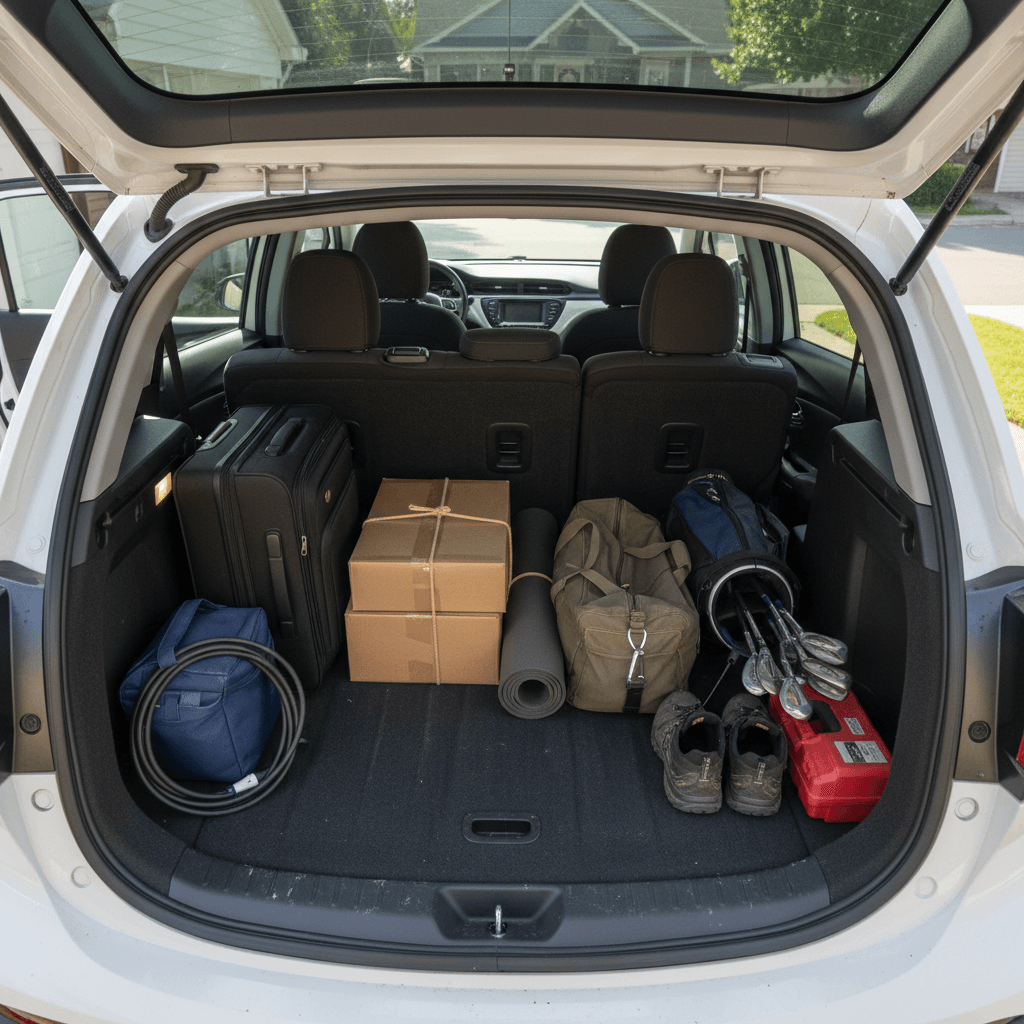
| Height to headliner (at rear) | ~31–33 in | ~31–33 in | Varies slightly because the EV roofline is boxier than the EUV. |
Use these numbers as planning tools, not as aerospace tolerances, always test‑fit if you’re right on the edge.
Take Owner Measurements Seriously
Common Items That Fit With Seats Down
Realistic expectations for a Chevrolet Bolt EV cargo area
Sleeping Setup
- Camping pads or a custom platform up to about 72 in
- Most people up to ~5'10" can lie flat diagonally or with front seats adjusted
- Good for minimalist car camping or one‑person sleeping setups
Bikes & Sports Gear
- 1–2 adult bikes with front wheels removed fit easily
- Snowboards and skis slide in diagonally
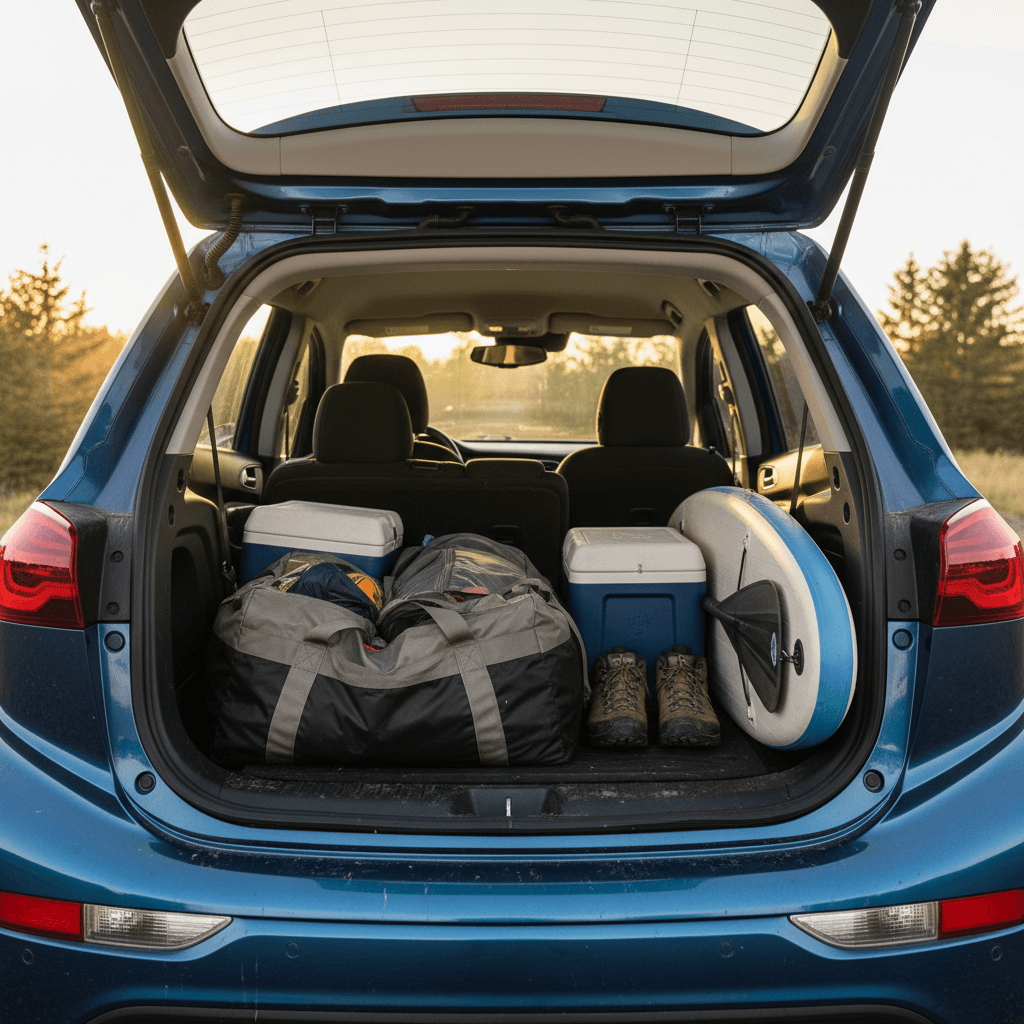
- Golf bags, duffels, and coolers stack comfortably
Moving & Big Boxes
- Flat‑pack furniture and medium moving boxes stack to the ceiling
- 6‑ft folding tables often fit on a diagonal
- Large dog crates fit if they’re under ~40 in long and 30 in tall
Cargo Floor, Folding, and Layout Quirks
The Bolt’s cargo area is a little more clever than it first appears. How flat and usable the space feels with the seats down depends on a few details: the split‑fold rear seatbacks, the optional false floor, and the way the floor meets the back of the seats.
- 60/40 split‑folding rear seats let you carry a long item on one side and a passenger on the other.
- With the optional adjustable/floating floor in the upper position, the floor and folded seats form a nearly flat load surface.
- Without the raised floor, there’s a step between the seatbacks and the lower cargo floor, but you gain a bit of vertical space for tall items.
- The seatbacks are slightly angled when folded, so long rigid objects may rest at a low angle rather than perfectly flat.
Bolt EV vs. EUV Roofline
Everyday Uses: Groceries, Strollers, and Pets
With the seats up, the Bolt’s 16–17 cubic feet behind the rear seats is enough for a solid grocery run, a compact stroller, or a couple of carry‑on suitcases. Fold the rear seats and it goes from "small hatch" to "mini‑moving van" quickly.
How Bolt Cargo Space Plays in Daily Life
Where the numbers meet real use cases
Groceries & Errands
Seats up, the Bolt can swallow a family’s weekly grocery haul if you pack smartly. Seats down, bulky items like Costco runs, large dog food bags, and flat‑pack shelves become easy work.
Kids & Strollers
Compact and many full‑size strollers fit behind the second row, but if you’re juggling multiple strollers or a double stroller, folding part of the rear seat gives you far more breathing room.
Dogs & Crates
Medium to large dog crates often fit best with the seats folded, using the full 39–40 in of width between the wheel wells and ~30 in of height. Soft‑sided crates and beds are easy.
Watch That Rear Load Height
Road Trips and Car Camping in a Bolt
One of the Bolt EV’s party tricks is how well it converts from commuter pod to micro‑camper. With the rear seats folded, a low, flat load floor, and a long roofline, you can genuinely sleep in this car, without feeling like you’re in a clown coffin.
Setting Up a Sleeping Area in a Bolt
1. Decide if you’re solo or duo
One adult can sleep comfortably diagonally or straight with the front seat pushed forward. Two adults can make it work in a pinch, but think "cozy" rather than "glamping."
2. Use a low‑profile mattress
A 2–3 in camping pad or inflatable mattress that’s ~24–26 in wide works best. Oversized air beds waste vertical space and make it harder to sit up.
3. Build a simple platform (optional)
Some owners build a plywood platform level with the folded seatbacks and raised floor, with storage underneath. It squares off the slight angle where seatbacks meet the floor.
4. Plan gear storage around the wheel wells
Those 39–40 in between the wells are prime real estate. Use soft duffels, packing cubes, or bins sized to that width so nothing rattles or shifts at night.
5. Use the front footwells as overflow
Shoes, backpacks, and small bags live happily in the empty front footwells. That keeps the sleeping area clear without sacrificing total cargo capacity.
6. Mind your weight and access
Even with the huge interior, don’t stack heavy gear so high that it can shift forward under hard braking. Pack the heaviest items low and against the seatbacks.
The Bolt as a Teardrop Trailer Stand‑In
How Bolt Cargo Compares to Other Small EVs
On a spec sheet, the Chevy Bolt EV’s ~56–57 cu ft with seats down holds its own against bigger‑looking crossovers. Many small EVs cluster in the mid‑40s for max cargo volume, with a few standouts touching the high 50s.
Bolt EV vs. Other Small EVs (Approximate Seats‑Down Cargo Volume)
Exact numbers vary by model year and trim; these ballpark figures illustrate how competitive the Bolt really is.
| Model | Body Style | Max Cargo (Seats Down) | Notes |
|---|---|---|---|
| Chevrolet Bolt EV | Small hatchback | ~56–57 cu ft | Boxy roofline and tall hatch opening make the space very usable. |
| Chevrolet Bolt EUV | Subcompact crossover | 56.9 cu ft | Essentially the same cargo volume as Bolt EV when folded, with more rear legroom. |
| Many subcompact EVs | Hatch / small crossover | 40–50 cu ft | Shorter rooflines or thicker rear liftgates eat into max cargo volume. |
| Typical compact crossover (gas) | Crossover SUV | 55–70 cu ft | Larger footprint and higher ride, but not dramatically more usable space than a Bolt. |
The Bolt EV lives in "small crossover" space on the inside while driving and parking like a compact hatchback.
Think About Shape, Not Just Cubic Feet
Tips to Maximize Your Bolt EV Cargo Space
- Use the 60/40 split to your advantage. Fold just one side for long items like skis or lumber while keeping one rear seat usable.
- If your Bolt has the adjustable cargo floor, keep it in the higher position when you want a flatter load space, and drop it low when you need extra height.
- Pack in soft‑sided bags instead of hard cases; they mold into the Bolt’s corners and around the wheel wells.
- Slide the front passenger seat forward and tilt the backrest slightly to open up more max length for long objects.
- Measure your critical gear (crate, stroller, music equipment) and compare to the ~39–40 in width and ~56–60 in flat‑floor length before you buy.
- Use small bins or dividers to keep groceries and smaller items from sliding forward into the main cargo well when you brake.
Safety First With a Full Load
Buying a Used Bolt EV: Cargo Checklist
If you’re shopping the used market, cargo space is more than a number, it’s how the car fits your life for years. Before you sign, do a quick reality check with your actual stuff, not just the brochure.
Cargo Questions to Answer Before You Buy
1. Seats‑down test with real items
Bring along your bulkiest regular cargo, bike, stroller, dog crate, music gear, and confirm it fits with the seats folded and the hatch closed.
2. Check for adjustable floor and hidden storage
Open the cargo floor and look for a floating/adjustable panel or extra under‑floor storage. That flexibility is worth real money in day‑to‑day use.
3. Inspect the seatbacks and latches
Fold the rear seats several times. They should latch and unlatch smoothly without grinding or binding, and the seatbacks should sit evenly when folded.
4. Look for cargo‑area wear and tear
Scratches, torn carpet, or broken trim pieces can hint at how the previous owner treated the car, and may affect rattles and noise with the seats down.
5. Think through your future use cases
If you’re planning kids, pets, or camping trips, imagine how often you’ll need all seats up versus folded. The EUV may make sense if you’ll carry more people more often.
6. Get the full picture with battery health
Cargo space is only half the story. A used EV lives or dies by its battery. A <strong>Recharged Score battery health report</strong> tells you how much real‑world range to expect when your Bolt is loaded with gear.
How Recharged Helps With the Practical Stuff
Ready to find your next EV?
Browse VehiclesChevrolet Bolt EV Cargo Space FAQ
Frequently Asked Questions About Bolt EV Cargo Space
The Chevrolet Bolt EV is proof that you don’t need a hulking SUV to haul a life full of stuff. With roughly 56–57 cubic feet of seats‑down cargo space, clever packaging, and a tall hatch, it behaves like a small moving van or teardrop trailer when you need it to, and a compact city runabout when you don’t. If you’re weighing whether a used Bolt EV or EUV can handle your bikes, camping gear, kids’ strollers, or pets, the odds are good that it can. And if you want help matching the right used Bolt to your real‑world cargo needs, Recharged’s EV specialists and battery‑health‑verified listings can make that decision a lot easier.