If you’re shopping for a Chevrolet Bolt EUV, especially a used one, insurance is one of those recurring costs that can turn a great deal into a groan. Age is one of the biggest drivers of what you’ll pay. In this guide, we’ll unpack Chevrolet Bolt EUV insurance rates by age, why EV coverage often runs higher than gas cars, and what you can realistically do to keep premiums in check.
Quick take
Why age matters for Bolt EUV insurance
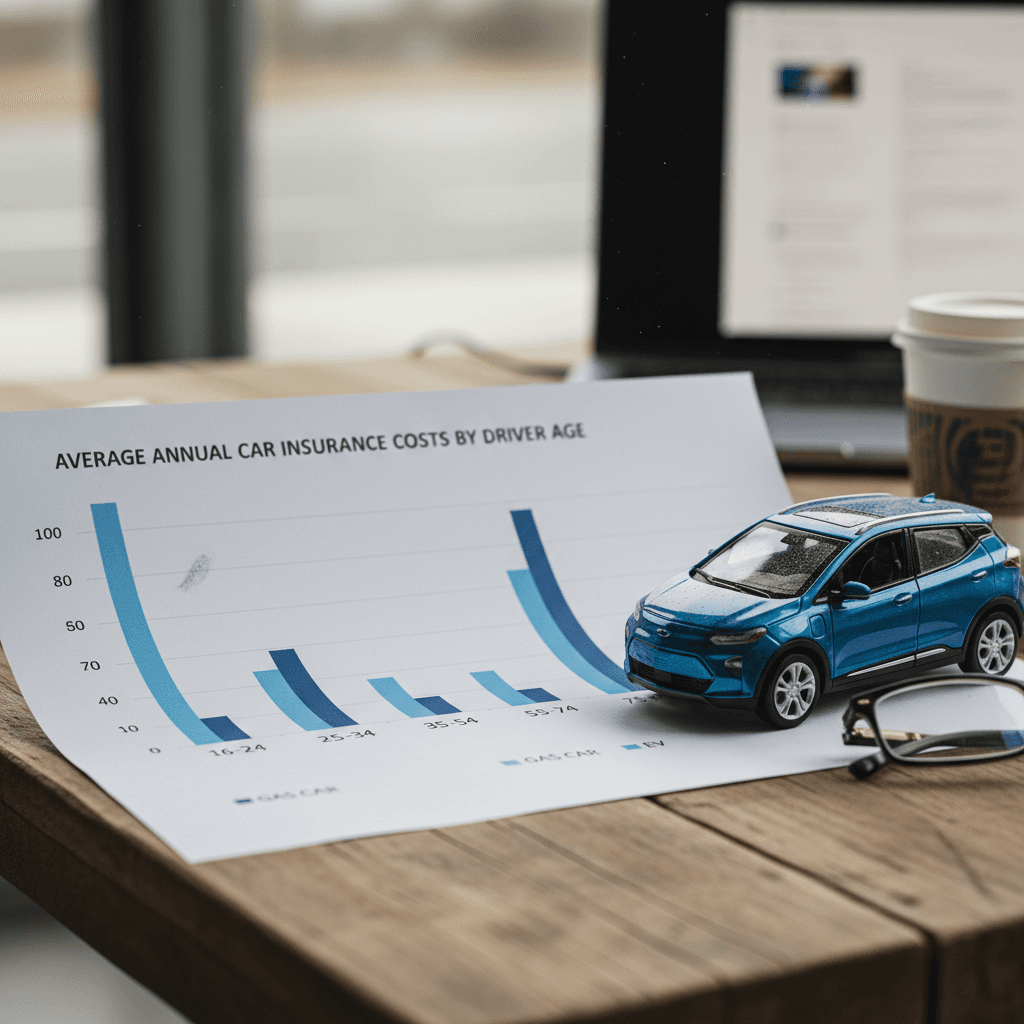
Insurers are not subtle about age. To an actuary, your date of birth is essentially a rough risk score. Very young drivers tend to crash more. Drivers in their 30s through early 60s are statistically calmer, more experienced, and cheaper to insure. In the senior years, claim frequency and severity tick up again. A Bolt EUV drops into that curve like any other vehicle, except that it also carries EV-specific repair costs.
Age, EVs, and insurance at a glance (U.S. 2024–2025)
Those are broad market averages, not a quote for your specific Bolt EUV. But they give you a sense of the water you’re swimming in before we break things down driver-by-driver.
How much does Chevrolet Bolt EUV insurance cost?
Insurer estimates for the Chevrolet Bolt EUV generally put full-coverage premiums in the same ballpark as other compact crossovers, sometimes a bit above. One national carrier recently advertised sample Bolt EUV premiums in the mid–$30s per month for their safest, older drivers on pared‑back coverage, translating to a few hundred dollars a year. When you zoom out to real-world, full-coverage scenarios across ages and states, it’s more realistic to think in four digits rather than three.
Don’t anchor on the teaser rate
Typical annual insurance cost range for a Bolt EUV
Very rough U.S. ranges for full-coverage policies in 2025–2026. Your quote may fall below or above these bands based on your specific profile.
| Driver profile | Approx. age band | Typical annual range | How it compares to a similar gas crossover |
|---|---|---|---|
| New driver | 18–21 | $3,000–$5,500 | Often higher, especially if financing requires robust coverage. |
| Young adult | 22–25 | $2,400–$4,000 | Still notably higher than mid‑30s driver, but closer to the segment average. |
| Prime driver | 30–45 | $1,800–$3,000 | Usually within 10–20% of a similar gas crossover. |
| Established driver | 46–64 | $1,600–$2,800 | Can be close to or slightly above mainstream crossover premiums. |
| Senior driver | 65+ | $1,900–$3,200 | Often similar to 50‑somethings until mid‑70s, when rates can climb again. |
These ranges assume a personal-use policy, good credit, and no recent at-fault accidents. Young drivers and high-risk drivers often pay more.
One more wrinkle: EV vs. gas
Chevrolet Bolt EUV insurance rates by age
Let’s walk through how Bolt EUV insurance typically changes by age, assuming full coverage, a clean record, and average U.S. pricing. Think of these as relative patterns, not promises from your insurer.
How age changes your Bolt EUV premium
From teens to retirees, here’s how insurers tend to see you.
18–21: High-risk, high premium
Insurers see teen and college-age drivers as the riskiest cohort. Put a first-time driver in a modern EV with brisk torque and advanced tech and you’re checking all their ‘handle with care’ boxes.
- Expect the steepest premiums of your driving life.
- Being on a parent’s policy can be cheaper than a solo policy.
- Good-student and telematics discounts matter a lot here.
22–25: Still pricey, but easing
Accident rates start to fall, but you’re not out of the penalty box yet.
- Premiums usually drop meaningfully from the teen years.
- Insurers still price you as relatively high‑risk.
- Building 3–5 claim‑free years pays off later.
26–35: Where things normalize
By your late 20s and early 30s, you’ve aged into the sweet spot.
- Many drivers see a noticeable drop in premiums.
- Bolt EUV pricing starts to mirror mainstream compact crossovers.
- Accident‑free history becomes a real lever.
36–55: The low‑cost plateau
These are the years when full-coverage Bolt EUV premiums often look the most reasonable.
- Stable income, established credit, and history help.
- Insurers like boring. Be boring.
- Shopping quotes every few years still pays off.
56–69: Still favorable, with caveats
Many insurers continue to offer strong pricing into your 60s.
- Experience works in your favor.
- Some carriers add mature driver discounts.
- A serious claim can move the needle more at this age.
70+: Gentle climb back up
In the 70s and beyond, premiums can rise as claim stats trend upward again.
- A clean record matters more than ever.
- Defensive driving courses can help offset age‑based increases.
- Annual mileage often drops; make sure your insurer knows.
Age bands vs. life events
Why EVs like the Bolt EUV can cost more to insure
On paper, the Bolt EUV should be an insurer’s dream: compact footprint, excellent efficiency, modern safety tech, and none of the hooligan horsepower you see in premium EVs. Yet, like most electric vehicles, its coverage can still run higher than a comparable gas model. That’s less about how you drive and more about what happens when something breaks.
1. Battery and repair costs
The Bolt EUV’s battery pack is the most expensive single component on the car. Even modest damage near the pack can trigger extensive inspection or replacement protocols. Across the market, EV repair bills have run substantially higher than on gas vehicles, thanks to specialized parts, equipment, and labor.
- High-value battery raises the potential cost of a total loss.
- Specialized shops mean fewer options and less pricing competition.
- Longer repair times can mean extended rental coverage payouts.
2. Advanced safety tech… that’s also expensive
Features like Chevy Safety Assist, cameras, radar sensors, and lane-keeping systems are brilliant at avoiding crashes, but when they’re cracked, dented, or need recalibration, the bill is not small.
- Bumpers and fenders packed with sensors cost more to repair.
- Calibration equipment and software add hours to labor.
- Insurers price in this higher potential claim severity.
The good news: EV risk is normalizing
Other factors that shape your Bolt EUV premium
Age is just one column in the spreadsheet. When an insurer prices your Bolt EUV insurance, they’re juggling a dozen or more variables at once.
- Location: Urban, high-traffic, or high-theft areas cost more than small towns with low claim rates.
- Driving record: Recent at-fault accidents, DUIs, or frequent tickets will overshadow your age in a hurry.
- Annual mileage: The Bolt EUV is an excellent commuter; if you drive a lot, your exposure, and premium, goes up.
- Coverage limits and deductibles: Higher liability limits and low deductibles protect you better but can raise the bill.
- Credit-based insurance scores (where allowed): In many states, better credit correlates with lower premiums.
- Garaging and usage: Garage-kept and personal-use cars often rate lower than street-parked or business-use vehicles.
- Vehicle age and value: A well-priced used Bolt EUV will usually be cheaper to insure than a brand-new one with the same driver.
State rules can flip the script
How to lower Bolt EUV insurance costs at any age
You can’t lie about your birthday, but you have more control than you think over what you pay to insure a Bolt EUV. Here’s where drivers of all ages can find real savings without leaving themselves dangerously underinsured.
Practical ways to cut your Bolt EUV premium
1. Right-size your coverage, don’t race to the bottom
Full coverage is usually a must if you’re financing a Bolt EUV, but you can still adjust liability limits and deductibles thoughtfully. Raising a $500 deductible to $1,000 can drop your premium, but only do it if you can actually afford that out of pocket after a claim.
2. Take advantage of EV and safety discounts
Many carriers now recognize EVs with modest discounts, and most will reward features like automatic emergency braking or lane-keeping assist. Make sure your insurer correctly codes your Bolt EUV’s trim and safety equipment so you’re not leaving money on the table.
3. Stack behavior-based discounts
Usage-based or telematics programs can be a powerful lever, especially for younger drivers. If you’re a smooth, daylight commuter rather than a midnight street racer, letting your insurer track that can translate into double-digit discounts over time.
4. Adjust for your real mileage and usage
If you bought a used Bolt EUV as a second car for local errands, you shouldn’t be paying commuter-car premiums. Report realistic annual mileage and usage (pleasure vs. commute) and update it when your lifestyle changes.
5. Clean up the household driver list
Insurers rate you based on everyone they think might regularly drive the car. If an adult child with a sketchy record moved out years ago, make sure they’re removed. Conversely, adding a high-risk driver as an occasional user can spike your rate.
6. Shop quotes when you change cars, especially when you go electric
Switching into a Bolt EUV is a big profile change. Don’t just roll your old policy forward and hope for the best. Get quotes from multiple carriers that actively like EVs; some are building portfolios around them and price more aggressively.
Don’t forget the financing angle
Used Bolt EUVs, insurance, and total cost of ownership
The Bolt EUV has quietly become one of the smartest used EV buys in America. Depreciation has already done much of its work, and you’re left with a versatile electric crossover with respectable range and low running costs. But used pricing and insurance can tug in opposite directions.
Why used helps on insurance
- Lower vehicle value: A three-year-old Bolt EUV often costs significantly less to replace than a brand-new one, which can soften comprehensive and collision premiums.
- More data for insurers: The longer a model has been on the road, the more loss data insurers have, which can reduce the uncertainty baked into early‑model EV pricing.
- Flexibility with coverage: As a used car’s value drops, some owners choose to raise deductibles or, eventually, drop full coverage if the math no longer pencils out.
The EV caveats still apply
- Battery health matters: A tired pack that’s expensive to replace is still a big liability from an insurer’s point of view.
- Recall and repair history: The Bolt family’s high‑profile battery recall years are mostly behind us, but a solid service history still reassures both you and your insurer.
- Financing requirements: If you finance a used Bolt EUV, your lender will almost certainly require full coverage, even if the car is inexpensive enough that you’d otherwise consider going liability‑only.
Where Recharged fits in
FAQ: Bolt EUV insurance rates by age
Frequently asked questions
Bottom line: Is a Bolt EUV expensive to insure?
In the grand scheme of EVs, the Chevrolet Bolt EUV is not an insurance villain. It’s a practical electric crossover with sensible performance and solid safety tech, priced far below the exotic hardware that tends to light up actuaries’ dashboards. Age will push your premium up and down the classic curve, painful in your teens and early 20s, friendlier in your 30s through early 60s, and gently rising again later in life.
Where you win with a Bolt EUV is in the total ownership story. Lower fuel and maintenance bills can offset a somewhat higher insurance line item, especially on a well‑priced used example. If you’re comparing options, take a few minutes to line up quotes for the ages and drivers in your household, then pair that with battery health data from a Recharged Score Report. When you understand how Bolt EUV insurance rates by age really work, you can shop with clear eyes, and enjoy the quiet, torque‑rich payoff every time you drive past a gas station.