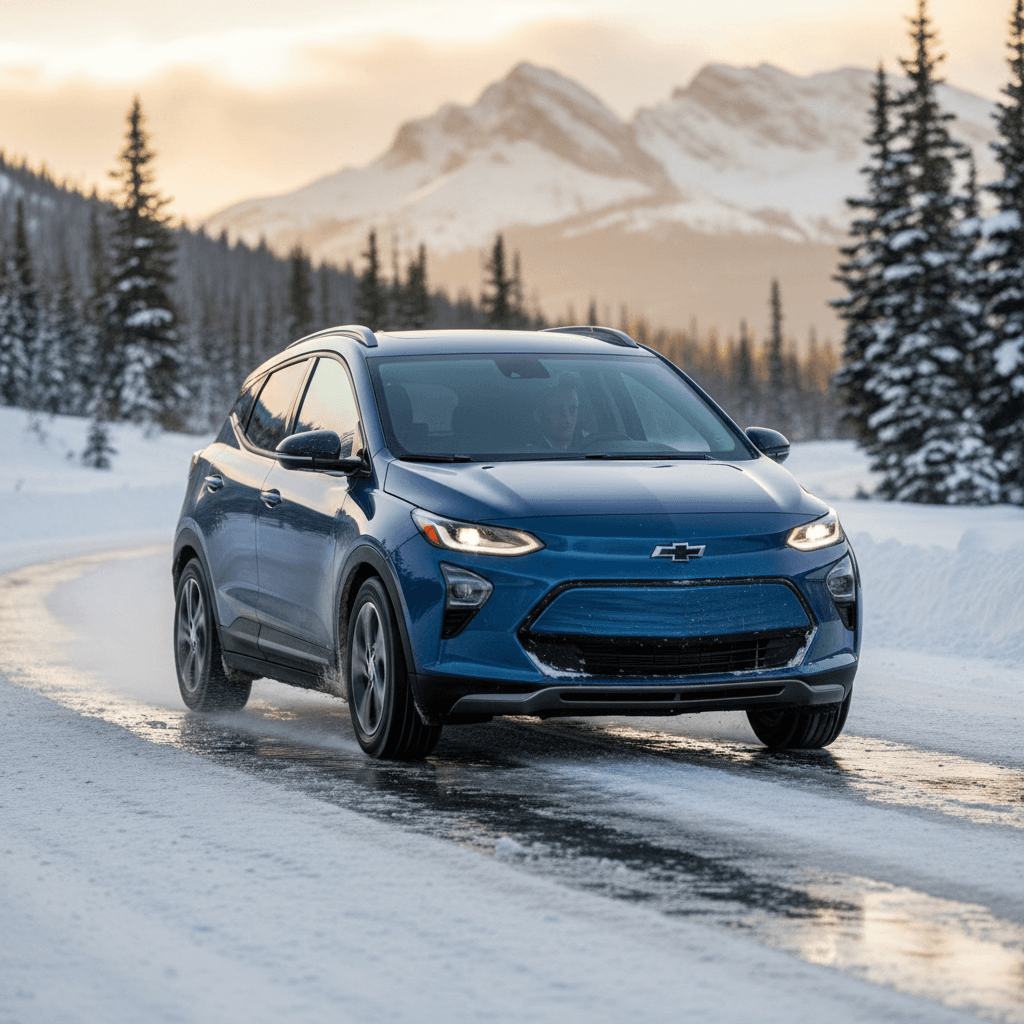
If you live where winters are serious, it’s fair to wonder whether the Chevrolet Bolt EUV is actually good in snow and ice, or if you should hold out for an all‑wheel‑drive SUV. The reality is more nuanced: with the right tires and expectations, the Bolt EUV can be a confident winter commuter, but it’s not a snow‑belt superhero out of the box.
Quick answer
Chevy Bolt EUV in Winter: Big Picture
Chevy Bolt EUV: Key Winter Numbers
Framed correctly, the Bolt EUV is a short‑to‑medium‑range winter commuter with excellent low‑speed traction electronics, instant torque you need to respect, and a cabin that stays warm even on frigid days. Its downsides in snow and ice are familiar EV issues: range loss in the cold, slower DC fast charging when the pack is cold, and limited ground clearance for rutted or unplowed roads.
Think “urban/suburban winter tool,” not “back‑country rig”
Is the Chevrolet Bolt EUV Good for Snow and Ice? Strengths & Limits
Where the Bolt EUV shines in winter
- Fine‑grained traction control: The front‑drive layout and quick stability control make it easy to pull away cleanly on packed snow once you learn the feel.
- Low center of gravity: The battery in the floor keeps the car stable and predictable on slick surfaces.
- Preconditioning: You can pre‑heat the cabin while plugged in, saving precious range once you’re driving.
- Strong regen (used correctly): Regenerative braking can offer smooth, engine‑brake‑like deceleration on winter roads.
Where it struggles
- All‑season OEM tires: Many owners describe the stock low‑rolling‑resistance tires as bad to downright scary on ice and packed snow.
- Low ground clearance: Around 5.6 inches means heavy, unplowed snow can pack under the car and push it around.
- No AWD option: If you’re used to an AWD crossover, traction from a standstill on steep, icy grades may feel like a step backward.
- Range hit: Expect 25–40% less effective range in real winter conditions, especially with highway speeds and cabin heat.
OEM tires are the weak link
Traction, Tires, and Drive Modes on Snow
When people ask whether the Chevrolet Bolt EUV is best for snow and ice, what they’re really asking is whether it can put power down and stop predictably when things get slick. In practice, that comes down to three things: tires, how you use the drive modes, and how well you understand regen on low‑grip surfaces.
Tires Matter More Than the Badge
How tire choice changes your Bolt EUV in winter
Dedicated winter tires
Best for deep winter climates. Modern winter tires (e.g., Michelin X‑Ice, Nokian Hakkapeliitta, Continental VikingContact) use soft compounds and aggressive siping to bite into ice and packed snow.
Owners who switch from OEM all‑seasons to winters routinely describe the Bolt as a “tank” in snow afterward.
All‑weather 3PMSF tires
Good compromise for mixed climates. CrossClimate‑style all‑weather tires carry the three‑peak‑mountain‑snowflake rating and handle light‑to‑moderate snow far better than standard all‑seasons, while still wearing reasonably in summer.
OEM low‑rolling‑resistance tires
Optimized for efficiency, not snow. They help with EPA range numbers but tend to slide and spin more easily in real winter. On ice or wet snow they’re often the first thing drivers replace.
If you buy a used Bolt EUV, check what rubber it’s on before judging its winter chops.
Use Snow/Ice‑friendly settings
- Avoid heavy one‑pedal driving on sheer ice or steep, slick descents; sudden regen can act like braking mid‑corner.
- Practice regen in an empty, snowy parking lot to feel how the car behaves before winter really hits.
- Let the traction control work; don’t mash the accelerator when you feel it cutting power.
- Remember that ABS and stability control are there to help, but physics still wins. Leave longer following distances on snow and ice.
Ground Clearance: How Deep of Snow Can a Bolt EUV Handle?
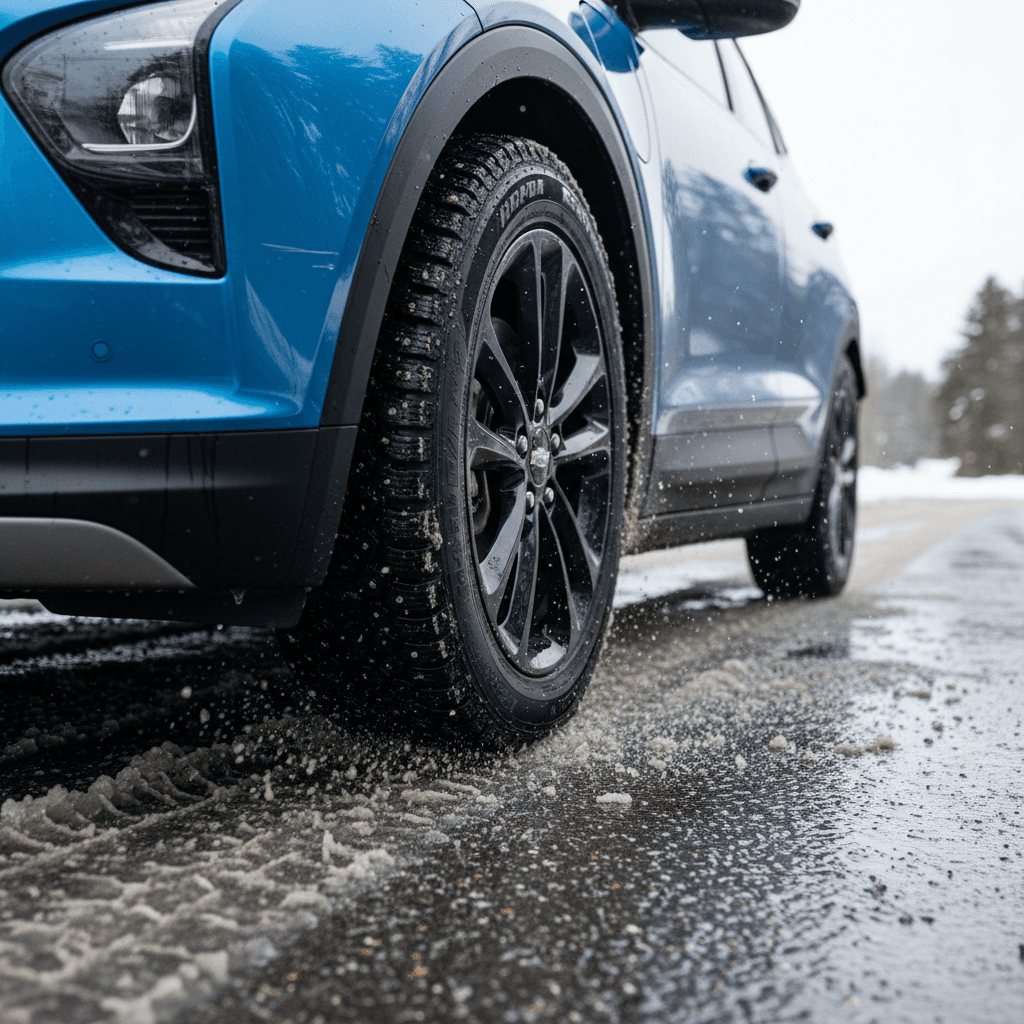
Chevy quotes roughly 5.6 inches of ground clearance for the Bolt EUV. That’s typical for a compact hatchback, but well below many crossovers. In practical terms, that means the car is happiest on plowed or partially‑plowed roads and starts to struggle when snow gets deeper than a few inches.
Bolt EUV vs Typical Winter Conditions
How the Bolt EUV’s ground clearance stacks up against common snow scenarios.
| Scenario | Snow Depth | What It Feels Like in a Bolt EUV | Risk Level |
|---|---|---|---|
| Light snow on pavement | Dusting–1 in | Little to no impact; treat like wet roads with cold tires. | Low |
| Normal plowed urban street | 1–3 in between lanes | Manageable with good tires, but snow can pack in wheel wells. | Low–Medium |
| Unplowed side street | 3–5 in | Car will push snow; traction OK with winter tires but you can high‑center if ruts form. | Medium–High |
| Rutted rural road, fresh storm | 5+ in | Front bumper and battery tray start plowing; high risk of getting stuck or damaging underbody panels. | High |
Use this as a sanity‑check, not permission to blast through unplowed roads at speed.
Don’t treat it like a lifted SUV
How Much Winter Range Does a Bolt EUV Lose?
Cold weather is where EV myths and reality blur. Data from fleet studies and owner logs consistently show that Chevy Bolt EV and EUV models can lose around 25–40% of their range in sustained winter conditions. That’s driven by three main factors: a resistive cabin heater (no heat pump), denser cold air, and higher rolling resistance from snow, slush, and winter tires.
Typical Winter Range Scenarios for a Bolt EUV
Assuming a healthy battery and mixed driving in the 20–30°F range
City & suburban driving
Speeds: 25–50 mph with stops and lights
- Range loss often toward the lower end of the 25–40% window.
- Cabin heater still hurts, but slower speeds help efficiency.
- Using seat and wheel heaters instead of blasting cabin heat can meaningfully reduce losses.
Highway & ski‑trip driving
Speeds: 65–75 mph on cold, wet pavement or snowy lanes
- Loss often near the higher end of that 25–40% range band.
- Higher aerodynamic drag and steady heater use stack up.
- Roof boxes or ski racks add more drag and can shave another noticeable chunk of range.
Rule‑of‑thumb for trip planning
Recharged’s own data on winter range loss across EVs shows the Bolt family on the higher side of cold‑weather losses compared with newer EVs that use heat pumps. That doesn’t mean the Bolt EUV is unusable in winter; it means you need to size your daily routes and charging access to realistic cold‑weather numbers, not the window sticker.
Winter Setup Checklist for Bolt EUV Owners
Step‑by‑Step: Making Your Bolt EUV Winter‑Ready
1. Choose the right tires for your climate
If you see weeks of sub‑freezing temps and regular snow, budget for a <strong>dedicated winter tire set on separate wheels</strong>. In milder but still snowy regions, consider 3PMSF all‑weather tires that stay on year‑round.
2. Check remaining tread and tire age
Used EVs sometimes come on worn or older tires. Look for at least 5/32" of tread going into winter, and avoid driving on anything older than 6–7 years, even if it “looks fine.”
3. Learn and practice your drive modes
Before the first storm, find an empty lot and practice in <strong>D, L (one‑pedal), and with the regen paddle</strong>. Learn how the car behaves under regen and ABS on low‑grip surfaces so it doesn’t surprise you when it matters.
4. Set realistic range expectations
Watch your consumption (mi/kWh) on the energy screen as temps fall. Build mental models for what your car actually delivers at 20°F vs 40°F vs 60°F, and plan winter charging stops accordingly.
5. Use preconditioning and seat heaters
Whenever possible, <strong>pre‑heat while plugged in</strong>, then rely more on seat and wheel heaters once driving. They use far less energy than blasting cabin heat and help preserve range.
6. Protect the car from snow buildup
Brush snow off the roof, hood, and especially around the wheel wells before driving. Heavy buildup in the wells can freeze, rub on tires, and make steering feel odd.
Done right, it’s a confident winter commuter
Shopping for a Used Chevy Bolt EUV for Snow States
If you’re considering a used Chevrolet Bolt EUV specifically for winter driving, you’re juggling three questions at once: Is the car itself suitable for my climate, is this particular example healthy, and is the price right compared to other used EV options?
Used Bolt EUV Winter Buying Priorities
What to look for beyond price and mileage
Battery health & winter range
Because winter range loss can mask battery degradation, it’s easy to misread a cold‑day test drive. A structured battery health report, like the Recharged Score included with every vehicle on Recharged, helps you separate normal winter losses from real long‑term degradation.
Tires, wheels, and underbody
Check whether the car comes with a second set of wheels/tires for winter. Inspect the underbody shields and front valance for scrapes from snowbanks or parking curbs; frequent contact is common with lower cars in snow states.
Charging and heater behavior
On a cold test drive, pay attention to how quickly cabin heat comes on, whether defrost works well, and how the guess‑o‑meter range reacts. Confirm that DC fast charging behaves normally if you’re able to test it in cold conditions.
Leaning on a specialist retailer helps
Bolt EUV vs AWD SUVs in Snow: What to Expect
It’s tempting to compare a front‑drive Bolt EUV directly with a Subaru or a compact AWD crossover and declare a winner, but that misses the point. They’re built for different missions. The Bolt EUV is a compact, efficient commuter that happens to cope well with winter when set up right, while an AWD crossover is a purpose‑built snow appliance with more clearance and traction hardware.
Where a Bolt EUV holds its own
- Plowed highways and arterials: On treated roads with modest accumulation, a Bolt on winters feels planted and predictable.
- Stop‑and‑go commutes: Instant torque plus good traction control makes smooth, low‑speed driving on packed snow straightforward.
- Total cost of ownership: Even with winter range loss, electricity plus minimal maintenance can undercut gas and oil changes over years of ownership.
Where an AWD SUV is still king
- Deep or drifting snow: More clearance and torque to all four wheels simply matters when you’re climbing unplowed hills.
- Rugged driveways and back roads: Ruts, ice humps, and frozen slush can high‑center a low EV where a taller SUV just clambers through.
- Towing and heavy loads: The Bolt EUV wasn’t designed as a tow rig; if you combine winter, weight, and mountains, you’re in SUV territory.
Think in terms of your real use case
Chevy Bolt EUV Winter Driving FAQ
Frequently Asked Questions About the Bolt EUV in Snow and Ice
Bottom Line: Is the Chevy Bolt EUV the Best for Snow and Ice?
If “best for snow and ice” means a lifted, all‑terrain tank you can aim at an unplowed mountain road after every storm, the Chevrolet Bolt EUV isn’t it. But if what you really need is a compact, affordable EV that can confidently handle plowed winter streets, commuters, and weekend trips, with predictable range and low running costs, the Bolt EUV absolutely belongs on your shortlist.
Set it up with the right tires, learn how its regen and traction control behave, respect its ground‑clearance limits, and size your winter routes around realistic range numbers, and the Bolt EUV can be an excellent snow‑belt daily driver. And if you’re exploring a used Bolt EUV, Recharged can help you see past the weather and into the real health of the battery and pricing with a transparent Recharged Score report, financing options, and even nationwide delivery right to your (hopefully plowed) driveway.