If you’re cross-shopping the Ford Mustang Mach-E, you’ve probably heard mixed stories about its highway noise level. Professional reviews often praise its quiet, refined ride, but some owners complain about wind noise near the mirrors or door glass once speeds climb above 60–70 mph. So which story should you believe, and what does it mean if you’re considering a used Mach-E?
Quick takeaway
Overview: How noisy is the Mustang Mach-E on the highway?
In instrumented tests and road reviews, the Mustang Mach-E generally earns high marks for cabin quietness. With no engine noise and good aerodynamic design, it keeps wind and road roar under control at typical U.S. highway speeds. Reviewers often compare it to a near-luxury crossover in terms of noise, vibration and harshness (NVH), especially on smoother pavement.
Based on published measurements and comparisons, a typical Mustang Mach-E at 70 mph lands in roughly the 67–70 dB range in the front seats on average asphalt, in line with other mid-size EV crossovers. Subjectively, that’s “conversation-level” quiet: you can talk without raising your voice and keep music at moderate volume.
- On good pavement, most drivers describe the Mach-E as calm, with only a soft rush of air and tire noise.
- On coarse or patched highways, you’ll hear more road roar through the tires, but not much more than a similarly priced gas SUV.
- Some owners report localized wind hiss or whooshing near the driver’s window or mirror above about 60–65 mph, which can make the car feel louder than the numbers suggest.
Why experiences vary so much
How quiet are EVs like the Mach-E at highway speeds?
EVs remove engine and transmission noise, but that doesn’t mean they’re silent on the highway. At 65–75 mph, the main sounds you’ll hear in any EV are:
- Wind noise around the windshield, A-pillars, door glass, and mirrors.
- Road noise from tire tread interacting with the pavement.
- Suspension noise from bumps, expansion joints and rough patches.
- Occasional electric motor whine, usually faint and low‑frequency in the Mach-E.
Because engine noise is gone, your ears are more sensitive to any wind hiss or tire roar. That’s why a small sealing issue or a noisy tire can feel more intrusive in a Mach-E than it might in a gas-powered Escape or RAV4, even if absolute sound levels are similar.
Typical EV highway noise ranges
Real-world owner feedback on Mach-E highway noise
Owner forums and social channels paint a more mixed picture than glossy road tests. You’ll find three broad types of feedback about the Mustang Mach-E’s highway noise level:
What Mach-E owners say about highway noise
Same model, very different experiences
“Surprisingly quiet”
“Normal for a crossover”
“Like a window is slightly open”
Threads from late 2024 and 2025 highlight a recurring theme: wind noise that seems to originate at the front side windows and side mirrors. Several owners say dealers compared their SUVs to other Mach-Es and declared the noise “normal,” while others had repairs or technical service bulletin (TSB) work to adjust weatherstripping or add foam around the mirror area, with mixed success.
Good news for shoppers
Common sources of highway noise on the Mach-E
Most complaints about the Ford Mustang Mach-E’s highway noise level trace back to a few specific areas. Knowing where to listen will help you separate a normal EV soundscape from a fixable issue.
Typical Mach-E highway noise sources
Where noise comes from, how it sounds, and whether it’s usually fixable.
| Area | How owners describe it | When it shows up | Is it fixable? |
|---|---|---|---|
| Driver/passenger side mirror & A-pillar | Hiss, whistle, whooshing like a cracked window | Often above 60–70 mph, worse with headwinds or crosswinds | Frequently improved by mirror and seal adjustments; some cases require Ford TSB work. |
| Top edge of front door glass | Whistle, air leak sound | At highway speed, especially on rough pavement or in crosswinds | Often improved by door adjustment or new weatherstripping. |
| Tires & road surface | Low-frequency roar or droning | On coarse concrete or worn asphalt at 65–80 mph | Largely tire-dependent; better with quieter touring tires. |
| Panoramic glass roof area | Broad wind whoosh, occasional creak | Highway speeds or over expansion joints | Usually normal; creaks can be addressed under warranty on newer cars. |
| Rear cargo area | Boomy or echoey road noise | When cargo cover is removed or seats down | Improves with cargo cover in place or additional damping (owners sometimes add mats/liners). |
Use this as a checklist during your test drive.
Don’t ignore unusual thumps or vibrations
Model years, trims and options that affect noise
Not every Mach-E is built the same, and a few details can change how loud or refined it feels at 70 mph.
- Early vs. later build years. Early 2021 builds had some reports of wind noise and squeaks that Ford and suppliers gradually improved. By 2023–2024, many owners report tighter, quieter cabins, especially on Premium and GT trims.
- Glass type and roof. All U.S. Mach-E models use a large fixed glass roof, which gives an airy feel but can transmit more expansion-joint thump than a steel roof. However, wind noise at the roofline is generally well controlled; most complaints focus on the side mirrors and door glass.
- Trim level and tires. GT and performance variants often ship with wider, lower-profile tires that generate more road noise on rough pavement. Premium or Select trims on more comfort-oriented all-season tires can be a bit quieter in real-world driving.
- Wheel size. Bigger wheels with lower-profile tires (20" vs. 18") look sharp but pass more road texture into the cabin. If highway comfort is a priority, an 18" or 19" wheel/tire setup can help.
Quieter Mach-E configurations
- Select or Premium trims on 18–19" wheels.
- Later build years (2023+), especially if any mirror/door TSBs have been addressed.
- Examples wearing quiet‑biased touring tires from brands known for comfort.
Potentially louder configurations
- GT and performance trims with aggressive, wide tires.
- Early 2021 builds that haven’t had wind‑noise fixes applied.
- Cars with aftermarket accessories near the windows (rain guards, racks) that disturb airflow.
Simple wheel-and-tire trick
How to test-drive a Mustang Mach-E for highway noise
Highway noise isn’t something you can judge in a five‑minute neighborhood loop. To really understand a specific Mach-E’s noise level, you’ll want a structured test drive that includes real highway time.
Highway noise test-drive checklist
1. Start with a baseline at low speed
With the radio and climate fan turned down, drive at 25–40 mph on side streets. Note any rattles or creaks, but remember these are different from pure wind or road noise.
2. Merge onto a 55–70 mph road
You need several minutes at true highway speed. Use a steady throttle so you’re not masking sounds with acceleration.
3. Listen around the driver’s window and mirror
Gently move your head closer to the A-pillar and upper window frame. A focused hiss that sounds like a cracked window, especially from one specific spot, points to a sealing or mirror issue.
4. Try different pavement types
If possible, drive on both smooth asphalt and rougher concrete or patched surfaces. The Mach-E will be louder on coarse pavement, but the character of the sound (broad roar vs. sharp hiss) matters.
5. Check for crosswind sensitivity
If it’s a breezy day, see whether noise jumps dramatically when wind hits one side of the car. That can reveal a borderline seal that doesn’t show in calm conditions.
6. Repeat with a passenger
Have a passenger sit in the front and rear. Sometimes a passenger will notice noise near the rear doors or cargo area that you can’t pinpoint from the driver’s seat.
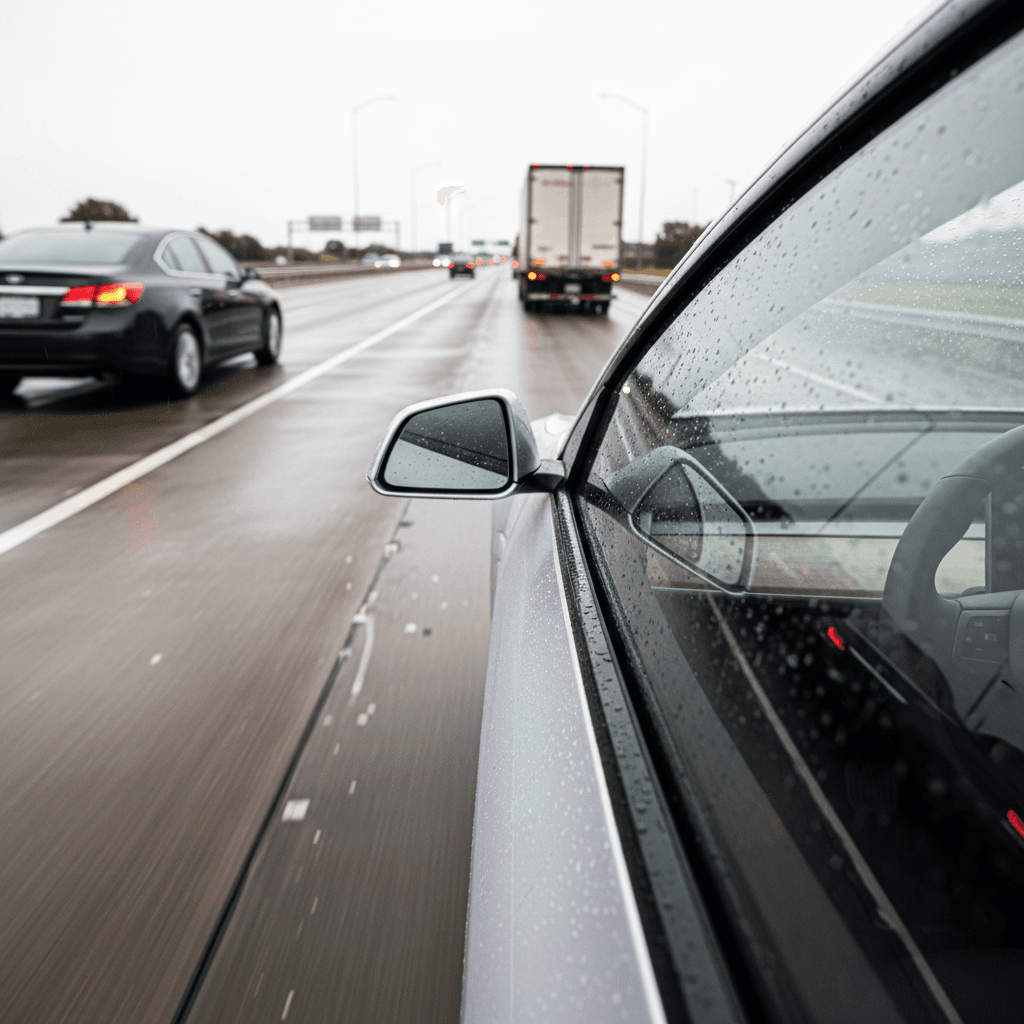
If you’re sensitive to noise…
Fixes and workarounds for wind and road noise
If you’ve already bought a Mach-E, or you’re evaluating a used one that’s otherwise perfect, there are several ways to tackle excessive highway noise, especially wind hiss around the front doors and mirrors.
Common remedies for Mach-E highway noise
From factory fixes to owner DIY tweaks
Dealer inspection & TSBs
Targeted seal improvements
Tire choice and rotation
When a “noisy” Mach-E becomes a keeper
How the Mach-E compares to other EVs on highway noise
Noise is subjective, but if you’re comparing a used Mustang Mach-E with other EVs like the Tesla Model Y, Hyundai Ioniq 5, Kia EV6, or VW ID.4, a few patterns tend to emerge:
- Versus Tesla Model Y: Many shoppers find the Mach-E slightly quieter than early Model Y builds, especially over sharp impacts, though the latest Model Y updates have narrowed the gap. Both can develop localized wind hiss depending on build tolerances.
- Versus Hyundai Ioniq 5 & Kia EV6: These Korean EVs are generally well insulated but can transmit more road noise from their sporty tires. Mach-E feels similar or a touch quieter on smooth asphalt, a bit louder on coarse concrete if it has aggressive tires.
- Versus VW ID.4: The ID.4 is often praised for its composed, quiet ride. A well-sorted Mach-E is competitive, but a noisy example with mirror hiss will feel less refined than a good ID.4 at 70 mph.
- Versus gas crossovers: Compared with a typical gas Escape, RAV4, or CR‑V, even an average Mach-E usually wins on overall highway quiet because there’s no constant engine hum or shifting noise.
You’ll likely be happy with Mach-E noise levels if…
- You’re coming from a mainstream gas SUV, not a flagship luxury sedan.
- You test-drive at 65–75 mph and don’t hear whistle, hiss or booming that bothers you.
- You choose a trim and tire setup that leans more comfort than track‑day.
You may want to keep shopping if…
- Any wind hiss near your ear is a deal‑breaker for you.
- The particular example you’re on has already had multiple failed wind‑noise repairs.
- You prioritize a library‑quiet cabin above all else and are willing to pay more for a luxury EV.
What Mach-E highway noise means when you buy used
Highway noise should be one of the key items on your used Mustang Mach-E inspection checklist. It’s not just about comfort; it can also hint at how carefully the car was assembled or repaired after any accidents.
Noise-related questions to ask on a used Mach-E
Has the car had wind-noise complaints or TSB work?
Ask the seller or dealer if the Mach-E has been in for wind‑noise or mirror/door seal service. Review service records for TSB codes related to weatherstripping or mirror foam repairs.
Any glass or door repairs?
Replaced windshields, glass, or door work after a collision can change how well the car seals. Confirm who did the work and check for even gaps around doors and windows.
What tires is it running today?
Budget or worn tires can make a quiet car seem loud. If you’re hearing mostly low‑frequency roar, factor a tire upgrade into your budget rather than assuming the whole car is noisy.
How does it compare with another Mach-E?
If possible, drive two Mach-Es back‑to‑back on the same route. If one is clearly louder, don’t assume that’s how they all sound.
How Recharged helps with noise and comfort checks
Bottom line: the Ford Mustang Mach-E’s highway noise level is solidly competitive for an electric crossover. Most examples deliver a calm, comfortable ride at U.S. highway speeds, especially once you understand that tire and pavement choices matter. But as owner reports show, some Mach-Es develop wind hiss around the mirrors and door glass that can be distracting on long drives. The good news is that these issues are often diagnosable and, in many cases, fixable, and that there are plenty of quiet examples on the used market if you know how to shop.
If you’re evaluating a Mach-E today, insist on a proper highway test drive, listen critically around the mirrors and doors, and don’t be afraid to compare a few different vehicles. And if you’d like expert backup, Recharged’s EV specialists and Recharged Score Reports make it easier to find a used Mustang Mach-E that’s not just quick and efficient, but also quiet enough to enjoy mile after mile.