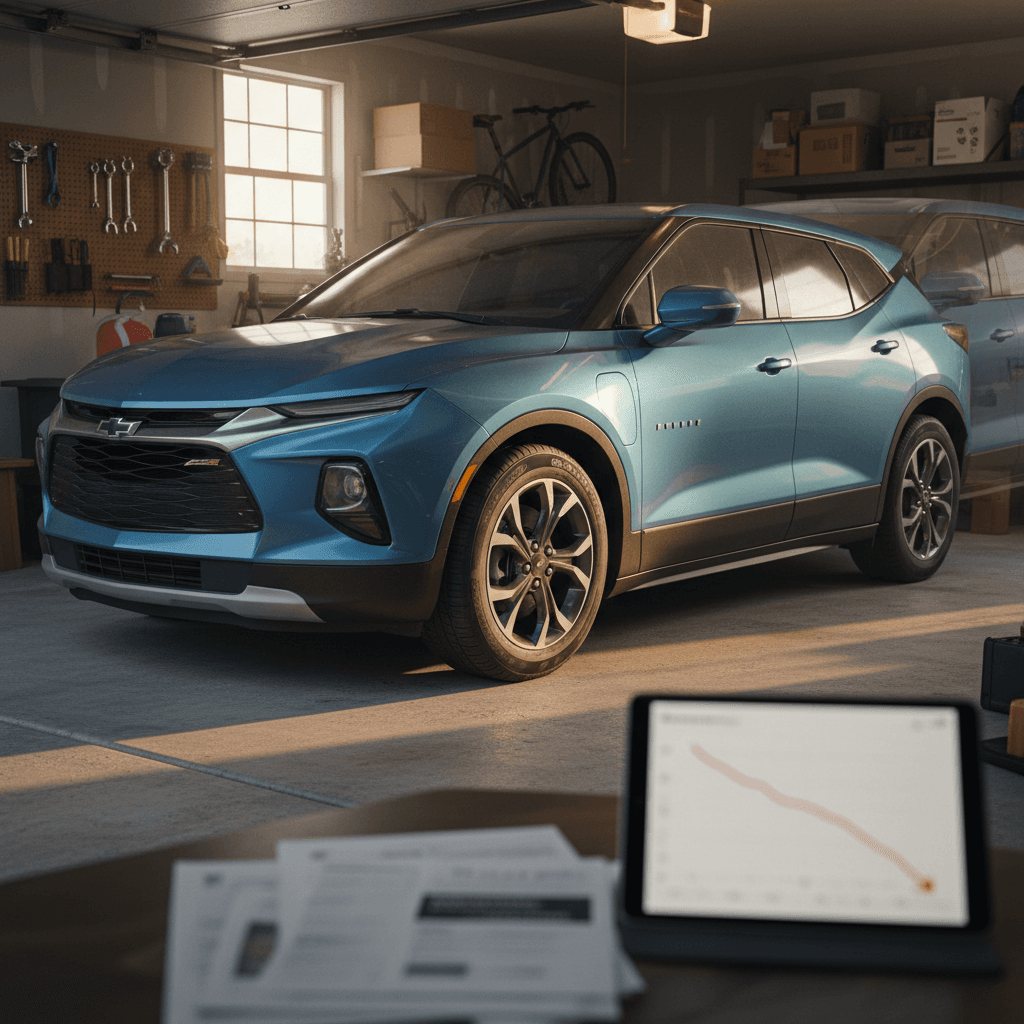
If you’re eyeing a Chevrolet Blazer EV, you’re probably wondering how this sharp‑edged electric SUV will hold its value after 5 years. Early software drama, fast‑moving EV tech, and shifting incentives all complicate the picture. But if you look closely at depreciation patterns, battery coverage, and buyer psychology, a clearer 5‑year story starts to emerge.
Quick context
Blazer EV 5‑Year Value at a Glance
Chevrolet Blazer EV 5‑Year Value Snapshot (Forecast)
Those numbers put the Blazer EV in the same neighborhood as other mainstream electric SUVs: likely to lose close to half of its value in 5 years, with unusually strong pressure from rapid EV tech improvements and its bumpy launch history. The good news for you as a buyer is that poor early reputation often translates into great used‑EV deals, if you know what you’re looking at.
How EVs, and the Blazer EV, Typically Depreciate
Traditional gas SUVs set the mental template most people bring to resale value: drop around 20–30% in the first two years, then settle into a slower slide. EVs like the Blazer EV play by slightly different rules. They’re more sensitive to tax credits, software reputation, battery confidence, and range competitiveness than their gasoline cousins.
- Year 1–2: Biggest hit. Incentives, discounts and early reputation can knock 25–35% off value quickly.
- Year 3–4: Value curve starts to flatten if reliability appears stable and software feels sorted out.
- Year 5: Buyers worry less about tech freshness and more about battery health and remaining warranty.
The Blazer EV launched at a premium price, then saw GM cut stickers by thousands of dollars and offer buybacks after serious software issues came to light. That one‑two punch means original buyers eat more depreciation, while shoppers coming in a few years later may find very attractive 5‑year‑old examples, assuming the bugs are worked out on the particular SUV in front of them.
Early stop‑sale fallout
What Will a Blazer EV Be Worth After 5 Years?
We don’t have 5‑year auction data yet for the Blazer EV, but we can triangulate from current transaction prices, incentives, and how similar EV SUVs have depreciated. Think of vehicles like the VW ID.4, Hyundai Ioniq 5, and Ford Mustang Mach‑E, mainstream, non‑luxury EV crossovers with decent range and mixed early‑reliability stories.
Illustrative 5‑Year Blazer EV Depreciation Scenarios
Approximate retained value forecasts based on a notional $55,000 MSRP, 12,000 miles per year and typical wear. These are directional, not guarantees.
| Scenario | Assumptions | Estimated Value After 5 Years | Retained Value % |
|---|---|---|---|
| Optimistic | Software reputation improves, EV demand strengthens, Ultium reliability looks solid | $29,000–$31,000 | 53–56% |
| Base case | Mixed reputation, steady EV adoption, average miles and cosmetic wear | $24,000–$28,000 | 44–51% |
| Pessimistic | Persistent software complaints, cheaper new EVs with better range, high interest rates | $20,000–$23,000 | 36–42% |
Depreciation will vary by trim, condition, software update history, and how the broader EV market matures.
In plain English, a typical 5‑year‑old Blazer EV that started life around $55,000 is likely to land in the mid‑$20Ks as a used buy. Range‑leading trims, clean histories, and well‑documented software updates will sit at the top of that band; early‑build problem children without records will sink toward the bottom.
How to “read” a used price
Factors That Can Hurt 5‑Year Blazer EV Value
Key Risks Dragging Down 5‑Year Blazer EV Value
Some are already baked in; others you can control as an owner or shopper.
Software & electronic gremlins
Battery or range anxiety
Aggressive discounts & incentives
Accidents & rough use
Charging experience
Unclear service history
Don’t ignore buyback history
Factors That Can Help the Blazer EV Hold Value
It’s not all doom and gloom. The same forces that punish fussy EVs can reward those that settle down and simply do the job. Over a 5‑year window, there are several tailwinds that could keep the Blazer EV from falling off a cliff value‑wise.
Ultium learning curve
GM’s Ultium platform underpins increasingly more vehicles, from the Blazer EV to the Cadillac Lyriq. As the software and battery management mature across the family, later‑build Blazers may look a lot more reassuring on the used market than the earliest ones.
If 2026–2027 models rack up miles without drama, that halo can float values for older years as well.
Right product at the right size
The Blazer EV hits a sweet spot: mid‑size, stylish, and with competitive range for family duty. As more households go all‑electric, a practical two‑row SUV with decent cargo space tends to hold value better than small hatchbacks or oversized luxury barges.
That packaging advantage can help offset some of the reputational baggage if the ownership experience proves solid.
Where the Blazer EV shines for used buyers
Battery Health, Range and Warranty: Impact on Value
Battery confidence is the spine of any used EV deal. On paper, the Blazer EV comes with the same headline promise as other Chevrolet EVs in the U.S.: an 8‑year/100,000‑mile limited warranty on the high‑voltage battery and electric propulsion components. That coverage easily stretches beyond the 5‑year mark for most drivers.
- A 5‑year‑old Blazer EV with 60,000–70,000 miles usually still has 3 years and 30,000–40,000 miles of battery warranty left.
- If the vehicle has already had major high‑voltage repairs under warranty, expect buyers to ask detailed questions, or walk.
- Range that’s still close to original EPA estimates is a strong selling point; noticeable real‑world loss will be priced in.
No explicit capacity guarantee
That’s where tools like the Recharged Score battery health diagnostics come in. Every vehicle sold through Recharged includes a detailed report with verified pack health and estimated remaining capacity. On a 5‑year‑old Blazer EV, that kind of documentation can easily swing thousands of dollars in value, because you’re no longer arguing about “how it feels,” you’re looking at the numbers together.
Trim & Configuration: Which Blazer EVs Are Likely to Age Best?
The Blazer EV family ranges from more modest LT trims to sportier RS and high‑performance SS models, with varying battery sizes, drivetrain layouts, and feature loads. All of that plays into 5‑year value.
5‑Year Value Outlook by Blazer EV Trim Type
Broad tendencies, individual vehicles still live and die by condition, miles and history.
LT (entry and mid trims)
RS (sport appearance)
SS (performance)
Trim‑shopping shortcut
5‑Year Cost Picture: Buying New vs. Used Blazer EV
Depreciation is only one chapter of the 5‑year story. You also have to factor in energy, maintenance, financing, and insurance. But depreciation is usually the largest single cost, and it looks different depending on whether you’re the first owner or the second.
If you buy new today
- You’re absorbing the steepest years of depreciation (years 1–3).
- You’ll enjoy a full new‑car warranty period and the longest run of software support.
- Any future price cuts or new tax incentives on fresh Blazer EVs could undercut your resale.
Financially, buying new makes the most sense if you plan to keep the Blazer EV for 8–10 years, ride out the value swings, and squeeze every mile out of the pack.
If you buy used at 4–5 years
- You let someone else pay the largest depreciation hit.
- You still catch the tail end of the 8‑year/100,000‑mile battery warranty.
- Your risk is higher if the first owner ignored software recalls or abused fast charging.
Buying used is a strong play for value, as long as you verify battery health, software update history, and any high‑voltage repairs before you sign.
Where Recharged fits in
How to Shop a Used Blazer EV Confidently
By the time Blazer EVs start hitting the market in real numbers at the 5‑year mark, you’ll see a wide spread between “good bones” examples and problem children. Here’s how to separate them.
5‑Step Checklist for Evaluating a 5‑Year‑Old Blazer EV
1. Pull a detailed history report
Look for accident records, lemon/buyback branding, frequent dealer visits for electrical issues, and recurring “Service High Voltage” or charging‑system complaints.
2. Confirm software and recall updates
Ask for service invoices showing major software campaigns and recalls have been completed. A Blazer EV that’s never seen the dealer for updates is a riskier bet.
3. Get objective battery health data
Use a marketplace like Recharged that provides a <strong>battery health diagnostic</strong> or have an EV‑savvy shop evaluate usable capacity and fast‑charging behavior.
4. Test real‑world range and charging
On the test drive, watch how quickly estimated range drops. If possible, do a short DC fast‑charge session to confirm the SUV takes power at a reasonable rate without error messages.
5. Drive everything electrical
Cycle through climate controls, seat heaters, cameras, driver‑assist features, and infotainment. Glitches here might be fixable, but they’re leverage on price and a window into how the SUV was maintained.
Don’t skip a pre‑purchase inspection
FAQ: Chevrolet Blazer EV Value After 5 Years
Frequently Asked Questions
Bottom Line: Is the Blazer EV a Good 5‑Year Bet?
The Chevrolet Blazer EV is unlikely to be a resale rock star, but it also isn’t doomed to be a 5‑year catastrophe. Expect it to behave like many modern EV SUVs: strong early depreciation, then a plateau once the market understands its true reliability and battery longevity. For first buyers, that means you should go in with eyes open about value loss. For second owners, it means a 5‑year‑old Blazer EV could be a savvy way to get a roomy, stylish electric SUV for roughly half of its original price.
If you’re shopping used, the key is to make this particular Blazer EV tell you its story: history reports, software records, and real battery health numbers. At Recharged, every vehicle comes with a Recharged Score battery report, fair‑market pricing, financing options, and EV‑specialist support from your first search to nationwide delivery. That way, you’re not guessing about 5‑year value, you’re stacking the odds in your favor.