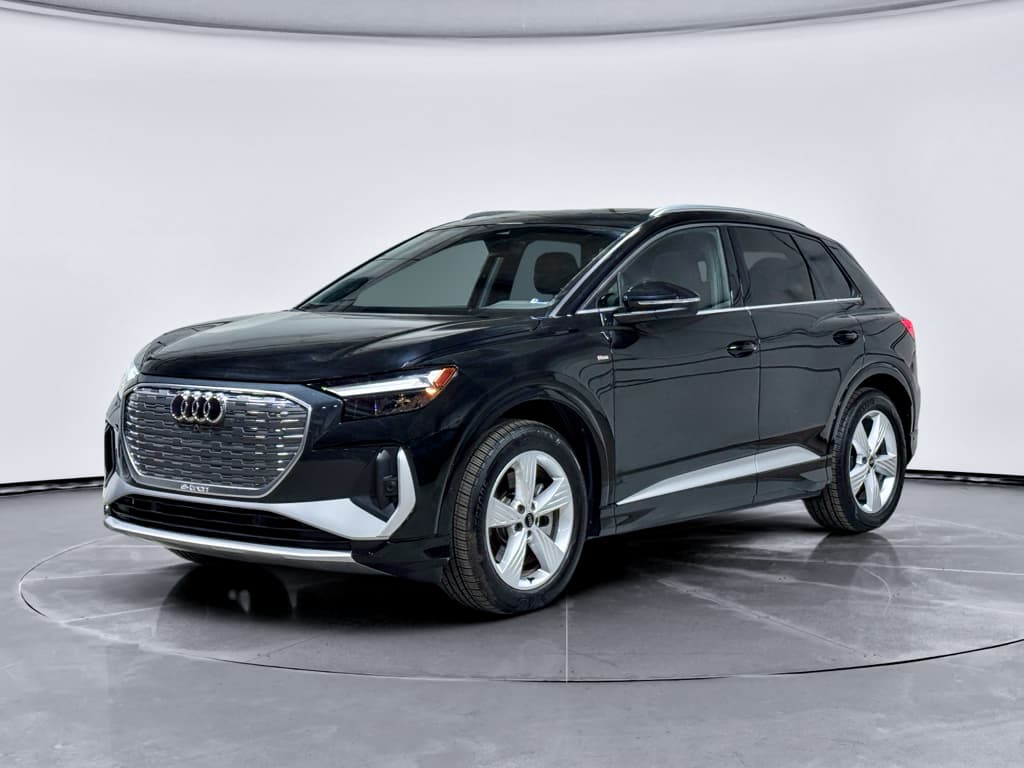
You don’t buy an Audi Q4 e-tron because you love spreadsheets. Yet here you are, wondering whether 2026 is the best time to sell your Audi Q4 e-tron before depreciation, incentives, and the next battery tech wave gang up on your resale value.
The short answer
Should you sell your Audi Q4 e-tron now?
Before we talk timing, ask a simpler question: why are you thinking about selling? The Audi Q4 e-tron is a competent, comfortable electric crossover, but it’s also one of the faster-depreciating luxury EV SUVs on the market. If you’re chasing the next thing, more range, faster charging, or a different badge, waiting too long can get expensive.
Reasons it may make sense to sell in 2026
- Your Q4 e-tron is 2–4 years old and still under warranty.
- Mileage is under ~40,000 and battery health looks strong.
- You want more range or newer driver-assistance tech.
- You’re eyeing lower-priced newer EVs as incentives and discounts shift.
Reasons to hold a bit longer
- Your loan is upside down and you’d have to bring cash to the table.
- You’re under 15,000 miles a year and plan to drive it for 7–10 years.
- You value the refinement more than the resale math.
- There’s no clear upgrade you actually want yet.
Watch the debt, not just the depreciation
How the Audi Q4 e-tron actually depreciates
Electric luxury crossovers like the Q4 e-tron live fast and depreciate hard. Data from multiple valuation services show the Q4 e-tron losing more value in the first five years than the average SUV, and more than the average EV. One large resale study estimates roughly 56–60% of value gone by year 3, and close to 70% gone by year 5 compared with the original MSRP.
What depreciation looks like for a Q4 e-tron
The practical translation: every extra year you hold a Q4 e-tron early on is expensive. The curve is steepest in years 1–3, then starts to flatten. So the question becomes: do you exit while the curve is still steep (to hand the loss to the next owner), or ride it down because you like the car more than the money?
Best time to sell by Q4 e-tron model year
Because the Q4 e-tron only arrived in the U.S. a few years ago, the whole lineup is still relatively young. But there are some clear timing signals by model year, especially with powertrain updates landing for 2025 and an expected facelift in the pipeline.
Recommended timing by Audi Q4 e-tron model year (U.S.)
Use this as a directional guide, then layer in your mileage, battery health, and local market conditions.
| Model year | Age in 2026 | What’s happening | Better to… | Why |
|---|---|---|---|---|
| 2022 | ~4 years | Early adopters with higher depreciation already baked in | Sell sooner (2026–2027) | You’re exiting before 60k+ miles while CPO shoppers still care. |
| 2023 | ~3 years | Early tech and range vs. newer upgrades | Aim for 2026–2028 | You’re near peak resale before out-of-warranty anxiety kicks in. |
| 2024 | ~2 years | Bridging to updated 2025 powertrains | Consider 2027–2029 | Let the worst early depreciation pass, but exit before 80k miles. |
| 2025 | ~1 year | Updated motors, range, and charging performance | Plan for 2028+ | If you like the car, there’s no rush, your depreciation hit is just starting. |
Assumes typical driving (12,000–15,000 miles per year) and normal wear.
Mind the facelift
Mileage, battery health, and timing your exit
With EVs, odometer miles and battery health march in lockstep in a buyer’s mind, even if the chemistry is more nuanced. An Audi that looks pristine but has a tired pack is like a watch that’s beautiful and five minutes slow, it drives people crazy. The timing trick is to sell while your Q4 e-tron still feels comfortably “low-mile” with a strong battery story.
Key mileage bands that move Q4 e-tron pricing
Buyers mentally price-shop in brackets, not one mile at a time.
Under 20,000 miles
Best-case scenario. Feels nearly new, especially if the interior still smells like Ingolstadt. If you’re selling this early, buyers will expect a clear reason (relocation, lifestyle change, another EV).
20,000–45,000 miles
Prime selling range. Enough use that depreciation has started to ease, but still in the zone where warranty coverage and battery health feel reassuring.
45,000–80,000 miles
Value shopper territory. Still absolutely sellable, but buyers will interrogate battery health, charging habits, and maintenance history much more closely.
Battery-health timing hack
Checklist: Are you at a good “sell” moment?
1. You’re under a big mileage milestone
You’re approaching but haven’t crossed 30k, 50k, or 75k miles. Listing before that odometer rolls over can make your car appear “lower use” compared with similar listings just past the line.
2. Your real-world range still feels close to new
On your regular commute, you’re seeing roughly the same usable miles as when the car was new, maybe down a small, understandable amount, not a gut-punch 20–30% drop.
3. Charging history is mostly Level 2
You’ve relied more on home or workplace Level 2 charging than constant DC fast charging. That quiet history is gold when a buyer asks, “How did you charge it?”
4. You have service and software records ready
You can quickly document tire rotations, brake checks, recall work, and software updates. EV shoppers are wary of neglect; tidy paperwork calms them down.
5. No looming expensive wear items
Your tires, brakes, and suspension still have honest life left. If everything is due within 10k miles, buyers mentally subtract that cost from your asking price.
2026 market timing: seasons, incentives, and EV price swings
Macro matters. Your Q4 e-tron doesn’t exist in a vacuum; it swims in the same used EV pool as Model Ys, Mach-Es, Hyundai Ioniqs, and whatever else automakers are discounting this month. As of early 2026, three big forces shape when it’s smart to sell:
- Seasonality: Late winter and early spring typically see more shopping activity as people emerge from holiday spending and tax-refund season starts. Summer road-trip planning also lifts interest in crossovers.
- Incentive shifts: The 2025 expiration and reshuffling of federal EV credits distorted demand, buyers rushed in, then demand cooled, pushing used EV prices downward in late 2025. As 2026 progresses, fewer subsidies on new EVs can make well-priced used models more attractive again, but it also means shoppers are picky.
- New model launches and facelifts: When Audi or a rival launches a cheaper, longer-range electric crossover, it instantly resets buyer expectations. Your older Q4 e-tron is being cross-shopped against cars that didn’t exist when you bought yours.
Beware the price cliffs
Generally better windows to list
- Late February through May: Tax refunds, better weather, and more shopping activity.
- Early summer: Families planning moves, new jobs, and road trips lean toward crossovers.
- Right before a facelift hits showrooms: Dealers are still pricing outgoing models optimistically; so can you.
Windows to approach carefully
- Late December–January: Holiday hangover plus winter weather in much of the U.S.
- Immediately after big incentive changes: The market needs a few months to find a new normal.
- When your local dealers are overstocked on EVs: Too many similar vehicles on the lot gives shoppers leverage.
Steps to maximize your Audi Q4 e-tron’s value before you list
Timing is only half the game. The other half is how your particular Q4 e-tron presents itself to the cold, calculating eyes of online shoppers scrolling past 40 nearly identical white crossovers. Here’s how to nudge your car to the top of the stack.
Six high-impact moves before you sell
They cost less than you think, and buyers notice.
Detail it like a dealer would
Full exterior wash, paint decontamination, and interior deep clean. EV interiors age quickly when they look dusty and shiny with body oil, reset that first impression.
Knock out small fixes
Replace worn wiper blades, blown bulbs, and cracked license-plate frames. The buyer assumes if you ignored the little things, the big things suffered too.
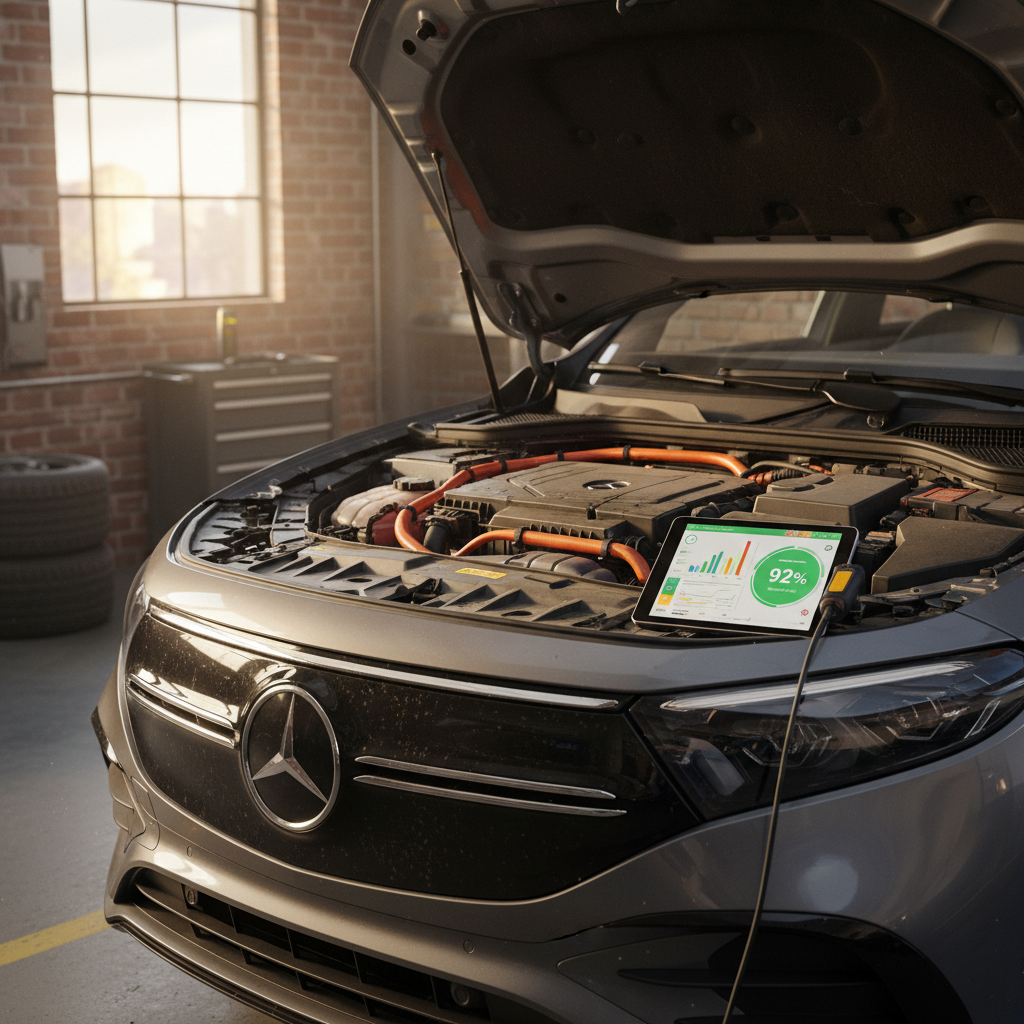
Document battery health
Capture screenshots of range at a known state of charge, plus any third-party battery report you have. At Recharged, this is rolled into our Recharged Score so buyers can see verified pack health.
Assemble a clean history file
Service receipts, recall letters, software update notes, charging-cable replacements, stack them in one PDF or folder. It says, "I cared" in a language car people understand.
Shoot honest, flattering photos
Landscape orientation, clean background, good light. Show the charge port, driver’s seat bolster, wheels, tires, and cargo area. For EVs, include a photo of the included charging cable.
Price with the market, not your heart
Anchor your expectations using multiple appraisal tools, then verify against live listings. Listing 3–5% below the outlier “optimistic” sellers often gets you more interest and a faster, cleaner sale.
Where Recharged adds value
Ready to find your next EV?
Browse VehiclesTrade-in vs. private sale vs. EV marketplace
With electric cars the old trade-in vs. private-sale decision tree gets a new branch: the EV-focused marketplace. The right route depends on how much time, risk, and hassle you’re willing to accept to chase that last dollar.
Traditional trade-in
Best for: Speed and simplicity.
- One-stop transaction when you’re buying another car.
- Dealers will be conservative on EVs they don’t fully understand.
- Least time-consuming, usually least money in your pocket.
Private sale
Best for: Maximizing price if you’re patient.
- Potentially the highest sale price.
- You handle marketing, screening, test drives, and paperwork.
- Most buyers will grill you on range, charging, and battery health.
EV-focused marketplace (like Recharged)
Best for: Balancing value, speed, and EV-savvy buyers.
- Audience already shopping for used EVs specifically.
- Battery diagnostics and pricing analysis are built in.
- Options for instant offers, trade-ins, or consignment-style listings.
Think in net dollars and time, not just price
How Recharged can simplify selling your Q4 e-tron
Selling an EV asks more of you than selling a gas SUV. Buyers want to know about battery degradation, software updates, and charging habits, topics most owners haven’t rehearsed in the mirror. Recharged exists to bridge that gap.
- Recharged Score battery diagnostics: Your Q4 e-tron gets an objective health check, including battery performance, charging history, and range behavior, distilled into a single, easy-to-read report for buyers.
- Fair market pricing analysis: We compare your Audi against live used-EV data so you’re neither leaving money on the table nor stuck with an overpriced listing that gets stale.
- Flexible ways to sell: Choose an instant offer, trade-in, or a consignment-style listing where Recharged markets the car on your behalf.
- Nationwide reach with local support: Sell digitally with delivery options, or get EV-specialist advice from our Experience Center in Richmond, VA if you want a human in the loop.
- Financing-ready buyers: Because Recharged also offers EV financing, many shoppers arrive prepped to buy quickly when the right Q4 e-tron appears.
Frequently asked questions about selling an Audi Q4 e-tron
Audi Q4 e-tron selling FAQ
If the Audi Q4 e-tron were a person, it would be the well-dressed friend who’s always on time and never quite the life of the party. As a used EV, it’s desirable but price-sensitive: buyers want it, but only at the right number, with the right battery story. Time your sale for the early middle years, keep the mileage and maintenance in your favor, and present clear, verified battery health, and your Q4 e-tron can be one of the smarter exits you make in this fast-moving EV era. If you’d rather not become an amateur market analyst along the way, that’s exactly what Recharged is here to handle for you.