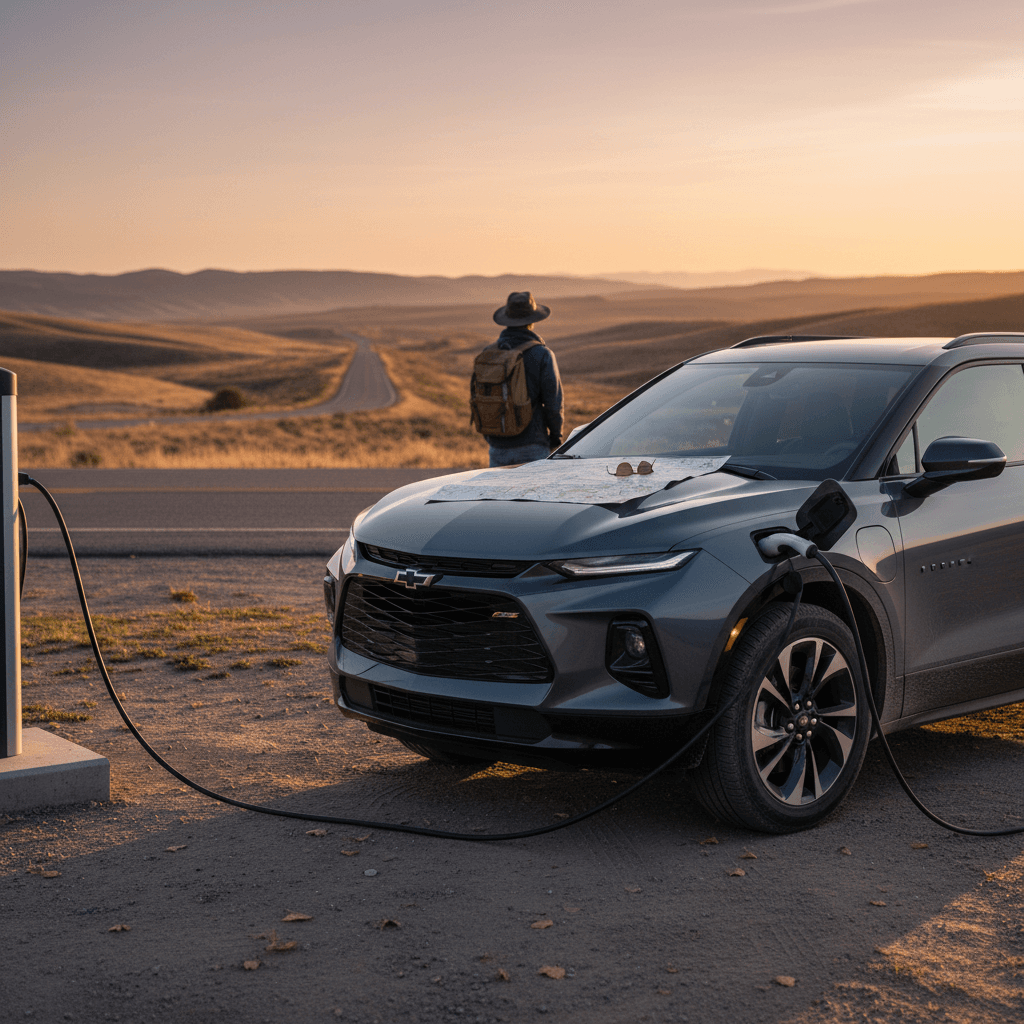
If you own a Chevrolet Blazer EV, chances are you bought it for more than just commuting. It’s a family-sized SUV with serious battery capacity, and with the right strategy it can be a capable long‑distance cruiser. This guide walks you through practical Chevrolet Blazer EV long distance driving tips, from route planning and DC fast‑charging strategy to real‑world range expectations, so your next road trip feels predictable instead of stressful.
Big Picture
Is the Chevrolet Blazer EV Good for Long-Distance Driving?
Blazer EV Road-Trip Numbers at a Glance
On paper, the Blazer EV is absolutely road‑trip capable: a big battery, DC fast‑charging support, and a modern efficiency‑focused platform. In practice, owners’ experiences vary widely. Some see 150+ kW on well‑sized DC fast chargers, while others are disappointed by slow speeds on cold days or at crowded stations. That’s not unique to Chevy, every EV is sensitive to temperature, charger quality, and how you drive, but it means your strategy matters as much as the specs.
Reality Check on Speed
Know Your Blazer EV’s Real-World Range and Charging Basics
Understand your trim’s battery and range
Different Blazer EV trims use different Ultium battery sizes and drivetrains. Front‑wheel‑drive and rear‑wheel‑drive versions typically pair an ~85 kWh usable pack with EPA range in the mid‑200‑mile bracket, while higher‑performance versions can pack ~100+ kWh usable with somewhat similar or slightly lower range due to bigger wheels and more power. For road‑trip planning, what matters most is your true highway range at the speeds you actually drive.
- At 65 mph in mild weather, many Blazer EV drivers report getting reasonably close to EPA range.
- At 70–75 mph, plan on shaving 15–25% off the sticker number, especially with big 21‑inch wheels.
- Headwinds, rain, and cold weather can knock range down another 10–30%.
Use Your Own Baseline
Charging connectors: CCS today, NACS tomorrow
As of early 2025, U.S. Blazer EVs primarily use a CCS1 DC fast‑charging port and a J1772 inlet for Level 2 AC charging, even though the industry is steadily migrating toward the Tesla‑style North American Charging Standard (NACS). GM is in the process of adopting NACS and enabling access to Tesla Superchargers via an adapter and software updates, but your exact options will depend on build date, software version, and whether you’ve received a NACS adapter from GM.
Bottom Line on Plugs
Pre-Trip Planning: Stack the Deck Before You Leave
Four Pre-Trip Checks That Pay Off All Day
Ten minutes of prep can save you an hour of hassle on the road.
Map your chargers
Use a planner (like A Better Routeplanner or PlugShare) to drop pins for your primary chargers and at least one backup for each stop. Look for 150–350 kW stations on major corridors.
Update your apps
Install or update apps for major networks you’ll use, Electrify America, EVgo, charge point operators in your region, and the myChevrolet app. Make sure billing is set up before you leave.
Set charge targets
Plan to arrive at fast chargers around 10–20% state of charge (SoC) and typically charge to 70–80%. This is the sweet spot for speed vs. time.
Book Level 2 stays
When possible, pick hotels or rentals with Level 2 charging. Waking up to a full pack every morning makes the rest of the day much easier.
Pre-Trip Blazer EV Road-Trip Checklist
1. Update vehicle software
Check in your infotainment settings for any pending over‑the‑air updates. Bug fixes for charging behavior and navigation often arrive this way.
2. Confirm charging cables & adapters
Carry your Level 1/Level 2 portable charger, any CCS or NACS adapters you own, and a physical RFID card for at least one major network as backup to apps.
3. Check tires and tire pressure
Underinflated tires hurt range and can make the ride noisy. Set pressures to the door‑jamb spec when the tires are cold, and remember that cold mornings reduce pressure.
4. Clean out unnecessary weight
Every extra 100 pounds of cargo costs you range. Remove sports gear, tools, and cargo boxes you don’t need on this trip.
5. Precondition the cabin on shore power
If you start the day at home or at a hotel EVSE, warm or cool the cabin while still plugged in. That preserves battery energy for driving.
6. Share the plan
If you’re traveling with family, explain that you’ll be stopping every 2–3 hours for 25–40 minutes. Setting expectations keeps everyone happy.
Smart Charging Strategy: How and When to DC Fast Charge
Aim for 10–70% (or 80%) instead of 0–100%
Ultium packs like the Blazer EV’s charge fastest when the battery is low but not empty, and when you’re not trying to stuff in that last 20%. Below roughly 10–15% the car begins to protect the pack, and above 70–80% most fast‑chargers taper down steeply. For trip efficiency, you’re usually better off making more frequent, shorter sessions in the 10–70% window than a couple of marathon 10–100% charges.
- Plan legs of 120–180 highway miles between fast chargers, depending on weather and trim.
- Target arrival at 10–20% SoC; leave once you have 15–20% more than the energy needed for the next leg.
- Skip charging to 100% unless you’re headed into a charging desert or planning to park for a long time.
Use the Time, Not Just the %
Precondition the battery for faster charging
The Blazer EV can warm or cool its battery pack before you arrive at a DC fast charger. That’s crucial in cold or very hot weather. Use the native navigation to set the fast charger as your destination; shortly before you arrive, the car will start preparing the battery so it can accept higher power right from the start.
Cold Weather Slowdowns
Pick the right station and the right stall
Not all DC fast chargers are created equal. Your Blazer EV can take advantage of up to roughly 150–190 kW in ideal conditions, but only if the station and cable can deliver it. Many “350 kW” units are paired stalls that share power; some 150 kW units are limited by lower‑amp cables. If possible, favor newer, well‑reviewed sites and avoid sharing a power cabinet with another big EV if you have a choice of stalls.
Don’t Rely on a Single Station
Using Apps and Tech: Let the Software Do the Heavy Lifting
Use the myChevrolet app and in-car navigation
The Blazer EV’s native navigation can route you through DC fast chargers and initiate battery preconditioning when a charger is set as your destination. Use it to:
- Preview arrival SoC and expected charge time.
- Start cabin preconditioning from your phone while plugged in.
- Get notified if charging stops unexpectedly.
Layer third-party tools on top
Apps like PlugShare, A Better Routeplanner (ABRP), and major network apps help you avoid bad sites and plan smarter:
- Filter for 150–350 kW stations along your route.
- Read recent check‑ins and photos from other drivers.
- Compare alternate routes by time spent driving vs. charging.
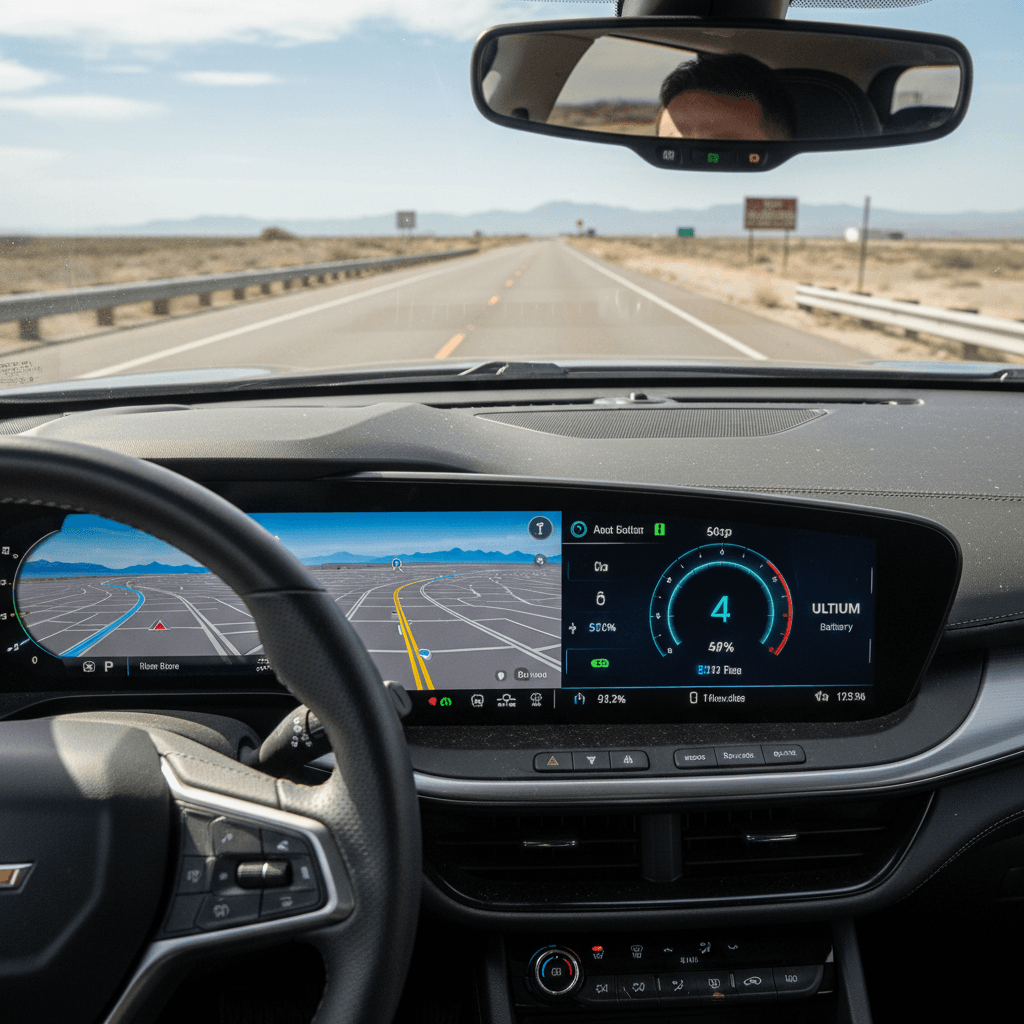
Pro Tip: Use Energy Projections, Not Just the Gauge
Driving Techniques to Maximize Highway Range
Choose a speed that matches your plan
Speed is the number one lever you control on a long EV trip. In a Blazer EV, the difference between driving 65 mph and 75 mph can easily be 40–50 miles of usable range. That’s the difference between skipping a marginal charger and having to stop at it.
- If you’re tight on range, lock in cruise at 60–65 mph and tuck behind (not too close) a large vehicle to cut wind drag slightly.
- If you’re ahead of schedule with plenty of buffer, 70 mph is fine, just watch the projected arrival SoC, not the instantaneous mi/kWh.
- Avoid repeated bursts to 80+ mph; they spike consumption without saving much overall time once charging is factored in.
Use One-Pedal Driving and Regen wisely
The Blazer EV offers One-Pedal Driving and steering‑wheel Regen on Demand. On a flat highway with light traffic, regen won’t transform your efficiency; steady driving is more important. But in rolling hills, traffic, or urban segments near your charger, one‑pedal control can reclaim meaningful energy that would otherwise become heat in the friction brakes.
Where Regen Really Helps
Manage climate control like a pro
Cabin comfort matters, especially with kids on board, but HVAC is one of the bigger auxiliary loads. Resist the temptation to blast climate settings constantly, especially while DC fast‑charging where the car is also trying to cool the battery.
- Use seat and steering‑wheel heaters in winter; they use far less energy than cranking cabin temperature.
- In summer, use Auto A/C but avoid extreme settings like 60°F; something in the mid‑70s is usually enough once the cabin cools down.
- If your car prompts you to reduce climate use during fast charging, take it seriously, cutting HVAC load can noticeably increase charging speed.
Weather and Elevation: How They Hit Blazer EV Range
Cold weather
Cold is the toughest enemy of range. The battery is less efficient, the pack needs to be warmed, and you’re using more energy to heat the cabin.
- On a freezing day, it’s normal to see 20–30% less range at highway speeds.
- Plan shorter legs between chargers and precondition the battery whenever possible.
- Try to park in a garage or at least out of the wind overnight.
Heat, wind, and hills
Hot weather doesn’t usually punish range as hard as extreme cold, but high A/C and battery cooling draw still add up. Strong headwinds and sustained climbs are just as important.
- A stiff headwind at 75 mph can feel like you’re driving 85 mph in terms of consumption.
- Expect higher consumption on long grades; you’ll earn some of it back on the way down via regen, but not all.
- If your projected arrival SoC is dropping on a climb, back off 5 mph and watch the projection stabilize.
Use Elevation Profiles When You Can
Blazer EV at Tesla Superchargers (NACS): What to Know
As GM rolls out NACS access, more Blazer EV owners will be able to use Tesla Superchargers on long trips. Experiences so far suggest that when the software, adapter, and station all cooperate, the Blazer EV can hold very solid charging speeds on Tesla hardware, sometimes better than at older third‑party CCS sites.
- Confirm your vehicle is eligible for Tesla access and that you have the correct adapter (or integrated NACS port on later builds).
- Use the official Tesla app or in‑car navigation integration when available to start sessions and see pricing.
- On NACS, you still want to arrive low (10–20% SoC) and leave around 70–80%, just as with CCS.
Treat NACS as a Backup, Not a Crutch
Protecting Your Ultium Battery on Frequent Road Trips
DC fast-charging and battery life
Modern Ultium packs are engineered to tolerate DC fast charging, and an occasional road trip will not ruin your battery. That said, repeatedly running any EV from nearly empty to nearly full on DC fast chargers will accelerate long‑term degradation compared with mostly Level 2 use in the middle of the pack.
- For everyday driving, stay mostly between ~20–80% SoC and use Level 2 at home or work.
- Reserve 5–10% “deep” DC fast‑charge cycles to near 100% for special cases, like mountain passes with limited charging.
- If you road‑trip often, consider slightly slower but more frequent DC sessions that avoid very high SoC.
Good News for Used Buyers
Ready to find your next EV?
Browse VehiclesStorage and charging habits between trips
How you treat the battery between adventures is just as important as what you do on race‑to‑grandma’s‑house weekends. If the Blazer EV will sit for days or weeks, avoid leaving it completely full or nearly empty, especially in extreme temperatures.
- For storage longer than a week, park around 40–60% SoC.
- If your Blazer EV has charge limit settings, use them; don’t automatically charge to 100% every night if you only drive 30–40 miles a day.
- In very hot climates, try to park in shade or indoors when the pack is at a higher SoC.
Sample Blazer EV Road Trip Playbook
To make all of this concrete, here’s how a realistic day might look in a Blazer EV with an EPA rating around 290–300 miles and average highway consumption. Adjust the distances up or down for your specific trim and weather.
Example 550–600 Mile Day in a Blazer EV
Assumes mild weather, mostly 65–70 mph highway speeds, and access to 150–350 kW DC fast chargers.
| Segment | Start SoC | End SoC | Distance | Charging plan |
|---|---|---|---|---|
| Morning drive | 100% | 25% | 180–200 mi | Left home at full after overnight Level 2. No morning charging needed. |
| Stop #1 | 25% | 75% | +30–35 min | Coffee, restroom, short walk. Precondition battery via nav, unplug around 75%. |
| Midday drive | 75% | 20% | 170–190 mi | Cruise at 70 mph, adjust speed if arrival projection drops below 10%. |
| Stop #2 | 20% | 70% | +30–35 min | Lunch. Watch kW/mi/hr; once it drops under ~70 kW and you have a 15–20% buffer to next stop, go. |
| Afternoon drive | 70% | 15% | 150–170 mi | Headwinds or hills? Ease down to 65 mph to protect your buffer. |
| Stop #3 | 15% | 60–70% | +25–30 min | Snacks and stretch break, charge enough to reach hotel plus 15–20%. |
| Evening hop | 60–70% | 20–30% | 80–100 mi | Arrive at hotel with Level 2, plug in overnight back to 90–100%. |
One long day, three DC fast‑charge stops, and a hotel Level 2 session make a multi‑state trip very doable.
Stack Stops With Real Breaks
Chevrolet Blazer EV Long-Distance Driving FAQ
Frequently Asked Questions
Key Takeaways for Stress-Free Blazer EV Road Trips
The Chevrolet Blazer EV is a capable long‑distance companion when you play to its strengths: a big Ultium battery, solid DC fast‑charging in the right window, and a comfortable, tech‑heavy cabin. Build your day around 120–180‑mile legs, keep most DC fast‑charge sessions in the 10–70% SoC range, and use preconditioning plus smart route planning to avoid slow, cold‑battery starts. Pay attention to speed, weather, and elevation instead of staring only at the percentage gauge, and your trip will feel much closer to driving a conventional SUV, just with quieter miles and fewer fuel stops.
If you’re evaluating a Blazer EV specifically for road‑trip duty, or shopping used, a transparent look at the battery and charging behavior is essential. That’s where Recharged comes in: every EV we sell includes a Recharged Score battery health report, expert EV guidance, financing options, trade‑in support, and nationwide delivery. Whether you start your next journey in Richmond, VA or across the country, the right Blazer EV, and the right plan, can turn long‑distance electric driving into something you look forward to instead of dread.