If you’re hunting for the cheapest EV SUV in 2025, the search results can be confusing. Some lists quote rock-bottom prices that assume every discount under the sun. Others ignore what really matters: your monthly payment, charging costs, and how the battery will hold up over time. This guide cuts through the noise with a clear look at the lowest-priced electric SUVs, new and used, and how to pick the one that’s actually cheapest for you over the years you’ll own it.
What this guide covers
Why “cheapest EV SUV” is trickier than it sounds
When you search for the cheapest EV SUV, you’ll see three very different kinds of numbers: MSRP on new models, used asking prices on marketplace sites, and heavily advertised “after incentive” prices that assume you qualify for every single rebate. To make a smart decision, you have to separate those out and think in terms of total cost of ownership, not just the price on the windshield.
Four ways an EV SUV can be “cheap”
Sticker price is only one piece of the puzzle
Low upfront price
Low depreciation
Low running costs
Low risk
Think in monthly cost, not MSRP
Cheapest new EV SUVs in 2025 (by sticker price)
As of late 2025, the entry point for a new electric SUV in the U.S. is generally in the mid–$30,000s before incentives. Here are some of the most affordable all-electric SUVs you can actually buy new, with rough starting MSRPs (including destination) to orient you:
Representative cheapest new EV SUVs in 2025
Approximate base MSRPs before incentives, for U.S.-market battery-electric SUVs.
| Model | Class | Approx. Base MSRP (2025) | EPA Range (base trim) | Notable notes |
|---|---|---|---|---|
| Hyundai Kona Electric | Subcompact | $34,500 | ~200 miles | Lower trims prioritize price over range; up to ~261 miles with larger battery. |
| Chevrolet Equinox EV | Compact | $35,000–$36,000 | ~250 miles | Chevy’s value-focused EV SUV; federal tax-credit eligibility depends on final battery sourcing rules. |
| MINI Countryman Electric | Subcompact premium | $34,400+ | TBD | Small, stylish, more of a premium urban runabout than a family hauler. |
| Kia Niro EV | Subcompact | Low–mid $40Ks | ~239 miles | Often heavily discounted; may undercut MSRP in real-world deals. |
| Volkswagen ID.4 (base RWD) | Compact | Low $40Ks | ~209–291 miles | Among the cheaper roomy EV SUVs when dealer discounts stack. |
Pricing is approximate and can vary by region, trim and dealer discounts.
MSRP ≠ what you’ll actually pay
How incentives change what “cheapest” really means
EV incentives in the U.S. have become more complicated. Federal rules have shifted, and some popular models no longer qualify for a purchase credit, even though leasing them can still unlock savings. State and utility rebates add yet another layer. When you’re chasing the cheapest EV SUV, you need to know which discounts are real for you, not just theoretical.
1. Federal tax credits
As of late 2025, the federal EV credit landscape has changed. Some crossovers built in North America with compliant battery sourcing may still qualify for a federal credit when purchased, while many imported EV SUVs do not. Leasing is often a workaround: the leasing company can claim the credit and pass some (or all) of that value on to you through lower payments.
Always ask the dealer or lender to break out how much of any advertised discount is from federal incentives and whether it applies to purchases, leases, or both.
2. State and local incentives
Many states, cities, and utilities offer their own rebates or bill credits for buying or leasing an EV, or installing a home charger. These can range from a few hundred dollars to several thousand and may only apply to vehicles under a certain MSRP cap.
Before you fall in love with one "cheapest EV SUV" headline, run the numbers for your ZIP code so you’re comparing post-incentive prices apples-to-apples.
Used EVs usually don’t get the federal credit, so where’s the value?
Why a used EV SUV is often your true cheapest option
From an economic perspective, EV SUVs tend to depreciate quickly in their first few years, much faster than their batteries typically wear out. That’s created a sweet spot in the used market where you can buy a low-mileage, well-equipped electric SUV for the price of a new economy EV, or less.
Why used EV SUVs can be the budget sweet spot
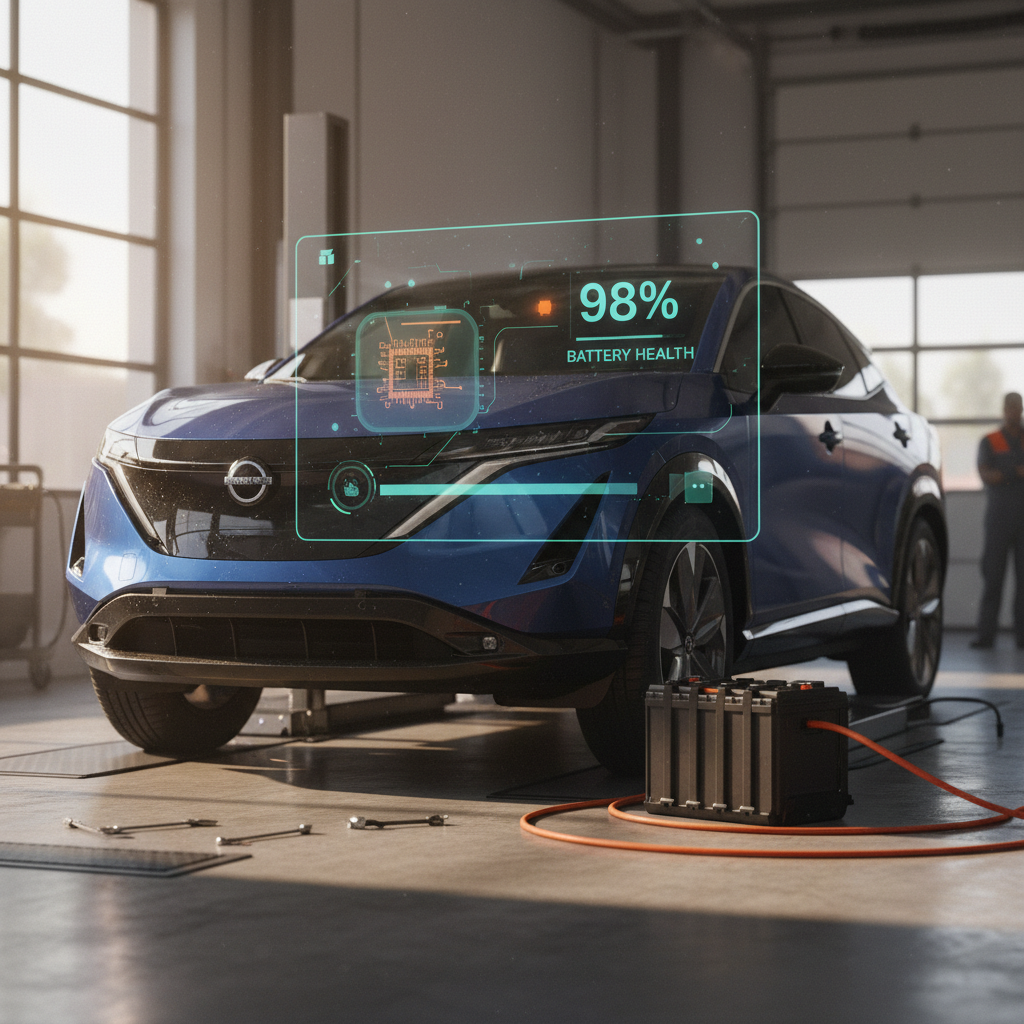
The catch, of course, is battery health. Two used EV SUVs with the same model year and miles can have very different real-world range depending on how they were charged and driven. That’s why Recharged includes a Recharged Score battery health report with every EV we list, so you can see a verified estimate of usable capacity and projected range before you buy, something you won’t get from a typical used-car listing.
Key trade-offs with cheap EV SUVs: range, charging, and space
You can absolutely get into an electric SUV on a tight budget, but every bargain comes with trade-offs. Understanding them up front helps you pick the version of “cheapest” that fits your life instead of fighting it later.
What you give up, and what you don’t have to
Cheap EV SUVs usually compromise in a few predictable areas
Range
Charging speed
Space & comfort
Match the car to your real use, not your fears
Cost comparison: new vs used EV SUV
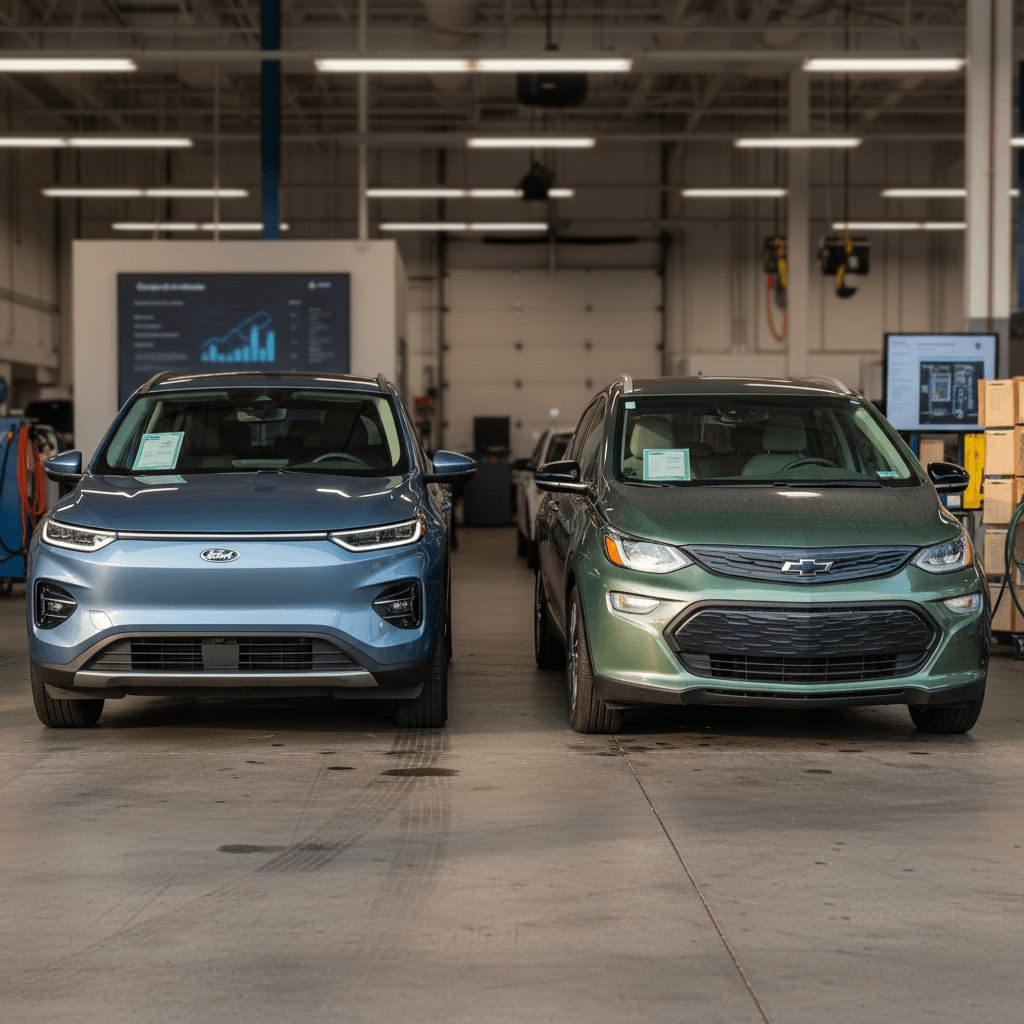
To see how this plays out in the real world, let’s compare a typical new "budget" EV SUV with a lightly used, better-equipped model you might find on a marketplace like Recharged. Numbers will vary by lender and region, but the pattern is what matters.
Example: new budget EV SUV vs used, longer-range EV SUV
Illustrative 5-year cost comparison assuming similar interest rates and average U.S. electricity prices.
| New budget EV SUV | Used longer-range EV SUV | |
|---|---|---|
| Example vehicle | New Hyundai Kona Electric SE | 3-year-old compact EV SUV (e.g., VW ID.4, Hyundai Ioniq 5) |
| Purchase price | ~$34,500 before incentives | ~$24,000–$28,000 depending on trim and mileage |
| Battery/range | Smaller pack, ~200 miles EPA | Larger pack, often 230–260+ miles EPA |
| Federal credit | Maybe (model- and build-dependent) | Usually not |
| Warranty | Full new-vehicle coverage | Remaining factory warranty; battery often still under 8-year coverage |
| Monthly payment | Higher principal, possible incentives | Lower principal, but no new-vehicle incentives |
| 5-year depreciation | Higher absolute $ loss, slower early on if incentives baked into price | A lot of the depreciation already taken by first owner |
| Best fit | Buyers who want brand-new and can fully use incentives | Value-focused buyers who care more about range and space than being first owner |
Actual pricing and savings depend on your credit, incentives, and driving habits, but the structure of the trade-off is typical.
Where Recharged fits in
Ready to find your next EV?
Browse VehiclesHow to shop smart for a cheap EV SUV
Finding the cheapest EV SUV that actually works for your life is about asking the right questions in the right order. Use this checklist as you narrow your options, whether you’re looking at new or used, franchise dealer or online marketplace.
Smart checklist for buying a budget EV SUV
1. Define your real daily and weekly mileage
Look at a normal week, not your worst-case road trip. If you rarely exceed 100 miles in a day, you have a lot more flexibility to choose a smaller, cheaper battery.
2. Decide where you’ll charge most of the time
Home charging with a Level 2 station keeps running costs low and makes even modest-range EV SUVs painless. If you rely heavily on public DC fast charging, prioritize models with faster charging curves.
3. Set a total monthly budget, not just a price cap
Combine payment, insurance, electricity, and estimated maintenance into one monthly number. Sometimes a slightly pricier EV SUV with better efficiency and residual value is cheaper overall.
4. Prioritize battery health on used EVs
On used EV SUVs, insist on a <strong>battery health report</strong> or capacity reading. Recharged’s Score makes this easy; elsewhere, you may need a third-party inspection or specialized scan tool.
5. Check cargo space and seating in person
Subcompact EV SUVs can feel tight for families or frequent road trips. Bring car seats, a stroller, or your usual cargo to a test drive to see if the "cheap" choice will frustrate you later.
6. Compare real financing offers
Pre-qualify with a lender, Recharged can help you <strong>get pre-qualified online</strong>, and compare that rate to what the dealer offers. Lower APR can offset a slightly higher price.
Common mistakes to avoid when chasing low prices
- Assuming every advertised price includes incentives you personally qualify for.
- Ignoring battery health on used EV SUVs because the dash still shows a full bar graph.
- Underestimating how much interior space and cargo you actually need.
- Overvaluing long-range numbers when you mostly drive short distances.
- Skipping a test drive that includes highway speeds and rough pavement.
- Focusing only on one brand instead of shopping across several similar models.
Don’t buy blind on a used EV SUV
FAQ: Cheapest EV SUV
Frequently asked questions about the cheapest EV SUVs
Bottom line on the cheapest EV SUV
If your only question is, “What’s the cheapest EV SUV?” you’ll get an answer, but probably not a very useful one. The models with the lowest MSRP aren’t always the least expensive to own, and the cheapest used examples aren’t always the smartest buys if the battery story is murky. The real win is finding an electric SUV that matches your daily driving, charging situation, and budget, while staying honest about range and space needs.
In 2025, that often means cross-shopping new entry-level EV SUVs with 2–4-year-old used models that offer more range and room for similar money. Tools like verified battery health reports, transparent pricing, and EV-savvy support, baked into every purchase at Recharged, turn that cross-shopping from guesswork into a data-driven decision. Start with your real-world needs, zoom out to total cost of ownership, and you’ll land on an EV SUV that’s not just cheap on paper, but genuinely affordable to live with.