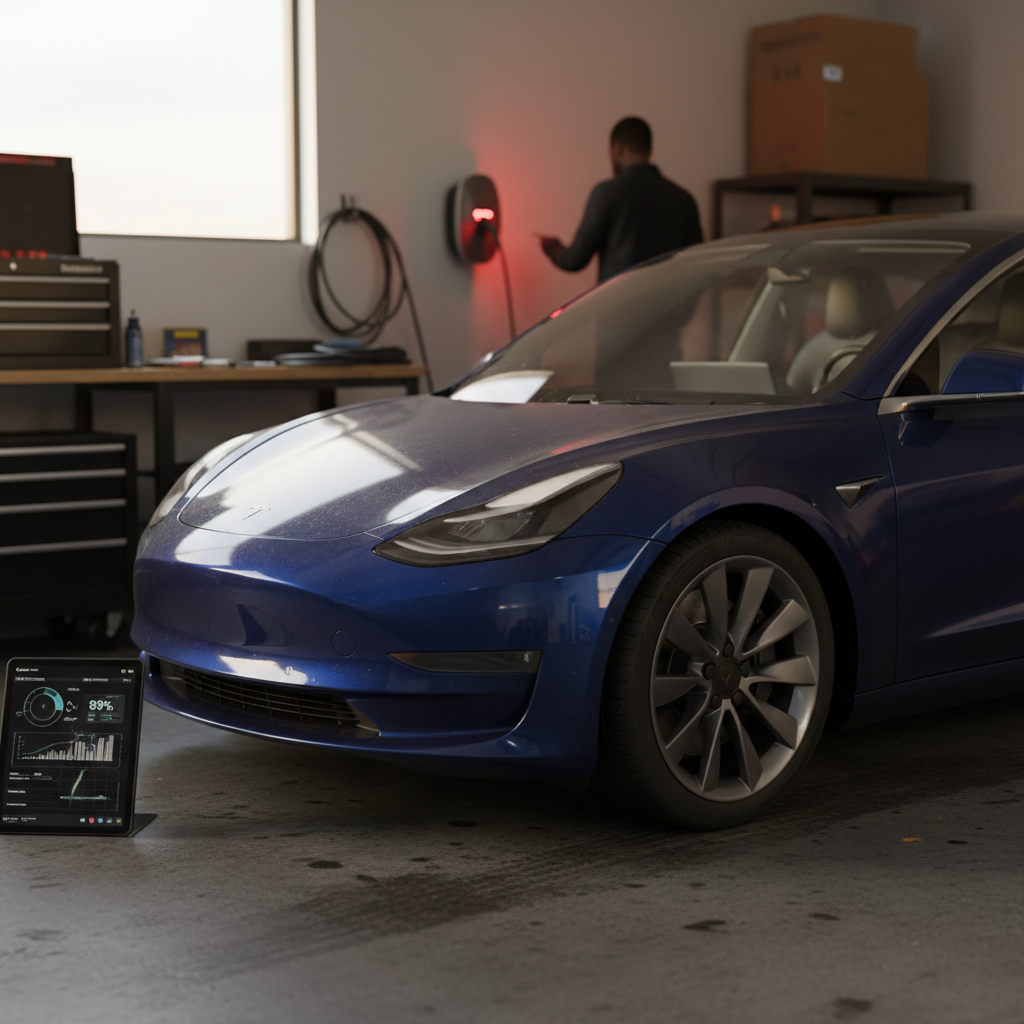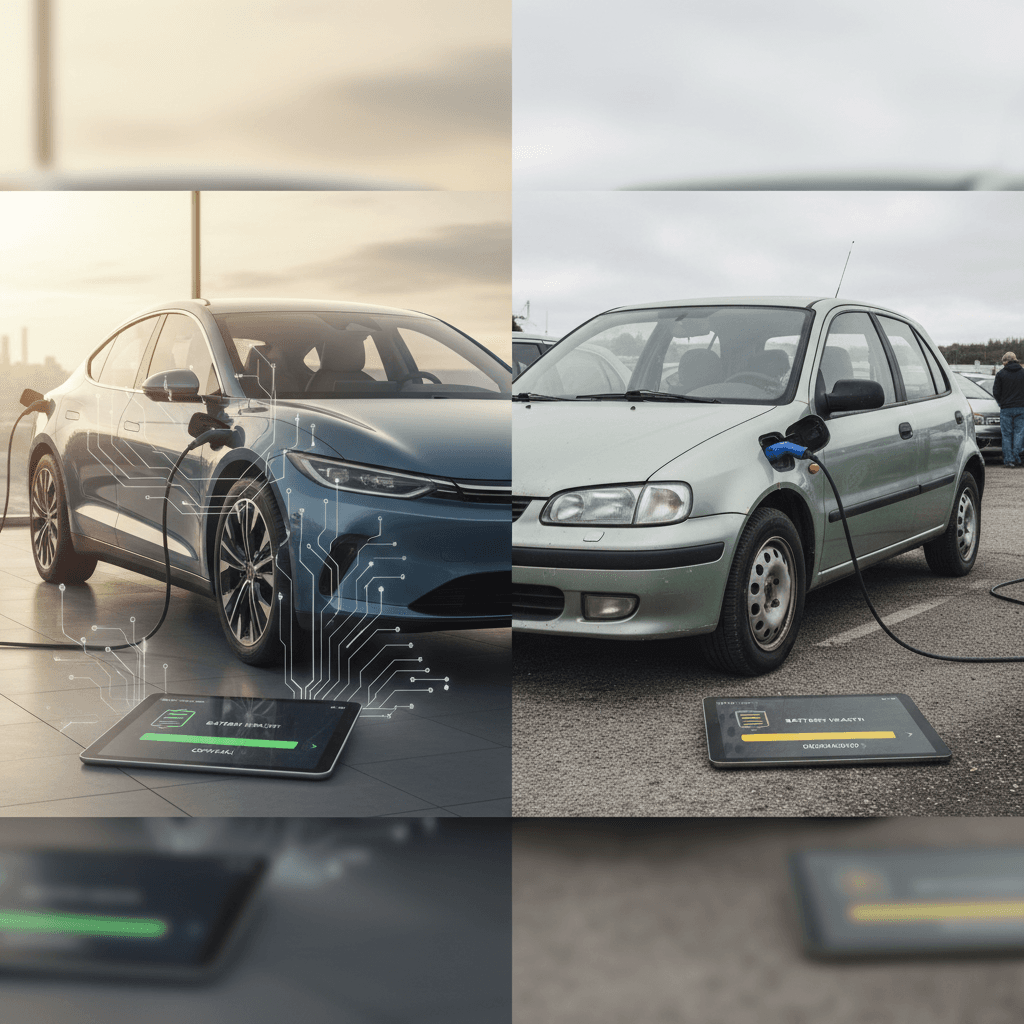
You’re ready to buy an electric car, you’ve heard that used EV prices have finally come down, and now you’re staring at two listings for the same model: one is a certified pre-owned (CPO) EV from a franchised dealer, the other is a regular used EV from an independent lot or online marketplace. The CPO car is thousands more. Is it worth it, or are you just paying for a badge and a balloon arch?
Why this decision matters more for EVs
Certified Pre-Owned EV vs Regular Used: What’s the Real Difference?
At a high level, a certified pre-owned EV is a used electric vehicle that’s been inspected and refurbished under an automaker-backed program and sold through an authorized dealer. A regular used EV is…everything else: cars sold by independent dealers, online retailers, auctions, or private parties without manufacturer certification.
Certified Pre-Owned EV
- Usually lower mileage and newer model years
- Multi-point inspection and cosmetic reconditioning
- Manufacturer-backed limited warranty (time/mileage)
- Often comes with roadside assistance and perks
- Higher upfront price and limited negotiation room
Regular Used EV
- Much wider choice of years, trims, and options
- Condition and reconditioning quality vary widely
- May have only the remaining factory warranty, or none
- More room to shop around for price and value
- Places more responsibility on you to vet battery health
Don’t confuse “clean Carfax” with low risk
How Certified Pre-Owned EV Programs Actually Work
On paper, certified pre-owned EV programs look similar to CPO gas-car programs: automakers set age and mileage limits, define inspection checklists, and package extended warranty coverage. But because batteries and software are at the center of EV value, the details matter more here than with a conventional CPO sedan or SUV.
Typical Certified Pre-Owned EV Requirements
These vary by brand, but most programs look something like this in 2026.
Age & mileage caps
Most CPO EVs are under 5 years old with mileage caps between 60,000–80,000 miles. That keeps programs focused on relatively fresh inventory.
Multi-point inspection
Dealers follow a checklist covering brakes, tires, bodywork, interior, and basic electrical systems. Battery testing ranges from minimal to fairly robust depending on the brand.
Limited CPO warranty
CPO coverage usually extends bumper-to-bumper or powertrain protection for a set number of years or miles beyond the original warranty start date. Some EV components may be excluded.
Where programs diverge is how they handle EV‑specific hardware. Some brands explicitly fold the propulsion battery and drive units into their CPO coverage; others rely almost entirely on the original EV battery warranty and focus CPO coverage on everything else. As a shopper, you can’t assume “CPO” automatically means “extra protection for the battery.” You have to read the fine print.
Ask these CPO questions before you fall in love
Battery Warranties: Where CPO EVs Help, and Where They Don’t
For EVs, the propulsion battery isn’t just another component, it’s the single most expensive part of the car and the main driver of long‑term value. Most mainstream automakers already offer 8-year / ~100,000-mile battery warranties that guarantee a minimum state-of-health (often around 70% capacity) over that period.
What Battery Coverage Usually Looks Like
Here’s the catch: certified pre-owned status usually doesn’t extend that battery warranty. For many brands, a CPO EV simply inherits whatever’s left of the original 8‑year/100,000‑mile battery coverage. If the car is four years old, you might get roughly four years of battery coverage whether it’s CPO or regular used.
Where CPO helps on battery risk
- Some brands do deeper battery diagnostics before certifying.
- A few extend EV component coverage beyond the original warranty.
- Dealer and OEM are clearly on the hook if a covered issue appears right after sale.
Where CPO doesn’t move the needle
- If the CPO warranty excludes the battery, your protection may be identical to a non‑CPO car of the same age and mileage.
- Capacity loss just shy of the OEM’s threshold (e.g., 72% vs 70%) may not be considered a defect.
- CPO programs rarely guarantee a specific state-of-health number at time of sale.
Battery health is better than early fears, but still worth measuring
Price, Depreciation & Total Cost: Who Really Saves More?
From a distance, certified pre-owned sounds like the safer play. But EVs have gone through a brutal price reset since 2023: as new prices fell and incentives shifted, used EV values dropped faster than gas cars, especially for early, shorter‑range models. That depreciation is a headache if you bought new, but it’s an opportunity if you’re buying used.
Typical Cost Differences: CPO EV vs Regular Used EV
Illustrative example for the same trim, model year, and similar mileage in today’s market. Actual prices vary by brand, region, and incentives.
| Scenario | Approximate Price | What You’re Paying For |
|---|---|---|
| Dealer CPO EV | Highest (often +$1,500–$3,000 vs non‑CPO) | Brand-backed certification, limited warranty extension, cosmetic reconditioning, dealer margin |
| Non-CPO used EV at franchise dealer | Mid | Same store, but vehicle didn’t qualify for, or wasn’t put through, CPO program |
| Independent dealer / online marketplace | Lower | Market pricing driven by supply and demand, variable inspection quality, little or no added warranty |
| Recharged used EV | Competitive with quality used | Transparent battery health via Recharged Score, pricing benchmarked to the broader used‑EV market, and EV‑specialist support without traditional dealer overhead |
Think in deltas, not absolutes, the relative gap between CPO and regular used is what matters.
Why depreciation can be your friend as a used EV buyer
When you compare certified pre-owned EV vs regular used, the central cost question is: Is the extra CPO premium smaller or larger than the financial risk you’re actually avoiding? If you’re buying a model with a strong battery track record and you can get independent health data, the answer is often that the regular used car is the better value.
Inspection, Reconditioning & Battery Tests: CPO vs Regular Used vs Recharged
The value of a CPO EV lives or dies on the quality of the inspection and reconditioning. Unfortunately, those processes are usually optimized for traditional cars: brake pads, fluids, trim repairs. EVs demand a different kind of rigor, less about oil leaks, more about kilowatts and charging curves.

How Different Paths Handle EV-Specific Risk
Same used EV, three different ways to buy it.
CPO at franchised dealer
- OEM checklist plus some EV‑specific items.
- Battery checks often rely on built‑in diagnostics and basic capacity tests.
- Cosmetic reconditioning prioritized for showroom appeal.
Regular used at non‑EV‑specialist
- Inspection quality varies widely; some lots still treat EVs like gas cars without exhaust pipes.
- Battery and charging tests may be superficial or skipped entirely.
- Pricing may not fully reflect battery health or software status.
Used EV through Recharged
- Every car gets a Recharged Score Report with verified battery health and charging performance.
- Pricing is benchmarked to real‑world used‑EV data, not just book values.
- EV‑specialist support helps decode what the health report means for your daily use.
Treat the battery like the engine & transmission combined
When a Certified Pre-Owned EV Makes the Most Sense
There are scenarios where paying extra for a certified pre-owned EV is entirely rational. The key is to focus on cases where the CPO program actually adds protection or solves a real information gap, not just when it adds a nicer detailer and a branded key fob.
- You’re buying a brand with a clearly better‑than‑average CPO EV warranty that explicitly extends high‑voltage component coverage.
- You don’t have access to independent EV inspection or battery testing where you live, and the CPO program is the only structured vetting available.
- You plan to keep the car only for the remaining CPO term and want the simplicity of single‑point coverage at the selling dealer.
- The specific CPO car offers a unique configuration you can’t easily find in the regular used market (rare trim, tow package, long‑range battery, etc.).
- You’re more risk‑averse than price‑sensitive and are comfortable paying a premium for the psychological safety of a manufacturer‑branded program.
When the math on CPO EVs often works
When a Regular Used EV May Be the Better Buy
In many other situations, especially in today’s softened EV market, a well‑vetted regular used EV paired with strong battery data gives you more car for the money than its CPO twin across town.
Regular used often wins when…
- The CPO program doesn’t extend battery coverage beyond the original warranty.
- You can get a third‑party battery health report (through a specialist or platforms like Recharged).
- Price differences between CPO and non‑CPO are several thousand dollars for nearly identical cars.
- You’re comfortable with a bit of risk in exchange for lower monthly payments or total cost.
How Recharged fits into this choice
Recharged isn’t a traditional OEM CPO program, it’s a dedicated used EV marketplace. Every vehicle includes a Recharged Score Report with verified battery health, pricing benchmarked to the broader market, and EV‑specialist support from search to delivery.
In practice, that means you often capture the pricing advantage of a regular used EV with risk levels closer to, or better than, a typical CPO car, especially for older EVs that don’t qualify for OEM certification at all.
Biggest mistake: Paying CPO prices for non‑CPO protection
Decision Checklist: Certified Pre-Owned EV vs Regular Used
7 Steps to Make the Right Call for Your Situation
1. Start with your ownership horizon
If you plan to keep the EV for just 2–3 years, CPO coverage can align nicely with your timeline. If you’re planning to drive it into the ground, the initial CPO label matters less than real‑world battery health.
2. Narrow to specific models first
Pick 1–3 EV models that fit your range, charging, and space needs. Different EVs age differently, the right model choice is more important than CPO vs regular used in isolation.
3. Compare actual warranty coverage line by line
Obtain the written CPO warranty booklet and compare it to the remaining factory warranty on a regular used example. Highlight exactly what the CPO program adds for EV components, if anything.
4. Demand battery health data on any candidate
Whether you’re at a dealer, scrolling a marketplace, or browsing Recharged, make <strong>quantified battery health</strong> a non‑negotiable. If a seller can’t or won’t provide it, treat that as a red flag, CPO or not.
5. Price out the risk difference
Estimate the CPO premium versus a similar regular used EV. Ask yourself: If I put that extra money aside, would it reasonably cover the most likely out‑of‑warranty repairs during my ownership?
6. Factor in total cost of ownership
Look beyond sticker price: home charging costs, insurance, maintenance, and projected depreciation. Tools and guides from Recharged and others can help you benchmark cost per mile across scenarios.
7. Consider your own risk tolerance
If an unexpected repair would be a serious financial shock, a strong CPO program, or a marketplace that fronts for quality and battery health, may be worth more to you than someone with more savings or a shorter commute.
Frequently Asked Questions: CPO EV vs Regular Used
Common Questions About Certified Pre-Owned vs Regular Used EVs
Bottom Line: How to Pick the Right Used EV for You
Choosing between a certified pre-owned EV vs regular used isn’t about which label sounds more reassuring; it’s about how you manage battery risk, warranty coverage, and depreciation in a maturing but still volatile EV market. For some shoppers, especially those buying expensive late‑model EVs with strong, EV‑specific CPO coverage, the premium can be justified. For many others, a carefully vetted regular used EV, backed by transparent battery health data and realistic pricing, delivers more value with similar or lower risk.
If you want that second path, Recharged was built for exactly this moment in the market. Every car on the platform includes a Recharged Score Report with verified battery health, expert‑reviewed pricing, and EV‑specialist support from first search to final delivery. Whether you end up in a CPO car, a regular used EV, or something from the Recharged marketplace, the best decision is the one grounded in data, not just a shiny badge on the window.