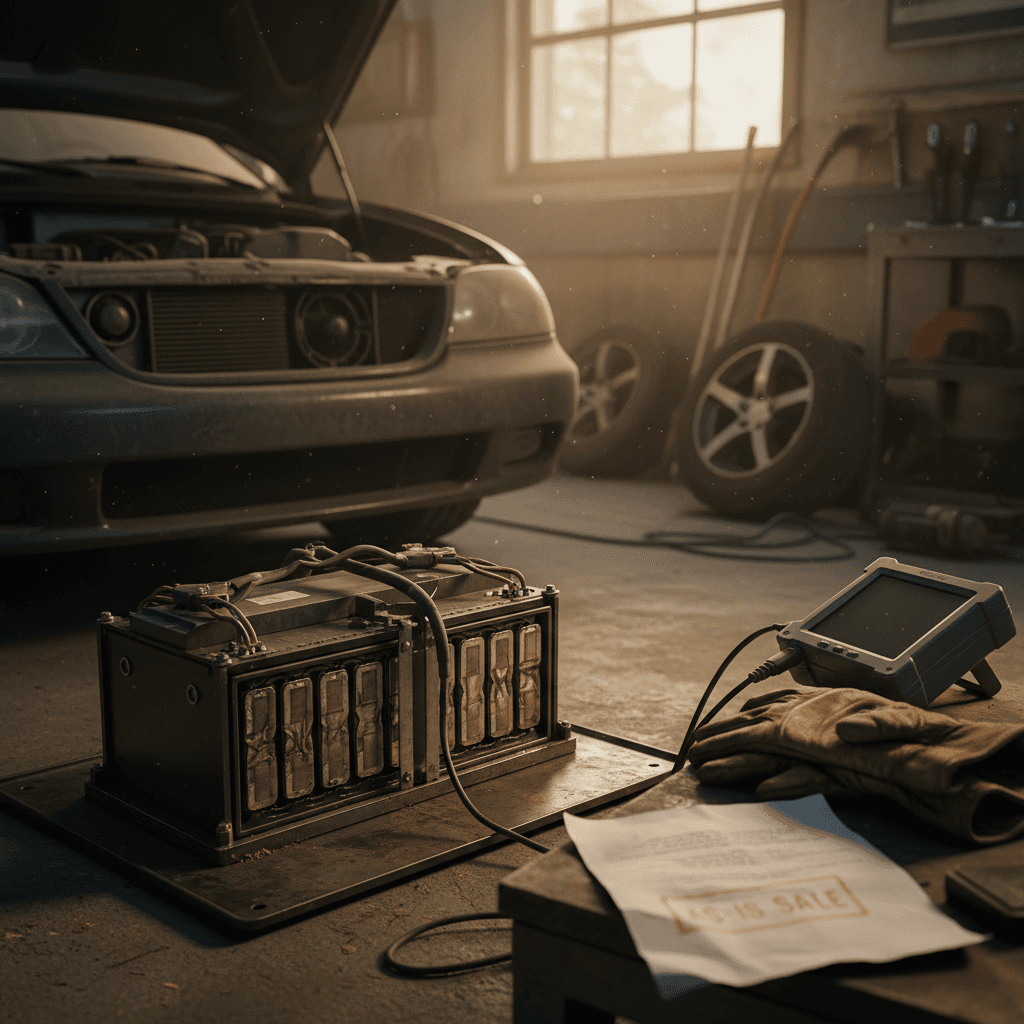
When you’re buying a used electric car, pulling a CarFax or similar vehicle history report is still non‑negotiable. But here’s the catch: electric vehicles live and die by their battery health, and that’s exactly where most history reports are thinnest. To use CarFax for electric cars effectively, you have to read it with an EV‑specific eye and then layer in a few extra checks.
Quick takeaway
Why CarFax Still Matters for Electric Cars
- Hidden crash damage that might have involved the battery pack
- Flood or salvage history that can quietly kill high‑voltage components
- Odometer rollbacks on high‑mileage ride‑share cars
- Gaps in registration that hint at long periods of storage
Used EVs: Why History and Battery Matter
How CarFax and Other Reports Actually Work
Before you can use CarFax intelligently for an EV, it helps to know what you’re looking at. Services like CarFax, AutoCheck, and Bumper pull data tied to the car’s VIN from sources such as DMVs, insurance companies, police reports, auctions, and many service centers. What you see is a timeline: first registration, reported accidents, emissions tests (where applicable), some maintenance, and ownership changes.
- They do not plug into the car or read the battery management system.
- They miss work done “off the grid” at independent shops that don’t report to their databases.
- They can lag behind reality; a very recent accident or repair might not show yet.
- They’re much better at telling you what did happen than confirming what never happened.
Don’t skip it just because it’s imperfect
EV-Specific Risks a History Report Can’t See
Gas cars wear their sins on their sleeves, oil leaks, misfires, smoke. Electric cars are more inscrutable. A quiet, smooth EV can still be one bad fast‑charge session away from an expensive battery problem. And many of those risks don’t generate a clean paper trail that CarFax can see.
The Blind Spots of CarFax on Electric Cars
Great for titles and crashes, weak on how the battery was treated.
Battery degradation
DC fast-charging abuse
Thermal and water damage
Use CarFax as context for the battery story
CarFax for Electric Cars: Line-by-Line Checklist
Here’s how to read a vehicle history report when the car you’re eyeing runs on electrons instead of gasoline. Keep the VIN report open while you walk through this checklist.
What to Check on CarFax for an Electric Car
1. Title brands and structural damage
This is non‑negotiable. Reject cars with <strong>salvage, flood, or rebuilt</strong> titles unless you are deeply experienced and the price reflects serious risk. Battery packs live under the floor; even a “minor” flood or underbody hit can be catastrophic for an EV.
2. Accident history and where the car was hit
On an EV, side‑swipes and front clips matter less than hard <strong>underbody or rear impacts</strong> that can involve the pack. Compare the report to photos and inspection notes. If the history hints at major structural repair with no battery documentation, walk away.
3. Mileage pattern vs. age
For a 5‑year‑old EV, 30,000 miles and 90,000 miles are very different lives. Steady, linear mileage is normal. Big gaps (for example, zero miles for 18 months) can mean the car sat, bad news if it sat fully charged in extreme heat or cold.
4. Number of owners and usage type
Multiple private owners aren’t automatically bad, but look for <strong>commercial use</strong> flags such as rental, fleet, or ride‑share. Those cars may have seen more DC fast‑charging and harsher duty cycles than a single‑owner commuter.
5. Geographic history and climate
Where the car lived matters. Years in very hot regions can accelerate battery wear; history in flood‑prone or coastal areas raises corrosion questions. Use this to decide how aggressively to pursue battery data and underbody inspections.
6. Reported battery or high-voltage repairs
Look for entries mentioning <strong>battery pack replacement, high‑voltage wiring, coolant leaks, inverter or on‑board charger</strong> work. A professionally replaced pack from the manufacturer can be a positive; repeated mysterious high‑voltage repairs are a red flag.
7. Service history clues
EVs need less maintenance, so thin records are common. Still, reported <strong>coolant service, software updates, and tire rotations</strong> suggest an owner who followed the book. A completely blank service section on a 5‑year‑old car should push you to demand other documentation.
Ideal scenario
Battery Health: The Part CarFax Barely Touches
CarFax can tell you if the battery pack was replaced, but it cannot tell you how healthy the current pack is today. That’s like knowing a gas car got a new engine at some point, without knowing whether the oil was ever changed.
What you can’t see in CarFax
- State of health (SoH), how much capacity the pack has left.
- Real‑world range at 100% charge vs original EPA rating.
- Daily charging habits (fast‑charge heavy, or mostly home Level 2?).
- How often the car sat at 100% charge, which accelerates wear.
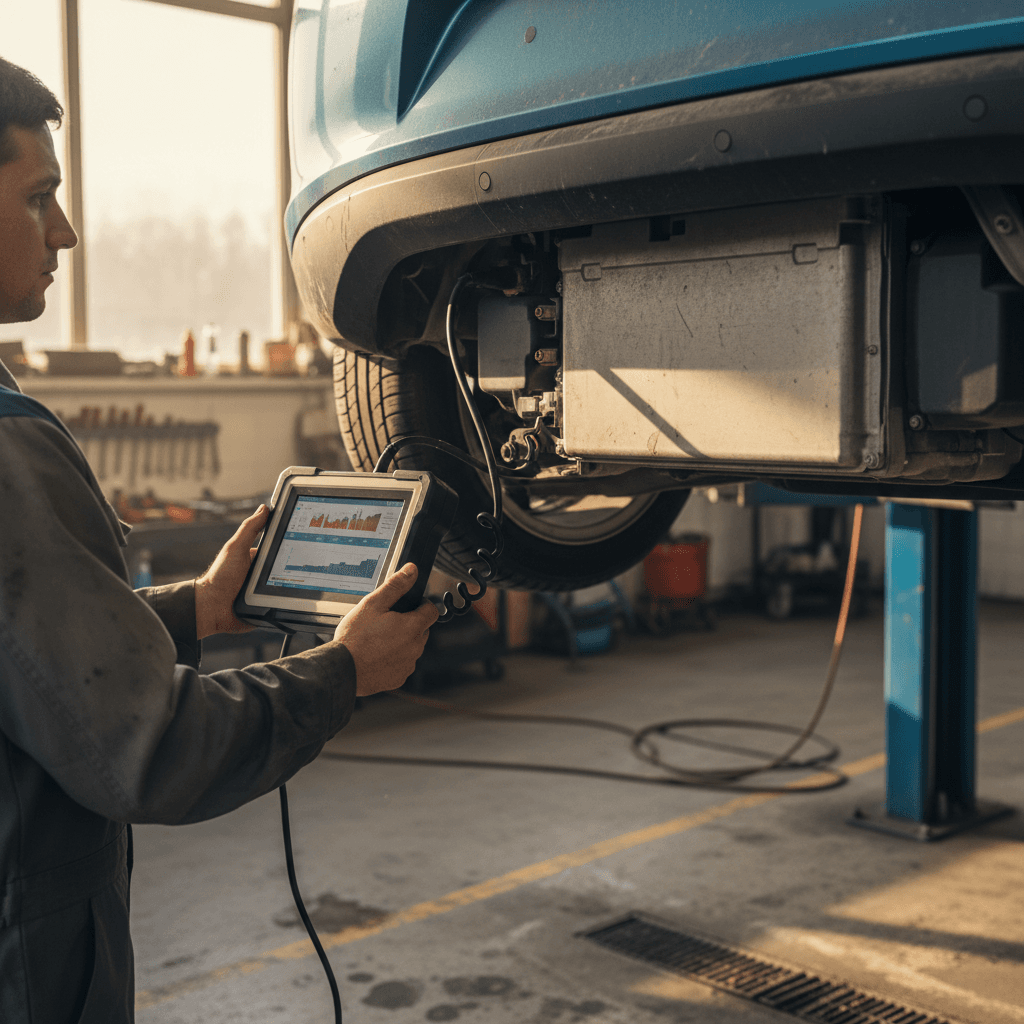
How to actually check battery health
- Ask for screenshots from the car’s battery health or range screen.
- Do a full‑charge test and compare range to the original rating.
- Use an OBD‑II dongle plus an EV‑specific app where supported.
- Request a third‑party battery report or a dealer diagnostic printout.
Many serious EV sellers now expect to provide some form of documented battery health. Sellers who refuse without a good reason deserve extra skepticism.
How Recharged handles this
Accidents, Floods, and the Battery Pack
A scuffed bumper is one thing. A compromised battery enclosure is another. When you read CarFax for an electric car, pretend the high‑voltage pack is its own expensive, fragile subframe, and filter the accident entries through that lens.
How to Read Accident and Damage Entries on a Used EV
Match the wording on the history report to the level of risk for the battery pack and high‑voltage systems.
| Report wording | What it usually means | Battery risk | Your move |
|---|---|---|---|
| "Minor front or rear damage" | Bumper, lights, cosmetic sheet metal | Low, unless notes mention underbody or cooling | Cross‑check photos. If repairs look professional and the car drives straight, usually fine. |
| "Moderate/major damage" with airbag deployment | Stronger structural hit; possible subframe involvement | Medium to high | Ask specifically whether the battery pack or cooling system was inspected or replaced. If answers are vague, walk. |
| "Underbody damage" or "damage to undercarriage" | Impact from debris, curb, or road hazard | High | This is battery territory. Demand documentation of pack inspection and repairs. No paperwork? Move on. |
| "Flood", "water damage", or "salvage" | Vehicle exposed to standing water or written off by insurer | Very high | For EV buyers without deep experience, these are almost always no‑go cars, regardless of how cheap they seem. |
When in doubt, pair the report with underbody photos or a lift inspection from an EV‑literate shop.
The cheap EV that’s too cheap
Charging Usage and Infrastructure Clues in the Report
CarFax doesn’t log every time someone plugged into a DC fast charger, but it can still give you hints about how the car was likely charged.
Reading Between the Lines: Charging Clues in a CarFax
No, it won’t list every fast charge, but you can still profile the car’s life.
Highway corridor life
Suburban commuter life
Missing charging equipment
Use the report to negotiate
Putting It Together: Step-by-Step Used EV Checklist
To keep this practical, here’s a full workflow you can run every time you’re serious about a used EV, whether you’re reading a CarFax PDF on your laptop or scrolling a marketplace listing on your phone.
Full Workflow: From Listing to Decision
1. Start with the listing, not the report
Read the seller’s story first. Are they specific about battery health, range, and charging, or is it just “runs great”? A vague description plus a sketchy report is your cue to bail early.
2. Pull CarFax (or equivalent) by VIN
Never rely on screenshots or partial pages. View the full report, and confirm the VIN matches the car in front of you. Many serious sellers and platforms provide this for free, if they don’t, ask why.
3. Run the EV CarFax checklist above
Work through title, accidents, mileage pattern, owners, geography, and high‑voltage repairs. You’re trying to answer: Is this car even worth scheduling a test drive and battery inspection?
4. Demand current battery health evidence
Explain that with EVs, proof of battery health is as basic as an oil‑change record on a gas car. Acceptable proof: a recent <strong>battery health report</strong>, dealer diagnostic printout, or platform‑provided score such as <strong>Recharged Score</strong>.
5. Test drive with range and refinement in mind
Start with a reasonably full battery. Note estimated range at the beginning and end versus miles driven; big unexplained drops are suspicious. Listen for suspension clunks and check that regen braking feels smooth and consistent.
6. Get an EV‑savvy inspection if you’re still interested
A generic pre‑purchase inspection is better than nothing, but for a five‑figure battery pack you want someone who understands high‑voltage systems and common EV issues. Ask specifically for underbody photos and signs of pack or cooling damage.
How Recharged Goes Beyond CarFax for Used EVs
If you love EVs but not homework, traditional used‑car shopping can feel like a part‑time job. You’re juggling a CarFax tab, battery apps, seller texts, and a creeping sense that you’re missing something expensive.
What You Get with Recharged vs. a DIY Search
Built for electric cars from the ground up, not retrofitted from gas‑car playbooks.
Recharged Score battery report
Digital, EV-first experience
Financing & nationwide delivery
Ready to find your next EV?
Browse VehiclesIf you’d rather not gamble
FAQ: CarFax for Electric Cars
Frequently Asked Questions About CarFax and EVs
CarFax for electric cars isn’t a different product, it’s a different way of reading the same report. Treat it as your background check on the car’s past, then insist on modern battery data to understand its future. If you don’t want to moonlight as an EV detective, shopping through a platform like Recharged lets you start with cars that already have verified battery health, transparent history, and fair market pricing, so you can focus on whether the EV fits your life, not whether it’s hiding an expensive surprise.