
If you own or are shopping for a 2021 Tesla Model Y, you’ve probably heard about recalls, and maybe a lot of them. The 2021 Model Y sits right in the middle of Tesla’s rapid growth years, when over-the-air software fixes made headlines right alongside hardware issues. This guide pulls together the most important parts of the 2021 Tesla Model Y recalls list, explains what each recall actually means, and shows you how to quickly check any specific VIN before you buy.
A quick word on Tesla recalls
Why 2021 Tesla Model Y recalls matter
The 2021 Model Y was one of Tesla’s first true volume years for this crossover, with hundreds of thousands of vehicles built worldwide. At the same time, regulators were watching Tesla’s software-driven approach very closely. As a result, the 2021 Model Y appears in a lot of recall campaigns, sometimes because of a genuine hardware concern, sometimes because Tesla needed to tweak software behavior or warnings.
- Your 2021 Model Y may be covered by multiple recalls at once.
- Some recalls affect only a narrow VIN range; others cover nearly every Model Y built in 2020–2023.
- Most software-related recalls are fixed via OTA updates, but hardware-related recalls still require a service visit.
Don’t assume the previous owner kept up
Quick overview: 2021 Model Y recall picture
2021 Tesla Model Y recall landscape in context
It’s difficult to give a single, tidy number of how many recalls apply to the 2021 Model Y because the same vehicle can be named in campaigns issued in later years. What matters more for you is understanding the main types of recalls this model year has seen and how to confirm that a particular vehicle is up to date.
Major 2021 Tesla Model Y recalls list
Below is a simplified 2021 Tesla Model Y recalls list focused on the most important and widely publicized campaigns that either originated in 2021 or heavily involve 2021-built Model Y vehicles. The exact NHTSA campaign numbers and VIN ranges are available through the official NHTSA lookup tool, but this table will help you quickly see what each recall addresses.
Key recall campaigns touching 2021 Tesla Model Y
High-level view of some of the most significant recalls that include the 2021 Model Y. Always verify specifics by VIN through NHTSA or Tesla before making decisions.
| Recall focus | Approx. model years involved | Primary fix type | What it addresses |
|---|---|---|---|
| Seat belt/seat fastener checks | 2020–2021 | Service visit | Inspections or re-torque of second-row seat belt or seat fastener bolts on early Model Y builds. |
| Forward-collision warning / AEB behavior | 2021 | OTA software update | Rare communication errors that could cause false forward-collision warnings or unexpected automatic braking. |
| Instrument cluster / warning messages | 2020–2023 | OTA software update | Updates to the way certain warning lights, chimes, or messages are displayed to meet regulatory standards. |
| Autopilot / Autosteer behavior | 2020–2023 | OTA software update | Adjustments to Autosteer driver monitoring and how the system handles certain road conditions and intersections. |
| Camera or sensor alignment checks | Various 2020–2023 ranges | Service visit | Inspections and adjustments for forward camera or sensor alignment that can affect active safety systems. |
This table is not exhaustive. Use it as a roadmap, then verify details with an official VIN search.
About those long recall names
Autopilot and FSD-related recalls that include 2021 Model Y
If your 2021 Model Y has Autopilot or the optional Full Self-Driving (FSD) package, it is almost certainly listed in at least one software-related recall. For example, regulators have required Tesla to update how Autosteer behaves in certain situations and how clearly the system communicates its limits to the driver. Those campaigns typically cover a broad swath of Tesla models from multiple years, including 2020–2023 Model Ys.
What these software recalls usually change
- How strictly the car checks that you’re holding the wheel or paying attention.
- How the system handles certain intersections, curves, or low-visibility conditions.
- When and how warning chimes, messages, or visual alerts appear.
What they usually don’t change
- The basic hardware in your steering, brakes, or camera module.
- Your ability to disable Autopilot or FSD entirely.
- The need for you to remain in full control of the car at all times.
Recall ≠ self-driving car
How to check if a 2021 Model Y has outstanding recalls
Before you worry about the length of the 2021 Tesla Model Y recalls list, zero in on a single vehicle. Here’s how to see whether a specific Model Y, yours or one you’re thinking about buying, still has open recalls.
Step-by-step: Check a 2021 Model Y for recalls
1. Locate the VIN
You’ll find the 17-character VIN at the base of the windshield on the driver’s side, on the driver’s door jamb label, or in the Tesla app under the vehicle details section.
2. Run a NHTSA VIN search
Go to the official NHTSA recall lookup site, enter the VIN, and review any listed <strong>open safety recalls</strong>. If nothing appears, there are no outstanding U.S. safety recalls for that vehicle at this moment.
3. Check the Tesla app for alerts
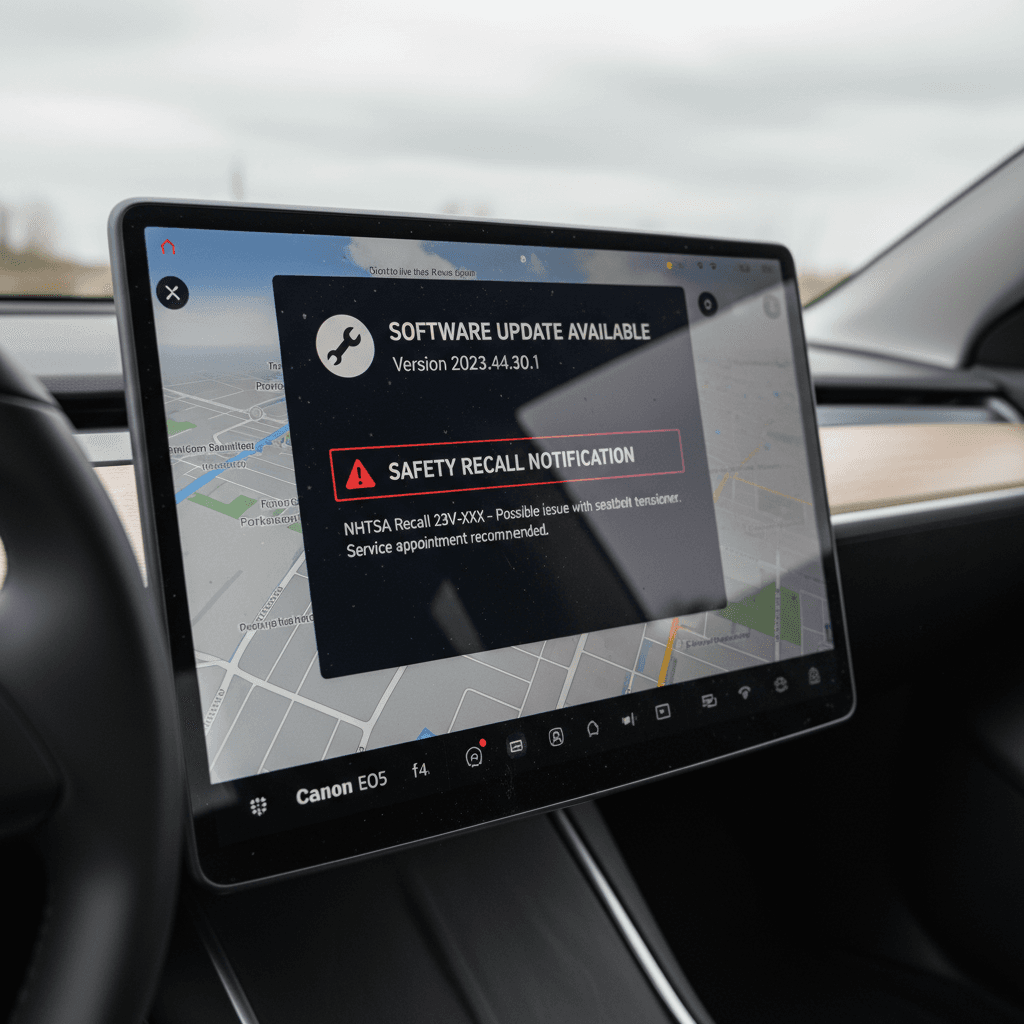
Open the Tesla app tied to that car. Tesla often surfaces recall-related service notifications or prompts for pending OTA updates directly in the app.
4. Review the in-car software screen
From the center screen, open <strong>Software</strong>. Make sure the car is on the latest available version. If an update is pending, many recall fixes will be bundled into that download.
5. Ask for service history on a used car
If you’re buying from a dealer or private seller, ask for any Tesla service records or screenshots from the app showing recent service visits and completed campaigns.
6. For Canadian vehicles, also check Transport Canada
If the car has lived in Canada, or you’re importing it, run the VIN through Transport Canada’s recall lookup as well. Some campaigns are country-specific.
Pro tip for shoppers
What these recalls mean for used 2021 Model Y buyers
A long recall list can feel scary, but with Tesla you need to read between the lines. The 2021 Model Y has been named in numerous campaigns, yet many of them were software cleanups that owners barely noticed beyond a progress bar on the screen. Hardware-related recalls, seat belts, steering, camera alignment, deserve more scrutiny, but even those are fixable at no cost when handled promptly.
Buying a used 2021 Model Y: pros and cons of the recall history
How to think about recalls when comparing this EV to other options
Potential positives
- Many issues have already been identified and corrected via earlier recalls.
- OTA updates mean less time at a service center compared with traditional brands.
- A complete recall history can be a sign of a meticulous previous owner.
Potential concerns
- Open hardware recalls may signal deferred maintenance or neglect.
- Some shoppers may be uncomfortable with an extensive recall record, even if repairs are done.
- Vehicles that missed updates could behave differently from those fully up to date.
Where Recharged fits in
Ready to find your next EV?
Browse VehiclesCommon owner questions about Tesla recalls
“Why does Tesla have so many recalls?”
Part of the answer is volume: Tesla builds a huge number of Model 3 and Model Y vehicles, so any campaign that touches them will affect a lot of cars. The other part is software. Regulators increasingly use the recall system to force software changes that, in another era, might have been a quiet service bulletin.
“Are OTA recalls ‘less serious’?”
Not necessarily. The underlying safety concern can be just as real; Tesla is simply able to fix it remotely. You should treat any recall, hardware or software, as important and make sure your vehicle is updated.
Don’t ignore software updates
How Recharged evaluates used 2021 Model Y vehicles
When a 2021 Tesla Model Y comes through Recharged, whether it’s a trade-in, consignment, or instant offer, we treat recalls and software history as part of the bigger safety and quality story. Because Teslas evolve so quickly via updates, two 2021 Model Ys with the same mileage can drive very differently depending on how they’ve been maintained and updated.
What we look at on a used 2021 Model Y
VIN-based recall status check
We check the VIN against current recall databases and document any open campaigns so you know exactly what’s pending.
Software version and update history
Our team notes the current software version and, when possible, patterns in how consistently the vehicle has received updates.
Safety system operation
On-road and diagnostic checks help confirm that Autopilot, emergency braking, lane-keeping, and warning systems behave as expected for a current, updated vehicle.
Seat belts, seats, and latches
We pay close attention to known concern areas like second-row hardware and latching mechanisms on early Model Y builds.
Charging and high-voltage system health
Although not a recall item for most 2021 Model Ys, we verify that the battery, charging port, and DC fast-charging behavior are healthy.
Transparent Recharged Score Report
All of this rolls into your <strong>Recharged Score</strong>, so you’re not guessing about what previous owners did, or didn’t, take care of.
Key takeaways for 2021 Tesla Model Y owners
- The 2021 Model Y appears in multiple recalls, especially software-related campaigns tied to Autopilot, FSD, and warning displays.
- Most software recalls are fixed over the air, but some hardware campaigns (seat belts, cameras, steering) still require a service visit.
- A long recall list doesn’t automatically make a 2021 Model Y a bad bet, but open recalls and skipped updates are red flags.
- Always run a VIN check through NHTSA (and Transport Canada if relevant), confirm software is current, and review service history on any used Tesla.
- When you buy through Recharged, your Model Y’s recall status, battery health, and overall condition are packaged into a single, easy-to-read Recharged Score Report.
The bottom line: a 2021 Tesla Model Y can be a smart, efficient choice, especially as a used EV, if you go in with clear eyes. Use the recall system as a flashlight, not a fright. Understand what each campaign changed, make sure the car you’re looking at is fully updated, and lean on experts who live and breathe EVs every day. Do that, and the sea of recall headlines becomes just one more data point instead of a deal breaker.