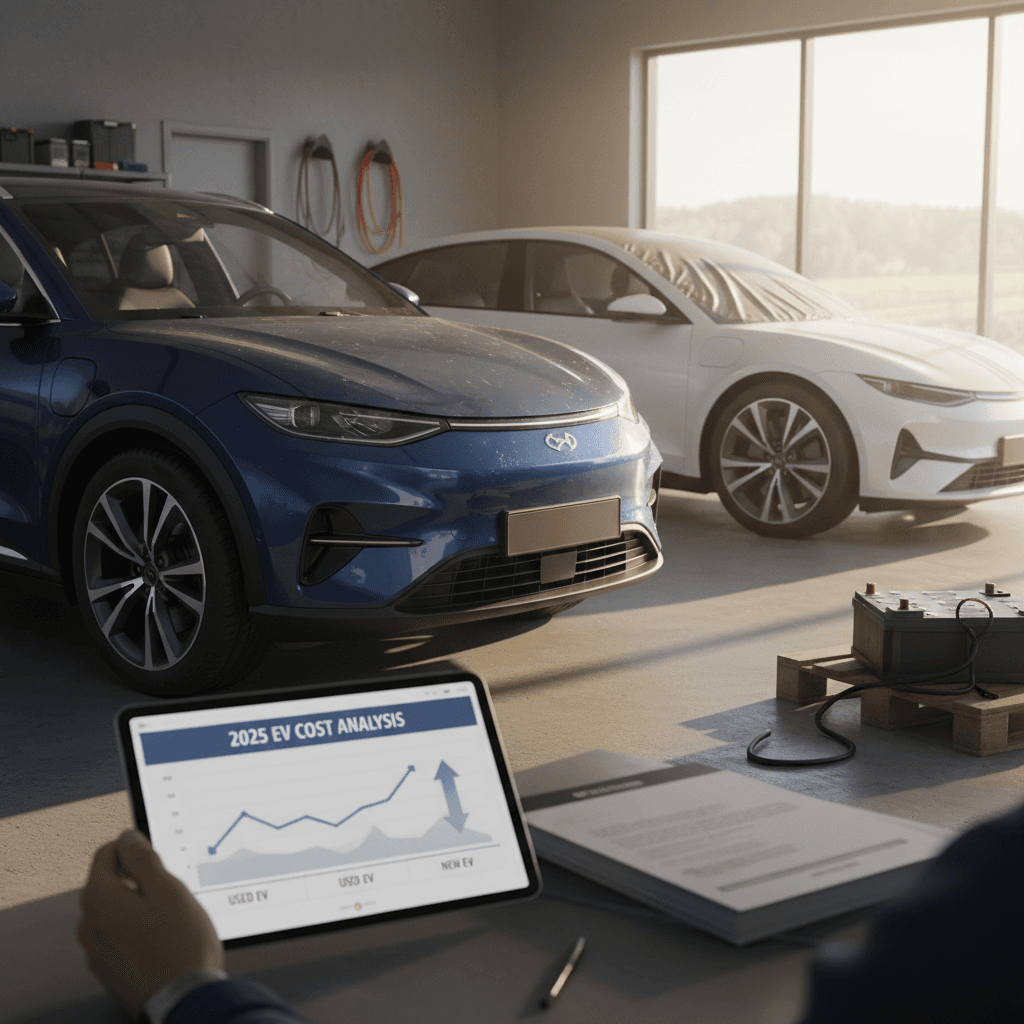
If you’re thinking about buying a car new in 2025, you’re not alone, and you’re probably feeling a bit of sticker shock. New-vehicle prices in the U.S. are hovering just above $50,000 on average, and electric models often cost even more. At the same time, federal EV tax credits have changed, depreciation is shifting, and the used EV market has matured fast. This guide walks you through what’s changed, what a new car really costs, and why a verified used electric vehicle may be the smarter “new car” for your driveway.
Who this guide is for
Should you buy a car new in 2025?
For years, the default advice was simple: if you could afford it, buying a car new meant full warranty coverage, the latest tech, and a predictable ownership experience. In 2025, the equation is more complicated. New-car prices are at record highs, federal EV tax credits for new and used electric cars ended for purchases after September 30, 2025, and many models, gas and electric, still take steep depreciation in their first few years.
That doesn’t mean you should never buy a car new. It does mean you need to be crystal clear about your priorities: Do you care most about long-term cost, or about having the latest model with exactly your preferred options? Are you comfortable with a lightly used EV if you can see verified battery health, or is being the first owner non‑negotiable? Your answers will do more to determine the right move than any headline about “the market.”
Car new vs used: 2025 market snapshot
Key policy change for EV shoppers
What buying a car new really costs today
When you buy a car new, you’re paying for more than the sticker. In 2025, AAA estimates that the average cost to own and operate a new vehicle is about $11,577 per year, or roughly $965 a month. That figure includes depreciation, finance charges, fuel or electricity, maintenance, insurance, and registration, not just your payment.
Up‑front and financing costs
- Purchase price: With the average new car over $50,000, even a modest down payment still leaves a large loan.
- Interest: Higher rates mean thousands extra over a typical 72‑month term.
- Taxes and fees: Sales tax, documentation fees, and registration can add several thousand dollars.
Ongoing ownership costs
- Depreciation: The single biggest cost, especially in the first 3 years.
- Fuel or electricity: EVs usually win here, even with slightly higher power rates.
- Maintenance & repairs: New cars have warranties, but tires, brakes, and wear items still add up.
- Insurance: Newer, higher‑value cars, and many EVs, often cost more to insure.
Run the 5‑year math, not just the monthly payment
How quickly a new car loses value
Depreciation is where buying a car new quietly gets expensive. While numbers vary by model, it’s common for a new vehicle to lose 15–20% of its value in the first year and around 40–50% by year three. Higher‑priced models and some EVs can fall even faster if incentives change or a newer version arrives quickly.
Typical depreciation pattern for a new car
Illustrative example for a $50,000 new vehicle with average depreciation. Real‑world results vary by brand, model, and powertrain.
| Timeframe | Approx. value | Value lost from new | Notes |
|---|---|---|---|
| At purchase | $50,000 | 0% | MSRP or negotiated price before taxes and fees |
| End of Year 1 | $40,000–$42,500 | 15–20% | Initial hit once the car is titled and used |
| End of Year 3 | $25,000–$30,000 | 40–50% | Lease returns and new models weigh on values |
| End of Year 5 | $18,000–$22,000 | 55–65% | Condition, mileage and brand matter more than age |
| End of Year 8 | $10,000–$14,000 | 70%+ | For EVs, battery health heavily influences value |
Depreciation is not linear; the steepest drop typically happens in the first 3 years.
The “instant depreciation” moment
Why used EVs are finally catching up
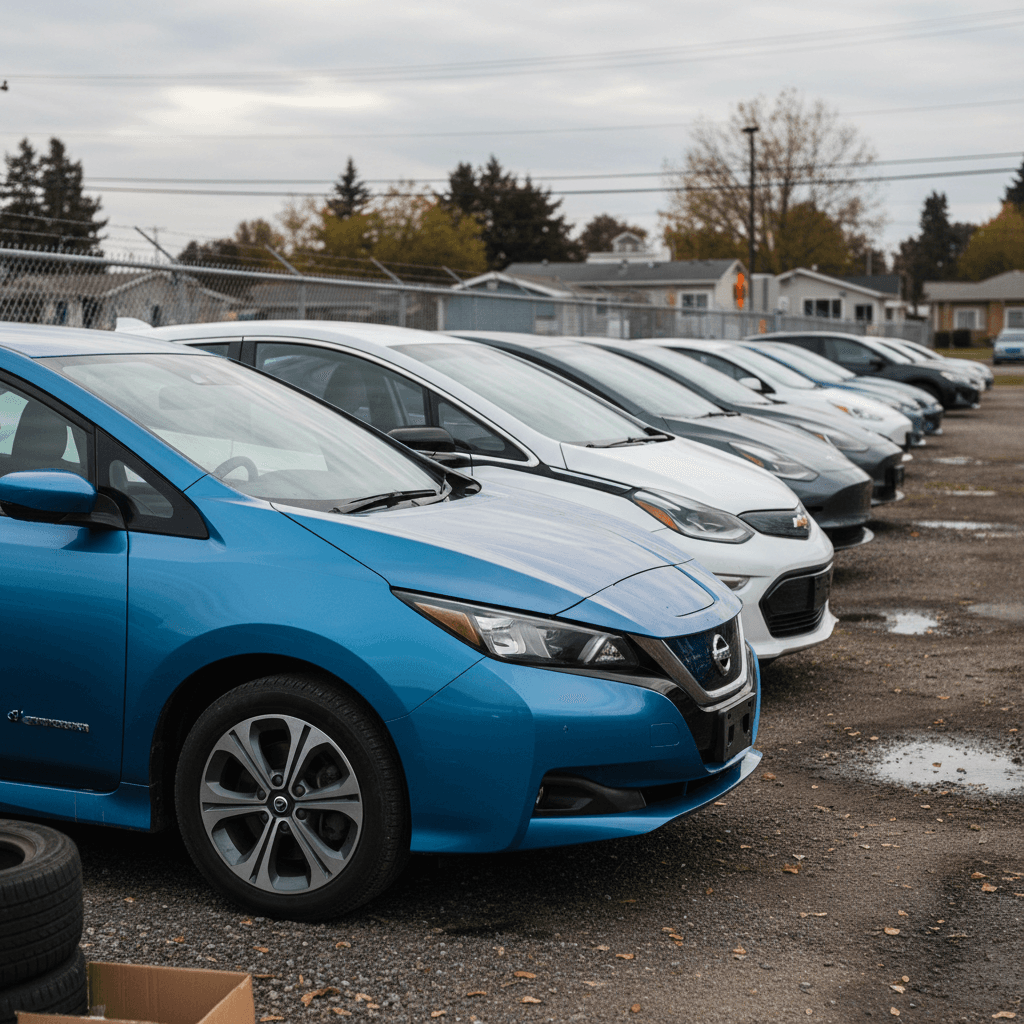
Early on, used EVs were scarce, expensive, and came with big question marks about battery life. That’s changing. U.S. EV sales have grown to roughly one out of every ten new vehicles, which means a growing pipeline of off‑lease cars and trade‑ins. At the same time, battery tech has improved and more independent data on real‑world degradation is now available.
3 reasons used EVs are more compelling in 2025
The “early adopter penalty” is shifting from buyers to sellers.
Better battery visibility
Steep early depreciation
Mature warranties & support
“The conversation has shifted from ‘Is a used EV safe to buy?’ to ‘How do I verify the battery is healthy and the price is fair?’ The tools now exist to answer both questions in minutes.
Car new vs used EV: side‑by‑side costs
To make this concrete, imagine you’re choosing between a $50,000 new gasoline SUV and a $32,000 three‑year‑old electric crossover with documented battery health. Assume you drive 12,000 miles per year and keep the vehicle for five years.
Five‑year cost snapshot: new gas SUV vs. used EV
Illustrative comparison using average prices and typical running costs. Actual numbers vary by model, location, and driving style.
| Category (5 years) | New gas SUV (~$50k) | 3‑year‑old used EV (~$32k) |
|---|---|---|
| Purchase price (before fees) | $50,000 | $32,000 |
| Estimated value after 5 years | $20,000 | $14,000 |
| Depreciation cost | $30,000 | $18,000 |
| Fuel / electricity | $10,000+ (gas) | $4,500–$6,000 (home & public charging) |
| Maintenance & repairs | $6,000+ | $3,000–$4,000 (fewer moving parts) |
| Total 5‑year cost (est.) | $46,000+ | $25,500–$28,000 |
| Key risk factor | Fuel price volatility | Battery health & charging access |
Even without federal tax credits, a solid used EV can close, or flip, the cost gap with a new gas vehicle.
Where Recharged fits in
Ready to find your next EV?
Browse VehiclesWhen a brand-new car still makes sense
Despite higher prices and depreciation, there are situations where buying a car new is still a rational move. The key is knowing what you’re getting for that premium and whether you’ll actually capture the benefits.
4 cases where buying a car new is reasonable
If you check at least two of these boxes, new may be worth a serious look.
You want a specific, hard‑to‑find configuration
You value maximum warranty coverage
You’ll keep it 8–10+ years
Your business can use tax strategies
Don’t assume a new EV will get incentives
How to shop smart if you still want a car new
If you’ve decided that a car new is the right move for you, you can still protect yourself from overpaying. The 2025 market is more balanced than the pandemic years, inventory is up, and many brands are quietly discounting, but high‑demand EVs and trucks can still command a premium.
Smart strategies for buying a car new
1. Start with out‑the‑door pricing, not MSRP
Ask every dealer for a written out‑the‑door quote that includes all fees, taxes, and add‑ons. This is the only fair basis for comparing offers.
2. Be flexible on color and options
Sticking to must‑have safety tech is wise; refusing to budge on cosmetic details can cost you thousands if it keeps you from taking in‑stock vehicles or better trims.
3. Compare dealer financing with outside pre‑approvals
Get pre‑qualified with your bank, credit union, or an online lender before you walk into a showroom. That way you can judge whether dealer promos are actually better.
4. Look at lease vs purchase with today’s incentives
Some EVs effectively bake old tax credits into lease deals. Run the total cost of leasing vs buying, including miles and disposition fees.
5. Keep the term under 72 months if you can
Longer loans make any car new feel affordable monthly, but they also trap you in negative equity longer and cost more interest overall.
Why a verified used EV can be the better “new car”
For many buyers, the real goal isn’t to buy a car new, it’s to get a vehicle that feels new, is safe and reliable, and fits the budget. A 2–5‑year‑old EV with documented battery health often hits that sweet spot, especially now that federal credits no longer tilt the scales toward new models.
How a used EV mimics the new‑car experience
- Modern EVs age slowly from a tech standpoint, many 3‑year‑old cars still have OTA updates and current software.
- Battery warranties often extend 8–10 years, so you may still have several years of coverage left.
- Interior wear is usually light on low‑mileage off‑lease vehicles, especially when they’ve been fleet‑maintained.
Where Recharged adds extra protection
- Recharged Score battery diagnostics show you real battery health, not just a guess based on age or miles.
- Every listing includes fair market pricing analysis, so you can see how it stacks up against similar cars new and used.
- Financing, trade‑in offers, and nationwide delivery make the process feel as seamless as ordering a new car online.
Step-by-step checklist before you sign
New car vs used EV: do this before committing
1. Define your real budget and time horizon
Decide how much you can truly spend per month and how long you expect to keep the vehicle. A car new that you flip in 3 years almost always loses to a solid used EV.
2. Map your daily driving and charging options
If you can charge at home or work, an EV, new or used, is often the cheapest long‑term option. If not, weigh your local public charging network carefully.
3. Compare 5‑year total costs, not list prices
Use a simple spreadsheet or calculator to tally purchase price, depreciation, fuel, insurance, and maintenance for each option.
4. For used EVs, demand battery data
Only consider used EVs with verifiable battery health. On Recharged, that’s built into the Recharged Score; elsewhere, ask for service records and third‑party tests.
5. Get pre‑qualified for financing
Whether you land on a car new or used EV, walking in with pre‑qualification gives you leverage and protects you from last‑minute rate markups.
6. Don’t rush, inventory is improving
The panicked, ‘take it or leave it’ days of 2021–2022 are largely over. Take the time to compare new vs used calmly before signing anything.
FAQ: buying a car new vs used EV in 2025
Frequently asked questions
Bottom line on buying a car new in 2025
Buying a car new has always come with a hidden cost: steep early depreciation. In 2025, with average new‑car prices above $50,000 and federal EV tax credits no longer cushioning the blow, that cost stands out more than ever. For many drivers, a carefully chosen used EV, backed by verified battery health data and fair, transparent pricing, delivers 90% of the new‑car experience at a fraction of the 5‑year cost.
If you truly need a brand‑new vehicle and plan to keep it for the long haul, you can still make a new‑car purchase work by focusing on total cost of ownership, not just the payment. But if your goal is simply a safe, modern, efficient car that fits your budget, it’s worth taking a serious look at used electric vehicles. That’s where platforms like Recharged are designed to help, turning battery health from a mystery into a clear score, and making it easier to decide whether your next “new” car really needs to be new at all.