Search for a car battery life expectancy chart and you’ll see everything from doomscroll graphs to marketing fairy tales. Somewhere between “your battery dies in three years” and “EV batteries last forever” is the truth, and that truth really matters if you’re trying to decide when to replace a 12V battery or whether a used electric car is worth your money.
Two very different “car batteries”
Why battery life expectancy charts actually matter
Battery charts aren’t just trivia. They influence when you replace parts, how you budget long-term, and, if you’re EV shopping, whether you walk away from a used car or grab it before someone else does.
- If you drive a gas car, a chart tells you when that $150–$300 12V battery is likely to strand you in a parking lot.
- If you drive an EV, a chart tells you how much range you may lose after 5, 10, or 15 years, and when replacement becomes realistic.
- If you’re buying a used EV, a chart plus a good battery report turns “range anxiety” into a routine line item, like tire tread or brake wear.
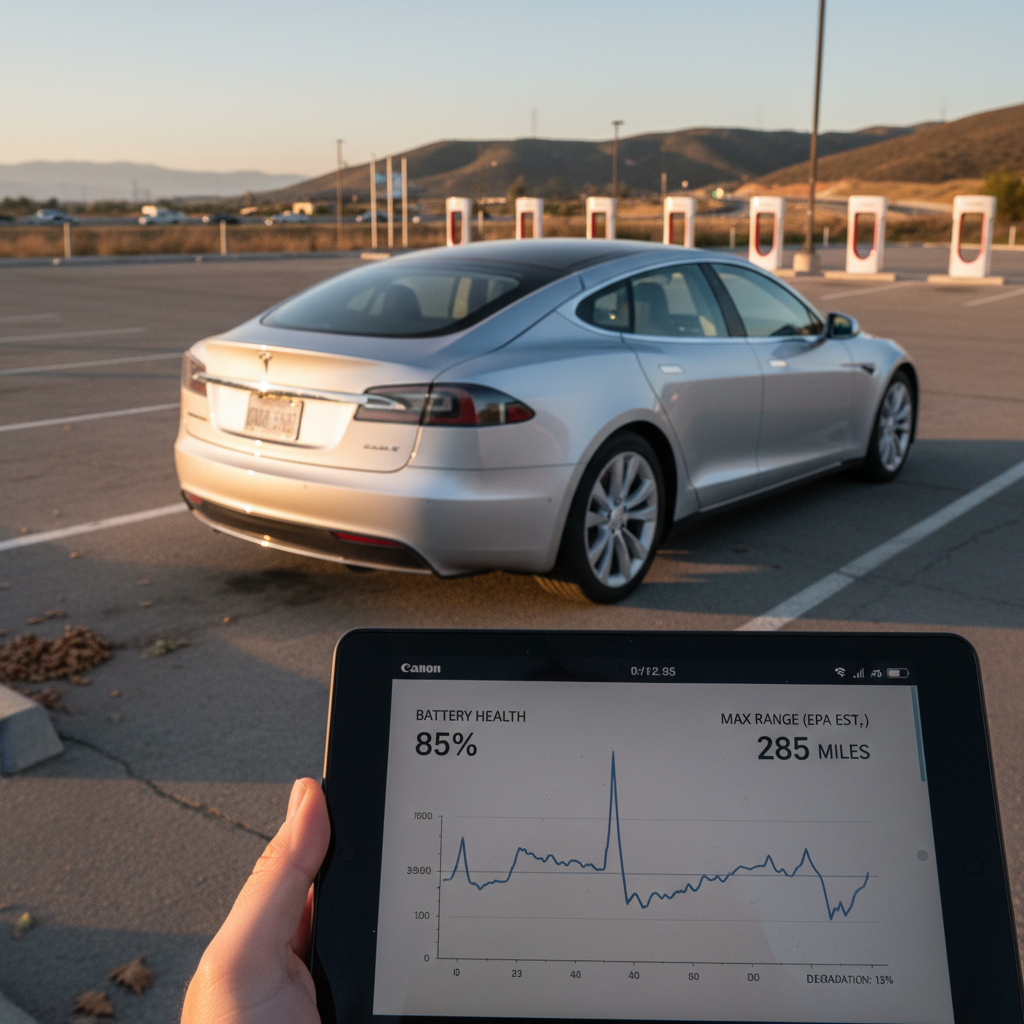
At Recharged, every used EV comes with a Recharged Score battery health report that makes this visual: you see how the car’s real, measured battery state of health compares to what the charts say should be normal for its age and mileage. That’s the difference between guessing and knowing.
Car battery life expectancy chart: Quick overview
Typical car battery life at a glance
Those ranges are real-world averages, not promises. Your climate, driving habits, and charging behavior can make things better, or worse, than the chart. Let’s get more precise, starting with the humble 12V battery.
12V car battery life expectancy chart
The 12V battery in a gas car is basically the drummer in a punk band: underpaid, abused, and forgotten until it quits. Most drivers only think about it when the car cranks slowly on a cold morning, or not at all.
12V lead-acid car battery life expectancy chart
Approximate lifespan ranges for common 12V starter batteries in passenger vehicles.
| Battery type | Typical warranty | Mild climate, mixed driving | Hot climate or heavy use | Cold climate, many short trips |
|---|---|---|---|---|
| Basic flooded lead-acid | 24–36 months | 3–4 years | 2–3 years | 2–3 years |
| Premium flooded lead-acid | 36–48 months | 4–5 years | 3–4 years | 3–4 years |
| AGM (Absorbent Glass Mat) | 48–72 months | 5–7 years | 4–5 years | 4–6 years |
| Start-stop rated AGM/EFB | 48–72 months | 4–6 years | 3–4 years | 3–5 years |
| LiFePO4 12V drop‑in* | 60–120 months | 8–10+ years | 6–8 years | 7–10 years |
Hot climates, short trips, and heavy accessory use (audio, winches, lights) all push you toward the shorter end of these ranges.
Watch the fine print

Mileage vs. calendar time for 12V batteries
For 12V batteries, calendar age and temperature matter more than odometer miles. A three-year-old battery in Phoenix that starts the car once a day may be in worse shape than a five-year-old battery in Seattle that sees regular highway trips that fully recharge it.
- Under 3 years old and healthy charging system: replacement is usually premature unless you’ve deeply discharged it several times.
- 3–5 years: the “watch closely” zone, test annually or at the first sign of slow cranking.
- Over 5 years: you’re living on borrowed time, especially if you’re heading into winter or planning a road trip.
EV battery life expectancy chart (years & mileage)
Now we get to the main event: EV traction batteries. This is the part that decides whether your used EV is a genius buy or an expensive science project.
Electric car battery life expectancy chart
Approximate lifespan ranges for modern EV lithium-ion and LFP packs based on climate and usage.
| Use case & climate | Expected lifespan (years) | Typical mileage range | Likely capacity at that point |
|---|---|---|---|
| Daily driver, moderate climate | 12–15 years | 150,000–250,000 miles | 75–85% |
| Daily driver, very hot or very cold climate | 8–12 years | 120,000–200,000 miles | 70–80% |
| High-mileage fleet (rideshare, delivery), well managed | 8–12 years | 200,000–350,000 miles | 70–80% |
| Low-mileage city car, rarely fast‑charged | 15+ years | 100,000–180,000 miles | 80–90% |
| LFP‑based EV (taxi/fleet duty) | 15–20+ years | 250,000–500,000 miles | 70–80% |
Most EV manufacturers back their packs with 8-year / 100,000–150,000 mile warranties, often guaranteeing around 70% capacity at the end of that period.
Why these numbers are conservative
Warranty reality check
- Most EVs in the U.S. carry at least an 8‑year / 100,000‑mile battery warranty; some extend to 150,000 miles or longer.
- Warranties usually define failure as dropping below about 70% capacity within that period, not complete death.
- Plenty of EVs cross 150,000–200,000 miles on their original packs without triggering a warranty claim.
Battery degradation chart: Capacity over time
Range loss doesn’t fall off a cliff. It’s more like a gently sloping hill with a steep driveway at the beginning. You lose a bit early, then the curve flattens out.
Estimated EV battery capacity retention over time
Typical capacity retention pattern for a modern EV pack with good thermal management and normal use.
| Vehicle age | Approx. capacity remaining | Approx. range vs. new | What it feels like day-to-day |
|---|---|---|---|
| Year 0 (new) | 100% | 100% | Full rated range, fresh off the lot. |
| Year 1–2 | 94–97% | 95–98% | You might notice nothing; maybe a few miles less on a 300‑mile car. |
| Year 3–5 | 88–94% | 90–95% | Some range loss is visible, but road trips still feel easy with normal planning. |
| Year 6–8 | 80–88% | 85–90% | You adjust your charging stops a bit; city driving is mostly unaffected. |
| Year 9–12 | 72–80% | 75–85% | Long‑distance driving takes more planning; perfect for commuting and local use. |
| Year 13+ | 65–75% | 70–80% | For most owners, the car has either been sold on or becomes a second car for short trips. |
Your exact curve depends on chemistry, thermal management, and how you treat the battery, but this is a useful mental model.
Convert charts into miles you care about
What really shortens car battery life
What hurts 12V batteries
- Heat: Parked outside in summer, especially in the Sun Belt.
- Short trips: Lots of 5–10 minute drives that never fully recharge the battery.
- Parasitic drains: Dash cams, alarms, or accessories that never sleep.
- Deep discharges: Leaving lights on, running accessories with the engine off.
What hurts EV traction batteries
- Heat and cold: Repeated exposure to extreme temperatures if the pack can’t cool or heat itself effectively.
- Living at 100%: Parking at full charge for days, especially in high heat.
- Chronic 0–100% swings: Hammering the pack from empty to full on a regular basis.
- Bad fast‑charging habits: Fast‑charging a very cold battery or pushing to 100% on DC fast chargers.
The silent killer: sitting unused
How to extend both 12V and EV battery life
Simple habits that add years to your batteries
Keep state of charge in the “happy middle”
For EVs, aim to charge to about 70–80% for daily use and avoid dropping below 10–15% unless you need the range. For long trips, 90–100% is fine, just don’t leave it full for days.
Let your car manage temperature
Whenever possible, park your EV in a garage or shade. Many modern EVs can precondition the battery before fast charging; use that feature instead of fast‑charging a stone‑cold pack.
Drive longer, less often
For 12V batteries, a good 20–30 minute drive lets the alternator fully recharge the battery. A week of short errands doesn’t.
Disconnect or tame parasitic drains
If you keep a vehicle in storage, use a smart trickle charger on the 12V battery, and make sure add‑on electronics either sleep properly or are disconnected.
Test instead of guessing
An annual 12V battery test before winter, and a periodic EV battery health report, tell you far more than a dashboard guess-o‑meter.
Update software and read the manual
Manufacturers quietly improve charging curves and thermal management via updates. Follow the car’s recommended charging limits and schedules; they’re there to protect the pack.
EVs are winning the durability war
Reading battery charts when you’re buying a used EV
Shopping used is where a car battery life expectancy chart stops being abstract and starts saving, or costing, you thousands of dollars. The pack is the most expensive component in the car. You want eyes wide open.
How to sanity‑check a used EV’s battery
Use the charts as a backdrop, then verify with real data.
1. Compare age vs. expected capacity
If the car is six years old and the chart says 85–90% is normal, anything in that ballpark is reassuring. A pack at 70% that early deserves more scrutiny and a lower price.
2. Look at mileage and duty cycle
High‑mileage highway commuters can be easier on batteries than low‑mileage city cars that just sit in extreme heat or cold. Ask how the car was used, not just how far it’s gone.
3. Get a proper battery health report
On a Recharged vehicle, the Recharged Score report shows measured state of health, projected remaining life, and how the pack compares to similar cars. That takes the guesswork out of the graph.
If you trade in or sell your EV through Recharged, that same battery health transparency works in your favor. Verified pack data makes it easier to justify your price and find the right buyer for the car.
FAQ: Car battery life expectancy and charts
Frequently asked questions about car battery life expectancy
Bottom line: Don’t fear the chart, read it
Battery life charts can look ominous at first glance, all those downward‑sloping lines. But once you understand what they’re really saying, they become a tool, not a threat. A 12V battery is a cheap, predictable wear item. An EV battery is a long‑life asset that, in most modern cars, quietly outlasts the rest of the vehicle.
If you’re considering a used EV, the smart move is to combine the kind of car battery life expectancy charts you’ve seen here with a verified battery health report. That’s exactly what Recharged builds into every car we sell or help you trade in: transparent battery data, fair market pricing, and EV‑savvy support from first search to final signature. The line on the chart may slope downward, but with the right information, your ownership experience doesn’t have to.