If you’re shopping for a used electric vehicle, you’ve probably seen ads for 0% APR financing on new cars and wondered: can you get 0 percent financing on a used EV too? The honest answer is: almost never in the way those splashy ads suggest, but there are a few narrow exceptions and plenty of smart ways to get your overall cost just as low, or lower.
Quick takeaway
Can You Get 0% on a Used EV? The Short Answer
For most buyers, 0% APR on a used EV will not be available. Manufacturers use 0% APR mainly to move new vehicles through their captive finance arms, and almost every lender charges higher rates on used cars, especially used electric vehicles, which they still view as higher risk.
- Mainstream automakers routinely advertise 0% APR on select new models, including some new EVs, to offset the loss of federal EV tax credits and higher MSRPs.
- Average used‑car APRs in 2025–2026 sit in the high single to low double digits, and used EVs are typically in that range or slightly above.
- Dealer finance managers and lenders on consumer forums consistently note that 0% APR on used vehicles is essentially nonexistent outside of tightly structured promotions.
That said, there are edge cases where the math looks like 0%, or close enough that you shouldn’t care about the missing percent sign. We’ll walk through those, then show you how to get the cheapest overall deal on a used EV even when the rate isn’t zero.
How 0% APR Actually Works on Cars
Understanding how 0% offers are built helps you judge whether chasing one, on a new or used EV, actually saves you money.
What’s Behind a 0% APR Offer?
It’s not “free money”, it’s a different way of applying discounts.
Subsidized interest
With 0% APR, the manufacturer or lender is eating the interest cost as a marketing expense. They do this on specific models or trims where moving metal matters more than maximizing finance profit.
Cash vs. rate trade-off
Most 0% offers come with a catch: "0% APR or extra cash back". If you choose the 0% financing, you often give up a rebate or discount you could have taken with a traditional loan.
Strict eligibility rules
- Only certain trims or stock units qualify.
- Terms are capped (often 36–60 months).
- Top‑tier credit is usually required.
Price flexibility shrinks
- Dealers are less willing to deeply discount the car when you take the 0% rate.
- The sticker price stays higher, even if interest is lower.
Pro tip
Why 0% Is So Rare on Used EVs
If 0% works so well to sell new cars, why don’t we see it on used electric vehicles?
- No captive‑financing push on used inventory. 0% APR is usually funded by the automaker’s own finance arm to boost new‑car sales. Used EVs, especially those sold through independent dealers or marketplaces, don’t have that subsidy behind them.
- Higher lender risk on used vehicles. Banks and credit unions price in the risk of default and collateral value. Used cars in general carry higher APRs than new, and used EVs add uncertainty around battery value and resale demand.
- Already‑discounted prices. The used EV market has seen significant price corrections since the early‑2020s surge. With lower resale values, there’s less margin to “hide” a 0% incentive in the deal.
- Regulatory and program limits. Many state and local EV financing programs for used vehicles cap rates at a low, but not zero, APR, often around 8% or less, instead of offering true 0% loans.
Reality check
When 0% Financing on a Used EV Can Happen
While rare, there are a few scenarios where you might effectively land at or near 0% APR on a used electric vehicle.
Edge Cases Where You Might See 0% on a Used EV
Most of these aren’t typical dealer‑arranged auto loans.
0% intro APR credit cards
Some buyers use a 0% intro APR credit card to cover part or all of a used EV purchase, then pay it off before the promo ends. The math can mimic a 0% auto loan, but the risk is higher if you miss a payment or can’t clear the balance in time.
Community or nonprofit programs
Certain local clean‑transportation or low‑income assistance programs offer very low‑interest or occasionally 0% loans on used EVs. These are typically income‑restricted and geographically limited, with modest loan caps.
Special CPO promotions
On rare occasions, an automaker will run a promotional rate on certified pre‑owned (CPO) EVs that looks almost like new‑car financing, say 1.9% or 2.9%, for top‑tier credit. True 0% on CPO is unusual, but not impossible in a localized sale event.
What doesn’t count
The takeaway: yes, it’s technically possible to get a used EV at 0% if you’re stacking the right tools (like promo credit cards or subsidized local programs), but you should treat it as a niche outcome, not a realistic baseline when you shop.
Smarter Alternatives to 0% APR on Used EVs
Chasing 0% APR can distract you from the bigger win: the lowest total cost of ownership. On a used EV, that usually comes from a combination of smart pricing, modest interest, and strong battery health, not a headline rate.
Where Used EV Rates Actually Land
Alternatives That Often Beat 0% in Real Dollars
1. Negotiate a lower sale price
A $2,000–$4,000 discount on the vehicle can outweigh the interest savings from a hypothetical 0% rate, especially if you plan to keep the car a few years and may pay it off early.
2. Use an EV‑friendly credit union
Many regional credit unions now offer special EV rates a point or two below their standard used‑car APR. Pre‑approve your loan before you shop, then ask the dealer to beat it if they can.
3. Shorten the loan term
A shorter term (48–60 months instead of 72–84) typically comes with a lower rate and dramatically reduces total interest, even if the APR isn’t zero.
4. Make a larger down payment
Putting more money down lowers your principal, so every percentage point of interest costs you less over the life of the loan, and can help you avoid being upside‑down on a quickly depreciating EV.
5. Stack rebates and local incentives
State or utility EV incentives, clean‑air grants, and used‑EV purchase rebates effectively reduce the financed amount. Think of them as a negative interest rate on part of your purchase.
How to Get the Lowest Possible Rate on a Used EV
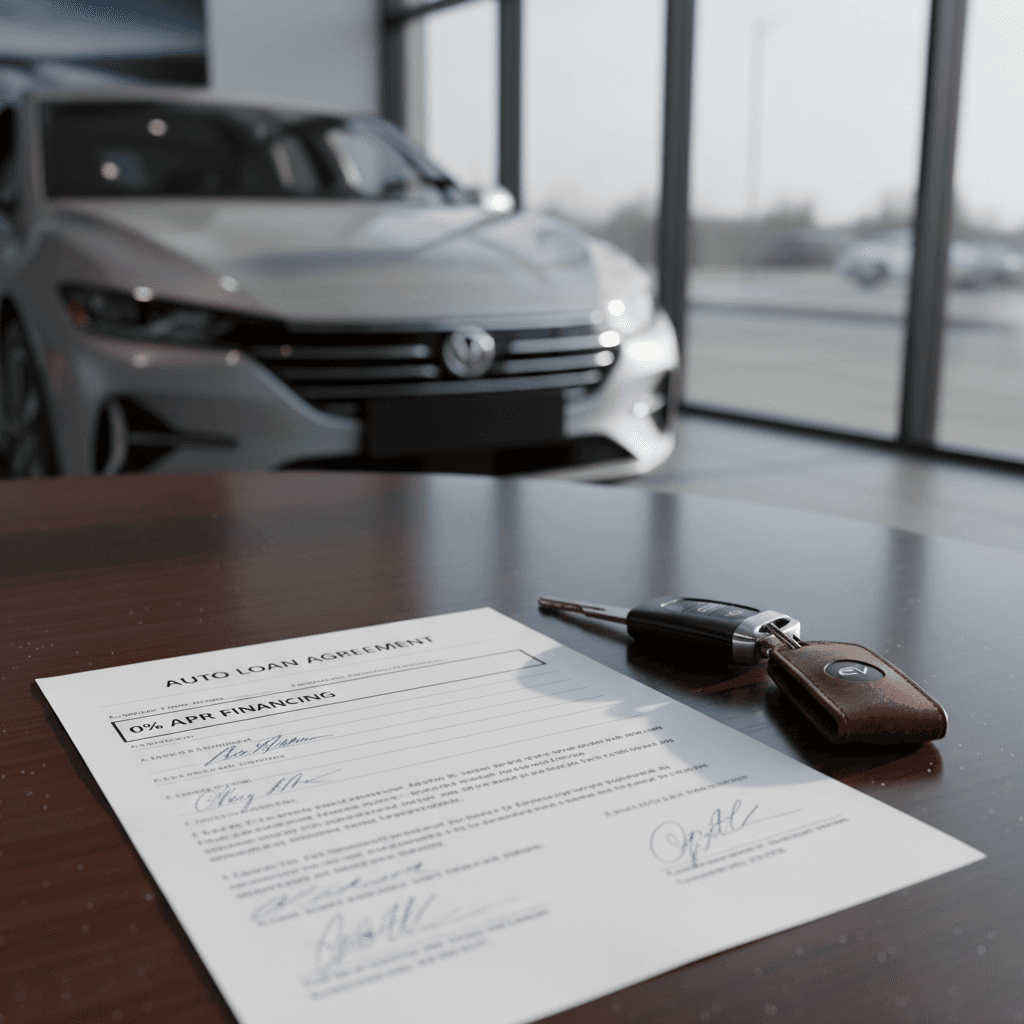
You may not see 0% APR, but you can still push your rate, and your total cost, down with a few deliberate moves.
6 Steps to Cheaper Used EV Financing
Work this process before you fall in love with a specific car.
1. Check your credit profile
Pull your credit reports and scores before you apply. Cleaning up old errors or paying down revolving balances can nudge you into a better tier and save thousands over a 5–6 year loan.
2. Get pre‑approved with a credit union
Shop rates at EV‑friendly lenders, many credit unions now publish specific EV loan specials. A firm pre‑approval gives you a benchmark that dealer financing has to beat.
3. Prioritize battery health
On a used EV, lenders care about value retention. A car with verified strong battery health, documented service history, and remaining factory warranty is easier to finance and may qualify for better terms.
4. Compare total cost, not just rate
Use a loan calculator to compare scenarios: lower price/higher rate vs higher price/lower rate. Focus on the total interest paid and out‑the‑door cost over the entire term.
5. Negotiate price separately from financing
Agree on the vehicle price first, then talk about financing. This prevents a 0% or low‑APR carrot from hiding an inflated sale price.
6. Keep the term reasonable
A 72–84 month loan on a used EV may leave you upside‑down if values fall faster than expected. Aim for a term that matches your budget without stretching too far just to get a smaller monthly payment.
Where Recharged fits in
Ready to find your next EV?
Browse VehiclesUsed EV with a Normal Rate vs New EV at 0%
One of the biggest questions shoppers face is whether to buy a cheaper used EV at a normal interest rate or stretch for a new EV at 0%. There’s no one‑size‑fits‑all answer, but you can think about the trade‑off in three buckets: price gap, depreciation, and risk.
Used EV at Market Rate vs New EV at 0% APR
Illustrative comparison assuming similar vehicle type and buyer credit quality.
| Factor | Used EV (Market Rate) | New EV (0% APR) | What It Means |
|---|---|---|---|
| Purchase price | Lower (often by $10k+ vs new) | Higher MSRP | Biggest driver of total cost, price gap can outweigh interest. |
| APR | Typical used rate (e.g., 8–11%) | 0% for promotional term | New car wins on interest cost alone. |
| Depreciation | Past steepest drop already absorbed | Largest early‑years drop still ahead | Used EV may hold its value better from your purchase date. |
| Warranties | Shorter or partial coverage | Full new‑car coverage | Factor expected repair costs into your math. |
| Monthly payment | Lower price but higher APR; payment may be similar | Higher price but 0% APR; payment may still be high | Don’t assume 0% means “cheap payment”, run the numbers. |
| Flexibility | Easier to pay off early or sell without big loss | Higher risk of negative equity if market softens | Important if your driving needs may change soon. |
In many real‑world scenarios, a sensibly priced used EV at a standard APR still beats a new EV at 0% in total dollars spent, especially if you plan to pay the loan off early.
“Dealerships use 0% APR to sell a payment, not a price. Savvy buyers compare the total cost of the deal, price, rate, term, and incentives, before deciding what’s truly cheaper.”
Common Pitfalls With 0% APR Marketing
Even if you never see a true 0% offer on a used EV, the same marketing tricks that surround those deals on new cars can show up in used‑car ads too. Watch out for these patterns.
- “As low as 0%” with tiny fine print. The rock‑bottom rate often applies only to a handful of highly qualified buyers, for very short terms, and may not apply to used vehicles at all.
- 0% but no discount. If the dealer refuses to budge on a high asking price when you bring up 0% or low APR financing, you may be paying the interest through the sticker instead of the loan.
- Bundled add‑ons. Some stores recoup lost finance profit by loading the contract with extras, extended warranties, protection packages, service contracts, often at marked‑up prices.
- Mixing term and payment. A low monthly payment sold alongside a 0% headline may hide an excessively long term that keeps you in the car (and under warranty) just long enough to avoid problems for the lender, not for you.
Guardrails before you sign
FAQ: 0% Financing on Used Electric Vehicles
Frequently Asked Questions
Bottom Line: Focus on Total Cost, Not Just the Rate
So, can you get 0 percent financing on a used EV? In practice, almost never, and when you can, it usually comes with strings like inflated pricing, narrow eligibility, or unusual risk. The smarter play is to treat 0% as a bonus if it genuinely appears, not as a requirement for doing the deal.
If you focus on fair market pricing, verified battery health, a reasonable APR from the right lender, and a term that fits your budget, you’ll likely end up spending less than someone who chased a flashy 0% headline. Platforms like Recharged are built around that idea, combining transparent vehicle reports, expert EV guidance, and financing support so you can buy the right used EV, on the right terms, without getting lost in the fine print.